The Hidden Barriers for Women in Finance
21 October, 2026


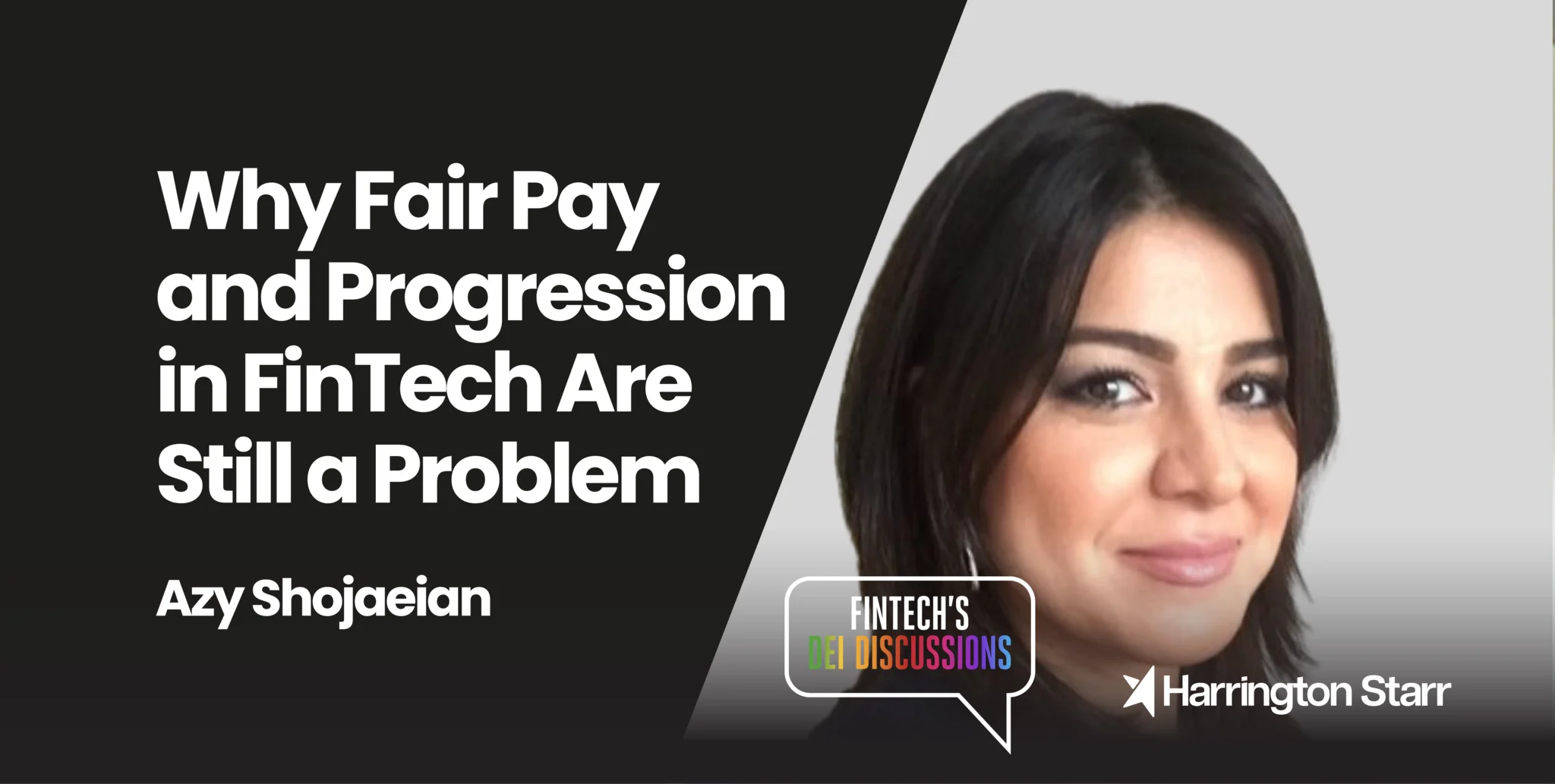
In this episode of FinTech’s DEI Discussions, Nadia Edwards-Dashti is joined by Azy Shojaeian, Group Chief Compliance & Risk Officer & MLRO at Pockit & Monese, for a deeply insightful and personal conversation on diversity and inclusion in FinTech, leadership progression, and the realities of building a long-term career in financial services. With over 22 years of experience in the UK financial services sector and 14 years operating as an MLRO, Azy brings a perspective shaped by resilience, continuous learning, and a commitment to driving meaningful change within organisations.
From the outset, Azy sets the tone by defining what inclusion and equality truly mean in a professional context. Rather than viewing diversity as a checkbox exercise, she frames it as an “endgame” that should be embedded into hiring, firing, and leadership decision-making processes. Her reflections highlight a recurring challenge across FinTech and financial technology businesses: the lack of representation at senior levels. As someone who has often found herself the only woman, and frequently the only individual from an ethnic minority background, in boardrooms and risk committees, Azy speaks candidly about the isolation that can come with being underrepresented. This insight is particularly relevant for FinTech recruitment strategies, where organisations must think beyond surface-level diversity initiatives and focus on building genuinely inclusive leadership teams.
Azy’s career journey is a powerful example of how determination, adaptability, and continuous development underpin success in financial services careers. Moving to the UK from Iran at the age of 14 with limited English, she faced the immediate challenge of adapting to a new education system while accelerating her language skills. Her academic journey took her through GCSEs, A-levels, and into higher education at Sussex University, where she studied organisational psychology. This early foundation in understanding people and behaviour would later prove invaluable in leadership roles within compliance and risk.
Her entry into financial services began through the HSBC graduate scheme, marking the start of a career that would evolve across multiple disciplines. A pivotal moment came when she transitioned into compliance by launching a startup, a move that required stepping away from the security of a tier-one banking role. This decision not only broadened her technical and commercial understanding of financial markets but also laid the groundwork for her future as a senior compliance leader. The experience of building something from the ground up enabled her to develop a holistic view of financial operations, from trading lines to governance frameworks, skills that are highly sought after in FinTech recruitment today.
Alongside her professional journey, Azy continued to invest heavily in education, completing a postgraduate diploma with the ICA and a master’s degree in governance, risk, and compliance from the University of Law. Her ambition to pursue a PhD and return to teaching reflects a mindset that is central to many successful FinTech leaders: a commitment to lifelong learning and knowledge sharing. For candidates and clients alike, this reinforces the importance of hiring individuals who are not only technically capable but also driven to continuously evolve in line with the demands of the financial technology landscape.
When discussing how to reach C-level positions in FinTech, Azy emphasises the importance of clarity, purpose, and resilience. She highlights that understanding your “why” is critical in shaping a career path, particularly in complex and highly regulated environments such as compliance and risk. For Azy, her motivation has always been rooted in making a tangible difference by preventing financial crime and ensuring that institutions operate with integrity. This sense of purpose has guided her decisions and helped her navigate the challenges inherent in progressing to senior leadership roles.
She also stresses the importance of aligning career choices with personal interests and strengths. In her case, a genuine enjoyment of reading regulations, writing policies, and building frameworks has been instrumental in her success. This insight is particularly relevant for FinTech recruitment, where aligning candidate motivations with role requirements is essential for long-term retention and performance. Too often, organisations focus solely on technical skills without considering whether candidates genuinely enjoy the work they are being hired to do.
Azy also acknowledges that career paths are rarely linear. Setbacks, organisational misalignment, and unexpected changes are inevitable, but resilience and adaptability are what ultimately determine success. This perspective is invaluable for both hiring managers and candidates navigating the fast-evolving FinTech job market, where flexibility and the ability to pivot are increasingly important.
A central theme of the conversation is the ongoing challenge of achieving fairness in pay and promotion for women in financial services. Azy addresses this issue head-on, highlighting the systemic barriers that continue to impact female professionals. She notes that women are often overlooked for promotions, receive lower pay increases, and face additional scrutiny when advocating for themselves.
Her advice is both practical and empowering. She emphasises the importance of being your own advocate, celebrating achievements, and clearly communicating your value within an organisation. Delivering results is only part of the equation; ensuring those results are recognised is equally important. This is a critical insight for professionals across FinTech, particularly in competitive environments where visibility and communication can significantly influence career progression.
Azy also challenges the notion that workplace flexibility should come at the expense of financial recognition. She shares examples of organisations using flexible working arrangements, often necessary for individuals with caregiving responsibilities, as a justification for limiting pay increases. This practice, she argues, is fundamentally flawed and disproportionately impacts women. Her perspective highlights the need for more equitable policies within financial services organisations, where performance should be the primary driver of compensation decisions.
For FinTech recruitment leaders and hiring managers, this serves as a reminder that attracting and retaining top talent requires more than competitive salaries. It requires a commitment to fairness, transparency, and creating an environment where all employees feel valued and supported.
The discussion also explores the role of organisations in driving inclusion through hiring practices. Azy highlights the importance of actively monitoring diversity metrics, such as gender balance, and using this data to inform recruitment strategies. She points out that it is difficult to claim inclusivity in a heavily male-dominated organisation, particularly in technical areas such as engineering, where the candidate pool may already be limited.
However, she also shares a positive example of hiring a female backend engineer, demonstrating that change is possible when organisations are open to challenging existing norms. This example underscores the importance of proactive and intentional hiring strategies within FinTech recruitment, where expanding the talent pool and creating opportunities for underrepresented groups can lead to stronger, more innovative teams.
Azy’s message is clear: inclusion is not a one-time initiative but an ongoing commitment that requires consistent effort. Whether through hiring decisions, internal policies, or day-to-day interactions, organisations must continuously evaluate and improve their approach to diversity and inclusion.
Another key takeaway from the episode is the importance of recognising when an organisation is not the right fit. Azy encourages professionals to assess whether their contributions are being valued and to be willing to move on if they are not. This perspective is particularly relevant in today’s FinTech job market, where opportunities are abundant, and candidates have greater mobility than ever before.
She also highlights the importance of evidence when advocating for pay rises and promotions. Demonstrating clear alignment between performance and objectives is essential in making a compelling case for recognition. This structured approach not only strengthens individual arguments but also contributes to a culture of accountability within organisations.
For employers, this reinforces the need to establish clear performance metrics and ensure that recognition processes are transparent and fair. In a competitive hiring landscape, organisations that fail to do so risk losing top talent to competitors who offer a more supportive and equitable environment.
As the conversation draws to a close, Azy reflects on what more needs to be done to drive meaningful change in the FinTech industry. She emphasises that diversity and inclusion must be treated as core business priorities, integrated into every aspect of organisational strategy. Regular evaluation, consistent action, and a genuine commitment to change are essential in moving from awareness to impact.
She also highlights the importance of individual responsibility, encouraging leaders and employees alike to question their own biases and ensure that decisions are based on merit rather than assumptions. This mindset shift is critical in creating a more inclusive industry, where talent is recognised and rewarded regardless of gender, background, or personal circumstances.
For FinTech recruitment businesses like Harrington Starr, these insights are particularly valuable. As organisations look to build high-performing teams in areas such as compliance, risk, technology, and engineering, the ability to identify and attract diverse talent will be a key differentiator. By aligning recruitment strategies with the principles discussed in this episode, businesses can not only enhance their hiring outcomes but also contribute to a more inclusive and innovative financial services industry.
This episode of FinTech’s DEI Discussions is a powerful reminder that while progress has been made, there is still significant work to be done in achieving true inclusion within FinTech. Azy Shojaeian’s story is one of resilience, ambition, and a relentless commitment to growth, offering valuable lessons for professionals at every stage of their careers.
For leaders, the message is clear: inclusion must be actively driven from the top, with a focus on representation, fairness, and continuous improvement. For candidates, the takeaway is equally important: know your worth, advocate for yourself, and remain resilient in the face of challenges.
As the FinTech industry continues to evolve, the organisations that succeed will be those that not only recognise the importance of diversity but actively embed it into their culture, hiring practices, and leadership strategies.