Inclusion is Not Charity
15 October, 2026

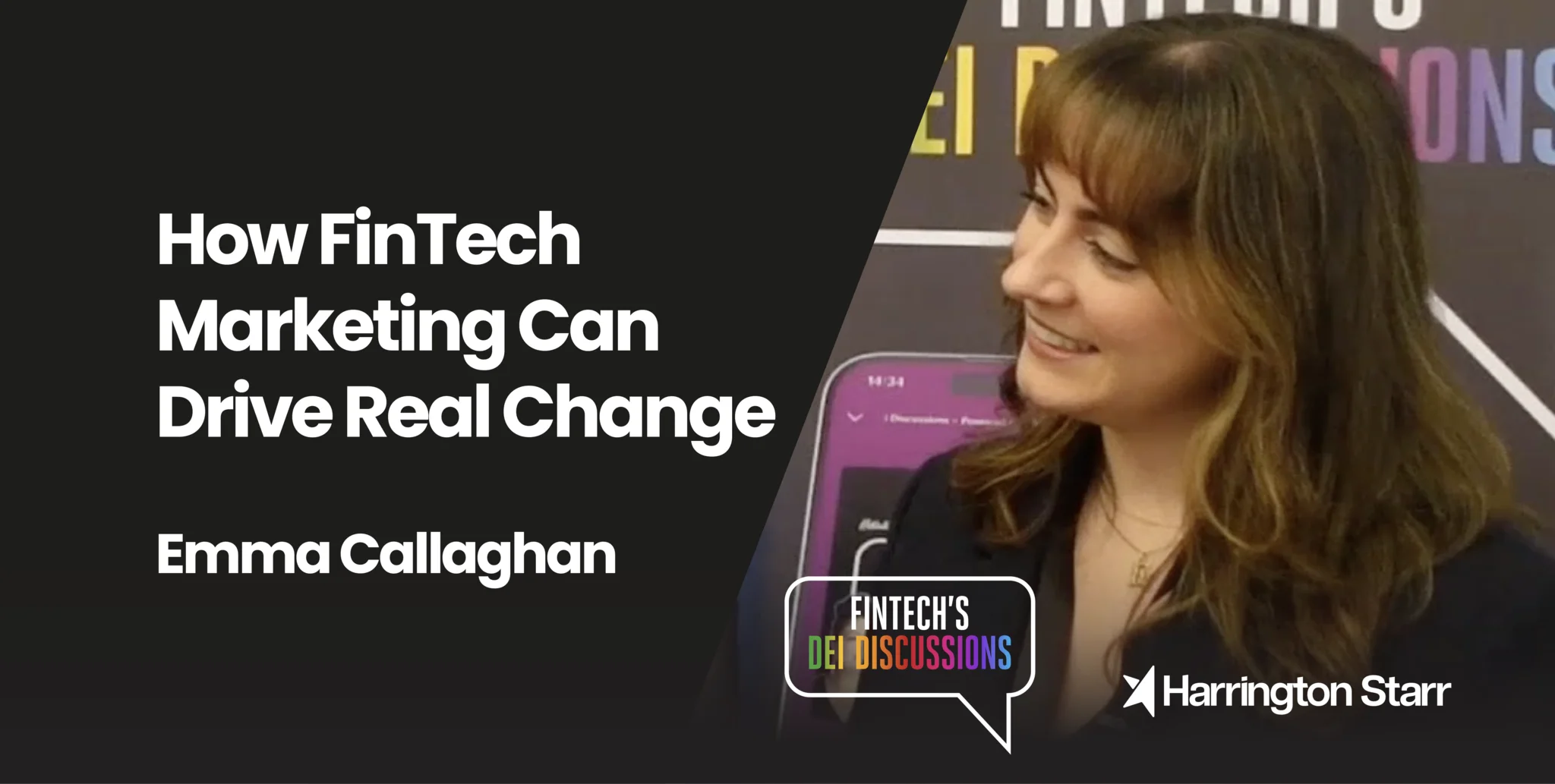
In this episode of FinTech's DEI Discussions, recorded live at the Fin.Tech Marketing Conference 2026 in London, host Nadia Edwards-Dashti is joined by Emma Callaghan for a thoughtful conversation around inclusion, FinTech marketing, leadership, accessibility, careers, and the role marketing teams play in driving authentic change across financial technology.
For businesses operating across financial services, RegTech, payments, trading technology, and the wider FinTech ecosystem, this discussion highlights why inclusive leadership and inclusive marketing are no longer optional. They are essential for attracting talent, building stronger cultures, and shaping the future of the industry.
One of the most relatable parts of this conversation is Emma Callaghan’s journey into FinTech. Like many professionals working across financial technology today, her route into the industry was not linear or planned.
Emma explains that only five years ago she knew very little about FinTech or RegTech. Originally from Ireland, she studied journalism at university in Dublin before moving to New York on a graduate visa. During that time, she worked for a political consulting firm, gaining experience in communications while living in one of the world’s leading financial and media hubs.
Following the COVID pandemic, Emma returned home to Sligo in Ireland and joined the Western Development Commission in a marketing role before eventually relocating to London to pursue opportunities within the FinTech sector.
That move ultimately led her into the world of RegTech and financial technology marketing, where she joined SteelEye as a Marketing Coordinator before progressing into leadership roles and eventually becoming Director of Marketing at KOR.
The conversation highlights something incredibly important for employers and hiring managers across FinTech and financial technology. Some of the best talent entering the industry may not come from traditional pathways.
Emma openly discusses how she initially lacked FinTech experience but brought enthusiasm, adaptability, and a willingness to learn. Those qualities ultimately helped her build a successful career in one of the world’s fastest-moving industries.
For FinTech hiring managers, and employers across financial services technology, this is a timely reminder that transferable skills matter. The future of FinTech jobs will increasingly depend on businesses identifying potential rather than simply hiring based on years of direct industry experience.
One of the strongest themes throughout the episode is the responsibility marketing teams have in shaping inclusion within the financial technology industry.
Emma explains that marketing is often the very first interaction somebody has with a business. From branding and websites to LinkedIn posts and visual design, marketing shapes how organisations are perceived externally and internally.
That means inclusive marketing goes far beyond campaigns or awareness days. It includes accessibility, language choices, visual representation, and ensuring content is usable for people with different needs and experiences.
The discussion around accessibility is especially important as financial technology businesses continue investing heavily in digital transformation and customer engagement strategies. Emma speaks about considering whether content is accessible for people with visual or audio impairments, and whether websites, social content, and communication strategies are genuinely designed for everyone.
In the world of FinTech marketing, these considerations are becoming increasingly important. As businesses compete for talent and customers across highly competitive markets, authenticity and accessibility are major differentiators.
For financial technology firms looking to strengthen employer branding and attract diverse talent pools, marketing can play a central role in communicating culture and values. This is particularly relevant for businesses operating in areas such as AI, cybersecurity, payments, capital markets technology, RegTech, and digital transformation, where competition for talent remains extremely high.
Emma’s perspective reinforces the idea that inclusive marketing is not simply a communications function. It is a business-wide strategy that impacts hiring, retention, reputation, and long-term growth.
Throughout the episode, Nadia Edwards-Dashti and Emma Callaghan also explore how diversity, equity, and inclusion conversations continue evolving across the financial technology sector.
A particularly powerful example comes from Emma’s reflections on International Women’s Day initiatives within the workplace. She explains how her organisation originally approached events as women-only spaces before realising that excluding men from those conversations unintentionally limited broader engagement and understanding.
That learning led to a more inclusive approach where everyone became part of the conversation.
The discussion reflects a wider shift happening across the FinTech industry. Increasingly, businesses are recognising that inclusion cannot succeed if it only involves one group of people. Real change happens when leadership teams, hiring managers, marketers, and employees all contribute to the conversation.
Nadia shares a similar experience from her own podcast series. Originally titled “The Maternity and Paternity Stories of FinTech,” the series was later renamed “The Families of FinTech” after recognising that modern families and caregiving structures are far more diverse than traditional labels suggest.
These examples demonstrate an important point about leadership within financial services and financial technology. Inclusion is not about perfection. It is about learning, adapting, listening, and improving over time.
For leadership teams across FinTech businesses, this mindset is becoming increasingly valuable. Employees, candidates, and clients are paying closer attention to company culture, transparency, and values than ever before.
The episode also provides valuable insights into FinTech recruitment and hiring strategies, particularly around identifying future talent.
Emma speaks openly about the importance of giving people opportunities even when they may not have extensive experience within financial technology. She encourages hiring managers to look beyond traditional CV expectations and focus on attitude, enthusiasm, adaptability, and willingness to learn.
This is a particularly relevant conversation within the current FinTech hiring market. Across software engineering, data, AI, cybersecurity, product management, and digital transformation, employers are increasingly competing for a limited talent pool.
At the same time, new technologies are changing how businesses operate, meaning the skills required today may evolve dramatically over the next few years.
Emma’s advice reinforces why businesses need to think differently about talent acquisition. Candidates entering financial technology from journalism, communications, retail, education, or other industries may bring fresh perspectives that strengthen innovation and collaboration.
The conversation also touches on career ownership and professional development. Emma encourages professionals to actively advocate for themselves, pursue training opportunities, and continuously upskill throughout their careers.
This is particularly important within modern FinTech marketing roles, where AI, prompt engineering, accessibility standards, data analytics, automation, and content strategy are evolving rapidly.
As financial technology continues changing at speed, the professionals who succeed will often be those who consistently invest in learning and adaptability.
Another key theme throughout the episode is the changing nature of marketing careers within financial technology.
Emma discusses how modern marketing roles require a much broader skillset than they did previously. Beyond traditional communications and branding responsibilities, today’s FinTech marketers increasingly need knowledge of accessibility, technology platforms, data, digital strategy, and AI-driven tools.
Nadia references prompt engineering courses and the growing importance of understanding AI technologies, highlighting how rapidly the marketing landscape is evolving.
For professionals working in FinTech marketing, this creates both challenges and opportunities.
The rise of AI tools, automation platforms, and digital engagement technologies means marketers must continuously learn and adapt. However, it also creates exciting opportunities for individuals willing to invest in new skills.
Emma encourages listeners to proactively seek out courses, create personal development plans, and advocate internally for training opportunities. Her advice is refreshingly practical. She suggests creating simple one-page proposals explaining why specific training would benefit both the employee and the company.
This mindset aligns strongly with the wider direction of financial technology careers. Across the industry, continuous learning is becoming one of the most valuable professional traits.
Whether someone works in marketing, software engineering, cybersecurity, quantitative finance, or product management, the pace of change within FinTech means learning can never stop.
Some of the most impactful moments in the episode come from Emma’s reflections on workplace culture and leadership.
She speaks honestly about learning that not everybody communicates or behaves in the same way. Some employees may appear quieter or less vocal in meetings while still producing exceptional work and contributing significantly behind the scenes.
Her observation that “the quietest person in the room could be the brightest” is particularly powerful in an industry often associated with confidence, performance, and visibility.
This conversation is highly relevant for leadership teams across financial services and financial technology. Creating inclusive workplaces means recognising and supporting different personalities, communication styles, and working approaches.
Emma also repeatedly returns to the importance of kindness within the workplace. While simple on the surface, the message carries significant weight.
In high-pressure industries such as FinTech, capital markets, payments, and financial services technology, workplace culture can heavily impact employee well-being, retention, and performance.
Small actions, such as greeting colleagues warmly or inviting someone for coffee, can meaningfully improve someone’s experience at work.
As businesses continue competing for top FinTech talent, workplace culture is becoming a major differentiator. Candidates increasingly want to work for organisations where they feel supported, included, and valued.
Toward the end of the episode, Emma discusses the importance of transparency within leadership teams and organisations.
She encourages businesses to openly share diversity data, acknowledge challenges, and communicate what steps are being taken to improve representation and inclusion.
Rather than hiding shortcomings, Emma argues that organisations should demonstrate progress, accountability, and commitment to improvement.
This perspective reflects a broader shift happening across the financial technology industry. Employees and candidates increasingly expect authenticity from employers. Businesses that openly discuss challenges while demonstrating meaningful action often build stronger trust and credibility.
For FinTech firms looking to strengthen employer branding and attract diverse talent, transparency is becoming increasingly important.
Emma’s emphasis on “progress over perfection” captures the overall tone of the conversation perfectly. Inclusion is not a destination that businesses suddenly achieve overnight. It is an ongoing process requiring listening, adaptation, accountability, and continuous improvement.
This episode of FinTech’s DEI Discussions offers far more than a conversation about marketing. It is ultimately a discussion about people, leadership, careers, workplace culture, and the future of the financial technology industry itself.
Emma Callaghan brings an honest, practical, and relatable perspective to topics that are often discussed only at surface level. Her insights around inclusive marketing, accessible communication, workplace culture, career development, and transparent leadership provide valuable takeaways for businesses and individuals across the FinTech ecosystem.
For employers, the episode reinforces why inclusive leadership and strong workplace culture matter for attracting and retaining talent. For professionals navigating careers within financial technology, it highlights the importance of adaptability, continuous learning, and self-advocacy.
And for the wider industry, the conversation serves as a reminder that innovation in FinTech is not only about technology. It is also about creating environments where different people, perspectives, and experiences can thrive together.
As financial technology continues evolving globally, the businesses that succeed long-term will likely be those that combine technological innovation with authentic inclusion, transparent leadership, and people-first cultures.