Stop Hiring the Same People
13 October, 2026


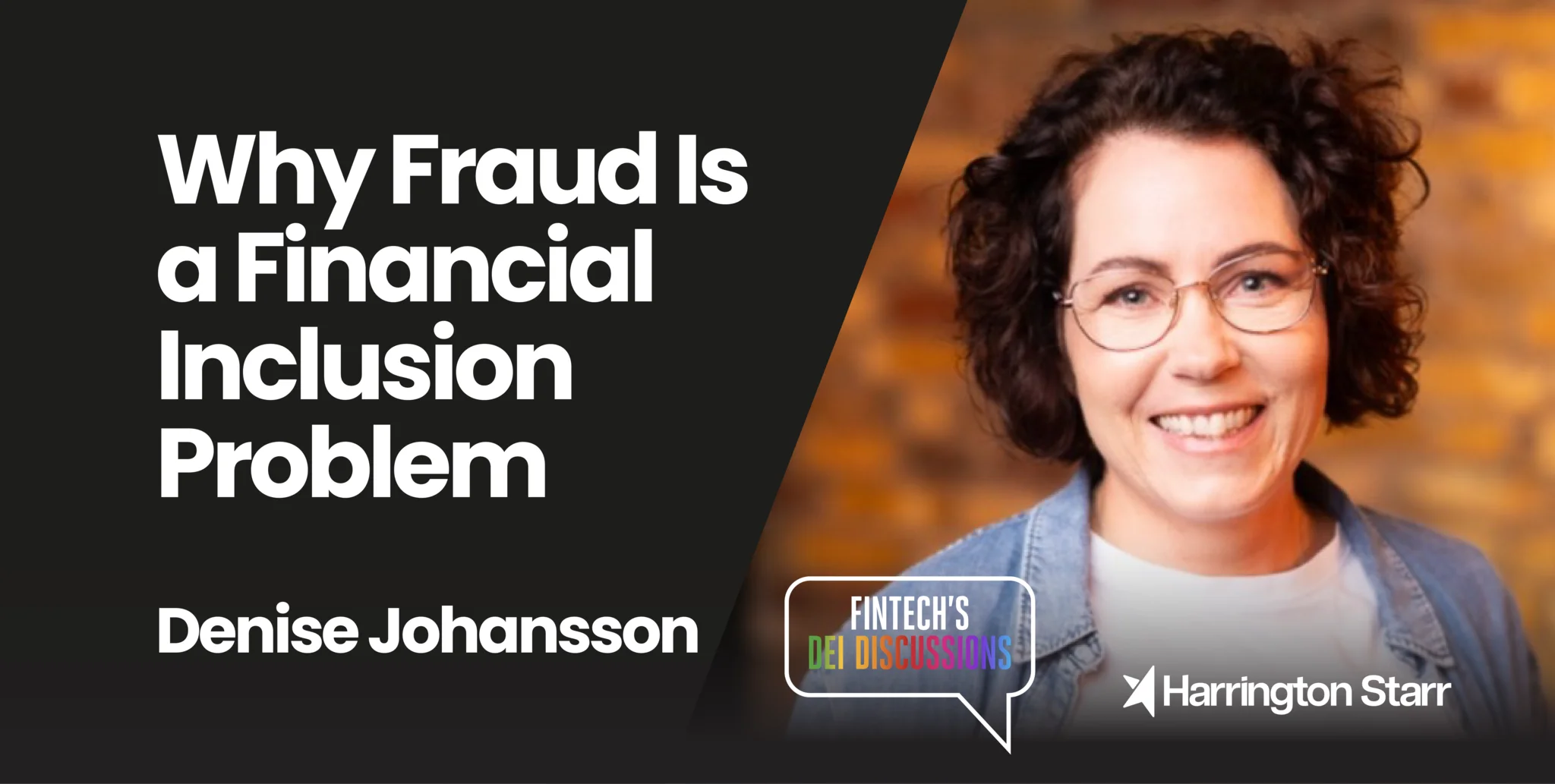
In this episode of FinTech’s DEI Discussions, Nadia Edwards-Dashti sits down with Denise Johansson, CEO & Co-Founder of Enfuce, to explore a topic that is becoming increasingly urgent across financial technology and financial services: the true impact of fraud. This conversation goes far beyond surface-level discussions of fraud prevention and instead dives into the human consequences of fraud, particularly how it intersects with financial inclusion, representation, and the way modern financial systems are designed. For businesses operating in fintech and for those hiring talent across fraud, payments, data, and risk, this episode offers a powerful reminder that technology alone cannot solve the industry’s most pressing challenges.
Denise begins by sharing her journey into financial services, a career that has now spanned more than twenty years. Entering the industry somewhat unexpectedly, she describes how her early role in a bank evolved into a broader career across financial systems and technology. It was during her time working within these environments that she began to question whether financial services could be built more efficiently and more inclusively. That realisation ultimately led to the founding of Enfuce, a company focused on processing digital payments and rethinking how financial infrastructure can better serve users. Her story sets the tone for the conversation, highlighting a recurring theme in fintech innovation: meaningful change often requires challenging the system itself, rather than trying to adapt within its existing constraints.
At the heart of the episode is Enfuce’s recent research into fraud and its wider implications. Denise explains that while men and women experience fraud at roughly the same rate, the consequences are far from equal. This is where the conversation shifts from a traditional fintech narrative to something far more complex. Fraud is often discussed purely in terms of financial loss, operational risk, or regulatory compliance. However, the findings presented in this discussion highlight that fraud has a deeply personal and long-lasting impact, particularly on women.
Women who experience fraud report significantly higher levels of stress and anxiety, as well as a notable loss of confidence in managing their finances. This erosion of confidence can fundamentally change how individuals interact with financial systems over time. For fintech companies, financial institutions, and hiring managers building teams across fraud prevention, payments infrastructure, and customer experience, this insight is critical. It suggests that fraud is not just a technical challenge to be solved by better systems or stronger controls, but a human problem that requires a more nuanced and inclusive approach.
Denise makes a powerful point during the episode: fraud does not just take money; it changes how people engage with the financial system long term. This shift in behaviour has implications not only for individuals but for the broader financial ecosystem. If segments of the population begin to disengage from financial services due to negative experiences, the industry risks reinforcing existing inequalities rather than addressing them. For organisations focused on financial inclusion and digital transformation, this represents a significant blind spot.
The discussion naturally moves into the concept of financial inclusion and how fraud plays a role in either enabling or restricting access to financial systems. Denise frames inclusion and equality in simple but powerful terms: who gets opportunities, who gets heard, and who gets to grow. These principles are directly applicable to the design of financial systems, particularly in a fintech landscape where products and platforms have a direct impact on people’s financial lives.
One of the most important takeaways from this episode is that equal risk does not mean equal impact. While fraud may occur at similar rates across different demographics, the outcomes are shaped by a range of social, behavioural, and psychological factors. This is especially evident in the way women respond to fraud incidents. The loss of confidence and increased anxiety reported in the research highlights a gap in how financial services are currently designed and delivered.
For fintech companies and financial services organisations, this raises important questions about representation and decision-making. If the teams building financial products do not reflect the diversity of the users they serve, there is a high likelihood of blind spots emerging. These blind spots can lead to systems that fail to adequately protect all users, particularly those who may be more vulnerable to the long-term effects of fraud. This is where the conversation intersects directly with talent and hiring. Building diverse teams across product, engineering, data, and risk is not just a matter of fairness or compliance; it is essential for creating systems that are safe, effective, and inclusive.
Another key theme explored in the episode is the evolving nature of fraud itself. Denise highlights that many scams today rely less on technical vulnerabilities and more on social engineering. This represents a shift in how fraud operates, moving from purely technical attacks to more human-centred manipulation. Scammers are increasingly exploiting trust, urgency, and emotional pressure to achieve their goals, making fraud more difficult to detect and prevent through traditional methods.
This insight is particularly relevant for fintech organisations investing in fraud prevention technologies and building teams focused on cybersecurity, data analytics, and risk management. While technical expertise remains essential, there is a growing need for a deeper understanding of human behaviour and psychology. Fraud prevention strategies must evolve to account for the ways in which people respond to pressure and make decisions under stress.
Denise offers a simple but effective piece of advice that underscores this point: if something feels urgent or pushes you to act quickly, that is often a red flag. This emphasis on pausing and reflecting highlights the importance of user education and awareness. However, as the conversation continues, it becomes clear that education alone is not enough. The way information is delivered is just as important as the content itself.
The episode also explores the role of education in addressing fraud and improving financial inclusion. Denise notes that a significant proportion of women affected by fraud feel that there is not enough education available to help them understand and prevent it. However, the issue is not simply about providing more information. Instead, the focus should be on delivering better education that is accessible, relevant, and aligned with how people actually experience fraud.
Current approaches to fraud education are often too complex, too technical, or too disconnected from real-world scenarios. For fintech companies and financial institutions, this presents an opportunity to rethink how they communicate with users. Education should be embedded into everyday financial interactions, making it easier for individuals to recognise potential risks and make informed decisions. Importantly, this education must feel human, rather than being driven purely by compliance requirements or regulatory obligations.
This has implications not only for product design but also for hiring and talent strategy. Organisations need professionals who can bridge the gap between technical expertise and user experience, ensuring that fraud prevention measures are both effective and accessible. Roles across product management, UX design, customer experience, and behavioural analytics are becoming increasingly important as the industry shifts towards a more user-centric approach.
One of the most compelling parts of the conversation is the link between representation and safety. Denise emphasises that if the people designing financial systems do not reflect the diversity of the users, there will inevitably be gaps in protection. This is not a theoretical concern but a practical reality that is already being reflected in the research findings discussed in the episode.
For fintech leaders and hiring managers, this reinforces the importance of building diverse teams across all areas of the business. From engineering and data science to product and leadership roles, representation plays a critical role in shaping outcomes. Diverse perspectives help to identify risks, challenge assumptions, and ensure that systems are designed with a broader range of users in mind.
At Harrington Starr, as a fintech recruitment business, this is a theme that continues to gain momentum across the market. Clients are increasingly recognising that diversity is not just a cultural or ethical priority but a commercial and operational one. Hiring strategies that prioritise inclusion can lead to better decision-making, stronger products, and ultimately more resilient financial systems. This episode provides a clear example of why that matters, particularly in areas such as fraud prevention and financial inclusion.
As the episode draws to a close, the conversation shifts towards what the industry needs to do next. Denise calls for a move beyond a purely compliance-driven approach to fraud and financial services. While regulation and compliance are essential, they are not sufficient on their own to address the challenges highlighted in the discussion. Instead, there needs to be a greater focus on responsibility, empathy, and understanding how people experience financial systems in practice.
This means designing products and services that are intuitive, transparent, and inclusive. It means communicating more clearly with users and providing support that is tailored to their needs. And it means recognising that equal risk does not automatically translate into equal outcomes. By addressing these differences, fintech companies can play a meaningful role in reducing inequality and improving financial inclusion.
For organisations operating in financial technology, this represents both a challenge and an opportunity. The ability to build systems that are not only efficient and secure but also inclusive and user-focused will be a key differentiator in the years ahead. This requires investment in talent, technology, and culture, as well as a willingness to challenge existing assumptions about how financial services should operate.
This episode of FinTech’s DEI Discussions offers a powerful and thought-provoking perspective on the intersection of fraud, financial inclusion, and technology. Through her insights, Denise Johansson highlights the importance of looking beyond traditional metrics and considering the broader impact of financial systems on people’s lives. Her message is clear: if the industry wants to build a more inclusive and equitable future, it must start by understanding the human side of the challenges it seeks to solve.
For fintech professionals, hiring managers, and organisations navigating the evolving landscape of financial services, the themes explored in this conversation are highly relevant. From the need for better education and communication to the importance of representation and diverse perspectives, the episode provides valuable insights that can inform both strategy and execution.
As fintech continues to evolve, the ability to address complex challenges such as fraud in a holistic and inclusive way will become increasingly important. This will require collaboration across the industry, as well as a commitment to continuous learning and improvement. By taking the time to pause, reflect, and rethink existing approaches, the industry has an opportunity to build financial systems that truly work for everyone.
Ultimately, this episode serves as a reminder that technology alone cannot solve the challenges facing financial services. It is the people behind the systems, and the decisions they make, that will shape the future of fintech. And as this conversation clearly demonstrates, inclusion is not just a desirable outcome, it is a fundamental requirement for building safe, effective, and sustainable financial systems.