Who's Missing From the Room?
05 October, 2026


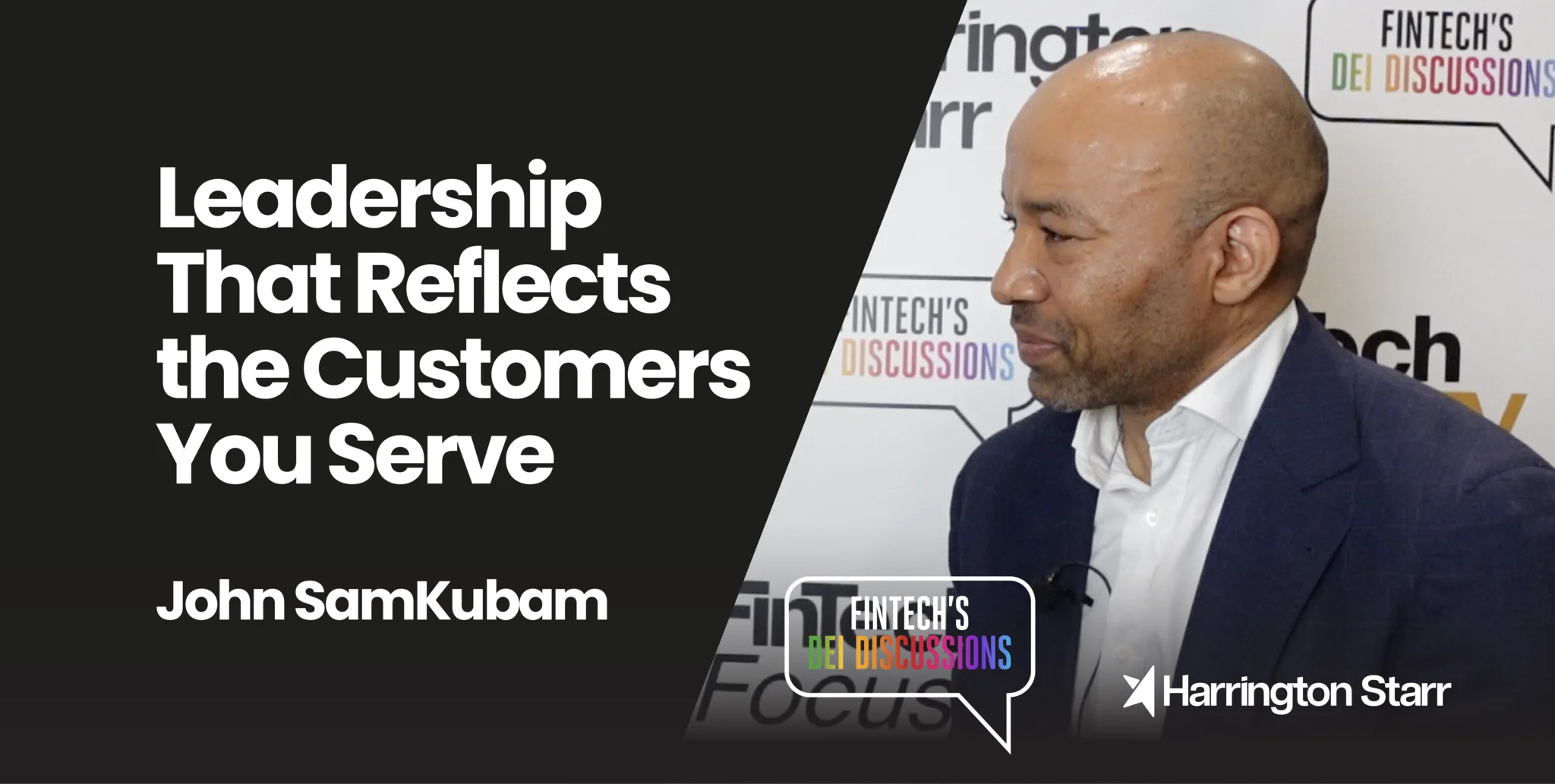
In this episode of FinTech’s DEI Discussions, recorded live at Pay360 2026, Nadia Edwards-Dashti is joined by John SamKubam, CEO for Africa at Crown Agents Bank, for a thoughtful and deeply personal conversation about leadership, diversity, inclusion, representation, and the evolution of financial services careers over the last three decades.
Recorded at one of the most important events in the payments and financial technology calendar, this episode explores how inclusive leadership can shape the future of FinTech and banking, why representation in leadership matters, and how the financial services industry can move beyond performative diversity initiatives towards genuine cultural change. For anyone working in FinTech recruitment, financial technology careers, leadership hiring, or financial services transformation, this discussion offers valuable insight into the realities of career progression and workplace inclusion.
One of the most compelling elements of this episode is John SamKubam’s career journey. His story reflects the increasingly global nature of the financial technology and banking sectors while also highlighting how career paths in FinTech are rarely linear.
John explains how he moved to the UK from Cameroon in 1990 to study at university before qualifying as a barrister. Originally intending to pursue a traditional legal career, his journey instead led him into financial services, where he began working within the legal departments of major global investment banks including JPMorgan Chase, Deutsche Bank, and HSBC.
What stands out throughout the conversation is John’s openness to opportunity. Rather than limiting himself to a single career identity, he embraced change, moving between legal, compliance, transformation, and business-focused roles. This willingness to develop broader skill sets became a defining feature of his leadership journey.
For professionals working in FinTech jobs, banking technology, payments, compliance, or financial services recruitment, this part of the discussion is particularly important. The modern financial technology industry increasingly rewards adaptability. Employers are no longer simply looking for individuals who can operate within narrow silos. Instead, businesses want leaders who understand regulation, technology transformation, operations, commercial strategy, and customer relationships simultaneously.
John’s transition from HSBC, a global organisation employing hundreds of thousands of people, to Crown Agents Bank, a much smaller organisation focused heavily on African markets, also demonstrates the value of taking strategic career risks. He discusses how joining Crown Agents Bank as an MLRO role allowed him to combine his legal knowledge, compliance expertise, technology transformation experience, and understanding of African markets in a way that ultimately led to his appointment as CEO for Africa.
For FinTech recruitment firms and hiring managers, this reflects a broader hiring trend across financial technology. Businesses are increasingly looking for commercially minded leaders with multidimensional skill sets rather than purely technical specialists.
A major theme throughout the episode is how much the financial services and FinTech industries have changed over the past thirty years.
John reflects on what it was like entering the City of London in the mid-1990s as a Black African professional. He explains that during that period, conversations around diversity, inclusion, work-life balance, maternity leave, and flexible working were far less developed than they are today.
The discussion highlights how many workplace policies that are now considered standard were once uncommon. Flexible working arrangements, support for parents, and conversations around representation were not embedded into financial services culture in the same way they are today.
What makes this conversation particularly powerful is the balanced perspective John brings. Rather than dismissing progress, he acknowledges how far the industry has come while also recognising that there is still work to do.
For professionals across FinTech, payments, banking, and technology recruitment, this long-term perspective is incredibly valuable. Discussions around DEI can sometimes become polarised, but this episode focuses instead on progress, leadership responsibility, and creating environments where people genuinely feel included.
Nadia Edwards-Dashti also draws attention to the importance of people opening doors throughout careers. John speaks warmly about leaders who supported him early in his career, including a manager at HSBC who created one of the most diverse teams he had experienced before diversity initiatives became formalised corporate priorities.
This section of the episode reinforces a key message that resonates strongly across FinTech hiring and leadership development: inclusive cultures are built by people who actively create opportunities for others.
Perhaps the most distinctive theme of the episode is the idea that leadership should reflect the customers businesses serve.
John discusses how organisations operating in global markets increasingly recognise the importance of appointing leaders who understand the culture, experiences, and realities of the regions they operate within. He explains that historically many international banks placed British or French executives in leadership positions across Africa, Asia, and the Middle East regardless of local context. However, this is changing significantly.
Today, more organisations are recognising the value of local representation and culturally aligned leadership. According to John, this is not simply about diversity targets or regulatory expectations. It is about better understanding customers, building trust, and operating more effectively in regional markets.
This discussion is especially relevant for global FinTech firms expanding into international markets. Whether businesses are hiring within payments, digital banking, compliance, infrastructure, cyber security, cloud engineering, or AI-driven financial services, there is increasing recognition that leadership teams must reflect the diversity of the customers they serve.
The conversation also highlights how diversity should not become a forced exercise. John repeatedly stresses that authentic inclusion comes from recognising the strengths people bring through different lived experiences, backgrounds, and cultural understanding.
For financial services recruitment businesses like Harrington Starr, this reflects a growing reality across the FinTech hiring market. Organisations are increasingly prioritising leadership diversity not simply because of corporate policy, but because it improves commercial outcomes, innovation, customer engagement, and global growth strategies.
One of the strongest moments in the episode comes when Nadia asks John what inclusion and equality mean to him personally.
John explains that many inequalities within society are rooted in historic structures and long-standing systems rather than inherent differences between people. He describes inclusion as the process of removing barriers created historically and building more open, multicultural workplaces and societies.
This leads into a wider conversation around performative inclusion versus meaningful inclusion.
John is clear that many organisations still approach diversity through “tick-box” exercises focused on statistics, forms, and compliance rather than genuine cultural change. He argues that real transformation happens when line managers and leadership teams genuinely believe in inclusion and actively demonstrate it in the way they lead teams and develop talent.
This is an increasingly important discussion across FinTech, banking technology, and financial services hiring. As competition for top talent intensifies, candidates are paying closer attention to workplace culture, leadership authenticity, and long-term progression opportunities.
For companies looking to attract high-performing talent across software engineering, payments, cloud infrastructure, AI, data science, cyber security, compliance, and trading technology, culture is becoming a critical differentiator.
The episode also touches on the emotional side of inclusion. John shares advice he once received when discussing concerns around having a non-English sounding name while applying for jobs. He recalls being asked: “Why would you want to work for an organisation that did that?”
It is a powerful moment because it reframes inclusion not only as a corporate responsibility but also as a question of personal value and belonging.
Another important theme throughout the discussion is career resilience.
John repeatedly reinforces the idea that leadership journeys are rarely predetermined. His own path from law into financial services leadership demonstrates the importance of remaining open to opportunities, developing transferable skills, and continuously evolving professionally.
For professionals pursuing careers in FinTech, financial services, payments, or banking technology, this advice feels especially relevant in today’s market. The industry is evolving rapidly due to AI, automation, regulation, digital transformation, and globalisation. Career paths are becoming increasingly fluid, and professionals who can combine technical expertise with commercial awareness and leadership capability are becoming highly sought after.
Nadia also highlights the importance of finding workplaces that genuinely value employees. In a highly competitive recruitment market, professionals are increasingly prioritising culture, progression, flexibility, inclusion, and purpose when evaluating new opportunities.
This conversation aligns strongly with wider trends across FinTech recruitment in London, New York, Europe, and global financial centres. Businesses that create inclusive environments and empower diverse leadership teams are increasingly viewed as more attractive employers by top-tier talent.
As the episode closes, Nadia asks John what more he would like to see from the financial services industry when it comes to inclusion.
Despite recognising the challenges that remain, John speaks positively about the progress already made, particularly within the UK financial services sector. He encourages businesses to continue approaching inclusion with positivity while moving away from surface-level approaches.
His final message is ultimately optimistic. Real progress is possible when organisations focus on authentic leadership, meaningful representation, and creating environments where individuals can succeed regardless of background.