Why FinTech Must Rethink Hiring | FinTech Connect 2026 Preview
20 October, 2026

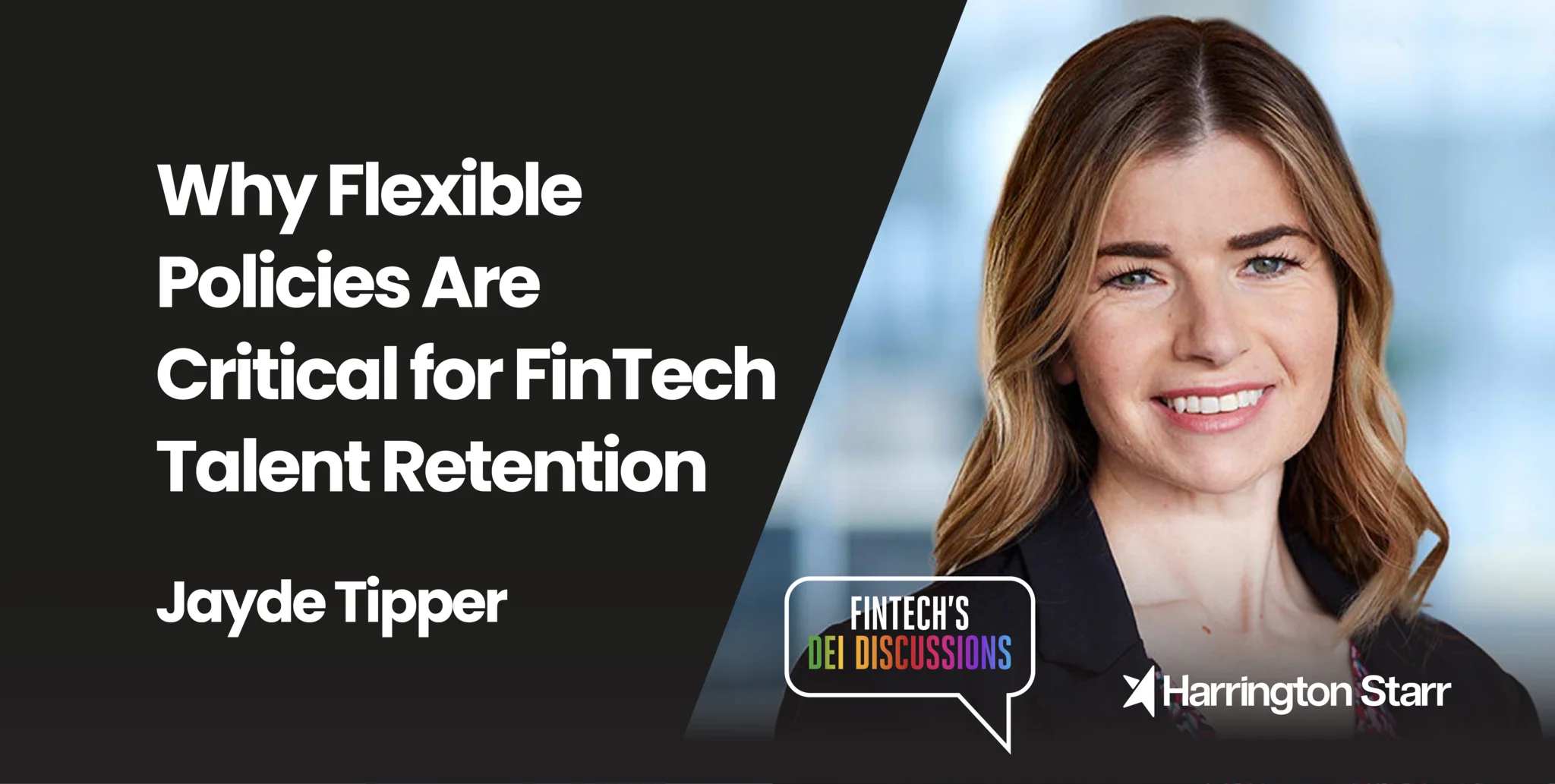
On this episode of FinTech’s DEI Discussions, Nadia Edwards-Dashti, is joined by Jayde Tipper, Chief People Officer at Temenos. This episode explores the real-life experiences, leadership decisions, and cultural behaviours that shape inclusive workplaces across global FinTech organisations.
Rather than presenting inclusion as a checklist or a set of policies, this discussion reframes it as a lived, daily experience. It highlights how inclusion is built through leadership behaviours, trust, flexibility, and the cumulative impact of small, human interactions. For FinTech businesses competing for top talent in an increasingly global and complex hiring market, this conversation is highly relevant, not just from a people perspective, but from a recruitment and retention standpoint as well.
Jayde Tipper’s career journey is a powerful example of how diverse career paths can lead to leadership roles in financial technology. Beginning her career in door-to-door sales before moving into recruitment, she describes those early experiences as foundational in building resilience and work ethic. Her transition into in-house recruitment and later HR eventually led her to Temenos, where she has spent the last decade and now serves as Chief People Officer.
This trajectory reinforces the idea that leadership in financial technology is not linear, and that skills developed in high-pressure, people-focused environments such as recruitment can translate directly into strategic leadership roles. For organisations looking to hire or develop future leaders, this is a reminder that talent often comes from unexpected pathways.
In today’s FinTech hiring landscape, where demand for experienced professionals continues to outpace supply, understanding these career journeys is critical. Recruitment strategies must evolve to recognise transferable skills and non-traditional career progression, especially when building diverse and inclusive leadership teams.
A central theme of the episode is the intersection of career progression and motherhood, and the myths that often surround it. Jayde openly shares her experience of having four children while building her career, including joining Temenos while seven months pregnant and continuing to progress into a senior leadership role.
Her perspective challenges the outdated belief that individuals must choose between career success and family life. Instead, she emphasises that there is no one-size-fits-all approach. What works for one person may not work for another, and success is defined by finding a balance that aligns with individual circumstances and priorities.
This insight is particularly important for FinTech employers seeking to attract and retain female talent. The industry has historically faced challenges around gender diversity, particularly at senior levels. By promoting flexible, supportive environments and normalising different career paths, organisations can begin to break down these barriers.
For recruitment firms operating in this space, including those focused on FinTech hiring, this reinforces the importance of advising clients on inclusive hiring practices and workplace cultures. Candidates are increasingly evaluating employers not just on salary and role, but on their ability to support long-term career growth alongside personal commitments.
The conversation moves into the practical side of inclusion, focusing on the role of flexible policies in supporting employees. At Temenos, Jayde highlights enhancements to maternity leave, adoption and foster leave, and the shift towards primary and secondary caregiver leave rather than traditional gendered policies.
One of the standout initiatives discussed is the phased return to work programme, allowing employees to gradually transition back into their roles after time away. This flexibility recognises that returning to work is not a uniform experience and that individuals may need different levels of support depending on their circumstances.
In the context of FinTech talent retention, these types of policies are increasingly important. However, the episode makes it clear that policies alone are not enough. While they provide a framework, their effectiveness depends on how they are implemented and experienced by employees.
From a recruitment perspective, this is a critical point. Candidates are becoming more discerning, often asking detailed questions about flexibility, return-to-work support, and overall employee experience. FinTech firms that can demonstrate genuine, well-executed policies will have a competitive advantage in attracting top talent.
One of the most insightful parts of the discussion centres on the gap between policy and reality. Jayde explains that organisations often implement policies with the best intentions, but if employees do not feel safe or supported in using them, those policies become ineffective.
At Temenos, there is a deliberate shift away from rigid “policies” towards more flexible “guidelines” built on trust and accountability. This approach reflects a broader cultural philosophy where employees are empowered to make decisions about what they need, rather than being constrained by strict rules.
The concept of psychological safety plays a significant role here. Employees must feel confident that they can take leave, request flexibility, or speak openly about challenges without fear of negative consequences. Without this foundation, even the most progressive policies will fail to deliver meaningful change.
For FinTech leaders, this highlights the importance of aligning culture with policy. It is not enough to introduce new initiatives; organisations must also invest in leadership training, communication, and role modelling to ensure those initiatives are truly embedded.
The role of leadership is another key theme throughout the episode. Jayde reflects on her own experience of working with supportive managers who demonstrated trust, empathy, and open communication. These qualities, she explains, are essential in creating environments where employees can thrive.
Supportive leadership is not about removing accountability, but about creating a balanced relationship where expectations are clear and individuals feel empowered to perform at their best. This includes having difficult conversations, being transparent about challenges, and assuming positive intent on both sides.
For organisations operating in high-pressure FinTech environments, this type of leadership is particularly important. The demands of the industry can lead to burnout and disengagement if not managed effectively. By fostering strong, supportive relationships between managers and employees, companies can improve both performance and retention.
From a FinTech recruitment perspective, leadership quality is increasingly becoming a deciding factor for candidates. Many professionals are prioritising workplace culture and management style over purely financial incentives. This shift underscores the need for organisations to invest in leadership development as part of their overall talent strategy.
While policies and leadership are important, the episode ultimately brings the focus back to individual behaviour. Jayde emphasises that inclusion is built through everyday actions, from ensuring everyone has a voice in meetings to checking in on colleagues who may be struggling.
These “micro moments” of inclusion are often overlooked, but they have a significant cumulative impact on workplace culture. By encouraging employees at all levels to be more aware, more empathetic, and more intentional, organisations can create environments where inclusion becomes a natural part of daily operations.
This perspective is particularly relevant for FinTech firms looking to improve talent retention. While large-scale initiatives are valuable, they must be supported by consistent, everyday behaviours that reinforce a culture of inclusion. Without this, even the most well-designed programmes will fall short.
For recruitment businesses like Harrington Starr, this insight is highly valuable when advising clients. It highlights the importance of assessing not just policies and benefits, but also the underlying culture and behaviours that define an organisation. By helping clients understand and improve these areas, recruitment firms can play a key role in shaping more inclusive FinTech workplaces.
As the FinTech industry continues to evolve, the importance of inclusion, flexibility, and strong leadership will only increase. The competition for talent is intensifying, and organisations that fail to adapt risk falling behind.
This episode of FinTech’s DEI Discussions provides a clear message: inclusion is not a one-time initiative or a box to tick. It is an ongoing commitment that requires alignment between policy, culture, leadership, and individual behaviour.
For FinTech employers, the challenge is to move beyond intention and into action. This means creating environments where employees feel genuinely supported, where flexibility is embraced rather than questioned, and where leadership sets the tone for inclusive behaviour.
For candidates, it reinforces the importance of evaluating potential employers holistically. Beyond the role itself, factors such as culture, leadership, and support systems play a critical role in long-term career satisfaction.
For Harrington Starr, as a global FinTech recruitment business, these insights are central to helping clients build high-performing teams and helping candidates find roles where they can truly thrive. By understanding the nuances of inclusion and the realities of modern workplaces, recruitment strategies can be tailored to meet the evolving needs of the industry.
Ultimately, this conversation with Jayde Tipper is a reminder that real change does not come from policies alone. It comes from people—leaders who set the tone, employees who support one another, and organisations that are willing to listen, learn, and continuously improve.