The Hidden Barriers for Women in Finance
21 October, 2026


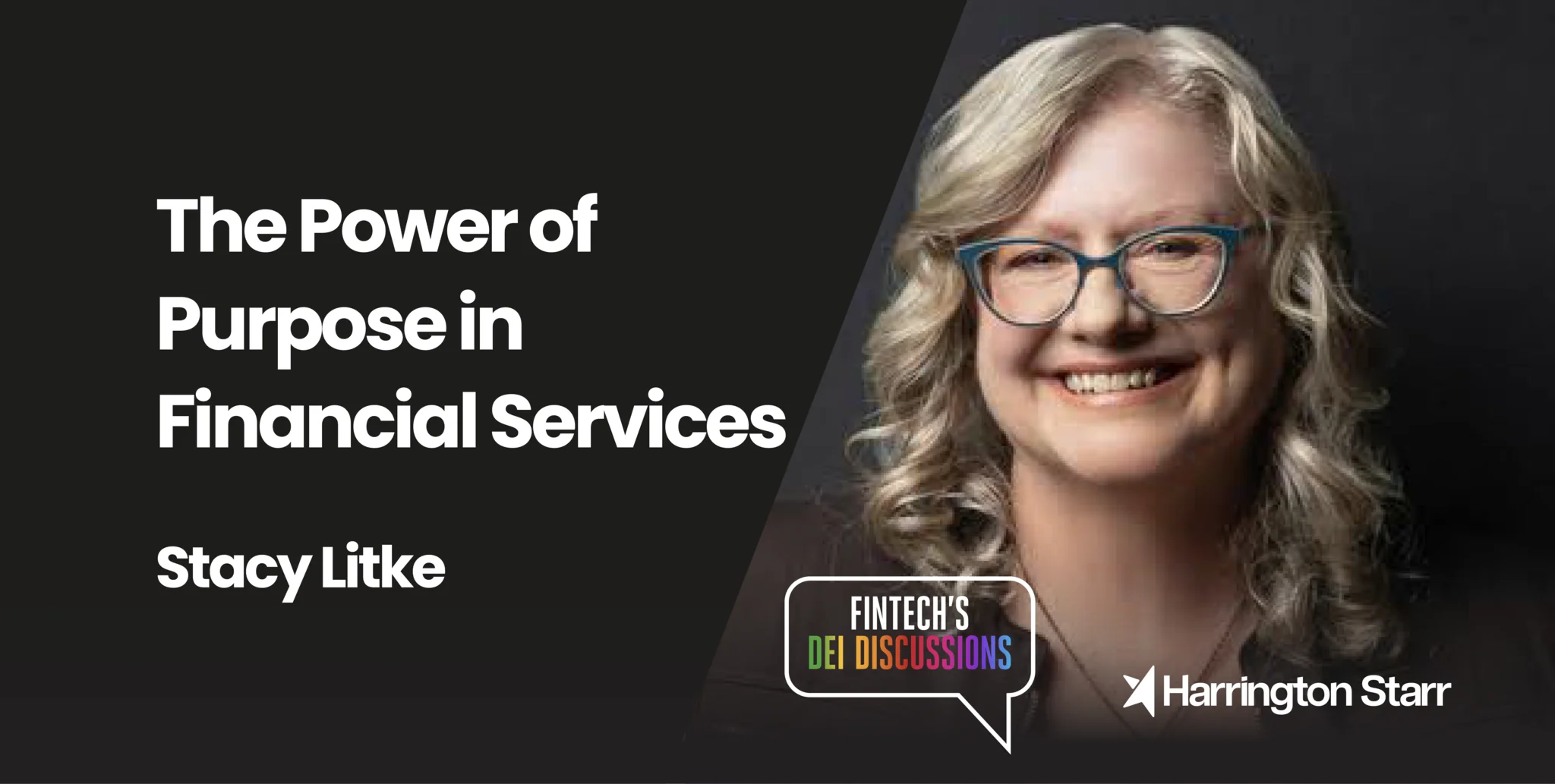
Purpose has become one of the defining themes shaping careers across financial technology. While innovation, artificial intelligence and digital transformation dominate industry conversations, organisations are increasingly recognising that people, culture and meaningful work remain the foundations of long-term success. In this episode of FinTech's DEI Discussions, host Nadia Edwards-Dashti sits down with Stacy Litke, VP, Banking Programs at Green Check Verified, to explore how purpose has guided her career through banking, technology and financial services, and why creating opportunities for others has become central to her leadership philosophy.
Throughout the conversation, Stacy shares a career built on decades of experience in banking before moving into one of the most unique areas of financial technology. Her story demonstrates how purpose can reshape a career, while highlighting the importance of diversity, equity and inclusion, mentoring and leadership within today's FinTech industry. For organisations focused on attracting and retaining exceptional talent, her experiences also offer valuable lessons about workplace culture, succession planning and inclusive leadership.
Early in the discussion, Stacy explains her role at Green Check Verified and describes herself as something of a "Swiss Army knife", moving wherever her banking expertise can create the greatest value. Rather than fitting into one traditional department, her work spans relationship building, financial institution support and helping organisations navigate a highly regulated sector.
She explains that Green Check Verified operates within the United States cannabis industry, helping financial institutions safely provide banking services to licensed cannabis businesses. Because cannabis remains federally illegal in the United States despite many states permitting legal cultivation and sales, financial institutions face significant compliance obligations when deciding whether to support these businesses.
Green Check Verified provides technology and consulting services that help banks automate compliance, monitor licensed operators and ensure transactions meet regulatory expectations. Stacy explains that this involves verifying licences, reviewing sales data and ensuring deposits align with legitimate business activity.
For Nadia, this represents a broader conversation about financial inclusion. Rather than focusing solely on technology, the discussion highlights how financial technology can remove barriers that have historically prevented legitimate businesses from accessing financial services. The episode illustrates how innovation can be used not simply to improve efficiency, but to increase accessibility across financial services.
One of the strongest themes throughout the episode is purpose.
After many years working in banking, Stacy explains that she began questioning whether the industry's focus had shifted too heavily towards money rather than people. She recalls reaching a point where she wanted to apply her knowledge and experience to something with genuine meaning.
Instead of simply searching for another banking position, she deliberately looked for a role that combined her experience in banking, technology and plant medicine. That search ultimately led her to Green Check Verified.
Her story serves as a reminder that career progression isn't always about moving upwards. Sometimes it is about moving towards work that aligns more closely with personal values.
For professionals working in financial services, FinTech and technology, purpose is increasingly becoming an important factor in career decisions. Salary and benefits remain important, but many professionals are also seeking organisations where they believe their work contributes to something larger than commercial success alone.
This conversation highlights why purpose has become an increasingly significant consideration for both candidates and employers across the FinTech recruitment market.
As the conversation moves into diversity, equity and inclusion, Stacy explains why inclusion carries particular significance within the cannabis sector.
She discusses the historical impact that cannabis legislation has had on Black, brown and Indigenous communities, describing how previous laws resulted in imprisonment, disrupted families and long-term inequality. As legal cannabis businesses have emerged, she believes organisations have a responsibility to recognise this history while creating fairer opportunities for future generations.
Rather than discussing inclusion as a corporate initiative, Stacy frames it as a question of purpose and responsibility.
This broader perspective aligns closely with the mission of FinTech's DEI Discussions, which aims to showcase practical examples of inclusion rather than simply discussing theory.
The conversation demonstrates that diversity, equity and inclusion extends beyond workplace representation. It also includes improving access to financial services, supporting underserved communities and creating systems that deliver fairer outcomes.
Stacy also reflects candidly on her own career as a woman working across banking and technology.
Beginning her banking career during the 1980s, she shares examples of discrimination that many women experienced during that period. Rather than presenting these experiences simply as personal stories, she uses them to illustrate how much progress has been made while acknowledging that meaningful challenges remain.
She explains that both banking and technology continue to be heavily male-dominated industries, and that she has often found herself to be the only woman in the room.
However, instead of allowing those experiences to define her career, she chose to focus on helping other women succeed.
This includes mentoring colleagues, sharing lessons learned throughout her own career and helping other women avoid obstacles she encountered herself. She describes creating supportive circles where women actively encourage one another, celebrate success and increase each other's visibility.
The discussion reinforces the importance of representation while also demonstrating that inclusion depends on creating environments where people are supported to develop throughout their careers.
One of the most valuable sections of the episode focuses on leadership.
Stacy shares an example from a previous leadership position where she worked closely with a group of women in middle management. Rather than operating as individual managers, they met regularly to solve problems collectively, support one another and develop practical solutions together.
She explains that one of her leadership principles is giving recognition to her team instead of taking credit herself.
Even when she helped initiate an idea, she preferred allowing others to develop it independently before ensuring they received recognition for the outcome.
During her time leading the team, she helped multiple individuals earn promotions while also creating opportunities for others to move into leadership positions themselves.
This emphasis on developing future leaders is particularly relevant for employers competing for FinTech talent.
Recruitment may help organisations attract exceptional professionals, but retention depends upon creating opportunities for progression, recognising achievement and investing in employee development. Stacy's approach demonstrates how effective leadership creates long-term organisational strength rather than simply short-term operational success.
Nadia expands on this leadership discussion by connecting Stacy's experiences to conversations she regularly has as a recruiter.
She explains that organisations frequently focus on improving diversity through hiring but sometimes overlook what happens after people join the business.
Promotion pathways, succession planning, mentoring and ongoing investment in employees all play equally important roles in creating inclusive workplaces.
This observation speaks directly to one of the biggest conversations taking place across FinTech recruitment today.
Candidates increasingly evaluate employers on culture, leadership and opportunities for development alongside salary and technology. Businesses that genuinely invest in people often find themselves better positioned to attract and retain high-performing professionals.
For hiring managers, the discussion offers a valuable reminder that inclusive recruitment should be supported by equally inclusive leadership.
Towards the end of the episode, Nadia asks Stacy whether she believes the industry has genuinely progressed.
Stacy acknowledges that there has been significant improvement.
She reflects on earlier points in her career when women were expected to organise meetings, take notes or remain on the sidelines rather than contribute strategically. Today, she feels she has earned a seat at the table.
However, she also explains that progress remains incomplete.
She still finds herself as the only woman in many meetings and continues to experience situations where men dominate discussions or interrupt female colleagues.
With greater experience and confidence, she now actively re-enters conversations rather than allowing herself to be overlooked.
Her reflections demonstrate both optimism and realism.
The industry has undoubtedly changed, but creating genuinely inclusive workplaces requires continued effort from organisations, leaders and individuals alike.
One of the most powerful messages from this episode is that leadership is ultimately about creating opportunities for other people.
Whether Stacy is helping financial institutions navigate complex regulations, mentoring women entering leadership roles or promoting team members for their achievements, her consistent focus remains on helping others succeed.
Rather than measuring success solely through commercial outcomes, she measures it through the people she has helped develop throughout her career.
For businesses operating across financial technology, this philosophy offers valuable guidance.
Technology continues to reshape financial services at an extraordinary speed, but organisations still depend on talented people to drive innovation, solve problems and build lasting relationships.
Creating cultures where individuals feel supported, recognised and empowered may ultimately become one of the strongest competitive advantages any organisation can develop.
This episode of FinTech's DEI Discussions demonstrates that purpose, leadership and inclusion are closely connected.
Stacy Litke shares a career built on experience, resilience and a genuine desire to make financial services more accessible while helping others achieve success. From supporting compliance within cannabis banking to mentoring future leaders, her journey illustrates that meaningful careers are often built by aligning professional expertise with personal values.
For professionals working across financial technology, banking and financial services, the conversation offers valuable lessons about leadership, representation and career development. For employers competing for FinTech talent, it reinforces the importance of creating workplaces where people can contribute, grow and feel recognised for their achievements.