The Hidden Barriers for Women in Finance
21 October, 2026


The financial services industry is facing one of the most significant demographic shifts in modern history, yet it remains a topic that receives surprisingly little attention. While conversations around artificial intelligence, digital assets, embedded finance, and financial technology innovation dominate headlines, a fundamental change is quietly reshaping society: people are living longer than ever before.
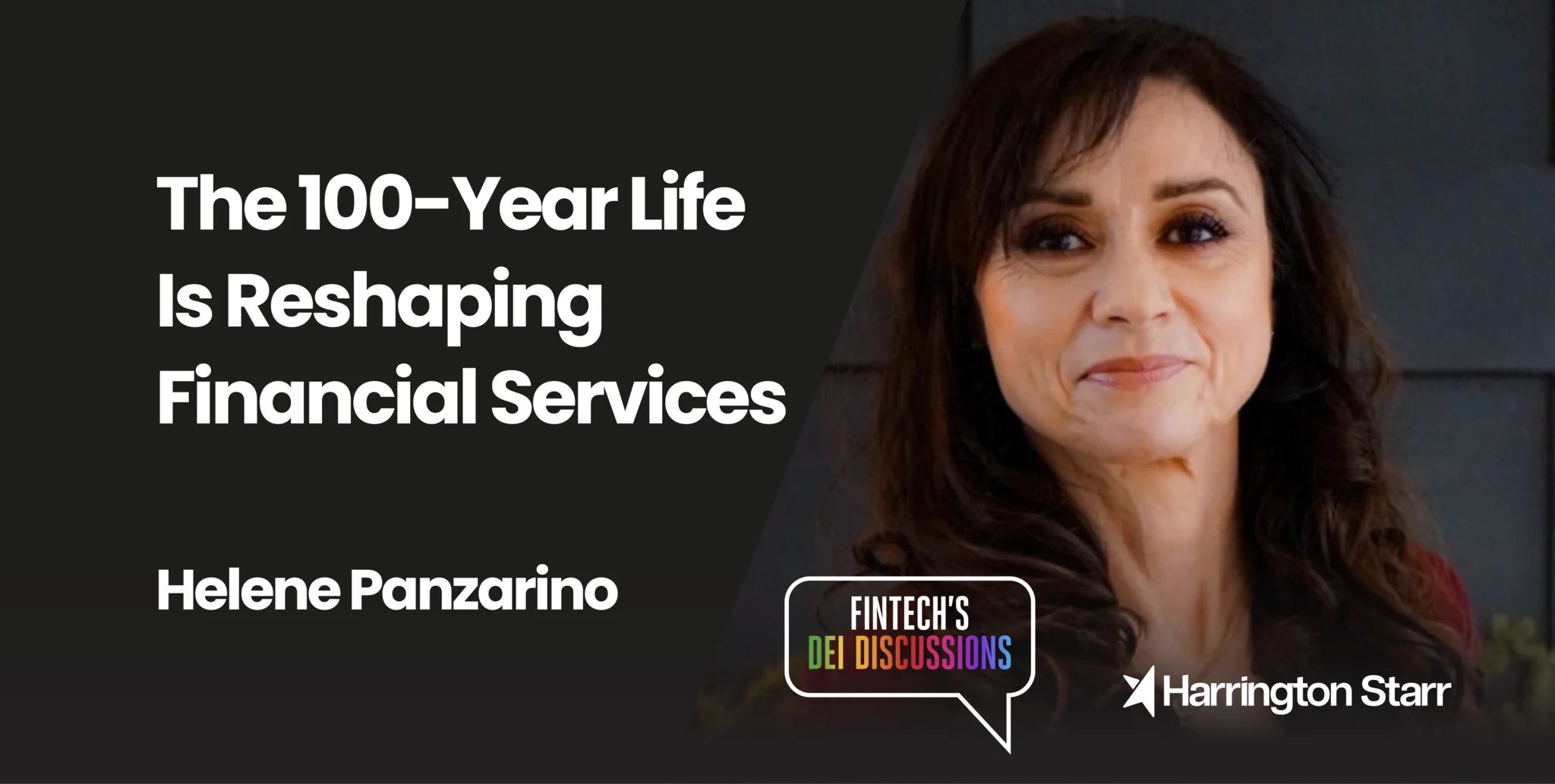
In this episode of FinTech's DEI Discussions, host Nadia Edwards-Dashti welcomes Helene Panzarino, an experienced FinTech relationship professional, former banker, investment readiness consultant, business advisor, lecturer, author, speaker, and board member. Together, they explore what Helene describes as one of the most overlooked challenges and opportunities facing financial services today, the rise of the 100-year life.
The discussion examines how longer life expectancy is changing the way people work, save, invest, retire, and interact with financial products. More importantly, it highlights the growing disconnect between the realities of modern life and the financial services products designed to support it.
For FinTech leaders, financial services professionals, wealth managers, pensions specialists, and those involved in financial technology recruitment, the conversation offers a compelling perspective on where future innovation opportunities may emerge.
Helene explains that her interest in longevity began almost a decade ago when she attended an investment event and heard a statement that completely changed her perspective.
Someone speaking at the event remarked that a person aged 50 in the room would likely live to 100. The statement created an immediate sense of reflection among attendees, but for Helene it became something much more significant. It prompted her to question whether financial services was genuinely preparing for a future where people routinely live far longer than previous generations.
As she continued working with banks, financial institutions, credit unions, and FinTech firms, she noticed recurring patterns. Products remained designed around assumptions that no longer reflected how people actually live. Financial planning continued to focus on traditional career structures, while demographic data increasingly suggested that society was moving in a very different direction.
The challenge is not simply that people are living longer. The challenge is that many financial services products remain rooted in outdated models of life expectancy, employment, retirement, and wealth accumulation.
For firms operating within financial technology, this creates both a challenge and a significant opportunity for innovation.
A major theme throughout the discussion is the decline of what Helene describes as the traditional three-stage life model.
Historically, life followed a relatively predictable structure. Individuals would receive an education, enter the workforce, spend decades in a career, and eventually retire. Many financial products, pension schemes, insurance policies, and lending criteria were built around this framework.
Today, however, that model is increasingly outdated.
People now move in and out of careers. Many take extended career breaks. Others become self-employed, launch businesses, pursue portfolio careers, or transition into entirely different professions later in life. Women, in particular, often experience career interruptions due to caring responsibilities and family commitments. The rise of the gig economy has introduced further complexity into traditional employment patterns.
Despite these shifts, financial services products often continue to assume a stable, linear career path.
Helene argues that financial products should reflect the realities of modern life. Instead of assuming uninterrupted employment, they should accommodate career breaks, family responsibilities, retraining periods, entrepreneurial ventures, and second careers.
As organisations continue hiring across financial technology, digital transformation, product management, data, software engineering, and FinTech leadership roles, understanding these changing life patterns becomes increasingly important.
One of the most striking parts of the conversation focuses on savings and investment behaviour.
Helene highlights that people are simply not saving enough for the lives they are likely to live. At the same time, many individuals are not investing enough to generate the long-term growth required to support extended retirements.
This challenge becomes even more pronounced when considering life expectancy projections. Pension pots that once needed to support retirement for ten or fifteen years may now need to last for thirty-five years or more.
Women face additional challenges. Helene points out that women generally invest less than men while simultaneously living longer on average. Combined with historical gender pay gaps and career interruptions, this creates significant financial planning concerns.
The issue is not simply individual behaviour. It also reflects a broader lack of awareness and education around long-term financial planning.
Helene compares the challenge to the evolution of public awareness around scams and cybercrime. Years ago, financial fraud was primarily discussed within specialist circles. Today, it is a mainstream topic that people encounter regularly. She believes longevity planning requires a similar shift in public consciousness.
The industry must find ways to make conversations about longer lives, financial planning, pensions, and investing part of everyday awareness.
One of the strongest messages throughout the episode is that financial services products are often misaligned with demographic reality.
Helene references examples from around the world that demonstrate how rapidly populations are ageing. She points to Japan as a leading indicator of demographic change, highlighting how declining birth rates and increasing longevity are reshaping society.
Yet despite these well-established trends, many organisations continue prioritising short-term objectives and quarterly reporting cycles rather than preparing for long-term demographic shifts.
This creates a significant opportunity for FinTech innovation.
As financial technology companies continue developing new solutions for lending, wealth management, retirement planning, insurance, and financial wellbeing, there is increasing scope to design products specifically for longer lives.
Rather than viewing ageing populations as a burden, Helene encourages organisations to recognise them as one of the most significant market opportunities available.
The discussion also explores practical examples of how existing systems can unintentionally exclude large sections of society.
Credit scoring is one such example.
Many traditional lending models rely heavily on employment status, income patterns, and conventional financial indicators. These criteria often disadvantage older individuals, self-employed professionals, and those with unconventional career histories.
Helene describes situations where people may possess significant equity, strong financial track records, and decades of responsible borrowing behaviour, yet still struggle to access finance because they no longer fit standard lending criteria.
The result is a growing mismatch between customer needs and available products.
Housing presents another challenge. Much of the UK's housing stock is owned by older generations, yet existing financial structures can discourage movement within the housing market. Stamp duty considerations, inheritance planning concerns, and limited housing options can all contribute to reduced mobility.
For financial services organisations focused on innovation, these challenges represent areas where entirely new approaches may emerge.
A key concept explored during the conversation is the longevity economy.
Rather than focusing solely on ageing, the longevity economy considers the economic impact of longer lives across entire populations.
According to Helene, this market already represents trillions of pounds globally. Yet despite its size, it remains significantly underserved.
She highlights an interesting contradiction. Only a relatively small percentage of marketing spend is directed towards people over fifty, despite this group often holding substantial wealth, disposable income, and spending power.
Many organisations continue focusing their attention elsewhere.
For wealth management firms, pension providers, insurers, lenders, and FinTech companies, this represents a potentially transformative opportunity. Organisations that successfully understand and serve longevity-related needs may gain access to one of the fastest-growing market segments in financial services.
Throughout the episode, Helene remains optimistic about the industry's ability to respond.
She points to examples where innovation is already occurring. Building societies are exploring longer mortgage structures. Alternative lenders are developing more flexible lending approaches. FinTech firms continue creating new models for investing, insurance, and financial education.
The same creativity that transformed digital banking, payments, robo-investing, and alternative finance can also be applied to longevity challenges.
The key requirement is a willingness to rethink traditional assumptions.
Instead of viewing age as a limitation, organisations must consider how changing demographics create new opportunities for product development, customer engagement, and long-term value creation.
For FinTech businesses, this may involve creating entirely new categories of financial products. For established financial institutions, it may require adapting existing services to reflect modern life patterns.
Either way, the opportunity is substantial.
For professionals working across FinTech, financial services, digital transformation, product management, software engineering, data, AI, cyber security, and leadership roles, this conversation provides valuable insight into the future direction of the industry.
As financial services evolves, organisations will increasingly need professionals capable of understanding demographic change, customer behaviour, financial inclusion, product innovation, and long-term strategic planning.
The firms that succeed will likely be those willing to challenge conventional thinking and build products around how people actually live rather than how previous generations lived.
Helene's message is ultimately one of opportunity.
The rise of the 100-year life is not simply a demographic trend. It represents a fundamental shift in society that will influence financial services, wealth management, pensions, insurance, lending, and FinTech innovation for decades to come.