Is This the End of Enterprise Architecture as We Know It?
07 October, 2026


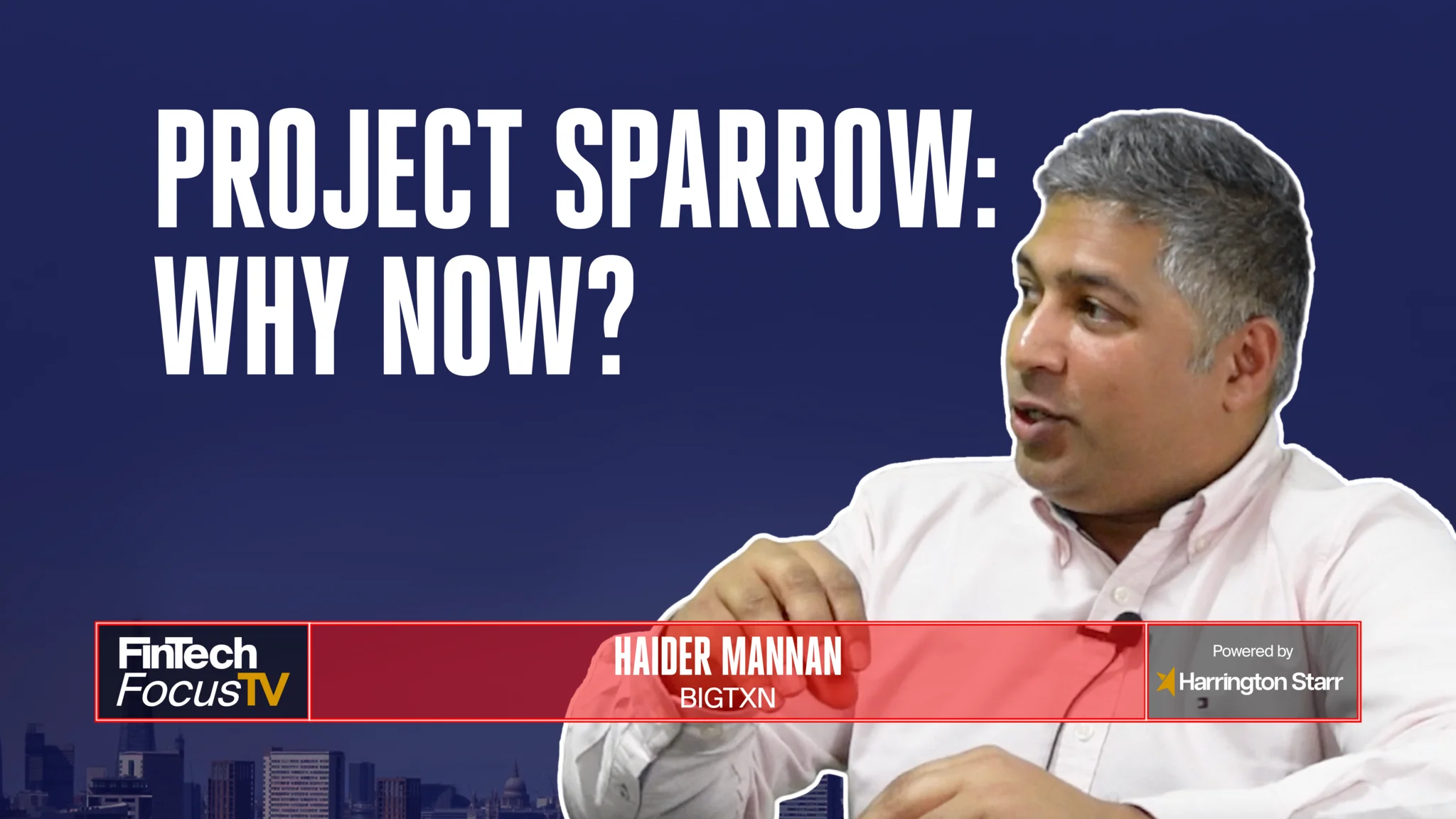
In this episode of FinTech Focus TV, hosted by Toby Babb, the conversation with Haider Mannan, Founder and CEO of BIGTXN, explores a critical shift currently underway across financial services. What emerges is a clear and compelling narrative: the global financial system is no longer operating within predictable, stable frameworks. Instead, financial institutions are now navigating a fragmented, uncertain, and rapidly evolving geopolitical environment that is fundamentally reshaping how fintech, risk, compliance, and data-driven decision-making must operate.
Haider sets the tone early by outlining how macroeconomic and geopolitical instability is becoming the defining characteristic of modern financial markets. Rather than a unified global system, we are witnessing fragmentation across economic alliances, supply chains, and regulatory environments. For financial institutions, this creates an unprecedented level of uncertainty, which in itself becomes one of the most significant operational risks. In this new reality, the ability to react quickly to change is no longer optional. It is essential.
This shift has major implications for financial technology recruitment, as firms increasingly look for professionals who can operate at the intersection of data, risk, compliance, and emerging technology. As a global FinTech recruitment business, Harrington Starr is seeing this demand accelerate, particularly across capital markets, financial crime, and regulatory technology roles.
A central theme of the discussion is the growing importance of sanctions, tariffs, and export controls as tools of economic warfare. Haider explains that rather than traditional physical conflict, nations are increasingly using financial mechanisms to exert influence and control. This has led to a surge in regulatory complexity and a dramatic increase in the volume of sanctions data that financial institutions must process.
For banks and financial services firms, this creates both operational and strategic challenges. Sanctions are no longer static lists that can be checked periodically. They are dynamic, rapidly evolving datasets that require real-time monitoring and interpretation. The risk of missing critical updates or reacting too slowly can expose firms to significant financial and reputational damage.
Haider highlights a key pain point within the industry: the delay between when sanctions-related information is published and when it is fully understood and acted upon within an organisation. In many cases, this lag can span hours or even days, creating a window of vulnerability. In a world where markets move instantly, this delay is no longer acceptable.
This is where the convergence of AI in fintech and regulatory technology becomes critical. Firms are now investing heavily in solutions that can ingest, process, and distribute information at unprecedented speeds. As a result, the demand for talent in AI, data engineering, and compliance technology is rising sharply, reinforcing the importance of specialist FinTech recruitment in supporting this transformation.
One of the most compelling parts of the conversation centres around the development of Project Sparrow, BIGTXN’s AI-driven platform designed to address the inefficiencies in sanctions intelligence. Haider explains how the platform was built in response to direct conversations with financial institutions, where a clear need emerged: access to high-quality, actionable information in near real-time.
Project Sparrow aims to deliver sanctions alerts in under five minutes, transforming how financial institutions respond to regulatory changes. By leveraging AI to process unstructured data sources, including multiple languages and formats, the platform can generate newsroom-quality insights almost instantly. This represents a significant leap forward from traditional approaches, where manual processes and fragmented systems often slow down response times.
The broader implication here is that AI is no longer just a tool for efficiency. It is becoming a strategic differentiator. Firms that can harness AI to deliver speed, accuracy, and trust in their data will have a clear competitive advantage. This is particularly relevant in capital markets and financial crime prevention, where the margin for error is minimal.
From a recruitment perspective, this shift is driving demand for professionals who can build and manage these systems. Roles such as AI engineers, data scientists, and regulatory technology specialists are becoming increasingly critical, highlighting the growing importance of FinTech recruitment expertise in sourcing and placing this talent.
The discussion also delves into the concept of a “multi-sphere” geopolitical environment, where countries maintain complex and sometimes conflicting relationships across trade, technology, and security. This creates a highly dynamic risk landscape for financial institutions, particularly those operating across multiple jurisdictions.
Haider explains that this fragmentation is likely to continue over the next five to seven years, leading to the gradual emergence of a new global order. However, this transition period will be marked by instability and uncertainty, making it difficult for firms to plan long-term strategies.
For capital markets firms, this means that risk management must evolve beyond traditional models. It is no longer sufficient to rely on historical data or static assumptions. Instead, firms must adopt a forward-looking approach that incorporates real-time information and scenario-based analysis.
This evolution is creating new opportunities within financial technology recruitment, particularly for professionals with expertise in risk analytics, data modelling, and geopolitical analysis. As firms seek to navigate this complex environment, the ability to combine technical skills with strategic insight will be highly valued.
At the heart of the episode is the story of innovation behind BIGTXN and Project Sparrow. Haider shares how the idea was developed through direct engagement with clients, identifying a clear gap in the market for faster, more reliable sanctions intelligence.
The development process involved training AI models to process vast amounts of data and deliver insights in a format that is both accurate and accessible. This required not only technical expertise but also a deep understanding of the regulatory landscape and the specific needs of financial institutions.
A key differentiator for BIGTXN is its ownership of sanctions.com, which provides a strong brand foundation for establishing authority in the space. By combining this domain with advanced AI capabilities, the company is positioning itself as a leader in sanctions intelligence and financial data services.
This focus on innovation aligns closely with broader trends in fintech, where firms are increasingly leveraging technology to create new products and services. For Harrington Starr, this highlights the importance of supporting clients in identifying and hiring the talent needed to drive innovation and stay competitive in a rapidly changing market.
Beyond the technology and market insights, the episode offers a candid look at the realities of building and scaling a fintech business. Haider reflects on his journey as a founder, highlighting the challenges of transitioning into a leadership role and managing the complexities of a growing organisation.
One of the key lessons he shares is that becoming a CEO is not an immediate transformation. It is a process that involves learning, adapting, and developing new skills over time. In the early stages, Haider was deeply involved in all aspects of the business, from coding and product development to hiring and operations. However, as the company grew, he recognised the need to delegate and trust his team.
This transition is often one of the most challenging aspects of scaling a business, requiring founders to let go of control and focus on strategic priorities. Haider also emphasises the importance of maintaining personal well-being, noting that burnout is a real risk for founders who try to do everything themselves.
These insights are particularly relevant for professionals considering careers in fintech startups, as well as for organisations looking to build high-performing teams. The ability to attract and retain the right talent is critical, reinforcing the value of specialist FinTech recruitment in supporting long-term growth.
As the conversation draws to a close, the focus shifts to the future of BIGTXN and the broader fintech landscape. Haider acknowledges that as companies grow, they often reach a point where new leadership structures are required. This reflects a broader trend in the industry, where scaling businesses must adapt to new challenges and opportunities.
For Harrington Starr, this highlights the evolving nature of FinTech recruitment. As firms move through different stages of growth, their talent needs change, requiring a strategic approach to hiring. From early-stage startups to established financial institutions, the ability to identify and secure the right talent is a key driver of success.
The episode ultimately reinforces the idea that we are entering a new era in financial technology, defined by rapid change, increasing complexity, and the growing importance of data and AI. For professionals and organisations alike, staying ahead of these trends will be essential.
Looking ahead, Haider’s insights suggest that the next five to seven years will be a period of significant transformation for financial services. The combination of geopolitical risk, regulatory change, and technological innovation will create both challenges and opportunities.
For financial institutions, the priority will be to build systems and processes that can adapt to this dynamic environment. This includes investing in AI, enhancing data capabilities, and developing new approaches to risk management. At the same time, organisations must focus on attracting and developing the talent needed to support these initiatives.
For Harrington Starr, this represents a significant opportunity to support clients in navigating these changes. By connecting organisations with the right talent across fintech, capital markets, and financial services, the business plays a key role in enabling growth and innovation.
This episode of FinTech Focus TV provides a powerful and timely perspective on the forces shaping the future of financial technology. Through the lens of Haider Mannan’s experience, it highlights the importance of adaptability, innovation, and strategic thinking in a rapidly changing world.
From the rise of sanctions as tools of economic warfare to the transformative potential of AI-driven platforms like Project Sparrow, the conversation offers valuable insights for anyone working in fintech, financial services, or capital markets.
As the industry continues to evolve, one thing is clear: the ability to understand and respond to change will be the defining factor for success. Whether through technology, talent, or strategy, those who can navigate this complexity will be best positioned to thrive in the new financial landscape.
For businesses looking to stay ahead, and for professionals seeking to build careers in this space, the message is clear. The future of financial technology is being shaped right now—and those who engage with it will play a critical role in defining what comes next.