The Quant Advantage is Disappearing
14 October, 2026


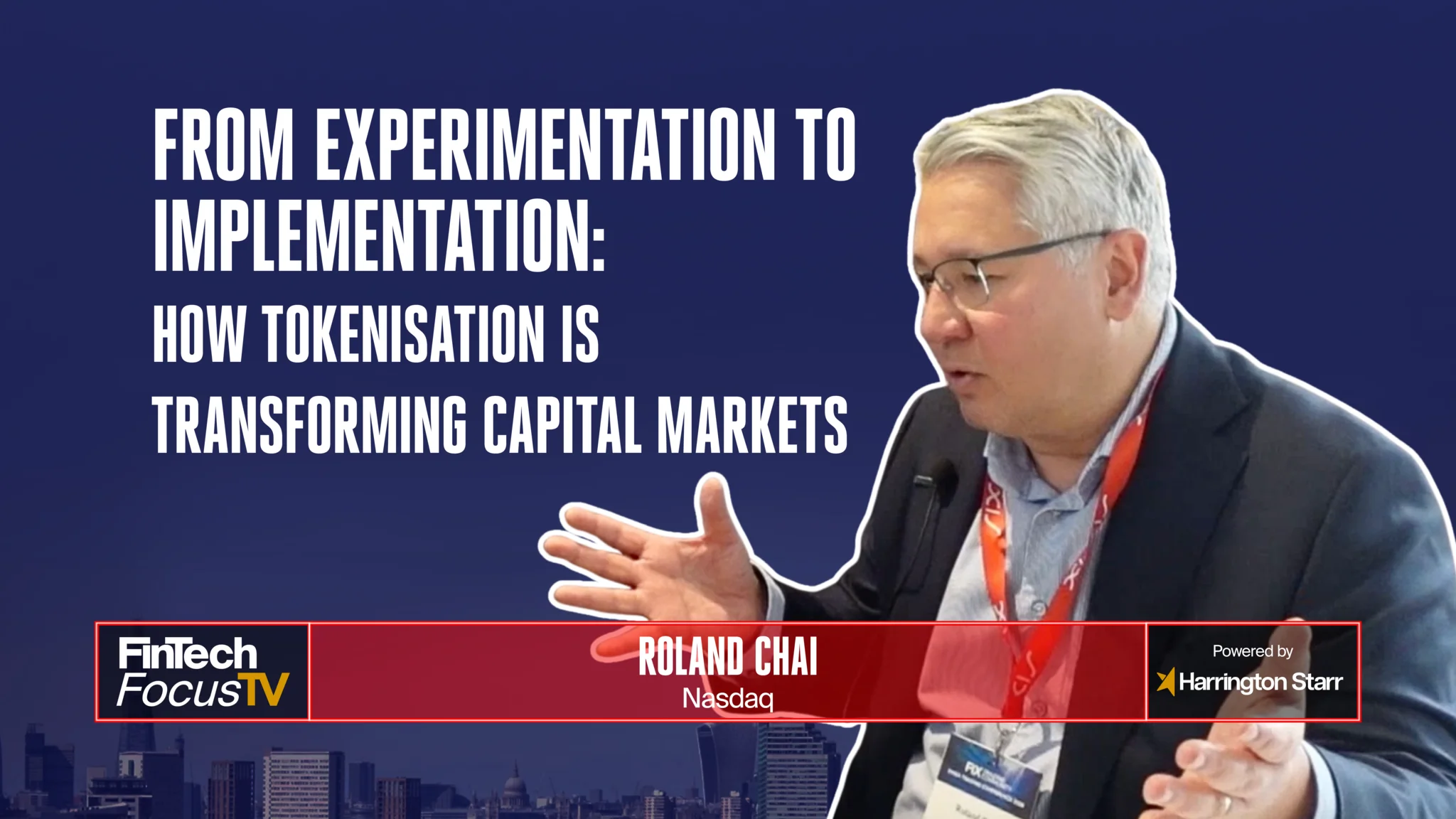
The conversation recorded live at the FIX EMEA Trading Conference 2026 in London brings together two highly relevant voices in today’s financial technology landscape. Hosted by Toby Babb on FinTech Focus TV, this episode features Roland Chai, President of European Markets and Head of Digital Assets at Nasdaq. Set against the backdrop of one of the industry’s most important gatherings, the discussion captures a moment where capital markets, digital assets, and market infrastructure are converging in a way that feels both urgent and inevitable.
From the outset, the tone is set by the scale and energy of the conference itself. The FIX EMEA event has long been known for bringing together leading voices across trading, technology, and market structure, but this year’s focus on change is particularly striking. The agenda reflects a market in transition, one that is grappling with rapid innovation while trying to maintain the resilience, trust, and efficiency that underpin global financial systems. For a FinTech recruitment business like Harrington Starr, this context is critical. The themes discussed are not just theoretical; they directly influence hiring demand, skill shortages, and the evolution of roles across trading technology, digital assets, and infrastructure.
One of the most compelling threads throughout the episode is the clear shift from experimentation to implementation in the world of digital assets. Roland Chai outlines how, for much of the past decade, digital assets were often treated as an exciting but somewhat abstract concept. There was enthusiasm, there was innovation, but there was also a lack of clarity around real-world application. That has now changed.
The discussion makes it clear that tokenisation is no longer a “shiny new toy” but a practical tool with tangible benefits. The focus has moved firmly towards value creation. Financial institutions are no longer asking whether digital assets are relevant; they are asking how these technologies can be deployed to improve efficiency, unlock liquidity, and solve complex operational challenges. This transition marks a critical inflection point for the industry.
Roland highlights several areas where tokenisation is already demonstrating value. These include improvements in trading and post-trade workflows, enhanced collateral mobility, and the ability to utilise balance sheet inventory more effectively. The concept of near real-time movement of collateral, combined with the potential for 24/7 utilisation, represents a fundamental shift in how capital can be deployed within financial markets. For organisations operating in highly competitive environments, these efficiencies are not just desirable; they are essential.
From a FinTech recruitment perspective, this evolution is significant. As digital assets move into large-scale implementation, the demand for talent with expertise in blockchain, distributed ledger technology, and market infrastructure is accelerating. Companies are no longer hiring for experimentation; they are hiring for execution. This requires a different calibre of candidate, one who can bridge the gap between innovation and operational delivery.
A key theme that emerges from the conversation is the role of established market infrastructure in supporting this next phase of innovation. Nasdaq is positioned at the centre of this evolution, not just as a market operator but as a technology provider and global partner. Roland explains that Nasdaq’s history as a disruptor, from its early move to electronic markets through to its current work in digital assets, gives it a unique perspective on how markets evolve.
What is particularly interesting is the distinction made between different parts of the market structure. While blockchain and digital asset technologies offer significant potential, they are not necessarily suited to every aspect of trading. For example, highly liquid, low-latency markets that already operate with extreme efficiency may not benefit from the introduction of distributed ledger technology in the same way that post-trade processes might.
Instead, the real opportunity lies in areas where inefficiencies still exist. Post-trade processes, including collateral management, corporate actions, and proxy voting, are highlighted as key areas where digital assets can deliver meaningful improvements. By enabling programmable assets on distributed ledgers, institutions can unlock new levels of automation, transparency, and efficiency.
For those working in FinTech recruitment, this creates a clear roadmap for where talent demand is likely to grow. Roles focused on post-trade technology, market infrastructure, and digital asset integration are becoming increasingly important. Employers are looking for professionals who understand both the technical and regulatory complexities of these environments, as well as the commercial realities of operating within global financial markets.
Another fascinating aspect of the discussion is the concept of always-on markets. Roland outlines how the industry is moving towards extended trading hours, with the potential for 23/5 markets in the United States and, ultimately, fully 24/7 trading environments. This shift is driven by a combination of factors, including global demand for access, the rise of digital assets, and the increasing expectation of real-time services.
The idea of always-on markets raises a number of important questions. How do you maintain resilience and stability in an environment that never sleeps? How do you ensure regulatory compliance and investor protection across multiple time zones? And perhaps most importantly, how do you integrate new digital networks with the existing capital markets infrastructure that has been built over decades?
Roland emphasises that this is not about replacing traditional markets but about connecting them with new digital ecosystems. The goal is to create a seamless environment where liquidity can flow freely, supported by robust regulation and high levels of transparency. This balance between innovation and stability is a recurring theme throughout the episode.
For professionals considering FinTech jobs, this evolution presents both challenges and opportunities. The move towards always-on markets requires new skills, new technologies, and new ways of thinking about risk management and operations. It also creates opportunities for those who can navigate this complexity and help organisations adapt to a rapidly changing landscape.
One of the most important insights from the conversation is the emphasis on problem-solving. Throughout the episode, both Toby Babb and Roland Chai stress that technology must serve a purpose. The industry has learned that innovation for its own sake is not enough. Successful solutions are those that address real challenges faced by clients and market participants.
This client-led approach is particularly relevant in the context of digital assets. While there has been significant investment and experimentation in this space, the most successful initiatives are those that deliver measurable value. Whether it is improving capital efficiency, reducing operational risk, or enhancing liquidity, the focus is firmly on outcomes.
Roland’s background in post-trade provides a valuable perspective on this. Having worked in an area of the market where inefficiencies are more pronounced, he understands where technology can have the greatest impact. This insight is reflected in Nasdaq’s strategy, which prioritises areas where digital assets can deliver meaningful improvements rather than attempting to disrupt already efficient systems.
For FinTech recruitment businesses, this focus on problem-solving is critical. Clients are not just looking for technical expertise; they are looking for individuals who can understand their challenges and deliver solutions. This requires a combination of technical skills, industry knowledge, and commercial awareness. As the market continues to evolve, these qualities will become increasingly important.
No discussion of digital assets would be complete without addressing the role of regulation. As the conversation highlights, the move towards tokenisation and digital markets does not eliminate the need for oversight. In fact, it arguably increases it. Regulators and financial market infrastructures are asking important questions about transparency, market surveillance, and know-your-customer requirements.
Roland makes it clear that the principles underpinning traditional markets, such as investor protection, market integrity, and transparency, remain just as important in the digital world. The challenge is to apply these principles in a new context, where technologies and operating models are fundamentally different.
This balance between innovation and regulation is one of the defining challenges of the current era. On one hand, there is a desire to embrace new technologies and unlock their potential. On the other hand, there is a need to maintain trust and stability within the financial system. Achieving this balance requires collaboration between market participants, technology providers, and regulators.
From a FinTech hiring perspective, this creates demand for professionals with expertise in regulatory technology, compliance, and risk management. As digital assets become more integrated into mainstream financial markets, the need for robust governance frameworks will only increase. Organisations will need individuals who can navigate this complex landscape and ensure that innovation is delivered in a responsible and sustainable way.
As the episode draws to a close, the focus shifts to the broader future of financial markets. Roland reflects on the role of Nasdaq in connecting capital with innovation, emphasising the importance of building scalable, resilient systems that can support global liquidity. This vision aligns closely with the broader trends shaping the industry, including the rise of digital assets, the push towards always-on markets, and the increasing importance of data and technology.
The idea of connectivity is central to this vision. Financial markets are becoming more interconnected, with capital flowing across borders and asset classes in ways that were not possible before. Technology plays a crucial role in enabling this connectivity, providing the infrastructure needed to support complex, global trading environments.
For a FinTech recruitment business like Harrington Starr, these trends highlight the importance of staying ahead of the curve. As markets evolve, so too do the skills and expertise required to operate within them. By understanding these trends and anticipating future demand, recruitment firms can play a key role in helping organisations build the teams they need to succeed.
Ultimately, this episode of FinTech Focus TV offers a compelling snapshot of an industry in transition. It captures the shift from experimentation to implementation in digital assets, the evolving role of market infrastructure, and the challenges and opportunities associated with always-on markets. It also highlights the importance of solving real problems, maintaining trust, and embracing innovation in a responsible way.
For anyone working in financial technology, capital markets, or FinTech recruitment, the insights shared by Roland Chai and Toby Babb provide valuable guidance on what the future may hold. As the industry continues to evolve, one thing is clear: the intersection of technology and finance will remain a dynamic and exciting space, full of opportunities for those who are prepared to adapt and innovate.