The Quant Advantage is Disappearing
14 October, 2026


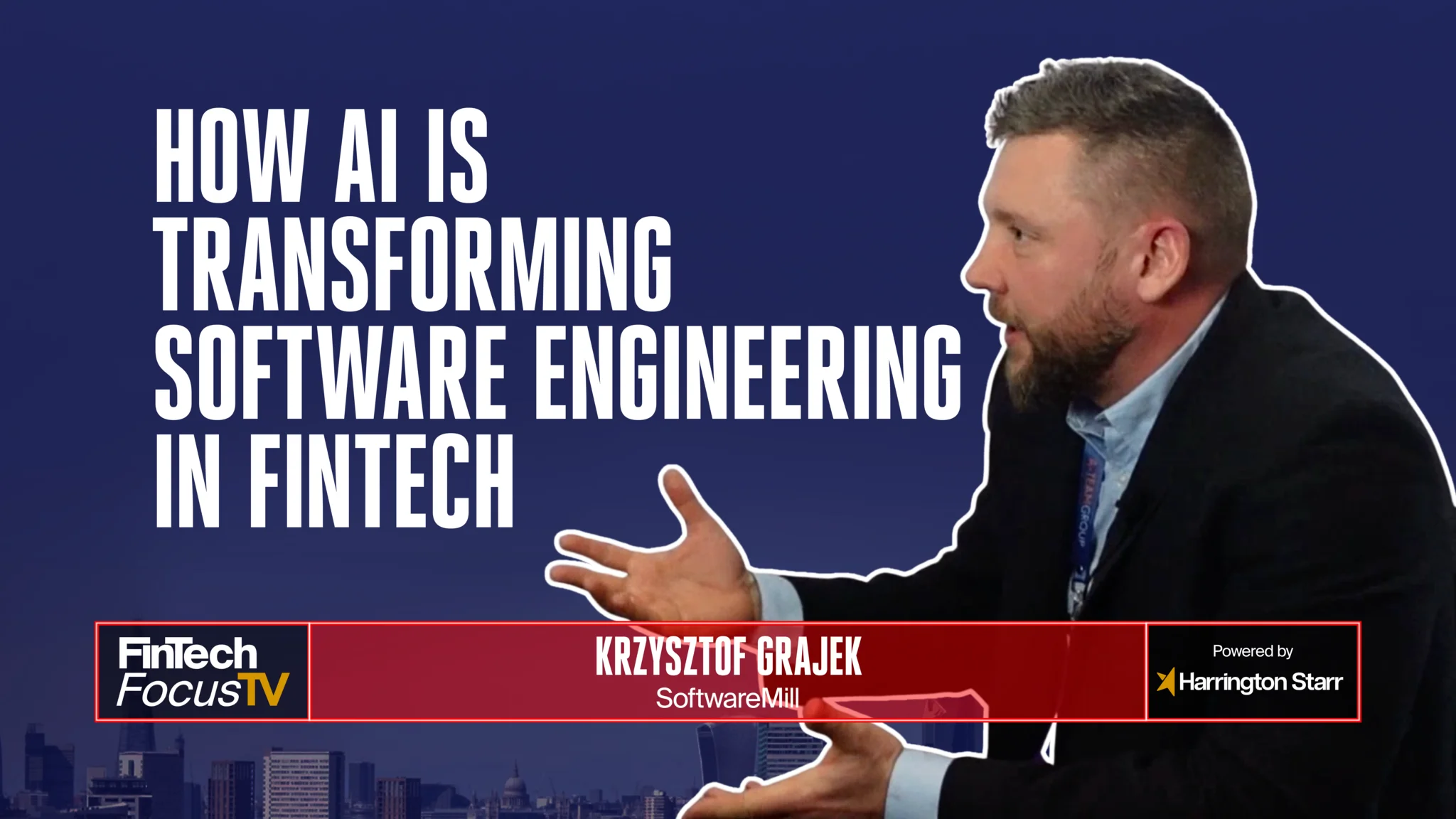
At the TradingTech Summit 2026, a key theme dominating conversations across the event floor was the accelerating impact of artificial intelligence on financial technology, particularly within software engineering and development. In this episode of FinTech Focus TV, hosted by Ian Bailey, the discussion centres on how AI is fundamentally reshaping the way technology is built, deployed, and trusted within financial services. Joining the conversation is Krzysztof Grajek, Principal Software Engineer at SoftwareMill, who brings a unique perspective from the front lines of research and development in AI-led software engineering.
From the outset, Krzysztof outlines his role, which extends beyond traditional engineering into leading research and development initiatives focused on AI strategies. His work is centred on understanding how emerging technologies can be effectively leveraged within development teams, particularly in industries like FinTech and telecommunications. SoftwareMill itself operates globally, providing development services with a strong emphasis on high-throughput messaging systems such as Kafka, often supporting banks and trading platforms across multiple regions. This global exposure positions Krzysztof and his team at the intersection of innovation and real-world application, making their insights particularly valuable for organisations navigating digital transformation and AI adoption.
One of the most striking themes in this episode is the sheer pace of change driven by AI within software development. Krzysztof explains that his R&D department was created specifically to respond to the rapid evolution of AI technologies and the need for organisations to adapt quickly. This includes not only adopting tools but also educating developers and convincing clients of the tangible benefits AI can deliver, such as increased speed and reduced costs in software development.
For businesses operating in financial services, this shift is already having a direct impact on hiring strategies. The traditional profile of a software engineer is evolving, and FinTech recruitment must adapt accordingly. As AI tools become more capable, the focus is moving away from manual coding towards higher-level decision-making and system oversight. This creates a demand for professionals who not only understand programming but also possess the ability to evaluate AI-generated outputs, manage risk, and ensure system integrity.
This shift presents both an opportunity and a challenge for hiring managers. On one hand, AI can dramatically increase productivity and reduce development timelines. On the other hand, it introduces new complexities around trust, accountability, and governance. For recruitment firms like Harrington Starr, this means advising clients not just on technical skills, but on building teams capable of navigating this new landscape.
A core discussion point in the episode is how AI is transforming the software development lifecycle itself. Historically, software engineers were responsible for the entire process, from interpreting requirements to writing code, testing, and deploying applications. However, Krzysztof highlights a future where AI agents take on much of this responsibility, potentially handling the majority of coding tasks autonomously.
In this emerging model, the role of the engineer becomes more focused on oversight and decision-making. Rather than writing code line by line, engineers may be responsible for reviewing AI-generated outputs and determining whether they should be integrated into production systems. This represents a fundamental shift in how software engineering roles are defined and, by extension, how organisations approach hiring.
For FinTech leaders, this raises important questions about the skills required in their teams. Technical proficiency remains essential, but it must now be complemented by critical thinking, risk assessment, and an understanding of AI systems. The ability to interpret and validate machine-generated code becomes just as important as the ability to write it.
Perhaps the most thought-provoking part of the discussion revolves around the concept of trust. In traditional software development, trust is built through processes and people. Developers write code, peers review it, and organisations rely on the expertise and accountability of their teams. However, as AI agents become more involved in development, this trust model is being disrupted.
Krzysztof points out that when AI systems generate code, the visibility into how that code was created can be significantly reduced. This creates what he describes as a “black box” problem, where outputs are produced without a clear understanding of the underlying decision-making process. For financial services firms, where security and compliance are paramount, this lack of transparency poses a significant risk.
To address this challenge, SoftwareMill’s R&D team is working on solutions that improve traceability. Their goal is to ensure that every action taken by an AI agent can be tracked and analysed, even after deployment. This level of traceability is critical for maintaining trust, particularly in environments where regulatory requirements demand full accountability.
From a recruitment perspective, this introduces a new dimension to hiring. Organisations must now consider candidates who can not only work with AI tools but also implement governance frameworks that ensure transparency and accountability. This is particularly relevant for roles in AI engineering, data governance, and technology risk within financial services.
As AI continues to reshape software engineering, the implications for FinTech talent strategy are profound. The demand for highly skilled engineers remains strong, but the definition of “highly skilled” is evolving. Organisations are no longer just looking for developers who can code efficiently; they need professionals who can operate within complex, AI-driven environments.
Krzysztof emphasises the importance of continuous learning in this context. At SoftwareMill, developers are constantly trained on the latest tools and technologies, with new advancements emerging every few weeks. This commitment to ongoing education reflects the reality of working in a rapidly changing field, where staying up to date is essential for maintaining a competitive edge.
For hiring managers, this highlights the need to prioritise adaptability and learning agility when building teams. Candidates who demonstrate a willingness to evolve alongside technology are likely to be more valuable in the long term than those with static skill sets. This is particularly important in FinTech, where innovation cycles are short and the pace of change is relentless.
The conversation also touches on the global nature of technology recruitment, particularly in the context of AI. SoftwareMill operates as a fully remote organisation, working with clients around the world, including banks and trading platforms. This reflects a broader trend in the industry, where geographical boundaries are becoming less relevant in the search for top talent.
For UK-based firms and those operating in major financial hubs like London and New York, this creates both opportunities and competition. Access to a global talent pool can help address skills shortages, but it also means competing with organisations worldwide for the same candidates. As a result, employer branding, culture, and the ability to offer meaningful work become increasingly important factors in attracting and retaining talent.
Recruitment firms play a critical role in navigating this landscape, helping clients identify and secure the right candidates while providing insights into market trends and salary expectations. In an AI-driven market, this expertise becomes even more valuable, as the demand for specialised skills continues to grow.
Given the episode’s context at the TradingTech Summit, there is a strong focus on capital markets and trading technology. AI is not only transforming software development but also the systems that underpin trading and financial infrastructure. From high-frequency trading platforms to real-time data processing systems, the need for robust, scalable technology has never been greater.
Krzysztof highlights SoftwareMill’s experience working with trading platforms and financial institutions, demonstrating the breadth of applications for AI within the sector. Whether it’s improving system performance, enhancing security, or enabling new capabilities, AI is becoming a core component of modern trading technology.
For organisations in capital markets, this reinforces the importance of investing in the right talent. The ability to build and maintain advanced systems is directly linked to business performance, making recruitment a strategic priority. This is where specialist FinTech recruitment firms can add significant value, connecting organisations with candidates who possess the skills and experience required to succeed in this environment.
Looking ahead, the episode paints a picture of a future where AI is deeply embedded in every aspect of software engineering. While this presents exciting opportunities, it also raises important questions about the future of work and the role of humans in technology development.
Krzysztof takes an optimistic view, acknowledging the challenges but emphasising the potential for innovation and growth. He sees AI as a tool that can augment human capabilities, enabling developers to focus on higher-value tasks and drive greater impact. However, he also recognises the need for careful management to ensure that these technologies are used responsibly and effectively.
For FinTech leaders, the key takeaway is the importance of balance. Embracing AI requires a willingness to experiment and innovate, but it must be accompanied by a strong focus on governance, trust, and talent. Building teams that can navigate this balance will be critical to success in the years ahead.
As the conversation concludes, it becomes clear that the role of recruitment agencies in the FinTech ecosystem is more important than ever. The complexity of AI-driven transformation requires a deep understanding of both technology and talent, making specialist recruiters invaluable partners for organisations looking to scale.
Harrington Starr, as a global FinTech recruitment business, is uniquely positioned to support clients in this journey. By combining industry expertise with a deep understanding of market trends, the firm helps organisations build high-performing teams that can thrive in an AI-driven world.
For companies exploring AI adoption or looking to enhance their technology capabilities, partnering with a recruitment specialist can provide a competitive advantage. From identifying emerging skill sets to navigating global talent markets, the right support can make all the difference in achieving long-term success.
Ultimately, this episode of FinTech Focus TV offers valuable insights into the intersection of AI, software engineering, and recruitment. It highlights the transformative impact of AI on the development lifecycle, the challenges around trust and governance, and the evolving nature of talent in financial technology.
For organisations, the message is clear: success in the AI era will depend on the ability to build and sustain high-performance engineering teams. This requires not only technical expertise but also a strategic approach to hiring, development, and organisational culture.
As AI continues to reshape the industry, those who invest in the right talent and embrace change will be best positioned to lead. Through conversations like this, FinTech Focus TV continues to provide a platform for thought leadership, helping industry leaders stay ahead of the curve and make informed decisions in an increasingly complex landscape.