Is This the End of Enterprise Architecture as We Know It?
07 October, 2026

Exchange technology is experiencing one of its most significant periods of transformation in decades. Across capital markets, firms are navigating new regulations, changing investor behaviour, growing retail participation and rapidly evolving technology requirements, all while ensuring the resilience and reliability of the infrastructure that underpins global financial markets.
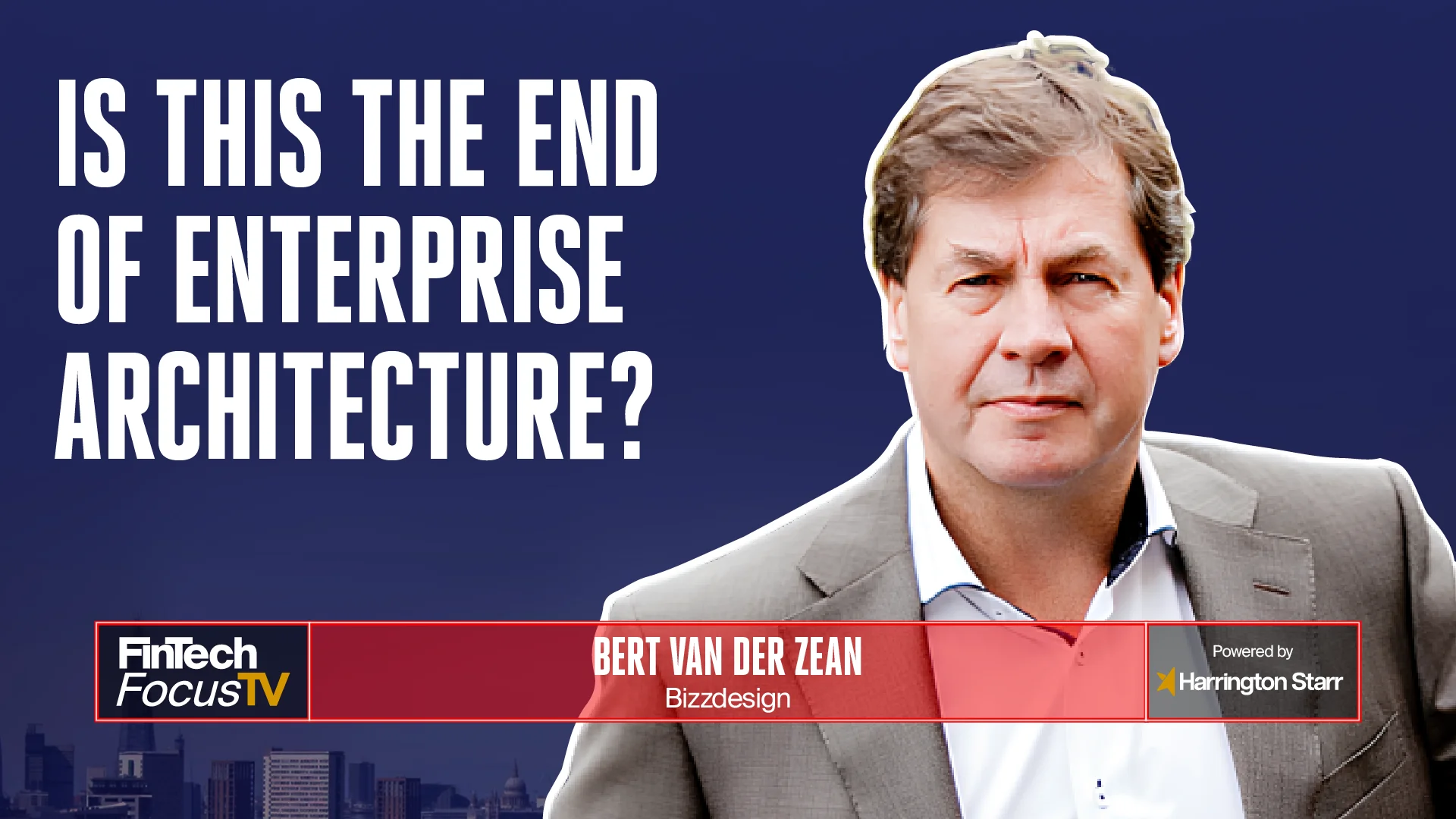
Recorded live at ExchangeTech Summit 2026, this episode of FinTech Focus TV sees host Toby Babb joined by Veronica Taylor, Head of Sales at EuroCTP, Mike Powell, CEO of Rapid Addition, Ian Salmon, Global Head of Business Development at Adaptive, and Wail Azizi, Chief Strategy Officer at Equiduct. Together, they explore the trends driving innovation across exchanges and market infrastructure, discussing everything from the European Consolidated Tape and market data to tokenisation, digital assets and the future of trading technology.
For organisations operating within financial markets, the conversation demonstrates why demand continues to grow for experienced software engineers, trading technology specialists, market infrastructure professionals and leaders capable of delivering large-scale technology transformation. As financial technology recruitment specialists, Harrington Starr continues to see these themes reflected in hiring activity across exchanges, trading venues and capital markets firms.
One of the first themes discussed throughout the episode is the sheer pace of change taking place across exchange technology.
Mike Powell explains that healthy debate is becoming more common because the industry itself is changing rapidly. Rather than the consensus often found at conferences, organisations are now approaching major market developments from different perspectives because the future is still being defined. As he explains, "there's a lot of change happening in the market, certainly impacting trading venues," meaning organisations are evaluating different approaches as the industry evolves.
Ian Salmon builds on this by explaining that the technology requirements facing exchanges today are fundamentally different from those of previous generations. Markets are increasingly preparing for developments such as 24/7 trading while also supporting significantly larger volumes as retail participation continues to increase.
Rather than incremental upgrades, organisations are beginning to rethink the architecture underpinning their platforms.
As Ian explains, firms now require technology capable of supporting entirely new operating models while maintaining the levels of performance expected by institutional participants. He points to growing demand for technology that can support continuous trading environments while remaining highly scalable as retail investors become a much larger part of modern markets.
These changes are reshaping technology investment across exchanges and market infrastructure providers alike.
One of the biggest talking points throughout the discussion is the launch of the European Consolidated Tape.
Veronica Taylor explains that ExchangeTech Summit arrives at exactly the right moment, with EuroCTP preparing to launch the European consolidated tape covering equities, shares and ETFs.
Having been discussed throughout European markets for many years, the initiative is finally becoming reality.
Veronica explains that both trading venues and technology providers have worked within relatively compressed timescales to prepare for launch, with market participants, including major data vendors, already getting ready to support the new infrastructure. While there is still work to complete across the market, she believes the industry is well-positioned for implementation.
However, she also stresses that launching the tape is only the beginning.
For years, the discussion has centred around whether Europe should have a consolidated tape. The next challenge is determining how firms will actually use it once it becomes available.
During her panel session, Veronica explains that the discussion will focus on practical use cases, the wider implications for market structure and whether participants can successfully deliver against the implementation timeline.
Perhaps most importantly, she highlights that Europe has never introduced anything comparable before, making this one of the largest structural changes the region's capital markets have experienced in recent years.
Alongside commercial innovation, regulation continues to be one of the biggest drivers of technology transformation.
Ian Salmon notes that many trading venues which once represented cutting-edge innovation have now become legacy technology.
Multilateral trading facilities introduced following MiFID, along with many crypto exchanges launched during the industry's first wave of digital assets, are now reaching the stage where modernisation becomes essential.
At the same time, organisations must also comply with new regulatory requirements including the Digital Operational Resilience Act (DORA) and Markets in Crypto-Assets (MiCA).
Rather than tackling these initiatives separately, many firms are using regulation as an opportunity to revisit their broader technology strategies.
This combination of ageing infrastructure and evolving regulation is creating significant investment across exchange technology, particularly as organisations seek platforms capable of supporting future growth rather than simply maintaining existing systems.
For technology leaders, this presents a complex balancing act. Modernisation cannot come at the expense of operational resilience, yet remaining on legacy platforms becomes increasingly difficult as new regulatory obligations continue to emerge.
While new technologies attract much of the industry's attention, Mike Powell argues that some of the biggest challenges actually stem from existing infrastructure.
The industry's move towards extended trading hours is placing increasing pressure on systems originally designed for far more limited operating windows.
Technology is only part of the challenge.
Mike explains that organisations also need to consider operational readiness, from staffing overnight support functions to reducing maintenance windows and responding more quickly when issues occur.
As exchanges continue extending market hours, firms have less opportunity to pause systems for upgrades or resolve operational issues before markets reopen.
Ian agrees that the pace of decision-making is accelerating across financial markets.
Business requirements are changing faster, organisations expect greater agility, and technology teams are being asked to deliver innovation without compromising reliability.
Rather than choosing between speed, resilience or performance, firms increasingly need all three simultaneously.
As Ian concludes, reliable, resilient and high-performance technology has effectively become "table stakes" for modern exchanges.
Another recurring theme throughout the discussion is the growing influence of retail investors.
Wail Azizi notes that retail participation has become central to almost every conversation taking place across ExchangeTech Summit.
Whether discussing tokenisation, extended trading hours or new market models, many of today's technology initiatives are ultimately being driven by changing retail expectations.
This shift is influencing how exchanges think about accessibility, operating hours and product innovation.
At the same time, firms must continue supporting institutional participants while ensuring that new services remain commercially viable across the wider market ecosystem.
It is this balance between innovation, infrastructure and commercial reality that defines much of today's exchange technology landscape—and it sets the stage for some of the episode's most thought-provoking discussions around tokenisation, digital assets and the future of market infrastructure.
No conversation about exchange technology in 2026 would be complete without discussing tokenisation, and it becomes one of the most engaging parts of the episode.
Mike Powell explains that while artificial intelligence continues to dominate headlines, tokenisation sits in a unique position because it is both a technology discussion and a market structure discussion. He points to growing institutional interest in digital assets, noting that over the past couple of years traditional financial institutions have begun taking the sector far more seriously. Rapid Addition has already supported projects in the digital asset space, helping organisations connect traditional market infrastructure with emerging digital asset ecosystems. Rather than becoming a blockchain business, Mike explains that his company's role is to provide the connectivity and integration between established financial markets and this new world.
He also believes tokenisation will gain the most traction where it creates entirely new investment opportunities rather than simply recreating existing markets on different technology. While tokenising traditional equity markets may improve efficiency, he suggests the real opportunity lies in creating new markets, new liquidity and new investment products that simply were not possible before. For Mike, innovation should create genuine value rather than merely replacing existing processes with marginal improvements.
Wail Azizi offers perhaps the most thought-provoking perspective of the episode.
Knowing many people expect him to strongly advocate for tokenisation, he instead presents a far more measured argument. He describes tokenisation within today's equity landscape as effectively becoming "a tax" because introducing parallel settlement rails creates additional reconciliation requirements and operational complexity. Rather than adding value by default, he argues that firms must carefully assess whether the costs outweigh the benefits.
Importantly, Wail makes clear that he is not opposed to tokenisation itself. Instead, he questions the timing.
As he explains, the debate is not whether tokenisation represents the future, but whether that future has arrived yet. He acknowledges that the industry will almost certainly move in this direction eventually, but believes adoption across the broader financial ecosystem will take considerably longer than many headlines suggest. Until every participant across exchanges, brokers, vendors and post-trade infrastructure can move together, firms risk introducing complexity for relatively limited gains.
His comments reflect a broader theme running throughout the discussion: successful innovation is not simply about introducing new technology. It is about solving genuine industry problems in a way that delivers measurable value.
While topics such as tokenisation and digital assets often dominate industry headlines, Veronica Taylor highlights another issue that is keeping many firms awake at night: market data.
She explains that organisations no longer simply want access to market data. They want access that is simple, affordable and efficient.
As markets become increasingly fragmented, firms are under pressure to source data from multiple venues while managing rising costs and growing operational complexity. Veronica believes the industry is approaching a tipping point where easier and more cost-effective access to market data becomes essential.
This challenge sits at the heart of EuroCTP's mission.
One of the primary objectives of the European Consolidated Tape is to demonstrate the true depth of liquidity available across European markets. While liquidity exists, accessing it should not be unnecessarily complicated or expensive. Veronica argues that simplifying market data access will ultimately strengthen Europe's competitiveness against other global financial markets while making participation easier for firms of every size.
For technology providers, this reinforces the growing demand for platforms capable of aggregating, distributing and processing market data efficiently, creating further opportunities for specialists working across financial technology, software engineering and market infrastructure.
Another fascinating insight from the discussion is where innovation is actually taking place.
Rather than suggesting disruption comes solely from startups, Ian Salmon explains that many of the largest and most established organisations are launching entirely new platforms alongside their existing businesses.
Mission-critical legacy systems often remain in place because replacing them carries significant operational risk. Instead, firms are introducing new technology platforms to support innovative products while allowing existing infrastructure to continue running core services.
This enables organisations to experiment more quickly without placing their established businesses at unnecessary risk.
Ian also explains that today's technology decisions increasingly revolve around balancing resilience, performance and speed to market. In reality, however, organisations no longer have the luxury of choosing between them. Modern exchange platforms must deliver all three simultaneously if they are to meet the expectations of both regulators and market participants.
Looking ahead, the panel agrees that the pace of innovation is unlikely to slow.
Ian points to continued interest in stablecoins, crypto markets and alternative asset classes, all of which require technology infrastructure capable of adapting quickly as market requirements evolve. As regulation becomes clearer across digital assets, firms are becoming increasingly confident about investing in new products and services built on modern technology foundations.
Meanwhile, Wail predicts that many of today's biggest topics will remain central to industry conversations for years to come. Just as the European Consolidated Tape has taken more than a decade to reach implementation, discussions around 24-hour markets and tokenisation are likely to continue evolving long before they become fully embedded across the industry. His perspective serves as a reminder that financial markets often move deliberately, balancing innovation with resilience and operational certainty.
Throughout the discussion, there is a shared recognition that exchange technology is becoming increasingly interconnected. Regulation, market structure, trading technology, retail participation, digital assets and operational resilience can no longer be viewed as separate challenges. Instead, they form part of a wider transformation that is reshaping capital markets around the world.
One of the clearest messages from this episode is that technology alone will not drive the next generation of exchange innovation.
Behind every new trading venue, market data platform, exchange infrastructure programme and digital asset initiative are highly skilled professionals capable of designing, building and operating increasingly complex technology environments.
As organisations modernise legacy systems, respond to new regulation and invest in scalable market infrastructure, demand continues to grow for software engineers, cloud specialists, platform architects, product leaders, market data experts and technology executives with experience across financial markets.
For firms navigating this transformation, attracting specialist technology talent has become every bit as important as selecting the right platforms or technology partners. Equally, for professionals working within exchange technology, capital markets and financial services, this period of change presents significant opportunities to shape the future of global markets.
This conversation at ExchangeTech Summit 2026 captures an industry at a pivotal moment. The European Consolidated Tape is becoming reality, digital assets are moving further into the mainstream, legacy technology is being challenged, and exchanges are preparing for a future defined by greater connectivity, resilience and innovation.