Stop Hiring the Same People
13 October, 2026


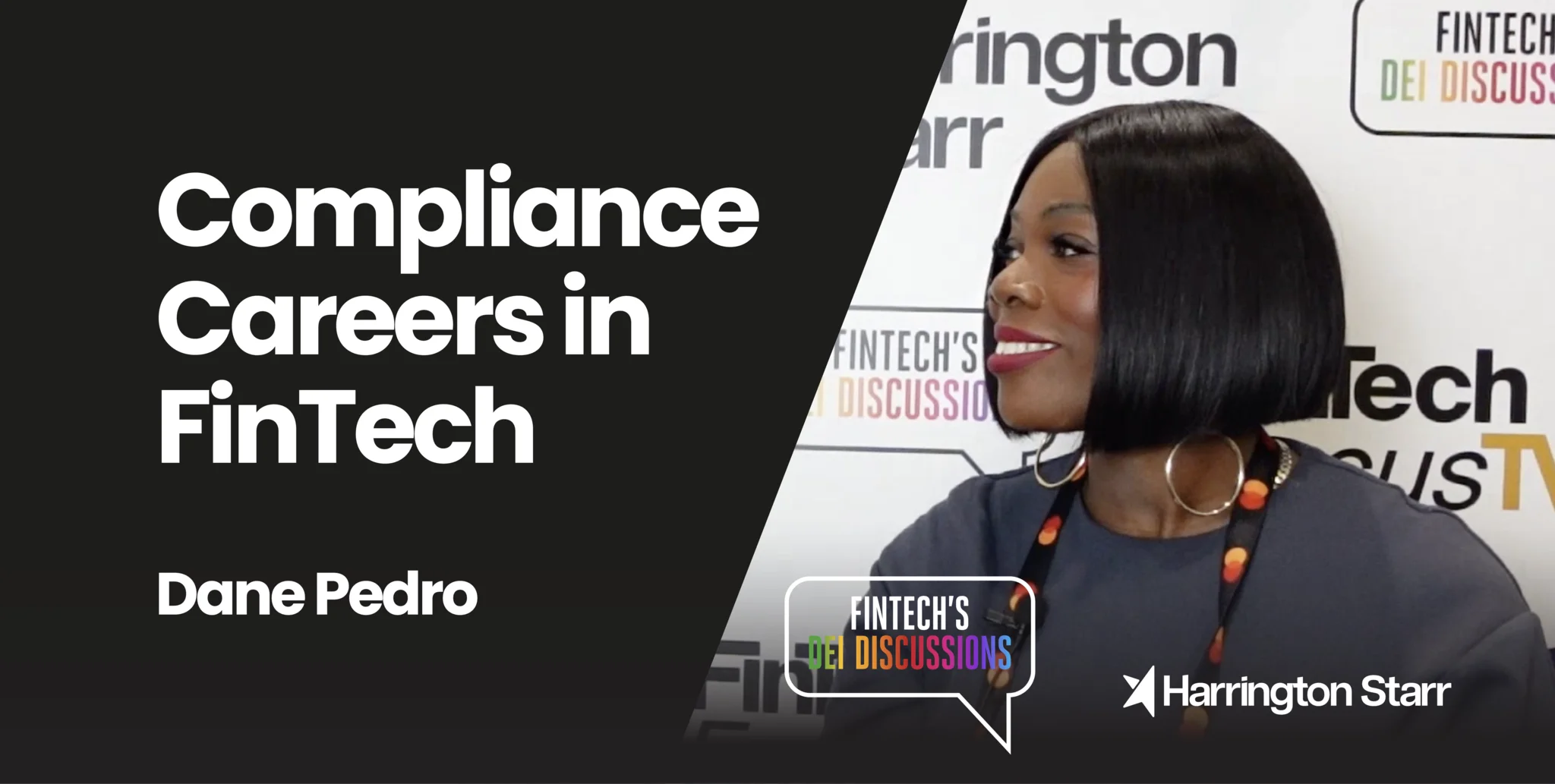
What does it really take to build a successful career in financial technology, and more importantly, what does it take to stay, grow, and lead in an industry that is still evolving when it comes to inclusion? In this episode of FinTech’s DEI Discussions, recorded live at PAY360 2026, Nadia Edwards-Dashti sits down with Dane Pedro, Board Director and Head of UK Compliance & MLRO at Mollie, to unpack a career journey that is as inspiring as it is instructive for anyone navigating FinTech careers today.
Dane’s story begins not in a boardroom, but at the front line of financial inclusion. Her early career as a money and debt advisor at Citizens Advice Bureau came at a time when society was dealing with significant financial crises. Working directly with individuals facing financial hardship, she gained a deep understanding of customer needs, from managing income and expenditure to navigating priority debts and welfare benefits. This experience formed the foundation of her career in financial services, grounding her approach in empathy, real-world impact, and a clear understanding of the importance of regulation in protecting customers.
This early exposure to financial vulnerability is a powerful reminder of why financial technology recruitment is not just about hiring technical skills, but about bringing in individuals who understand the broader ecosystem. For FinTech firms looking to hire talent that can genuinely make an impact, Dane’s journey highlights the value of diverse entry points into the industry.
Dane did not initially set out to build a career in this field. Her original ambition was to become a lawyer, but her transition into compliance proved to be both unexpected and transformative. After her early experience, she joined the Financial Conduct Authority, where she worked in authorisations, reviewing firms applying for regulatory approval. This role provided her with a unique perspective on how financial institutions operate, from business plans to regulatory frameworks.
Her career continued across major financial institutions, including American Express, where she led monitoring and testing for the UK market and supported Nordic teams. She later moved into consulting, helping international firms establish a presence in the UK, particularly those looking to become payment or money service providers. Each step of her journey added depth to her expertise, reinforcing the importance of compliance as a core function within financial services and financial technology.
For clients and hiring managers, this highlights a critical point. Compliance is no longer a back-office function. It is central to how FinTech businesses scale, operate, and build trust. As a FinTech recruitment business, Harrington Starr sees firsthand how demand for compliance professionals continues to grow, particularly as regulation evolves and businesses expand into new markets.
Dane’s openly discusses experiences of being overlooked for promotion, not being considered for opportunities, and facing micromanagement. These are realities that many professionals in financial services and FinTech careers will recognise, but what stands out is her response.
Rather than allowing these challenges to define her, she focused on continuous development. Studying for a law degree and a master’s in law while building her career, she committed to constant upskilling. She also developed the self-awareness to take feedback constructively, recognising where she could improve while maintaining confidence in her abilities.
Her reflections on imposter syndrome are particularly relevant. She acknowledges that everyone experiences it, but emphasises the importance of recognising your own value and trusting the work you have put in. This message resonates strongly in the context of FinTech hiring, where high-performing candidates may still question their readiness for senior roles.
For businesses looking to attract and retain top talent, this reinforces the need to create environments where individuals are recognised, supported, and given clear pathways for progression.
While Dane recognises that there has been progress in gender representation within compliance roles, she is clear that there is still a long way to go, particularly when it comes to representation of Black women in senior positions. Throughout her career, she has often found herself to be the only Black woman in boardrooms and committee meetings.
This lack of representation is not just a diversity issue. It is a business issue. FinTech firms that fail to build diverse leadership teams risk missing out on perspectives that are critical for innovation, customer understanding, and long-term success.
Dane highlights the barriers that still exist, from lack of support networks to workplace challenges such as micromanagement, harassment, and bullying. She also points to a culture where individuals may feel unable to speak out, leading to what she describes as “suffering in silence.”
For FinTech recruitment, this underscores the importance of not just placing diverse candidates, but ensuring that organisations are equipped to support them. Diversity without inclusion will not drive meaningful change.
One of the most powerful themes in this episode is the importance of mentorship and community. Dane shares that she had never had a mentor until just a few years ago, despite having built a successful career. This realisation led her to actively engage in mentoring others through organisations such as Women in Banking and Finance.
Her approach to mentorship is deeply personal. She shares her own experiences openly, helping others understand that the challenges they face are not unique to them. This transparency is critical in building confidence and enabling individuals to navigate their careers more effectively.
The impact of her mentorship is tangible. She has supported individuals transitioning into compliance roles, helped candidates succeed in competitive recruitment processes such as the FCA graduate scheme, and guided professionals through difficult workplace situations. These stories demonstrate the real-world impact of mentorship in financial services careers.
For hiring managers and businesses, this is a clear call to action. Investing in mentorship programmes and fostering strong professional networks can significantly enhance talent development and retention.
Dane is passionate about reshaping perceptions of compliance. She challenges the outdated view of compliance as a “no” function, instead positioning it as a key enabler of business success. In her role, compliance is about ensuring that businesses operate within regulatory frameworks while still achieving their strategic goals.
She describes compliance as highly collaborative, involving close work with product, marketing, data science, engineering, and legal teams. This cross-functional influence makes compliance one of the most dynamic areas within FinTech.
In a highly regulated market like the UK, where rules and guidance are constantly evolving, compliance professionals play a critical role in helping businesses adapt and innovate. For FinTech firms, hiring the right compliance talent is essential for sustainable growth.
This aligns directly with Harrington Starr’s focus on supporting clients with FinTech recruitment across key areas, including compliance, risk, and regulatory functions. As the industry continues to evolve, the demand for professionals who can bridge the gap between regulation and innovation will only increase.
Another key theme in this episode is the importance of finding the right organisation. Dane emphasises that career success is not just about the role itself, but about the environment in which you work. She encourages professionals to look beyond company branding and assess whether an organisation truly lives its values.
This includes evaluating whether companies “walk the talk” when it comes to diversity and inclusion, and whether they genuinely value employee contributions. She also highlights the importance of using probation periods as a two-way assessment, allowing individuals to determine whether a company is the right fit for them.
Interestingly, she challenges the assumption that larger companies are always the best option. Smaller organisations can often provide broader opportunities, allowing individuals to gain experience across multiple areas and make a more significant impact.
For candidates navigating FinTech careers, this is a valuable perspective. For employers, it reinforces the importance of creating environments where employees feel valued, trusted, and empowered.
As the conversation draws to a close, Dane delivers a clear message on what needs to change. She calls for organisations to be open to feedback and willing to challenge existing practices. Diversity and inclusion should not be treated as a tick-box exercise, but as a fundamental part of business strategy.
She acknowledges the current challenges facing DEI initiatives, including budget cuts and shifting priorities, but emphasises that these should not derail progress. Instead, companies must remain committed to building inclusive cultures and fostering open, honest conversations.
For individuals, her message is equally powerful. She encourages professionals, particularly women, to speak up, share their ideas, and step into their power. Authenticity and integrity, she argues, are key to long-term success.
From the growing importance of compliance to the ongoing challenges around diversity and inclusion, it provides valuable insights for both candidates and employers.
For Harrington Starr, as a leading FinTech recruitment business, these themes are central to our work. We see the increasing demand for skilled professionals across compliance, risk, and regulatory functions, as well as the need for organisations to build inclusive, high-performing teams.
Dane’s journey highlights the qualities that define successful careers in FinTech: resilience, continuous learning, and a commitment to making a difference. It also reinforces the importance of creating environments where diverse talent can thrive.
As the FinTech industry continues to evolve, the organisations that succeed will be those that not only attract the best talent, but also create cultures where that talent can grow, contribute, and lead.
This episode of FinTech’s DEI Discussions is a powerful reminder that inclusion is not just about representation. It is about opportunity, support, and the willingness to challenge the status quo. And as Dane’s story shows, when individuals and organisations truly walk the talk, meaningful change is not just possible, it is inevitable.