Why FinTech Must Rethink Hiring | FinTech Connect 2026 Preview
20 October, 2026


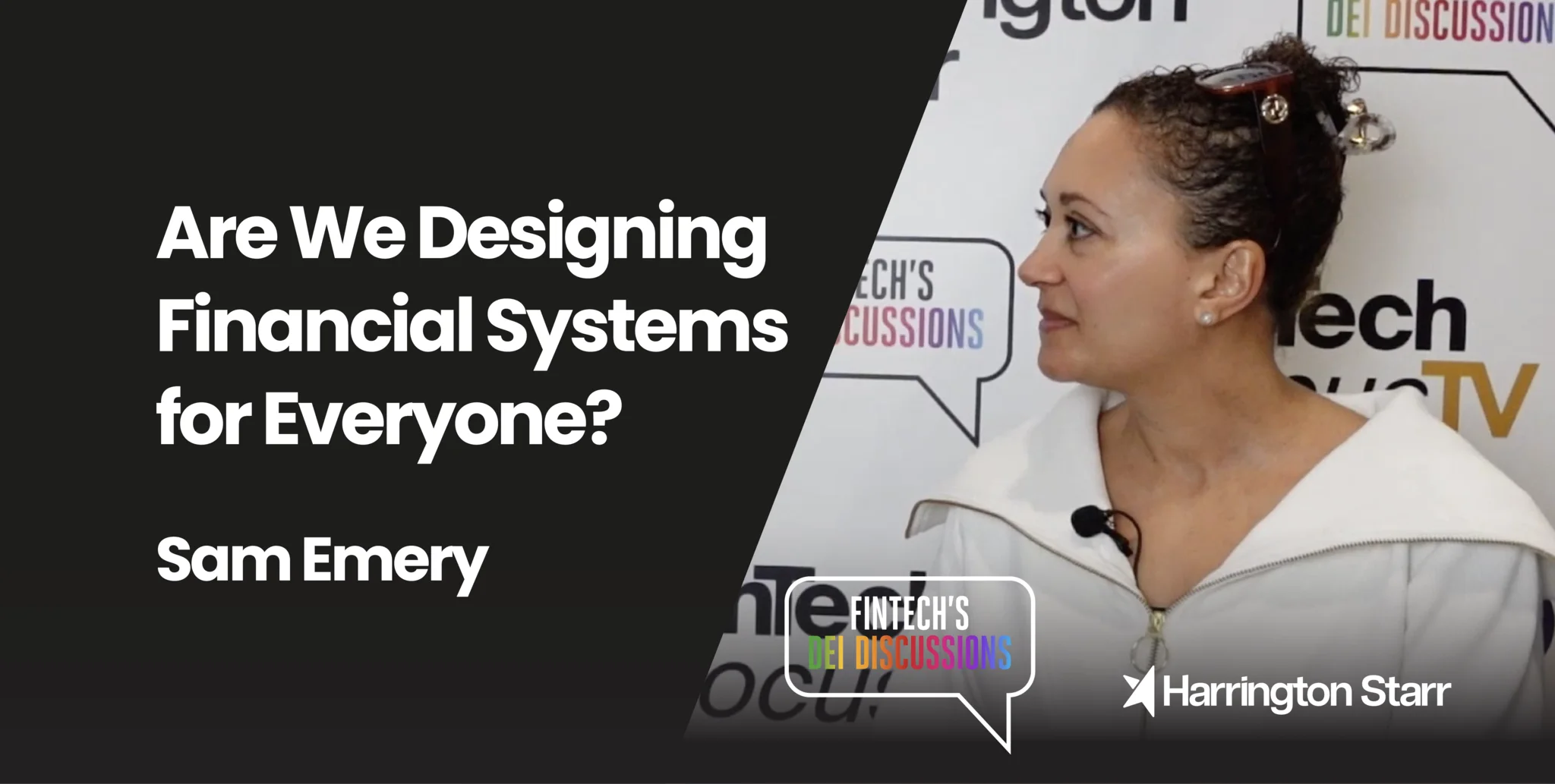
In this episode of FinTech’s DEI Discussions, Nadia Edwards-Dashti sits down with Sam Emery, FS Executive, NED and Advisor, for a powerful and timely conversation recorded live at PAY360 2026. This discussion goes far beyond surface-level diversity conversations. Instead, it tackles a deeper, more urgent question facing the financial technology sector today: are we truly building a financial system that works for everyone, or are we unintentionally reinforcing the same systemic gaps that have existed for decades?
Sam Emery brings over two decades of experience across payments, financial services, and regulation. Her career spans executive leadership roles, including time at the Financial Conduct Authority, where she led payment supervision and innovation initiatives, as well as senior positions at Lloyds Banking Group, overseeing strategy, partnerships, and payments infrastructure. Alongside this, her non-executive work across fintech firms, from startups to global institutions such as Swift, gives her a unique, panoramic view of the sector. This breadth of experience allows her to connect the dots between talent, technology, and outcomes in a way that is both strategic and deeply practical.
The conversation begins by grounding the discussion in Sam’s journey through the financial services ecosystem. From early work in change management and technology delivery to leading strategic initiatives in payments, her career reflects the evolution of financial technology itself. Having worked across regulatory bodies, major banking institutions, and emerging fintech organisations, Sam has seen firsthand how decisions made at the top of the industry ripple through hiring practices, product development, and ultimately, customer outcomes.
For those working in FinTech recruitment, this perspective is critical. Hiring is not just about filling roles. It is about shaping the future of the industry. As Sam explains, the tools and processes used to hire, promote, and evaluate talent directly influence the kinds of products and services that are built. When those processes are not equitable, the consequences extend far beyond the workplace and into the experiences of end users across the financial system.
This is particularly relevant for firms operating in competitive markets such as London, New York, and across Europe, where the demand for high-quality FinTech talent continues to grow. The ability to attract, retain, and develop diverse talent is no longer a “nice to have.” It is a fundamental driver of innovation and long-term success.
One of the central themes of the episode is what Nadia and Sam describe as an “inclusion recession.” Over recent years, despite increased awareness of diversity and inclusion, there has been a noticeable regression in certain areas of the industry. Practices that many believed had been left behind are re-emerging, and progress that once seemed promising is beginning to stall.
Through their work across the sector, Sam and Nadia have built a clear picture of these trends. Conversations with industry leaders, combined with lived experience and data analysis, reveal a concerning pattern. Fewer diverse voices are being heard. Hiring practices are regressing. Structural barriers remain firmly in place. And perhaps most concerning of all, there is a growing disconnect between the industry’s ambitions and its ability to deliver inclusive outcomes.
This matters because the financial services industry is currently undergoing a significant transformation. With the rise of artificial intelligence, blockchain, and new digital assets, there is enormous potential for innovation. However, as Sam highlights, innovation without inclusion carries significant risks. If the same narrow perspectives continue to shape decision-making, the products and systems being built may fail to meet the needs of a diverse and global customer base.
The discussion then turns specifically to the payments sector, which Sam describes as being at a particularly exciting and critical moment. With the introduction of the payments forward plan, the industry now has a clear roadmap for the future. This plan outlines how the sector will evolve to support a multi-asset, multi-rail financial ecosystem, delivering improved outcomes for consumers and businesses alike.
However, achieving this vision requires more than just technological advancement. It requires a fundamental shift in how organisations think about talent, leadership, and collaboration. As Sam explains, the industry must be willing to do things differently at every level, from governance structures to day-to-day operations.
This includes creating space for cross-industry dialogue, encouraging new ways of working, and actively bringing in diverse talent. For organisations focused on FinTech recruitment, this presents both a challenge and an opportunity. The firms that succeed will be those that can identify and engage talent that not only has the right technical skills but also brings new perspectives and ways of thinking.
At the same time, Sam is clear that bringing in diverse talent is only part of the solution. Without addressing the underlying systems and processes that shape the workplace, these efforts will fall short. True inclusion requires organisations to examine how decisions are made, how performance is measured, and how opportunities are distributed.
A particularly powerful part of the conversation focuses on the data behind these trends. Sam shares insights from research she conducted, highlighting significant disparities in areas such as funding, leadership representation, and employment.
For example, the funding gap for female founders continues to represent a major missed opportunity for the UK economy. Similarly, progress in increasing the number of women in senior leadership roles has stalled, while broader issues such as wealth inequality and access to financial products persist.
One of the most striking insights comes from analysis of data from the Office for National Statistics. Over the past decade, the proportion of ethnically diverse women who are unemployed, despite having previously worked in financial services, has consistently exceeded their representation in the wider population. In some cases, the disparity is stark, with these women making up a significantly higher percentage of the unemployed population than their share of the workforce.
For FinTech recruitment professionals, this data is a clear signal that something is not working. It suggests that talent is being lost from the industry at an alarming rate, and that existing systems are failing to support career progression and retention for underrepresented groups.
One of the key takeaways from the episode is that traditional DEI initiatives, while well-intentioned, are not enough on their own. As Sam explains, many of these initiatives act as temporary fixes rather than addressing the root causes of inequality.
This is not to say that they are not valuable. For many individuals, these initiatives provide essential support and opportunities. However, if the goal is to create truly equitable workplaces, organisations must go further. They must be willing to challenge existing norms, rethink how success is defined, and address systemic barriers head-on.
This includes examining the language used in job descriptions and performance reviews, ensuring that hiring processes do not favour certain backgrounds or experiences, and recognising the value of non-linear career paths. It also means being open to different ways of working and understanding that potential does not always present itself in the same way.
For hiring managers and business leaders, this requires a shift in mindset. It means moving away from a focus on short-term efficiency and towards a more holistic view of talent and potential. It also means being willing to question assumptions and make decisions that may not always align with traditional expectations.
Another critical area explored in the episode is the role of technology, particularly artificial intelligence, in shaping the future of financial services. While AI offers significant opportunities for innovation, it also introduces new risks, particularly when it comes to bias and fairness.
Sam highlights the importance of considering who is involved in designing and implementing these technologies. If diverse perspectives are not included in the process, there is a real risk that biases will be embedded into systems at scale. This could have far-reaching consequences, affecting everything from credit decisions to customer experiences.
This is why inclusion is not just a people issue. It is a product issue, a risk issue, and ultimately a business issue. The decisions made today will shape the financial systems of tomorrow, and organisations must ensure that these systems are designed with fairness and inclusivity in mind.
The conversation also addresses the challenges associated with career progression and leadership, particularly for women and other underrepresented groups. Despite increased awareness of these issues, significant barriers remain.
Sam identifies several areas where organisations can take action. This includes addressing exclusionary language, recognising different types of career paths, and ensuring that opportunities for progression are accessible to all. It also involves tackling systemic issues such as access to sponsorship and visibility within organisations.
For FinTech recruitment firms, this presents an opportunity to play a key role in driving change. By working closely with clients to understand their hiring needs and organisational culture, recruiters can help to identify and address potential barriers. They can also support candidates in navigating their careers and accessing opportunities that align with their skills and aspirations.
As the episode draws to a close, Sam offers a clear and practical call to action. Rather than focusing on large-scale, abstract solutions, she highlights two simple but powerful actions that individuals can take to drive change.
The first is a constructive challenge. This involves speaking up when something does not feel right and creating environments where others feel able to do the same. The second is taking a step back to consider the bigger picture. By looking at the cumulative impact of individual decisions, organisations can better understand the long-term consequences of their actions.
These actions may seem small, but they have the potential to create significant change over time. By embedding these behaviours into everyday practices, organisations can begin to shift the culture of the industry and move towards more inclusive and equitable outcomes.
This episode of FinTech’s DEI Discussions is a powerful reminder that inclusion is not a standalone issue. It is deeply connected to every aspect of the financial services industry, from hiring and talent strategy to product design and customer outcomes.
For organisations operating in FinTech, the message is clear. If the industry wants to achieve its ambitious goals, it must address the structural challenges that are holding it back. This includes rethinking how talent is identified and developed, ensuring that diverse perspectives are included in decision-making, and creating systems that work for everyone.
For Harrington Starr, as a global FinTech recruitment business, these insights reinforce the importance of working closely with clients to build teams that are not only technically strong but also diverse and forward-thinking. By doing so, the industry can unlock new opportunities, drive innovation, and create a financial system that truly serves all.