Who's Missing From the Room?
05 October, 2026
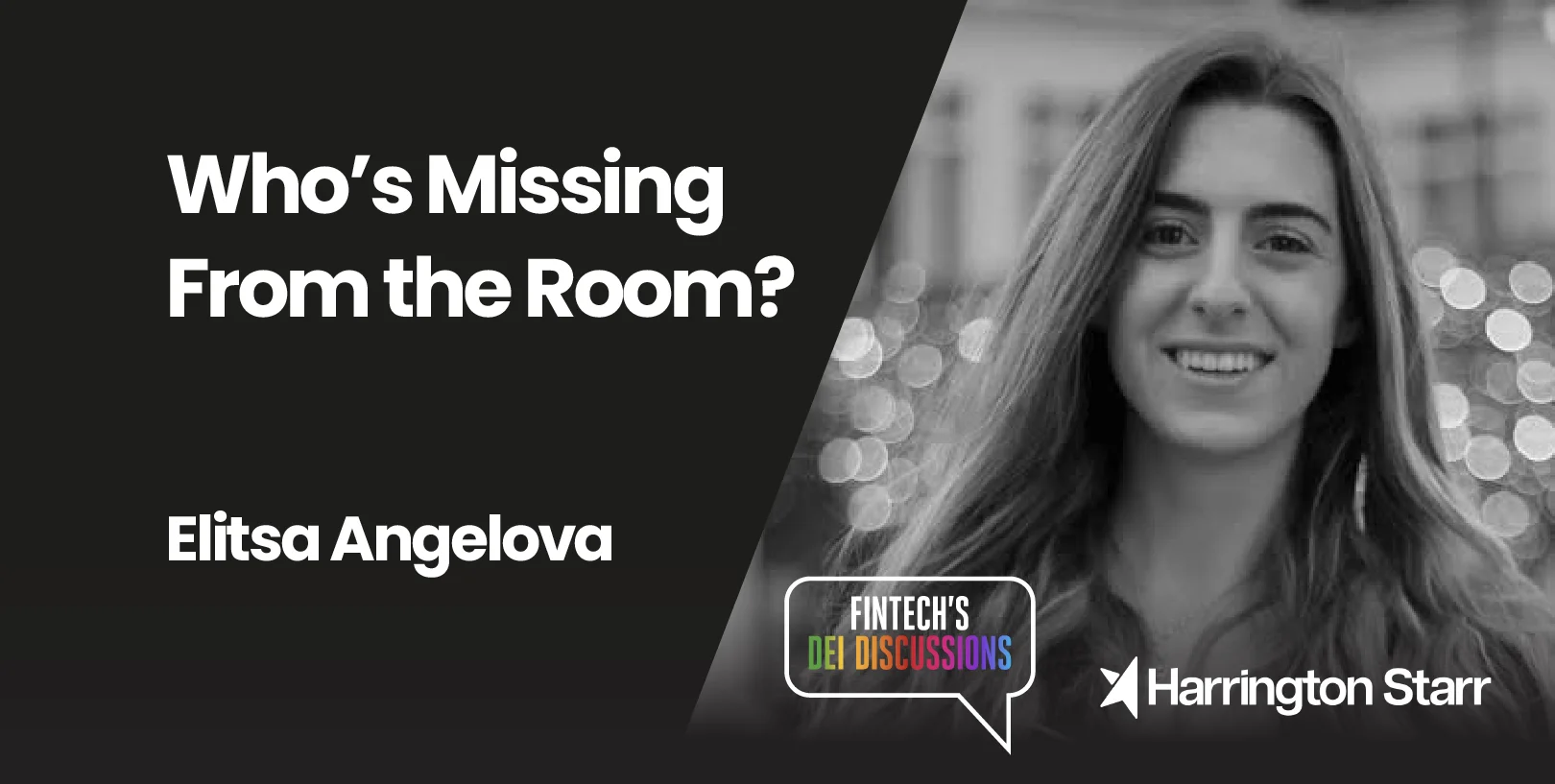

At Fin.Tech Marketing Conference 2026, FinTech's DEI Discussions host Nadia Edwards-Dashti sat down with Kelly Waller, Global VP Field Marketing at Quadient, for a conversation that explored leadership, inclusion, recruitment, workplace culture and talent development.
Recorded live in London, the discussion centred on a theme that repeatedly emerged throughout the episode: the importance of being deliberate. Whether discussing recruitment processes, employee development, diversity and inclusion initiatives or leadership responsibilities, Kelly argued that progress does not happen by accident. Organisations must make conscious decisions about the environments they create, the people they hire and the opportunities they provide.
For professionals working across FinTech, financial services and technology recruitment, the conversation offers valuable insight into how businesses can create stronger cultures, improve retention and build more innovative teams.
Kelly began by reflecting on her own career journey. Before entering the worlds of MarTech and FinTech, her original ambition was to become a teacher. Although her career ultimately followed a different path, she explained that the desire to develop people has remained a consistent thread throughout her professional life.
Having spent approximately half of her career in the marketing technology sector and half within financial technology, Kelly has led both marketing and sales teams. Throughout those experiences, she has maintained a strong belief that organisations grow when people grow.
That philosophy forms the foundation of many of the themes explored throughout this episode.
One of the most interesting areas of discussion focused on the role marketing teams play in shaping more inclusive businesses.
When asked what responsibility marketing has in creating a fairer and more accessible industry, Kelly's answer was immediate. She believes marketing has a significant responsibility because marketing plays a central role in building trust.
Trust is often discussed in relation to customers, products and brand reputation. However, Kelly challenged listeners to think more deeply about what trust actually means.
Rather than focusing purely on organisational goals, she argued that effective marketing requires a genuinely customer-centric mindset. This means recognising that customers are not a single homogeneous group. Instead, organisations must understand the different individuals they serve and tailor their communications accordingly.
For Kelly, successful marketing is not about pushing products, features or sales messages. It is about understanding customer needs and helping solve problems. When organisations take this approach, trust becomes a natural outcome.
This perspective aligns closely with broader conversations taking place across FinTech recruitment and financial technology hiring today. Businesses are increasingly recognising that understanding diverse customer needs requires diverse perspectives within their teams.
When companies recruit people with different experiences, backgrounds and viewpoints, they are often better positioned to understand increasingly diverse customer bases.
The conversation then moved beyond customer trust and into workplace culture.
Nadia highlighted ongoing discussions around authenticity at work and the challenges individuals face when trying to bring their whole selves into professional environments.
Kelly spoke passionately about this topic, explaining that throughout her own career she has found that embracing authenticity creates stronger engagement among colleagues, leaders and teams.
She believes that when individuals feel comfortable bringing their full selves to work, creativity increases. Teams become more collaborative, people feel more comfortable sharing perspectives and organisations gain access to a broader range of ideas.
This is particularly important in FinTech, where innovation often depends on the ability to challenge established thinking and approach problems from multiple angles.
Kelly explained that greater openness creates opportunities for individuals to listen to different viewpoints and learn from experiences that may differ significantly from their own.
The result is not only a stronger workplace culture but also a more customer-centric organisation. Teams become better equipped to understand a wider audience because they themselves represent a wider range of experiences.
However, Kelly also expressed concern about recent developments she has observed across the corporate landscape.
One of the most powerful sections of the discussion focused on what Kelly sees as a growing reduction in organisational commitment towards diversity, equity and inclusion initiatives.
She described seeing company after company scaling back investment in DE&I programmes and expressed disappointment at what she believes is a misunderstanding of their original purpose.
According to Kelly, many organisations appear to be reacting to external pressures, media narratives and political debates rather than focusing on the fundamental reasons these initiatives were introduced in the first place.
For her, the consequences are significant because these decisions ultimately affect people.
This led to an important distinction between management and leadership.
Kelly suggested that managers often focus on following established direction and organisational messaging. Leaders, however, have a responsibility to think critically about how progress can continue even when circumstances become more challenging.
The observation resonated strongly throughout the discussion because it shifted the conversation away from policy and towards accountability.
Rather than asking whether organisations have diversity initiatives in place, Kelly encouraged listeners to consider whether leaders are actively working to create environments where people can thrive.
For businesses operating in highly competitive sectors such as FinTech, this distinction may become increasingly important as organisations compete for specialist talent across software engineering, data, AI, cyber security, product management and quantitative finance.
The conversation then turned towards recruitment, where Kelly challenged one of the most common arguments used within hiring discussions: meritocracy.
At first glance, merit-based hiring appears entirely reasonable. Organisations should recruit the best candidate for the role based on capability and potential.
However, Kelly encouraged listeners to look beneath the surface.
She argued that a truly merit-based system would require organisations to remove factors such as gender, ethnicity, names and educational background from recruitment processes.
In reality, those factors often remain visible throughout hiring decisions.
As a result, unconscious bias can continue to influence outcomes even when organisations believe they are operating objectively.
Kelly highlighted a common tendency for hiring managers to recruit individuals who resemble themselves in some way. Whether consciously or unconsciously, people often feel more comfortable with candidates who share similar backgrounds, experiences or perspectives.
The challenge is that innovation rarely comes from surrounding ourselves with people who think exactly the same way.
Throughout financial technology, some of the most successful teams are built upon diverse viewpoints that challenge assumptions and encourage constructive debate.
Kelly acknowledged that merit-based hiring has value as a principle. However, she questioned whether genuine meritocracy can exist without significant efforts to reduce bias throughout recruitment processes.
Her comments raise important questions for FinTech recruitment leaders and hiring managers seeking to build high-performing teams.
If organisations genuinely want to access the widest possible talent pool, they must examine how hiring decisions are made and whether unconscious biases may be limiting opportunities for exceptional candidates.