Why FinTech Must Rethink Hiring | FinTech Connect 2026 Preview
20 October, 2026

What does genuine inclusion look like in the financial technology industry? Is it enough to bring different people into an organisation, or does true inclusion depend on whether those people are actually heard, valued and given the opportunity to contribute?
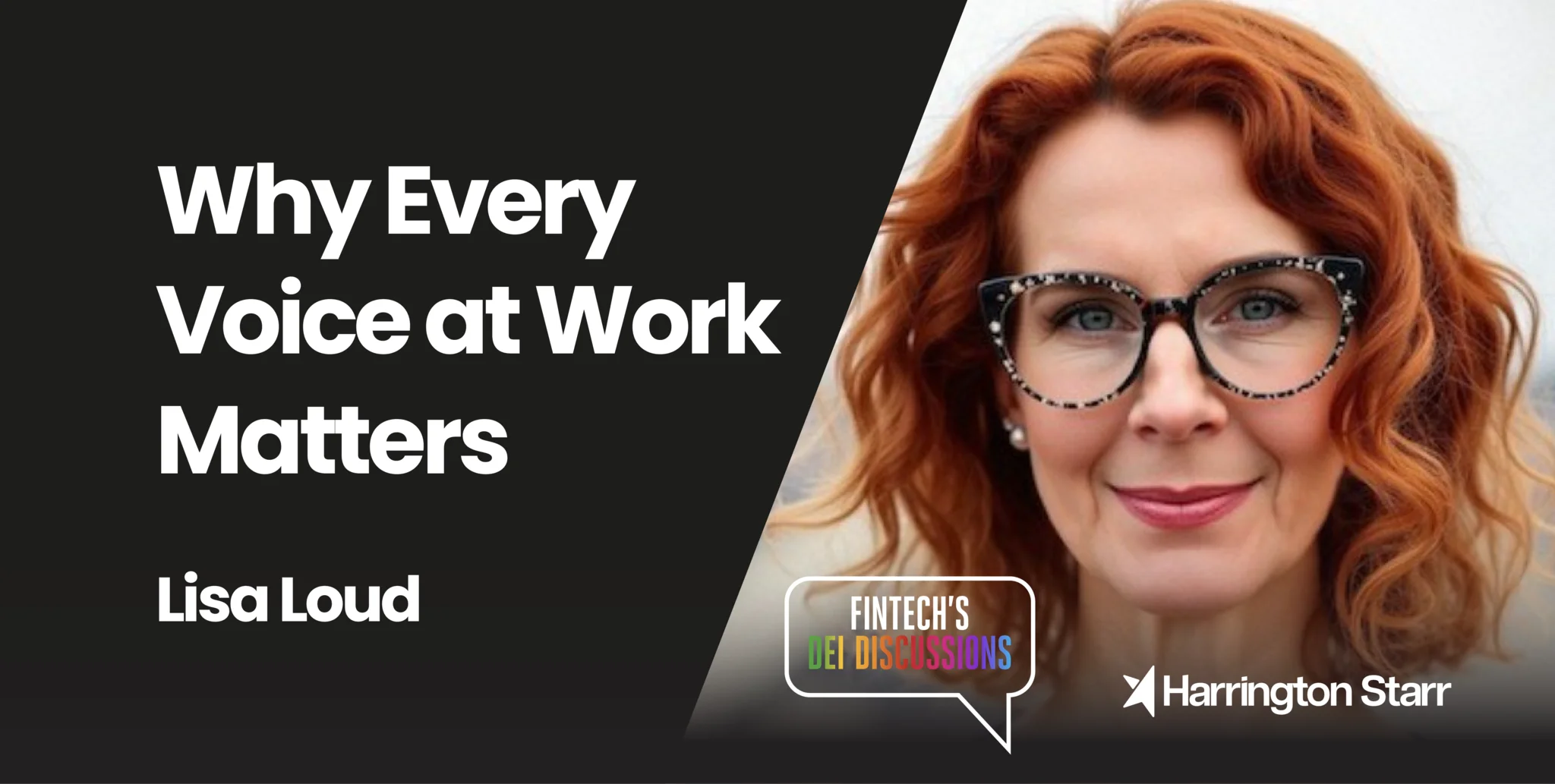
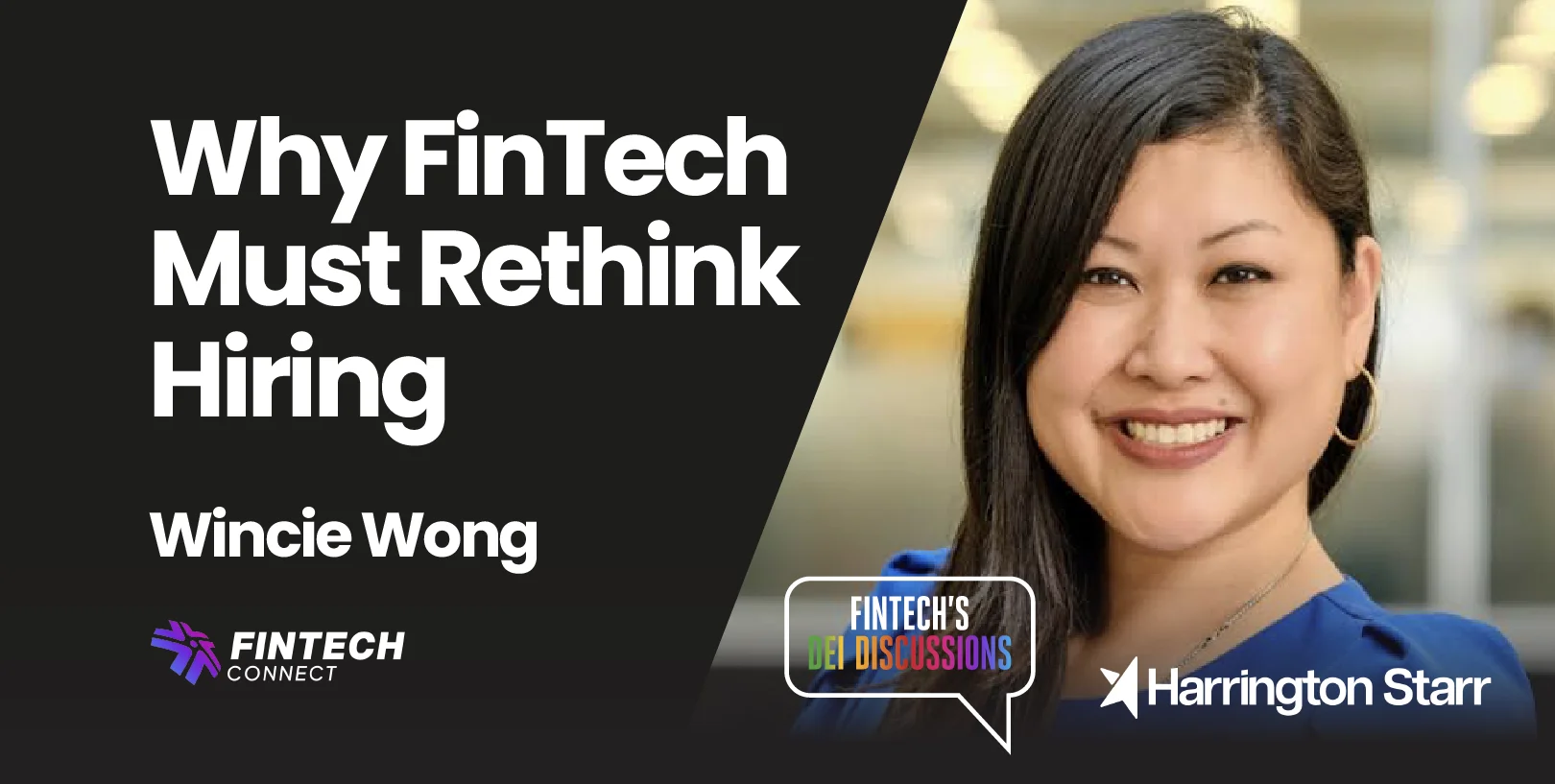
In this episode of FinTech’s DEI Discussions, Nadia Edwards-Dashti is joined by Lisa Loud, Head of Product at Ubuntu Tribe, for a conversation about workplace inclusion, belonging, financial access and the importance of listening to every voice.
Drawing on a career that has taken her from software development at Apple to PayPal and into the blockchain industry, Lisa shares the experiences that have shaped her understanding of inclusion. She discusses the challenges of feeling unheard, the importance of finding an organisation that aligns with your values, and why people can quickly disengage when they feel their contribution does not matter.
The conversation also moves beyond workplace inclusion to explore access to financial services. Lisa discusses Ubuntu Tribe’s mission, the potential of real-world asset tokenisation and the importance of giving more people opportunities to participate in financial systems.
For financial technology employers, leaders and professionals, the discussion provides an important reminder: creating an inclusive workplace is not simply about who is in the room. It is about who has a voice once they are there.
Lisa’s career has taken her through a wide range of roles across technology, financial services and blockchain.
She explains that she initially thought she wanted to become a biomedical engineer before eventually majoring in maths and computer science. Her professional career then began as a software developer at Apple, where she worked for several years before moving to PayPal.
At PayPal, Lisa initially led the website development group before moving towards the marketing team to support its analytics. That transition took her from pure technology and technology management into digital acquisition. By the end of her time at PayPal, she was leading digital acquisition for North America on the B2B side of the organisation.
On paper, Lisa describes her career as being on a good trajectory. But her experience also demonstrates why progression cannot be understood through job titles alone.
Lisa speaks openly about becoming frustrated during this period of her career. She found it difficult to get promoted and difficult to feel listened to in meetings. She recalls the subtle behaviours that made her feel that her contributions were not receiving the attention they deserved.
Eventually, she decided she could not stay and took what she describes as a huge career risk by leaving PayPal and joining the blockchain industry.
For those working across FinTech recruitment and financial technology careers, her experience raises an important question. What makes talented people stay with an organisation, and what eventually pushes them to look elsewhere?
Salary, job title and employer reputation all have their place, but Lisa’s experience highlights another important part of talent retention: whether people genuinely feel heard and supported in their workplace.
Lisa’s move into blockchain introduced another chapter in her experience of inclusion.
Her first blockchain company had 55 men and just two women. She later worked at BitMEX, helping the company during a period of significant growth, but describes how being one of very few women in a heavily male environment became difficult.
Lisa subsequently moved to ShapeShift, where she experienced greater diversity and says she felt that she belonged, was welcomed and had support.
When ShapeShift decided to become a full decentralised organisation, Lisa moved on to lead the blockchain foundation Secret Network for several years. She then joined Ubuntu Tribe, where she says the organisation’s focus on inclusion has created a very different experience.
For Lisa, this represents the end of a long journey towards finding somewhere that aligns with her own values.
That distinction between simply working somewhere and actually feeling that you belong becomes one of the central themes of the episode.
For financial technology businesses competing for specialist talent, it is an important consideration. Attracting professionals into a company is only one part of building a successful team. The experience they have once they arrive can influence whether they feel able to develop, contribute and ultimately remain with the organisation.
When Nadia asks Lisa what inclusion means to her, Lisa reflects on her own upbringing and career.
Her father was highly supportive of her pursuing maths, and Lisa says she grew up without feeling that there should be a difference between what boys and girls could do. That perspective has remained with her throughout her career.
She explains that she does not see a difference between herself and the men she works alongside. Because of this, she can find it particularly surprising when someone else treats her differently from her male colleagues.
For Lisa, inclusion therefore means reaching a point where other people do not see that difference either.
It is a revealing way to think about diversity and inclusion in financial technology workplaces. Inclusion is not simply an initiative, policy or statement. It is something experienced through everyday interactions: who gets listened to, whose ideas receive attention, who is assumed to be capable and who is given the opportunity to contribute.
Nadia connects this with the need for all of us to avoid making assumptions about the people we work and spend time with.
For FinTech employers, the conversation demonstrates why building diverse teams and building inclusive teams cannot necessarily be treated as the same challenge. Representation matters, but the experience people have after joining an organisation matters too.
The conversation also explores inclusion from a different perspective: access to financial systems.
Lisa explains that Ubuntu Tribe operates within real-world asset tokenisation. The organisation uses blockchain technology to create tokens tied to portions of gold, with the tokens backed by the physical asset and redeemable for physical gold.
However, Lisa stresses that the reason behind the product is more important than the instrument itself.
She describes how many people around the world have limited access to finance, whether because they cannot access a bank account or because their local currency loses value so rapidly that saving becomes extremely difficult.
Lisa explains that when a currency is rapidly devaluing, people have little incentive or opportunity to save for the future. Providing another way to hold value can therefore create new possibilities around saving, financial management and planning for families.
For Lisa, this is about giving people who have historically been excluded from financial systems what she describes as a “seat at the table”.
It broadens the episode’s discussion of inclusion beyond the workplace. Whether discussing careers or financial systems, the underlying question is similar: who gets to participate?
Representation is another important theme in Lisa and Nadia’s conversation.
Lisa discusses Ubuntu Tribe Academy and a programme called She’s Included in Nigeria. She explains why visible initiatives can have an impact on how people see their own possibilities.
When somebody sees a person who looks like them in a position of influence, authority or career success, Lisa argues that they can immediately begin to think, “I could do that.”
Without that representation, the opposite can happen. People can mentally exclude themselves from careers or opportunities because they do not see anybody like themselves occupying those positions.
Lisa also discusses mentoring women in their careers and the value she sees in that work. At the same time, she argues that companies have an opportunity to create impact on a larger scale through visible programmes capable of changing perceptions.
This is particularly relevant when considering the future of talent across financial technology. Employers looking to widen their talent pools cannot focus exclusively on recruitment at the point a vacancy becomes available. The way industries, careers and leadership teams are represented can influence who believes those opportunities are available to them in the first place.
Changing established financial systems is not straightforward.
Lisa describes financial systems as slow to change and points to the continued existence of large unbanked and underbanked populations.
She argues that changing this requires work at several different levels. Mentoring can influence individuals. Visible programmes can shift perceptions. Ultimately, however, the people running financial systems also need to change how they think about who should be included.
The goal is for that change in perception to eventually translate into practical decisions, including how people are treated when applying for accounts or loans.
Lisa is realistic about the scale of this challenge. Having worked in blockchain for more than a decade, she jokes that at times it appears financial systems are changing blockchain more than blockchain is changing financial systems.
She compares the challenge to redirecting a river one stone at a time.
Nadia picks up on the analogy and connects it back to the wider financial services industry. Creating an environment where more people are included, more opinions are heard, and workplaces operate differently is not something that happens through one intervention.
It requires consistent change.
Lisa also offers a candid perspective on working for some of the major organisations she once aspired to join.
Having experienced both Fortune 500 companies and small start-ups, one of her biggest lessons is that every organisation has dysfunction.
Companies are made up of people, she says, and people bring their own agendas, habits, frustrations and ways of working. Organisations should therefore not be viewed as perfect machines simply because they have a prestigious name or reputation.
Lisa still encourages people to pursue jobs at their dream companies. She has managed to work for companies she once dreamed of joining and believes others should pursue those ambitions too.
Her warning is simply not to assume that reaching a dream employer means every workplace problem disappears.
Most organisational problems, in her experience, are human problems.
People can be stubborn. They can fail to see what might be possible for a business. Individual agendas can conflict with the interests of the organisation.
For professionals considering their next FinTech career move, this is a useful perspective. Employer brand can be powerful, but the reality of a workplace is determined by far more than the company name.
Culture, leadership, communication and whether employees feel their contribution matters can have a profound impact on the experience of a role.
The episode concludes with perhaps its clearest lesson for leaders, employees and anyone interested in creating more inclusive workplaces: listen.
Lisa acknowledges that listening can become particularly difficult when people are under pressure.
She also recognises this tendency in herself. People can naturally pay more attention to colleagues they perceive as powerful or particularly valuable while giving less attention to those they do not immediately regard in the same way.
The problem is that every person has ideas.
Those ideas may not always be expressed perfectly, but Lisa argues that there can still be a valuable seed within them. Every colleague has a voice, a brain and a creative perspective that differs from the people around them.
Taking the time to listen can uncover something that would otherwise have been missed.
Sometimes listening does not result in agreement. An idea might reveal a perspective that needs to be challenged or addressed. At other times, it can expose something a leader or colleague simply had not considered.
Either way, listening creates the opportunity for meaningful contribution.
That is ultimately how Lisa defines inclusion.
It is belonging. It is having a voice at the table. It is knowing your ideas will be listened to and having the opportunity to contribute to something larger than yourself.
When people do not have that voice, Lisa says they disengage. They give up. They stop feeling that they belong.
For financial technology employers, this makes inclusion relevant not only to DEI strategies but to the everyday experience of attracting, developing and retaining talent.
Lisa’s conversation with Nadia demonstrates how closely workplace inclusion, career development, representation and financial access can be connected.
Her career has taken her through software development, financial services, digital acquisition and blockchain, providing first-hand experience of different organisational cultures and different levels of belonging.
Across those experiences, one idea repeatedly emerges: participation needs to be meaningful.
It is not enough for somebody simply to be present in a workplace if they do not feel heard. It is not enough to open up financial opportunities if large groups of people remain unable to participate. And it is difficult to convince people that a career is possible if they cannot see anybody like themselves succeeding within it.
For employers navigating an increasingly competitive financial technology talent market, these questions matter.
Recruitment can bring new skills, experiences and perspectives into an organisation. But creating an environment where those people can make their best contribution requires listening to them after they arrive.
For leaders, that can mean questioning whose opinions receive the most attention. For colleagues, it can mean recognising the value of perspectives different from their own. And for organisations, it means understanding that belonging is created through everyday experiences, rather than simply stated as a company value.