Why Human Connection Matters More in the Age of AI
12 November, 2026


Financial Technology businesses are investing in innovation, leadership development and attracting specialist talent. Yet an important question remains: are women being given the same opportunities to demonstrate their expertise and influence the conversations shaping the industry?
Gender equality in financial services is not simply about how many women organisations employ or promote. It is also about whose expertise receives recognition, who represents businesses publicly and whose perspectives shape industry discussions.
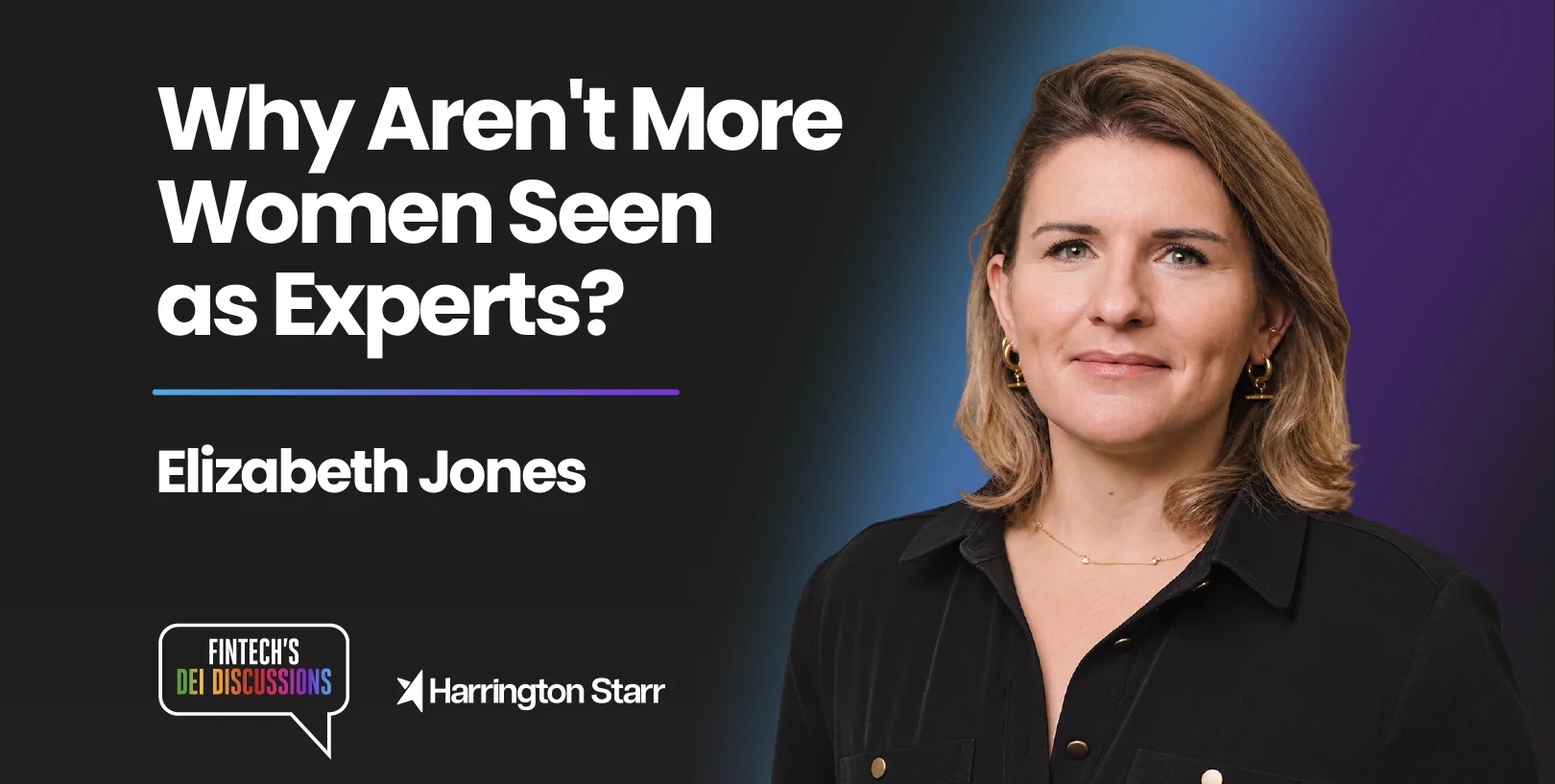
In this episode of FinTech's DEI Discussions, Nadia Edwards-Dashti speaks with Elizabeth Jones, Senior Director at With, about the gender visibility gap, women's representation in the media and the responsibility businesses have to create more inclusive leadership opportunities.
Their conversation challenges employers to reconsider how they recognise talent and why greater visibility matters for career progression, workplace inclusion and business reputation.
The gender visibility gap describes the imbalance between men and women receiving opportunities to contribute publicly as experts, spokespeople and industry leaders.
Elizabeth explains that research published by UN Women found women accounted for just 26% of people seen, heard or read about in the news, despite representing approximately half the population.
For Elizabeth, this imbalance reflects something deeper than media representation.
"The issue isn't that the expertise isn't there? It absolutely is. It's that women aren't always being identified, prepared and put forward at the same rate as men."
Within Financial Technology, this raises questions about who represents organisations at conferences, contributes to industry publications and speaks about developments in banking, payments, artificial intelligence and financial markets.
When businesses repeatedly select the same spokespeople, they risk reinforcing narrow perceptions of who holds authority.
This connects with Harrington Starr's Talent Equity List, an initiative, set up by Nadia, focusing on improving the visibility of underrepresented talent.
Both conversations highlight that recognising talent is only part of inclusion. Organisations must also create opportunities for that talent to be noticed.
Improving women's representation is not exclusively a diversity, equity and inclusion objective. It also influences how organisations communicate their expertise, establish credibility and attract employees.
Elizabeth references research conducted with Sapio indicating that approximately 80% of businesses recognised the importance of gender diversity in building audience trust. Yet she explains that most businesses surveyed had women occupying no more than approximately 25% of their spokesperson positions.
This suggests a disconnect between recognising the value of representation and changing business practices.
For employers competing for specialist Financial Technology talent, visible leadership can also influence perceptions of workplace culture and career opportunities.
Georgia Richardson examines this relationship in her Harrington Starr article, Reputation Now Drives Hiring Before Salary Does. She discusses how organisational credibility, leadership visibility and market reputation can influence candidates considering opportunities across financial services and technology.
Elizabeth's argument adds an important dimension, whose visibility contributes to that reputation?
If women rarely represent an organisation externally, prospective employees may have fewer visible examples of female leadership and progression.
This matters particularly for businesses developing their FinTech sales and marketing teams, where communication, industry relationships and commercial credibility are important capabilities.
Career progression depends on more than technical ability or professional experience. Employees also need opportunities to demonstrate their knowledge, build relationships and develop their professional reputation.
Elizabeth argues that visibility should not be reserved for chief executives or the most senior individuals.
Marketing leaders, HR professionals and heads of brand may offer equally valuable perspectives because of their understanding of customers, employees and business strategy.
This is particularly relevant to inclusive leadership in Financial Services, where organisations need expertise across commercial, operational and technology functions.
In The Financial Technologist's 2026 Influence List edition, Nadia Edwards-Dashti explores a related theme in her article Leadership That Opens Doors: “evidence that gives confidence” on pages 80–81.
The article's focus on opening opportunities through leadership provides a useful connection to Elizabeth's argument that organisations must actively recognise and support expertise beyond established leadership circles.
For Financial Technology employers, this means examining whether career development programmes provide meaningful opportunities to build visibility, rather than focusing exclusively on internal performance.
One of Elizabeth's strongest arguments concerns the responsibility for improving women's representation.
She encourages women to develop their communication skills, invest in themselves and pursue opportunities to share their expertise.
However, she also makes clear that individual confidence cannot resolve an organisational problem.
"But equally, we can't put all of that responsibility on women to fix a problem that ultimately they didn't create."
Business leaders must identify overlooked expertise, provide preparation and create opportunities for employees to participate in public conversations.
This connects with another episode of FinTech's DEI Discussions featuring Christina Di Nolfo, CEO of Collection Pot. Christina and Nadia discuss the importance of recognising potential rather than allowing established hiring and leadership practices to determine who receives opportunities.
Both conversations challenge businesses to consider whether existing processes are unintentionally limiting access to progression.
For employers, inclusive leadership should influence decisions about recruitment, development, succession planning and who receives opportunities to represent the organisation.
Elizabeth explains how With launched the With Women Programme to address the gender news gap through practical support.
Since 2022, the programme has provided free media training to more than 2,000 women, helping senior professionals prepare for interviews and communicate their expertise publicly.
She describes supporting a CFO at a Financial Services technology business preparing for a BBC interview.
The CFO already possessed the necessary expertise. The challenge was translating that knowledge into a compelling broadcast interview.
This distinction is important. Media training does not create professional credibility; it helps individuals communicate the expertise they already possess.
For women working across Financial Technology, developing these skills can create opportunities to participate in industry discussions, contribute to thought leadership and strengthen their professional profiles.
Employers can support this by making communication training accessible beyond their established executive spokesperson groups.
A genuinely inclusive workplace gives employees opportunities to contribute, develop and receive recognition for their expertise.
That principle also matters for employee retention.
Harrington Starr's Financial Technology & Financial Services Salary & Hiring Report 2026/27 examines workplace culture, career progression and employee retention alongside salary benchmarks and hiring trends.
Its 2026 talent research found that 61.4% of respondents agreed or strongly agreed that their company was committed to improving employee diversity.
That finding provides context for Elizabeth's discussion. Organisational commitment matters, but employers must also consider whether their everyday decisions translate that commitment into visible opportunities.
For Harrington Starr, working across specialist Financial Technology recruitment markets, this reinforces the importance of looking beyond compensation when considering how employers attract and retain talented professionals.
Career development, leadership accessibility and recognition all contribute to the experience businesses offer their employees.
Elizabeth introduces With's One More Woman Pledge as a practical way for businesses to improve representation.
Rather than requiring organisations to redesign their entire approach to inclusion, the initiative encourages them to identify one additional woman whose expertise deserves greater visibility.
That could involve preparing someone for a media interview, inviting them to speak at an industry event or supporting their contribution to a leadership discussion.
Elizabeth's message is that meaningful change should become part of everyday business decisions, rather than being limited to occasions such as International Women's Day.
For Financial Technology leaders, the starting point is straightforward: examine who currently receives opportunities, identify whose expertise is missing and provide the support needed to change that.
Closing the gender visibility gap requires both individual development and organisational accountability.
Elizabeth's conversation with Nadia demonstrates that improving representation does not begin with finding more qualified women. It begins with recognising the expertise already present and ensuring more people have opportunities to share it.
For Financial Technology and Financial Services employers, this approach connects inclusive leadership with stronger professional development, workplace culture and talent attraction.