Can AI Finally Modernise Capital Markets? | Breakfast with Babb
11 November, 2026


US capital markets are experiencing a period of innovation that is challenging established approaches to trading, market structure and financial technology. Prediction markets, tokenisation, artificial intelligence and new derivatives are creating opportunities, but they are also raising difficult questions about regulation, infrastructure and investor confidence.
Recorded live at the FIX Americas Trading Conference in New York City, this special episode of FinTech Focus TV brings together host Toby Babb and Larry Tabb, Global Head of Financial Sector Research at Bloomberg.
Having spent decades analysing financial market structure, Larry offers a perspective on why the current wave of innovation feels different, where the risks lie and what financial services professionals must do to remain relevant.
For Larry, the defining characteristic of today's financial markets is the sheer breadth of innovation taking place simultaneously.
After 30 years writing about market structure, he describes the current environment as unlike anything he has previously experienced. Developments are emerging across trading products, digital assets, connectivity and financial market regulation.
A significant part of this shift involves the US regulatory environment. Larry discusses how changing attitudes at the Securities and Exchange Commission (SEC) and Commodity Futures Trading Commission (CFTC) are creating greater room for experimentation.
The result is a wider conversation about what financial markets can offer. Alongside growing retail trading activity, the industry is examining prediction markets, perpetual futures, compute futures and 24-hour trading.
These developments are particularly relevant to American financial institutions, exchanges and technology providers because introducing new products requires more than regulatory permission. Firms must consider liquidity, pricing, operational resilience and whether existing infrastructure can support new trading models.
For businesses operating in the US financial services market, innovation therefore presents both a commercial opportunity and a complex implementation challenge.
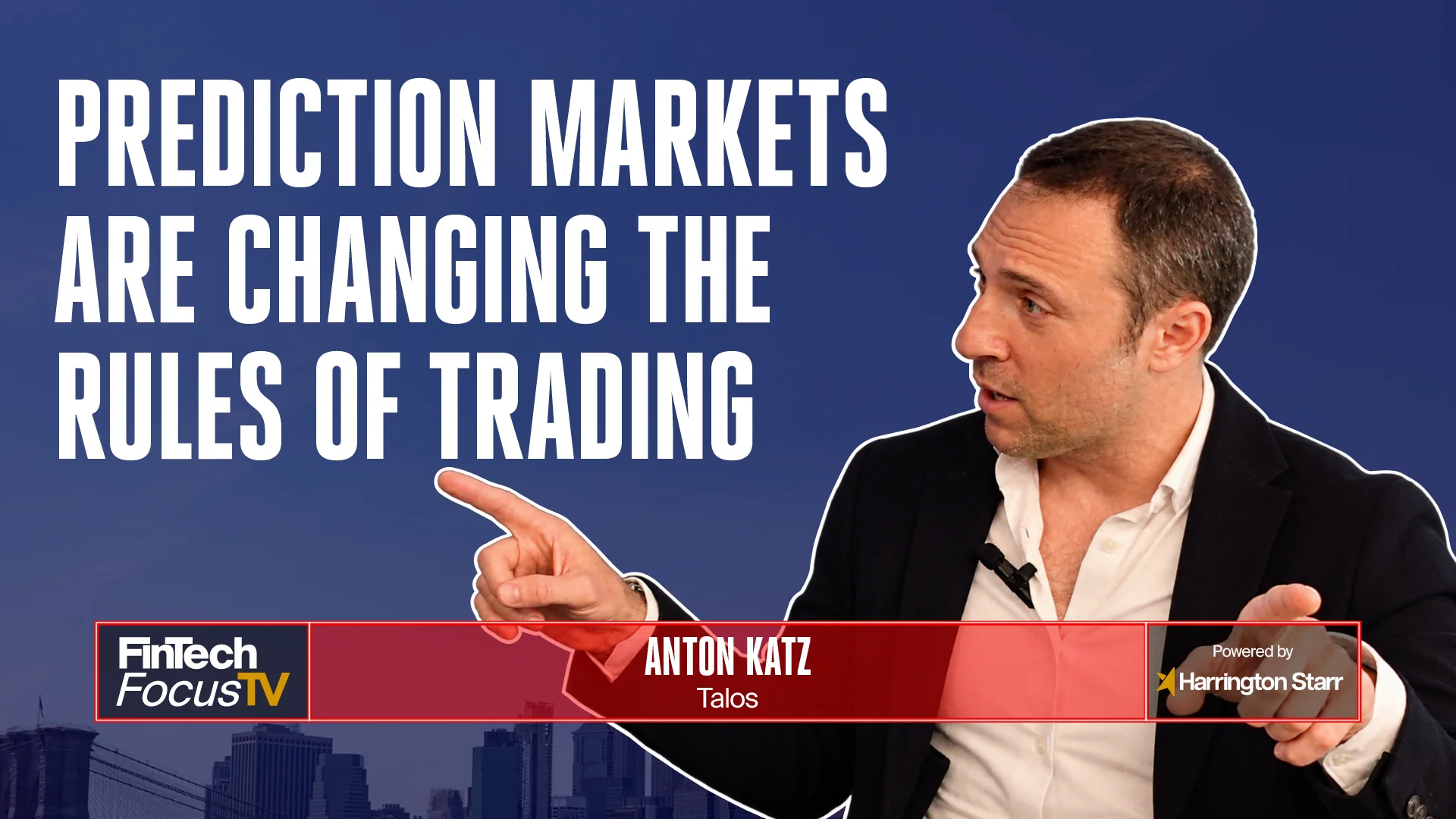
Prediction markets are among the clearest examples of the tension between financial innovation and investor protection.
Larry distinguishes between contracts linked to economic outcomes and those connected to sporting events. He is comfortable with financial prediction markets involving interest rate decisions or the performance of major indices.
His concerns focus instead on sports betting and the potential consequences of bringing those activities closer to established brokerage platforms.
The central issue is trust. If a sporting event were manipulated, could the resulting controversy damage public confidence in financial institutions offering prediction market products?
Larry worries about the possibility of reputational problems extending beyond sports contracts into the wider investment industry.
This distinction matters. His argument is not that prediction markets are inherently unsuitable for financial services. Rather, he questions whether combining fundamentally different activities within similar platforms could create unintended consequences.
He also discusses the regulatory disagreements surrounding prediction markets in the United States, including the relationship between federal oversight and state-level interests.
For US trading firms and FinTech businesses, the wider lesson is that product innovation must be considered alongside market integrity, regulatory responsibilities and customer confidence.
Digital assets represent another major development in the evolution of capital markets.
Larry sees considerable potential for stablecoins, particularly in collateral movement and round-the-clock settlement. These applications could improve how financial institutions transfer value and manage assets outside conventional operating hours.
However, his assessment of tokenised equities is more cautious.
Traditional US equity markets already have sophisticated pricing mechanisms and established liquidity. Introducing tokenised versions of shares creates questions about how these products interact with existing exchanges.
For example, how would the price of a tokenised equity compare with the same security traded on Nasdaq or the New York Stock Exchange? What happens when prices differ, and what costs would investors face when entering or exiting positions?
These are fundamental market structure questions rather than minor technical considerations.
Tokenisation may create new ways to access and transfer financial assets, but its practical value depends on how effectively those systems interact with established markets.
Related questions about fragmented liquidity and cross-border execution are examined in Harrington Starr's article on a new market architecture for global portfolios.
For financial institutions exploring digital assets, the challenge is to identify applications that deliver meaningful improvements without overlooking the efficiency of existing market infrastructure.
At a conference dedicated to financial information exchange, Larry highlights the importance of FIX Protocol in the development of electronic trading.
He credits FIX connectivity with providing an underlying foundation for decades of innovation in equity markets.
Standardised communication between financial institutions and trading systems has helped enable the connectivity on which modern electronic markets depend.
This becomes increasingly important as new financial products, trading venues and automated processes emerge.
For exchanges, investment banks and trading technology vendors, innovation depends on systems communicating reliably across different platforms. New products cannot deliver their intended benefits if market participants cannot access, price or process them effectively.
These requirements also have implications for specialist hiring. Expertise in trading systems, FIX connectivity, market data, execution technology and operational infrastructure remains important when firms modernise established platforms.
Harrington Starr's trading and exchange infrastructure recruitment specialism reflects the breadth of technical capabilities involved in supporting these environments.
The connection between market innovation and infrastructure is particularly relevant in New York, where financial institutions and technology businesses operate within a highly interconnected capital markets ecosystem.
Artificial intelligence introduces a different challenge: what happens when technology can perform tasks previously undertaken by experienced financial professionals?
Larry does not predict the wholesale disappearance of financial services jobs. Instead, he argues that AI will automate certain activities while increasing the importance of skills that are harder to replicate.
Equity research provides a practical example.
Financial analysts traditionally examine earnings announcements, company filings, financial statements and management commentary to assess business performance.
Larry expects AI to become highly effective at processing this material and producing conventional analysis.
That creates a difficult question for analysts: if AI can interpret publicly available information quickly, what makes an individual researcher's contribution valuable?
His answer centres on differentiated insight.
Understanding why a bank or financial institution might perform differently from market expectations requires more than summarising existing information. It involves judgement, specialist knowledge and the ability to recognise connections that others may overlook.
This theme is also explored in Harrington Starr's article When Everyone Has AI, Where Does the Edge Come From?.
The implication for US financial technology employers is not simply to recruit people who can use AI tools. It is to develop teams capable of combining technical efficiency with independent thinking.
The developments Larry discusses have direct implications for the capabilities financial institutions need.
New derivatives require product expertise and an understanding of market structure. Tokenisation raises questions about settlement and integration. Electronic trading depends on reliable infrastructure, while AI is changing expectations of research and analytical roles.
These connections are particularly relevant to employers assessing specialist recruitment requirements across American financial services.
Harrington Starr's 2026/27 Financial Technology and Financial Services Salary & Hiring Report provides US salary benchmarks across quantitative finance, software engineering, data and AI, infrastructure and other specialist disciplines.
Its US contract-rate benchmarks also illustrate the value placed on established technical expertise, including FIX connectivity specialists.
For organisations evaluating where to build teams, the geographical distribution of talent is another consideration. Harrington Starr's US FinTech talent hotspots map provides additional context for understanding specialist talent markets.
The firm's New York financial technology recruitment presence also connects these workforce considerations to the US capital markets ecosystem.
The broader point is that financial market innovation changes the combination of skills businesses require, rather than making existing expertise universally obsolete.
Larry's closing argument focuses on adaptability, original thinking and professional relationships.
As AI becomes more capable of producing conventional research, financial professionals will need to demonstrate why their individual perspectives matter.
That means developing specialist knowledge, challenging established assumptions and building relationships that contribute to better understanding.
The importance of combining technology with human expertise is also reflected in The Financial Technologist's 2026 Humans With AI edition, which examines how changing technology affects skills, careers and financial services organisations.
For the US trading industry, the opportunity is substantial, but so is the responsibility to adapt thoughtfully.
Prediction markets, digital assets, new derivatives and artificial intelligence may expand what financial markets can achieve. Their long-term value will depend on the quality of the infrastructure, judgement and expertise supporting them.