Inclusion is Not Charity
15 October, 2026

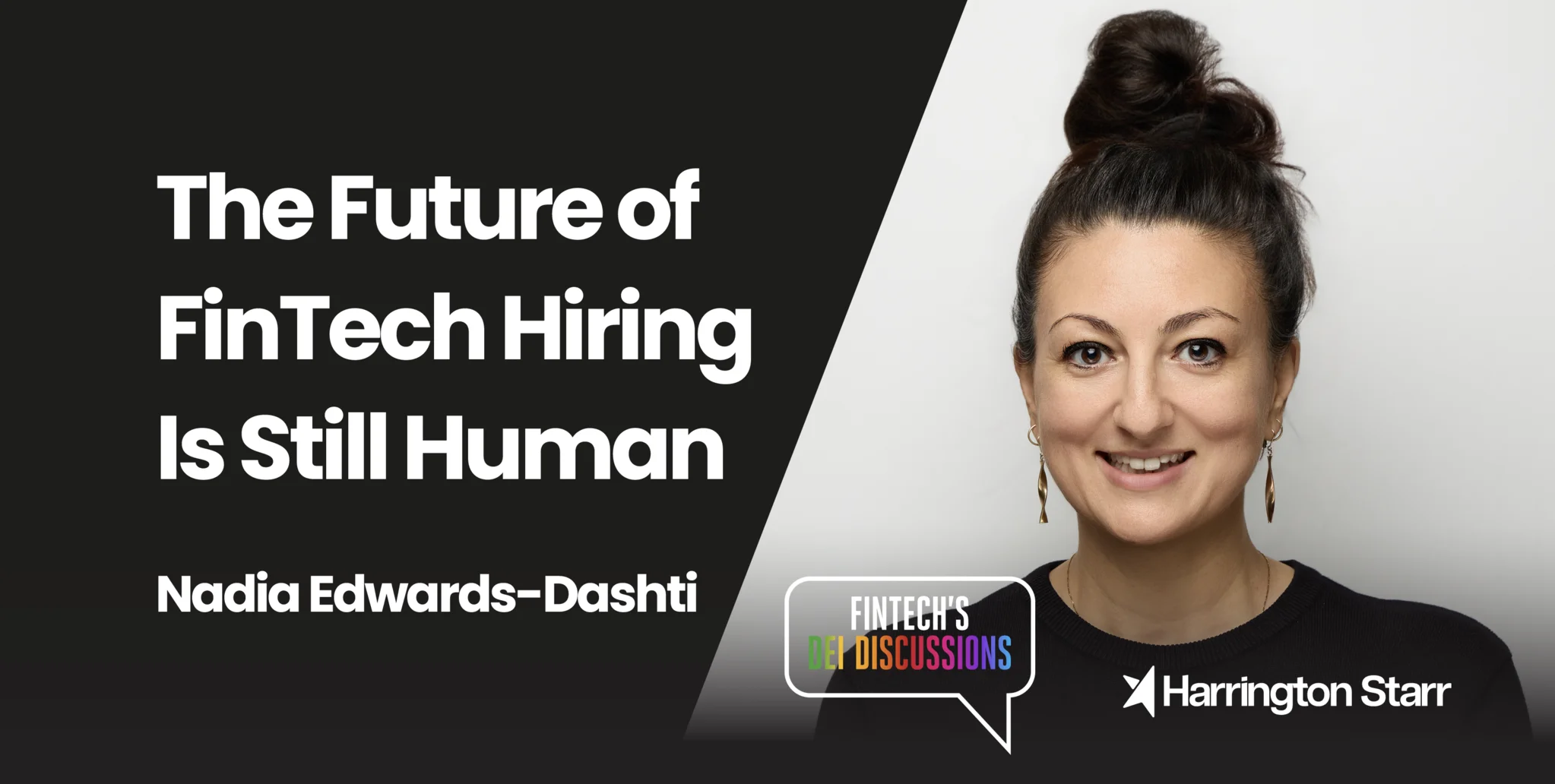
The financial technology industry has experienced extraordinary change over the past few years. From rapid growth and investment during the post-pandemic boom to a more challenging market focused on efficiency, profitability and sustainable growth, the hiring landscape has evolved dramatically. At Money20/20, Nadia Edwards-Dashti, Chief Customer Officer at Harrington Starr, joined Igor for an episode of FinTech Garden on how artificial intelligence is reshaping recruitment, why candidate experience remains critical, and what today's hiring decisions could mean for the future of the FinTech workforce.
Their conversation explored the reality of today's FinTech job market, the impact of AI on recruitment processes, the consequences of prolonged market uncertainty, and the growing importance of retaining and developing talent. While artificial intelligence was the starting point of the discussion, the wider theme centred on something far more important: ensuring that technology enhances the human experience rather than replacing it.
To understand the current state of FinTech recruitment, Nadia first reflected on the dramatically different conditions that existed in 2021 and 2022.
During that period, FinTech businesses were experiencing unprecedented growth. Funding was flowing freely into the sector, companies were scaling rapidly, and demand for talent significantly exceeded supply. Organisations competed aggressively for skilled professionals across software engineering, sales, product management, risk, compliance and technology leadership.
The market conditions created an environment where employee retention became a priority for every business. Employers were focused on flexibility, employee wellbeing, remote working support and creating workplace environments where people could thrive. Leaders understood the value of talent and recognised that losing employees could have a significant impact on business growth.
According to Nadia, if a business leader had been told during that period that ten percent of their workforce might leave, the response would have been immediate concern. Organisations were willing to invest heavily in employee experience because attracting and retaining talent was one of their biggest challenges.
Fast forward to 2026, however, and the environment looks very different.
Following the correction in FinTech valuations and several years of more difficult market conditions, businesses have shifted their focus towards efficiency, profitability and lean operating models. This prolonged downturn has resulted in fewer available opportunities, multiple rounds of redundancies across the sector and increased competition for every open position.
The result is a hiring market that has fundamentally changed. There are now significantly more candidates than available roles, creating challenges for both employers and job seekers navigating the financial technology recruitment landscape.
Artificial intelligence is increasingly becoming part of the recruitment process. From CV screening and candidate matching to interview preparation and assessment support, AI tools are now being used by both employers and job seekers.
While these technologies can improve efficiency, Nadia emphasised the importance of remembering the people involved in the hiring journey.
One of the strongest messages throughout the discussion was the need to maintain a human-centric approach to recruitment. Technology can streamline processes and reduce administrative burden, but organisations must be careful not to lose sight of the human experience.
The reality is that many professionals searching for new opportunities today are doing so because of circumstances beyond their control. Redundancies, restructuring programmes and organisational changes have left many highly skilled FinTech professionals actively seeking new positions.
For these individuals, the recruitment process represents far more than simply submitting a CV. It can be an emotional and uncertain period that shapes how they perceive both individual employers and the wider industry.
Nadia highlighted that while AI is transforming talent acquisition, businesses must ensure that efficiency does not come at the expense of empathy. Recruitment remains fundamentally about people, relationships and long-term career development.
For employers looking to attract the best FinTech talent, maintaining a positive candidate experience continues to be a critical competitive advantage.
One of the most significant concerns raised during the conversation was the potential loss of experienced talent from the FinTech sector altogether.
As hiring activity has slowed and competition for opportunities has increased, many highly skilled professionals have started exploring careers outside of traditional FinTech organisations.
Some are moving into adjacent sectors such as EdTech and FemTech. Others are transitioning into more established industries, including energy, oil and gas, or traditional financial services institutions.
This trend presents a potential challenge for the future growth of the FinTech industry.
The sector has spent years building a highly specialised talent pool consisting of technology professionals, product leaders, sales specialists, risk experts and operational professionals with deep domain knowledge. If these individuals leave the industry and establish successful careers elsewhere, bringing them back may become increasingly difficult.
For employers, this creates an important strategic consideration. Recruitment should not simply focus on filling vacancies today. It should also consider how businesses contribute to maintaining a healthy and sustainable talent ecosystem for the future.
The organisations that continue investing in people, even during challenging periods, are likely to benefit significantly when market conditions improve.
The conversation also explored how candidates can evaluate potential employers more effectively.
Historically, job seekers often relied on company websites, corporate messaging or media coverage to form opinions about prospective employers. Today, however, there are far more opportunities to gain authentic insights into workplace culture.
Nadia pointed to the growing influence of content, podcasts, interviews and social media in helping people understand what organisations are really like.
For candidates considering a move within financial services or financial technology, the available information extends far beyond a careers page. Thought leadership content, employee stories, leadership interviews and industry events all provide valuable indicators of company culture.
LinkedIn, in particular, offers useful insights into how organisations develop and retain talent. Looking at internal promotions, career progression and employee achievements can often reveal more about a business than recruitment marketing materials alone.
These signals help candidates understand whether organisations genuinely invest in their people or simply talk about doing so.
In a competitive recruitment market, transparency and authenticity are becoming increasingly important components of employer branding strategies.
A particularly interesting point raised during the discussion was the idea that recruitment extends far beyond external hiring.
Too often, recruitment is viewed solely as the process of bringing new people into an organisation. Nadia argued that the broader talent agenda should also include internal mobility, professional development and career progression.
Understanding who receives promotions, who is given opportunities to develop new skills and who is being prepared for future leadership positions provides a more complete picture of an organisation's commitment to talent development.
This perspective is particularly relevant as technological change accelerates across financial services.
Many of the skills required in future roles may not even exist today. As artificial intelligence, automation and digital transformation continue to reshape business models, organisations must become more adaptable in how they identify and develop talent.
Rather than focusing exclusively on existing technical skills, employers increasingly need to recognise transferable capabilities, learning potential and adaptability.
The organisations that successfully embrace this mindset are likely to gain access to broader and more diverse talent pools while building workforces that are better prepared for future change.
As FinTech continues evolving, transferable skills are becoming increasingly valuable.
While some highly regulated positions require very specific industry expertise, many roles can benefit from broader perspectives and experiences. Professionals from different sectors often bring fresh ideas, innovative thinking and alternative approaches to problem-solving.
Nadia highlighted the importance of diversity of thought and flexibility when evaluating talent.
For hiring managers, this may require rethinking traditional recruitment criteria. Rather than seeking candidates who have followed identical career paths, organisations may benefit from considering individuals with complementary experiences and adjacent skill sets.
This approach not only expands available talent pools but can also strengthen innovation and organisational resilience.
As competition for specialist FinTech talent continues, transferable skills are likely to become an increasingly important component of successful workforce strategies.
Perhaps the most significant long-term concern discussed during the interview relates to junior talent development.
As businesses focus on efficiency and reducing costs, entry-level hiring has often been one of the first areas affected. Graduate programmes, junior recruitment initiatives and early-career development pathways have become less common across many organisations.
While this may provide short-term financial benefits, Nadia warned that it creates significant risks for the future.
Drawing comparisons with the aftermath of the 2008 financial crisis, she recalled a period when organisations dramatically reduced junior hiring. Several years later, employers faced severe shortages of professionals with three to five years of experience because that talent pipeline had not been developed.
The same pattern could emerge again.
If businesses fail to invest in junior professionals today, the industry may face substantial skills shortages in the years ahead. The experienced leaders, managers and specialists required in the future need opportunities to develop now.
This challenge becomes even more important when considering the growing use of artificial intelligence across technology teams.
Questions are increasingly being asked about how organisations will train future software engineers, technology specialists and business leaders if fewer opportunities exist for learning and development at the beginning of careers.
Without a strong pipeline of emerging talent, the long-term health of the industry could be compromised.
The discussion concluded with a broader reflection on the future of work itself.
Nadia believes the coming years will bring significant changes to how careers are built, how organisations access expertise and how professionals choose to work.
The rise of entrepreneurship, fractional working models, contract opportunities and portfolio careers is already beginning to reshape traditional employment structures. At the same time, a new generation of highly educated professionals is entering the workforce with different expectations, different skills and different career ambitions.
These trends are likely to accelerate as technology continues transforming the employment landscape.
For FinTech businesses, success will depend on balancing innovation with human connection. Artificial intelligence will undoubtedly play a major role in recruitment, workforce planning and organisational efficiency, but the organisations that thrive will be those that continue investing in people.
The key takeaway from this conversation is that while technology is changing the mechanics of hiring, it should not change the purpose of recruitment.
FinTech recruitment has always been about connecting talented individuals with opportunities where they can create impact, build careers and contribute to innovation. AI may help organisations move faster and operate more efficiently, but it cannot replace the value of empathy, relationship-building and long-term talent development.
As the FinTech industry navigates economic uncertainty, evolving workforce expectations and rapid technological advancement, organisations must remain focused on the human side of hiring.
The companies that continue investing in candidate experience, junior talent development, internal mobility and workforce diversity will be best positioned to attract, retain and develop the people who will shape the future of financial technology.
For recruitment leaders, hiring managers and business executives alike, the message is clear: the future of FinTech hiring may involve more technology than ever before, but it remains fundamentally human.