Inclusion is Not Charity
15 October, 2026
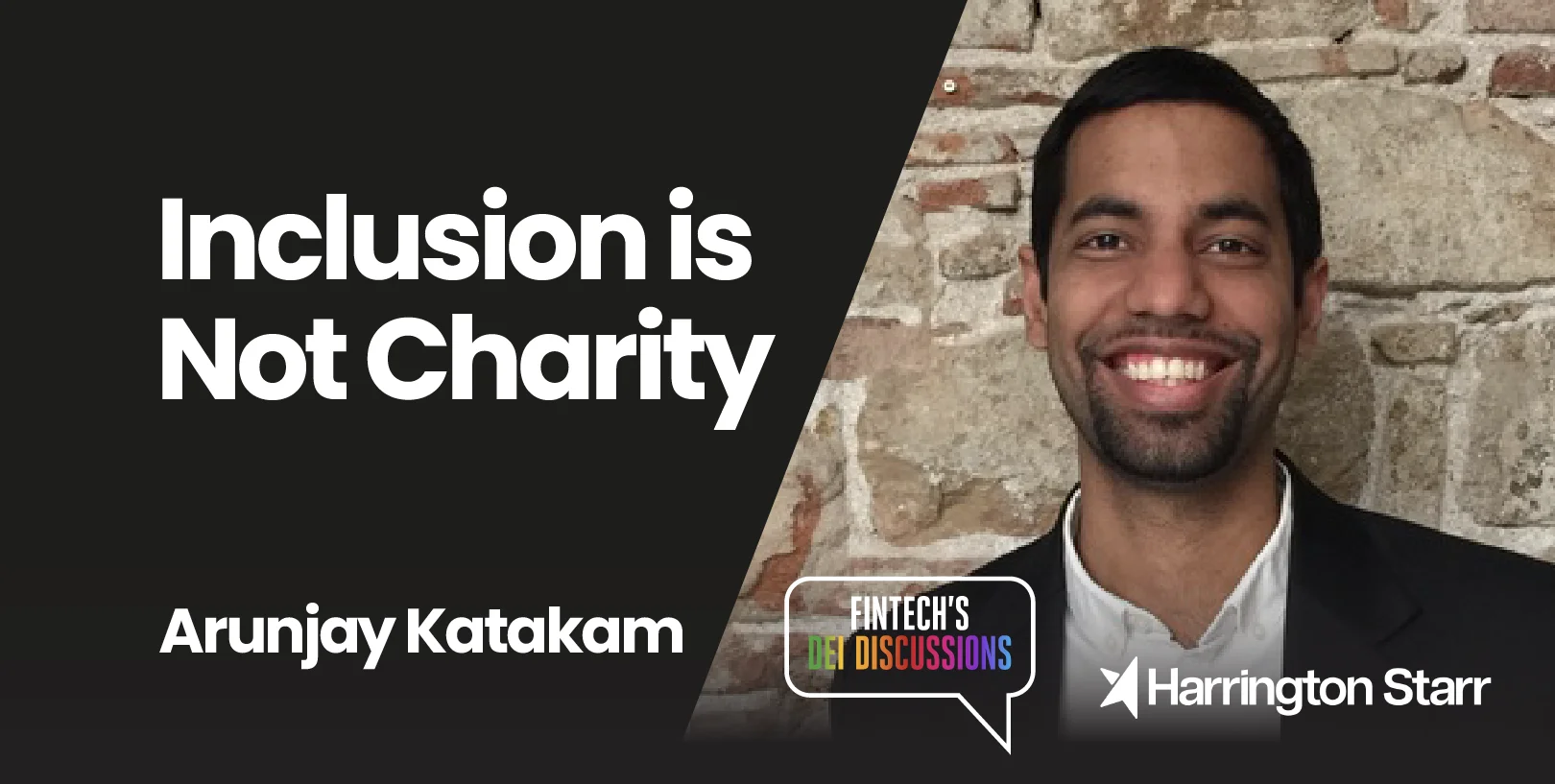

The financial technology industry is often defined by innovation, transformation and the rapid evolution of technology. Yet behind every successful innovation are the people who build, market, support and scale it. In this episode of FinTech’s DEI Discussions, host Nadia Edwards-Dashti sits down with Joanna Akers-Khan, Senior Director, Global Regional Marketing at Feedzai, to discuss career pivots, fraud prevention, financial crime, inclusion, and the power of creating opportunities for others.
Joanna's journey demonstrates that there is no single route into financial technology. From growing up in a small Australian town to becoming a senior leader within one of the world's leading financial crime prevention companies, her story highlights the importance of curiosity, adaptability and continuous learning. Throughout the conversation, Joanna shares valuable insights into why financial crime prevention has become one of the most important sectors within financial services and why inclusion must be treated as a daily practice rather than a corporate initiative.
One of the most compelling themes throughout the discussion is the idea that successful careers rarely follow a straight line. Joanna describes her upbringing in rural Australia, a world away from the global FinTech ecosystem she operates within today. Growing up in a small town with only a handful of shops and a school, she could never have predicted that her career would eventually take her across the world into leadership positions within financial technology.
Joanna arrived in London on a working holiday and what began as a temporary adventure quickly became a long-term career opportunity. She joined a small independent brand innovation agency where she worked alongside major global brands including Coca-Cola, Speedo and Carlsberg.
These formative experiences shaped her approach to leadership, marketing and professional development. More importantly, they laid the foundation for a future career that would eventually move far beyond traditional brand marketing.
For employers looking to attract diverse talent into FinTech careers, Joanna's story serves as an important reminder that great candidates do not always emerge from traditional career pathways. Many of the most successful professionals bring transferable skills from entirely different industries and disciplines.
A major turning point in Joanna's career came when she made the decision to leave brand innovation and enter the world of fraud prevention and financial crime technology.
Initially, the sector was completely unfamiliar. However, the more she researched the industry, the more she recognised both its importance and its long-term relevance. She quickly discovered that fraud represents one of the largest challenges facing financial institutions globally, with billions lost every year.
What stood out most was not simply the financial impact but the human impact. Behind every statistic is a person whose finances, security and wellbeing may have been affected by criminal activity.
This perspective ultimately inspired Joanna to join Pindrop, where she began working alongside specialists dedicated to fraud prevention. It was here that she developed a deeper understanding of how technology can be used to combat increasingly sophisticated forms of financial crime.
For professionals considering new FinTech jobs or exploring opportunities within financial technology recruitment, fraud prevention represents one of the most exciting and meaningful areas of growth. As digital payments continue to increase and AI-powered scams become more sophisticated, demand for talent in this sector is likely to continue rising.
The conversation naturally moves towards Joanna's current role at Feedzai and what attracted her to the company.
She explains that Feedzai stands apart from many traditional FinTech businesses because it was built as an AI-native organisation from the beginning. Founded in Portugal by former rocket scientists who met while working at the European Space Agency, Feedzai has built its reputation on using artificial intelligence to protect consumers and organisations from financial crime.
The company's technology operates behind the scenes, analysing transactions and identifying suspicious activity in real time while consumers go about their daily lives. Whether customers are transferring money, making purchases or paying bills, sophisticated AI systems are constantly working to identify potential threats.
The scale of this responsibility is immense. Feedzai helps protect more than a billion consumers and supports the processing of trillions of dollars in payment volume annually.
What particularly resonates with Joanna is the company's commitment to innovation. Significant investment into research and development ensures that technology continues to evolve alongside emerging fraud threats.
This balance between cutting-edge technology and human impact reflects a broader trend across financial services. While AI is transforming the sector, its greatest value often lies in protecting and empowering people rather than replacing them.
When asked what inclusion means to her personally, Joanna offers a thoughtful and practical perspective. Rather than focusing solely on representation metrics or organisational policies, she describes inclusion as creating environments where people feel valued, respected and empowered regardless of their background, identity or education.
Importantly, she highlights that inclusion does not always mean active participation. Some individuals may feel more comfortable listening and observing rather than speaking. True inclusion means creating space for different forms of engagement while ensuring everyone feels welcome and supported.
This perspective reflects an increasingly important shift within workplace culture. Organisations are recognising that inclusion is not simply about who is present in the room but whether individuals genuinely feel able to contribute in ways that are authentic to them.
For businesses hiring within financial technology, cyber security, data, product management, software engineering and other specialist areas, creating inclusive cultures is becoming a significant competitive advantage in attracting and retaining top talent.
Joanna's commitment to inclusion extends far beyond her day-to-day responsibilities. She plays an active leadership role within Feedzai's Women in Tech initiatives and employee resource groups.
What began as an internal networking programme has evolved into a much broader community that now includes customers, partners and industry peers.
Through quarterly events and networking opportunities, the programme creates environments where professionals can build relationships, share experiences and support one another. These initiatives deliberately move beyond traditional industry conversations to explore the wider human impact of financial technology.
One particularly powerful example discussed during the episode involved bringing together scam victims, banking professionals and therapists on a single panel. This approach provided a holistic understanding of financial crime by exploring its emotional, operational and societal implications.
By bringing together diverse perspectives, organisations can foster deeper understanding while encouraging more innovative solutions to industry challenges.
Beyond networking and community-building, Joanna also discusses initiatives designed to create opportunities for future generations.
Feedzai works closely with charitable organisations such as The King's Trust to support young women facing barriers to employment, education and training. These programmes help individuals access opportunities that may otherwise feel out of reach.
The company also runs regular #IAmRemarkable workshops, a global initiative originally developed by Google. These sessions help participants challenge self-limiting beliefs, overcome bias and build confidence in their achievements.
These efforts highlight an important principle that often emerges in discussions around diversity and inclusion: creating change requires action at multiple levels. It involves supporting current employees while also building pathways for future talent to enter the industry.
For FinTech recruitment businesses and hiring leaders, investing in talent pipelines remains critical to ensuring the industry continues to evolve and diversify.
Another important theme throughout the episode is Joanna's belief in the power of transferable skills.
She argues that strong foundations in communication, critical thinking and problem-solving enable professionals to move across industries and specialisms far more effectively than many people realise.
Her own career serves as evidence. Having successfully transitioned from brand innovation into fraud prevention and financial technology, she demonstrates that expertise can often be developed when the underlying skills already exist.
This perspective challenges many traditional assumptions about hiring. Too often, organisations focus exclusively on industry experience while overlooking candidates with strong transferable capabilities.
As financial technology continues to evolve, the ability to learn, adapt and think critically may become even more valuable than specific technical knowledge.
For professionals exploring FinTech jobs, product management careers, marketing leadership roles or opportunities within financial crime prevention, Joanna's experience provides reassurance that career pivots are not only possible but can lead to highly rewarding outcomes.
Perhaps the most memorable message from the entire conversation comes towards the end of the episode when Joanna reflects on what individuals can do to create more inclusive workplaces.
Her answer is simple but powerful.
Inclusion is a daily practice.
It is not something achieved through a single initiative, event or policy announcement. Instead, it requires continuous and conscious effort.
She explains that meaningful change often begins with small actions. Advocating for a colleague's idea in a meeting, recognising someone's contribution, or ensuring another voice is heard may seem insignificant in the moment. Yet these actions create ripple effects that can influence workplace culture far beyond the initial interaction.
This concept aligns perfectly with the broader mission of FinTech’s DEI Discussions. Progress is often driven not by grand gestures but by consistent actions repeated over time.
For leaders across financial technology, capital markets, payments, banking and financial services, the challenge is not simply understanding the importance of inclusion. It is committing to the daily behaviours that bring inclusion to life.
Joanna Akers-Khan's conversation with Nadia Edwards-Dashti offers a compelling reminder that successful careers and successful organisations are built on continuous growth, curiosity and human connection.
Her journey from rural Australia to senior leadership within one of the world's leading financial crime prevention companies demonstrates the power of embracing opportunities and trusting transferable skills. Her commitment to inclusion highlights how organisations can create environments where people feel valued and empowered to succeed.
As financial technology continues to evolve through AI, digital payments and emerging innovations, the industry's greatest strength will remain its people. Building inclusive cultures, supporting diverse talent and creating opportunities for career development will be essential to future success.
Whether discussing fraud prevention, Women in Tech initiatives, employee resource groups or career pivots, Joanna consistently returns to the same principle: meaningful change starts with everyday actions.