The Quant Advantage is Disappearing
14 October, 2026


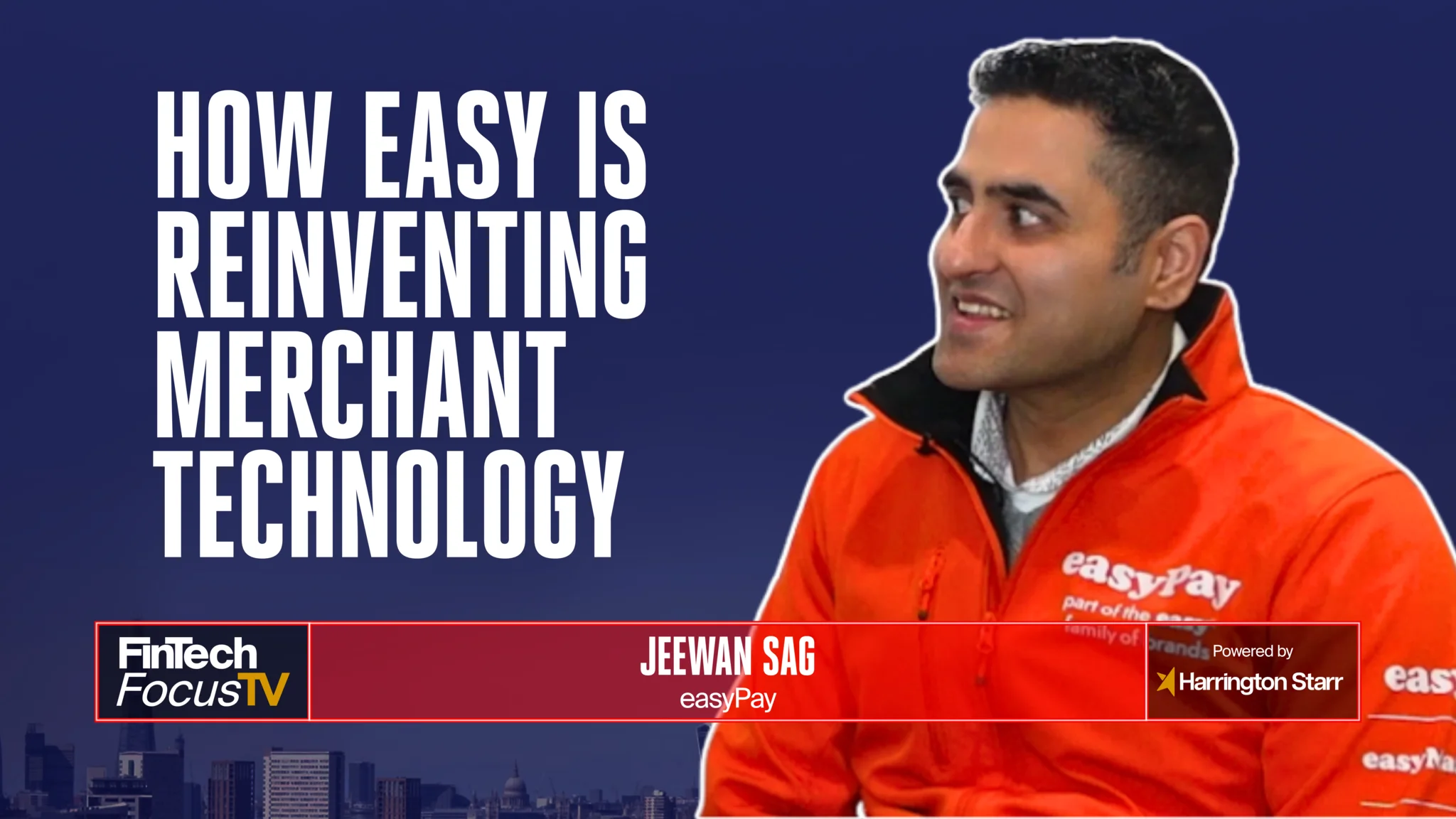
The payments industry continues to evolve at an extraordinary pace. Artificial intelligence is changing how businesses operate, merchants are demanding simpler technology, and payment providers are increasingly expected to deliver complete ecosystems rather than standalone products. These themes were explored in the latest episode of FinTech Focus TV, recorded live at Pay360 2026, where host Ian Bailey sat down with Jeewan Sagu, Co-Founder of easyPay, to discuss how the Easy family of businesses is making technology more accessible for organisations of every size.
As a leading FinTech recruitment specialist, Harrington Starr is constantly speaking with the businesses building the future of financial technology. Conversations like this provide valuable insight into the technologies shaping the industry, from AI-powered payments and merchant services to digital transformation, point-of-sale innovation and customer experience. Throughout this discussion, Jeewan explains how easyPay, easyMarketing and easyKiosk combine to create a connected ecosystem that removes complexity for merchants while embracing the latest developments in artificial intelligence.
The conversation begins with Jeewan introducing both himself and the wider Easy family of brands. While many people immediately recognise the famous orange branding through easyJet, Jeewan explains that the Easy ecosystem has continued to expand into multiple industries while remaining true to one core principle: delivering exceptional value.
That philosophy has become the foundation behind easyMarketing, easyPay and easyKiosk. Rather than creating disconnected software products, the business has focused on building complementary solutions that work together to solve common problems faced by merchants.
Jeewan explains that the business has continued following the entrepreneurial vision established by Sir Stelios, expanding into new sectors while maintaining the recognisable Easy brand identity. The objective is not simply to create more software but to make technology easier to access, easier to understand and significantly more affordable for businesses that may previously have considered advanced digital tools beyond their reach.
That emphasis on accessibility is becoming increasingly important across the wider financial technology industry, where businesses are balancing innovation with rising operational costs and increasing customer expectations.
One of the first areas Jeewan explores is easyMarketing, which has undergone significant redevelopment to embrace the rapid growth of artificial intelligence.
Rather than simply adding AI as a feature, easyMarketing has rebuilt its offering around it. The platform enables businesses to create fully functioning websites and complete e-commerce experiences with Google hosting and daily backups at a comparatively low monthly cost.
Beyond website creation, Jeewan discusses how the platform now includes an AI-powered design studio built on top of large language models. Instead of relying on generic AI image generation, the system has been designed to produce higher-quality marketing assets suitable for commercial use while reducing many of the common issues users experience with first-generation AI tools.
The platform also incorporates AI-driven SEO and Answer Engine Optimisation capabilities, allowing businesses to improve their online visibility without relying entirely on external agencies. Rather than spending thousands of pounds each month on search optimisation, merchants can use AI to automate much of the optimisation process themselves.
For businesses operating within increasingly competitive digital markets, this democratisation of marketing technology reflects a much broader trend occurring across FinTech. AI is no longer reserved for enterprise organisations with significant budgets. It is becoming accessible to independent retailers, SMEs and growing businesses looking to improve efficiency while controlling costs.
One of the most interesting moments during the discussion comes when Jeewan explains that easyPay "accidentally became a FinTech company."
He explains that the payments business naturally evolved from the development of easyKiosk, a software platform initially designed to provide merchants with accessible point-of-sale technology.
Today, easyKiosk has evolved into a comprehensive AI-powered SoftPOS solution capable of supporting multiple operational functions across retail and hospitality businesses. Despite its name, the platform is far more than a traditional kiosk. Jeewan describes how it can function as a till system, kitchen display unit, self-service terminal, staff rota management platform, marketing solution and much more.
The affordability of the platform is another recurring theme throughout the interview. Jeewan explains that businesses can begin using the software from approximately £1 per month while gaining access to an extensive suite of operational tools.
As adoption increased, the company identified the need for integrated payment capabilities. Working alongside multiple payment providers naturally led the business into the world of merchant acquiring, payment processing and financial technology, ultimately giving birth to easyPay.
It is an example of how innovation often develops organically within FinTech. Rather than entering the payments market with a predefined strategy, the business identified a genuine merchant need and expanded its technology accordingly.
A major focus of the episode is the way easyPay, easyMarketing and easyKiosk work together.
Although each product operates independently, they have been intentionally designed to complement one another. A merchant may initially engage with easyPay before adding easyKiosk for point-of-sale management or easyMarketing for website creation and online payments. Equally, businesses entering through easyMarketing can later integrate payment processing and physical point-of-sale functionality.
Jeewan describes this as creating an ecosystem rather than simply selling software products.
That integrated approach reflects a wider trend currently shaping the FinTech landscape. Businesses increasingly want fewer suppliers, fewer disconnected systems and less operational complexity. Rather than managing multiple software subscriptions across marketing, payments, websites and retail operations, merchants are looking for unified platforms capable of supporting multiple aspects of their business.
Ian Bailey highlights this during the interview, describing the proposition as becoming a genuine one-stop shop that delivers multiple services while remaining consistent with the Easy philosophy of affordability and accessibility.
For employers across the FinTech sector, these developments also reinforce growing demand for professionals with expertise spanning payments technology, embedded finance, software engineering, cloud infrastructure, artificial intelligence, product management and digital transformation. As FinTech recruitment specialists, Harrington Starr continues to see organisations searching for professionals capable of delivering integrated customer experiences across increasingly connected technology ecosystems.
Throughout the interview, Jeewan reflects on the long-term vision established by Sir Stelios.
While easyJet remains the most recognised business within the group, he explains that numerous Easy brands have emerged across multiple sectors over the years, including hospitality, storage, cleaning and now financial technology.
The common denominator is not simply the branding but the commitment to delivering value.
Jeewan credits this wider strategic vision with allowing businesses such as easyPay to develop naturally while benefiting from the recognition and trust already associated with the Easy name.
Rather than creating complexity, the objective remains making services straightforward, transparent and accessible.
That philosophy continues to resonate within financial services, where customer experience increasingly determines competitive advantage. Whether businesses operate in payments, banking, lending or wealth management, simplicity is becoming just as valuable as technical capability.
As the discussion moves towards broader industry trends, Ian Bailey asks Jeewan what businesses should be paying attention to over the coming years.
Unsurprisingly, artificial intelligence dominates the conversation.
While acknowledging that AI has become one of the industry's biggest talking points, Jeewan argues that professionals should embrace the technology rather than resist it.
He compares AI to replacing a traditional hammer with a power tool. The objective is not to replace people but to equip them with better tools that improve productivity and efficiency.
Importantly, he also advises against relying on a single AI platform.
With technologies evolving almost weekly, Jeewan encourages businesses and professionals to remain familiar with multiple AI solutions rather than limiting themselves to a single provider. Whether using ChatGPT, Grok, Claude or future large language models, continuous learning will become increasingly valuable as the technology develops.
That message is particularly relevant across today's FinTech jobs market. Employers increasingly expect candidates to demonstrate familiarity with AI-assisted workflows, automation tools and productivity platforms regardless of their specific technical role.
From software engineering and product management through to marketing, payments, compliance and operations, artificial intelligence is becoming embedded across every function within modern financial technology organisations.
Another recurring message throughout the episode is accessibility.
Jeewan explains that easyPay supports businesses ranging from individual market traders through to large enterprise organisations.
A sole trader looking for a free SoftPOS solution can access the platform alongside multinational retailers requiring large-scale payment deployments.
The company works alongside numerous payment providers, including NatWest, Elavon, Shift4 and others, helping merchants identify the most suitable solution for their individual requirements.
Rather than overwhelming customers with pricing structures, settlement times and technical terminology, the objective is to present payment solutions in straightforward language that merchants can understand.
Ian Bailey observes that this once again reflects the wider Easy philosophy of making technology available to everyone.
That customer-first mindset continues to influence innovation throughout the payments sector, where simplicity increasingly differentiates providers in highly competitive markets.
One of the strongest themes throughout the interview is the desire to remove unnecessary friction.
Instead of forcing merchants to navigate complicated payment structures, multiple hardware providers or confusing software packages, easyPay aims to consolidate these decisions into one connected experience.
The company also avoids locking customers into proprietary hardware.
Businesses can use existing tablets, smartphones and other compatible devices while also accessing preferred hardware partners where required.
This flexibility significantly lowers the barrier to entry for smaller organisations while allowing larger businesses to deploy solutions at scale without extensive infrastructure changes.
As digital payments continue growing globally, these kinds of flexible deployment models are likely to become increasingly attractive for merchants looking to modernise without substantial upfront investment.
The discussion leaves viewers with a clear understanding of the company's long-term direction. Rather than viewing payments, marketing and point-of-sale software as separate technologies, easyPay is creating an interconnected ecosystem where each solution strengthens the others.
That reflects one of the defining trends currently shaping financial technology. Customers increasingly expect unified digital experiences supported by intelligent automation, integrated payments and AI-powered services.
For businesses hiring within the sector, these developments continue driving demand for professionals across FinTech recruitment, payments recruitment, software engineering recruitment, AI recruitment, cloud engineering recruitment, product management recruitment, digital transformation recruitment, financial technology careers and payments technology hiring.