The Quant Advantage is Disappearing
14 October, 2026


The FinTech industry is entering a period of significant transformation. Advances in artificial intelligence, changing buyer expectations, increasing competition, and the growing importance of trust have all reshaped what success looks like for technology vendors operating in financial markets. For sales leaders, founders, and FinTech professionals, understanding these changes has become critical.
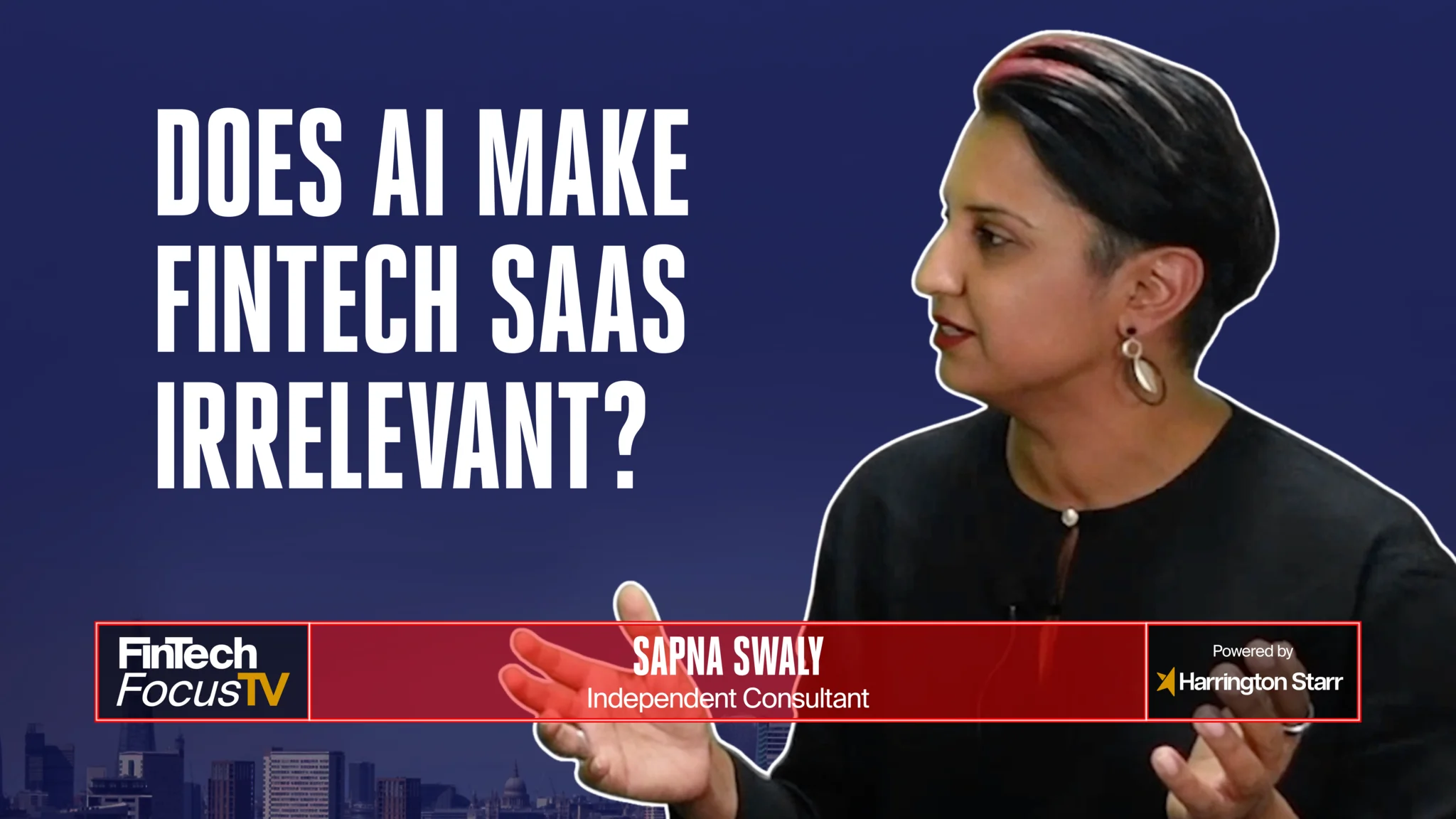
In this episode of FinTech Focus TV, Toby Babb sits down with Sapna Swaly, Independent Consultant, to explore how sales organisations are evolving across FinTech and capital markets. Drawing on her experience spanning technology, sales engineering, sales leadership, and consultancy, Sapna provides valuable insight into what separates high-performing sales teams from the rest of the market.
The conversation covers the evolution of sales careers, the role of AI in software development and sales, the future of SaaS businesses, leadership, trust, transparency, and the importance of alignment between sales, marketing, and product teams. For businesses hiring sales talent, technology professionals, or commercial leaders within financial technology, the discussion offers a timely perspective on the skills and behaviours that are becoming increasingly valuable.
Sapna's career journey highlights a theme that is becoming increasingly common within financial technology: the convergence of technical expertise and commercial capability.
Beginning her career within technology-focused roles, including sales engineering and support functions, she initially had little interest in moving into sales. However, an opportunity to join a sales team changed her perspective entirely. What made the transition successful was not a desire to become a traditional salesperson but rather her ability to understand complex technology and communicate its value effectively to different audiences.
Throughout the conversation, Sapna explains how her technical background enabled her to act as a translator between business stakeholders, developers, technology teams, and clients. Rather than simply selling software, she was helping organisations understand how technology could solve specific business challenges.
This ability to bridge technical and commercial conversations has become increasingly valuable across FinTech recruitment and capital markets hiring. As technology platforms become more sophisticated and buyers become more informed, organisations increasingly need professionals who can speak both languages.
Her experience also demonstrates how modern sales careers have evolved. The traditional stereotype of sales as relationship building alone has largely disappeared within specialist financial technology markets. Today’s most successful professionals combine commercial awareness, technical credibility, strategic thinking, and communication skills.
The conversation also explores Sapna’s move into fractional sales leadership and consultancy.
After spending time leading and building sales teams, including growing a function from a single contributor to a six-person team, she recognised both the opportunities and challenges that come with senior leadership positions. While head of sales roles offer career progression, they also require significant commitments beyond standard working hours.
This led Sapna towards a fractional model, supporting multiple businesses simultaneously and helping organisations access senior expertise without committing to a full-time executive hire.
This reflects a wider trend across financial technology recruitment. As markets become more competitive and firms look to manage costs carefully, many organisations are exploring alternative leadership models. Fractional executives provide access to experience, networks, and strategic insight while maintaining flexibility.
For growing FinTech firms, particularly those backed by venture capital or private equity investors, the ability to access experienced sales leadership during critical growth phases can prove invaluable. External perspectives often identify opportunities, inefficiencies, or strategic gaps that internal teams may overlook.
The discussion highlights how this model can be particularly effective for niche businesses operating within specialist areas of capital markets technology, where hiring a full-time senior executive may not always be practical.
One of the most thought-provoking sections of the episode centres on the ongoing debate surrounding artificial intelligence and software-as-a-service businesses.
Across the technology sector, discussions continue around whether AI will ultimately replace traditional software platforms or simply enhance them. Sapna takes a pragmatic approach to this debate.
Drawing on her experience within capital markets technology, she argues that AI should be viewed primarily as an accelerator rather than a replacement. While artificial intelligence can dramatically improve productivity, automate repetitive tasks, and enhance development processes, highly regulated financial markets still require deep expertise, oversight, and accountability.
The conversation examines how technology delivery has evolved over the past two decades. From large software releases and extensive testing cycles to managed services and cloud-based solutions, each phase of technological evolution has improved efficiency while maintaining the need for specialist expertise.
According to Sapna, the same principle applies to AI.
Financial institutions operate within heavily regulated environments. Trading platforms, compliance systems, market infrastructure, and post-trade technologies all require rigorous governance, testing, and accountability. While AI can assist with development, analysis, and productivity, organisations must still ensure systems meet regulatory standards and perform reliably under real-world conditions.
For firms operating across electronic trading, capital markets infrastructure, and financial technology platforms, expertise remains a critical differentiator.
A recurring theme throughout the discussion is the importance of expertise.
Sapna questions whether organisations should always build technology internally simply because they can. Instead, she encourages firms to focus on where their true competitive advantage lies.
For investment banks, asset managers, hedge funds, and trading firms, the ultimate objective is often performance, execution, risk management, and client outcomes rather than software development itself.
Technology vendors bring specialist knowledge developed through working with multiple clients, regulatory environments, and operational challenges. This collective experience enables them to solve problems more effectively and identify trends that individual firms may not encounter independently.
This perspective reinforces the continued importance of technology providers across capital markets. While AI may improve productivity, expertise remains difficult to replicate.
The discussion also explores the regulatory implications surrounding AI. Questions around accountability, ownership, decision-making, and transparency remain unresolved. As artificial intelligence becomes more integrated into financial services, regulators will continue to scrutinise how decisions are made and who remains responsible for outcomes.
For technology professionals considering careers within FinTech, this presents a positive outlook. Rather than replacing skilled individuals, AI is likely to increase the value of professionals who understand both technology and its broader business context.
Another fascinating aspect of the conversation focuses on innovation within financial technology.
Despite significant consolidation across capital markets technology over the past decade, Sapna believes the industry is entering another period of entrepreneurial growth.
Artificial intelligence and modern development tools have reduced barriers to entry, allowing new firms to launch products more quickly and efficiently than ever before. This has created fresh opportunities for innovation and increased competition across the marketplace.
However, standing out in an increasingly crowded environment remains challenging.
According to Sapna, differentiation ultimately comes down to trust, transparency, and credibility.
Financial markets remain relatively small communities where reputations matter. Buyers regularly speak to peers, share experiences, and assess vendors based on both product quality and the people representing those organisations.
As a result, trust continues to play a central role in commercial success.
For FinTech companies looking to scale, this creates an important lesson. Product innovation alone is rarely enough. Organisations must also build strong relationships, communicate transparently, and demonstrate credibility consistently across every client interaction.