Stop Hiring the Same People
13 October, 2026


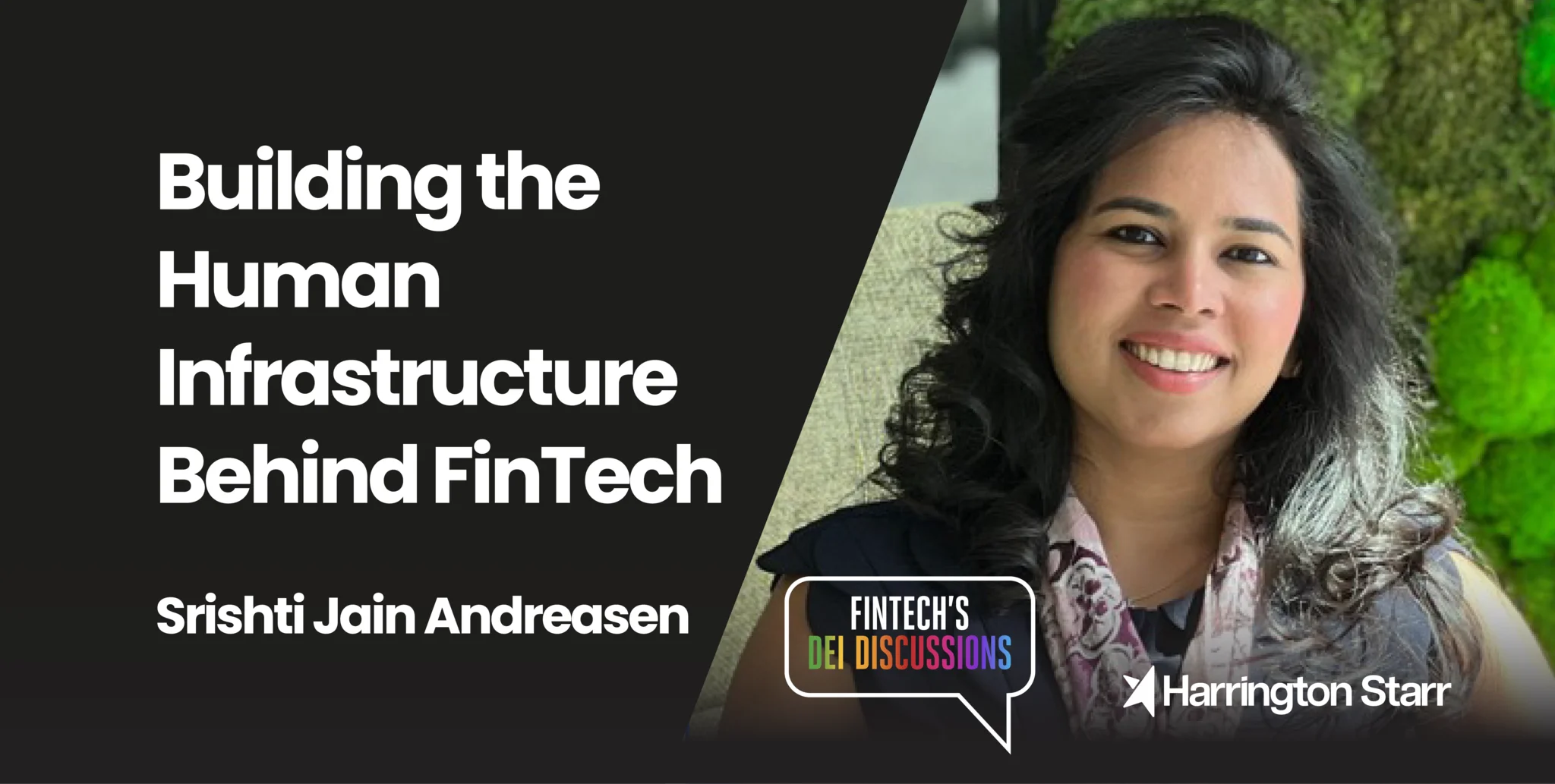
The FinTech industry is built on innovation, disruption and the ability to solve complex global challenges. Yet while the sector continues to transform payments, banking, cybersecurity and financial services, questions around diversity, inclusion and representation remain firmly on the agenda. In this episode of FinTech’s DEI Discussions, host Nadia Edwards-Dashti sits down with Srishti Jain-Andreasen, Global Executive for Business Development at RS Software and Country Ambassador for Denmark for the European Women Payments Network (EWPN), to explore what it truly means to create inclusive change across the financial technology industry.
Srishti brings a unique perspective to the conversation. Her career spans cybersecurity, digital payments, international business development and community leadership. Alongside her role at RS Software, where she works across global payment infrastructure and strategic partnerships, she has become a recognised advocate for diversity and inclusion within the payments ecosystem. Her work with EWPN and her recognition on the Women in FinTech Powerlist 2025 demonstrate her commitment not only to building technology but also to creating opportunities for people.
Throughout the discussion, Srishti shares insights from a career that has taken her across continents, industries and cultures. Her experiences highlight why inclusion is not simply a social objective but a critical business priority for organisations seeking to attract, develop and retain the best talent in financial technology.
At the start of the conversation, Srishti explains how her professional life operates across two complementary worlds. On one side, she works within the highly technical and globally significant payments sector through RS Software. The organisation has spent more than three decades helping build digital payment infrastructure that powers economies around the world.
A major example of this work is RS Software’s involvement with the National Payments Corporation of India and the development of the Unified Payments Interface (UPI). As Srishti explains, UPI has become the largest real-time payment system in the world, processing hundreds of millions of transactions every day across hundreds of banks. The scale of this achievement demonstrates how technology can transform financial inclusion and create entirely new economic opportunities.
However, while technology infrastructure enables transactions, Srishti believes human infrastructure is equally important. This is where her work with EWPN becomes particularly significant. Through the organisation, she focuses on improving gender parity, professional mobility and opportunities for women and underrepresented groups within FinTech and payments.
This dual perspective forms a recurring theme throughout the podcast. Success in financial technology requires both technical innovation and human progress. Organisations that focus exclusively on technology while neglecting inclusion risk-limiting their ability to innovate, attract talent and build sustainable growth.
One of the most compelling parts of the discussion centres on Srishti’s international career journey. Shortly after completing her master’s degree, she entered the highly specialised world of defence technology and cybersecurity. Working on cybersecurity initiatives for the US government through SRI International required her to navigate complex technical environments and highly structured government frameworks from the beginning of her professional career.
From there, her career became increasingly global. Following her move to RS Software, she spent significant time in both Japan and India, helping oversee the launch of UPI. She later worked in the United Kingdom during the emergence of open banking before spending time in Denmark and Canada, eventually returning to Denmark.
This international experience provided more than geographic exposure. It taught her how different business cultures operate and how leadership must adapt accordingly. Throughout the conversation, she emphasises two critical skills that have become fundamental to her success: active listening and cultural agility.
Active listening goes beyond simply hearing what people say. For Srishti, it involves understanding underlying concerns, cultural contexts and the motivations that influence business decisions. Cultural agility, meanwhile, enables leaders to move between very different organisational environments without losing authenticity.
These insights are increasingly relevant for financial technology organisations operating across global markets. As FinTech companies expand internationally and compete for talent worldwide, leaders must develop the ability to navigate diverse cultural expectations while maintaining strong relationships and clear strategic direction.
The conversation then moves into one of the most important themes within the episode: the realities of navigating industries that remain heavily male-dominated.
Throughout her career in cybersecurity, payments and financial technology, Srishti has frequently found herself as the only woman, the youngest person or the only person of colour in the room. While external challenges certainly existed, she explains that one of the most difficult obstacles was internal.
She describes what she calls the “double proof” challenge. This was the feeling that she needed to know significantly more than her peers in order to be taken seriously. The pressure to consistently demonstrate expertise created moments of self-doubt and imposter syndrome, experiences that many professionals from underrepresented groups will recognise.
What ultimately changed her perspective was a shift in mindset. Rather than viewing her differences as disadvantages, she began to see them as strengths. She stopped trying to fit into traditional leadership archetypes and instead embraced the unique perspectives she brought to discussions and decision-making processes.
This section of the conversation offers an important lesson for both individuals and employers. Diversity creates value precisely because different perspectives challenge assumptions, identify new opportunities and encourage innovation. Organisations seeking to improve performance should not focus on creating teams that think alike. Instead, they should actively seek diverse viewpoints that strengthen decision-making.
Recognition through the Women in FinTech Powerlist 2025 represents an important milestone in Srishti’s career. However, her perspective on recognition is particularly powerful. Rather than viewing awards as a personal achievement, she describes them as a responsibility.
For her, recognition creates an obligation to help others. This philosophy has shaped her approach to leadership, mentorship and advocacy. She explains how she actively uses her position to challenge outdated hiring practices, question the lack of diversity on panels and recommend talented individuals from her network when opportunities arise.
Her commitment to developing governance expertise through professional board education further demonstrates her long-term approach to leadership. By strengthening her own knowledge and qualifications, she positions herself to influence decision-making at higher levels while helping create pathways for others to follow.
This approach aligns with many of the conversations currently taking place across financial services recruitment and FinTech hiring. Organisations increasingly recognise that improving representation requires more than statements of intent. It requires leaders who actively use their influence to create opportunities and challenge existing barriers.
A major focus of the episode is Srishti’s work establishing EWPN Denmark. Inspired by experiences gained while serving on the board of Women in Payments during her time in Canada, she identified an opportunity to create a similar network within Denmark.
Although Denmark is frequently recognised as a leader in gender equality, Srishti observed significant gaps within financial services, FinTech entrepreneurship and capital allocation. These observations motivated her to take action and build a dedicated community focused on creating meaningful change.
Rather than launching a simple networking initiative, she spent months developing relationships and building trust across the industry. Working alongside organisations such as Copenhagen Fintech and Mastercard, she helped establish a thriving ecosystem that connects banks, fintech companies, universities, entrepreneurs and technology leaders.
The success of EWPN Denmark highlights the importance of intentional community building within the financial technology sector. Strong professional networks create opportunities for collaboration, knowledge sharing and career progression while helping address structural challenges that individuals cannot solve alone.
Another key theme explored throughout the discussion is the role of male allies in advancing diversity and inclusion.
Srishti is clear that diversity should never be viewed solely as a women’s issue. Instead, it is a business issue that affects the performance, innovation and sustainability of organisations across the financial services ecosystem.
She highlights examples of senior male leaders within the European payments sector who actively support EWPN’s mission and contribute to its success. Their involvement demonstrates that meaningful progress requires participation from all stakeholders rather than responsibility resting solely with underrepresented groups.
For FinTech employers, this message is particularly relevant. Building inclusive workplaces requires engagement from leadership teams, hiring managers and colleagues across the organisation. Sustainable change happens when inclusion becomes embedded within culture rather than treated as a separate initiative.
One of the most memorable discussions in the episode centres on networking and relationship building.
Srishti argues that many professional introductions fail because they lack context. Simply connecting two people based on shared industries or job titles rarely creates meaningful outcomes. Instead, she believes introductions should clearly articulate why the connection matters and what value each person can bring to the conversation.
This philosophy reflects a broader approach to relationship building that prioritises quality over quantity. Strong professional networks are not created through volume but through relevance, trust and shared purpose.
For professionals working within FinTech, financial services and technology recruitment, this insight provides a valuable reminder that meaningful connections often create the greatest opportunities for career development and business growth.
As the conversation draws to a close, Srishti shares practical advice for listeners seeking to create more inclusive workplaces.
Her message is simple but powerful. Inclusion should not be treated as an HR exercise or a compliance requirement. It should become a daily practice embedded within how organisations hire, promote and support people.
She encourages leaders to insist on diverse candidate slates, colleagues to actively amplify overlooked contributions during meetings, and senior professionals to move beyond mentorship towards sponsorship. While mentors provide guidance, sponsors actively advocate for people when opportunities arise.
This distinction between mentorship and sponsorship is particularly important within financial technology recruitment and leadership development. Career progression often depends not only on capability but also on visibility and advocacy.
This episode of FinTech’s DEI Discussions offers far more than a conversation about diversity. It provides a practical exploration of leadership, global business development, community building and the role individuals can play in creating change.
Through her experiences in cybersecurity, payments, fintech and advocacy, Srishti Jain-Andreasen demonstrates that inclusion and business success are not competing priorities. They are deeply connected. Organisations that embrace diverse perspectives, invest in inclusive leadership and create meaningful opportunities are better positioned to innovate, attract exceptional talent and thrive in an increasingly competitive market.