Why the Next Generation of FinTech Leaders Are Reshaping Capital Markets
The future of financial markets will not simply be shaped by technology, regulation, or market structure evolution. It will be shaped by people. More specifically, it will be shaped by the next generation of leaders entering the financial technology and capital markets industry today.
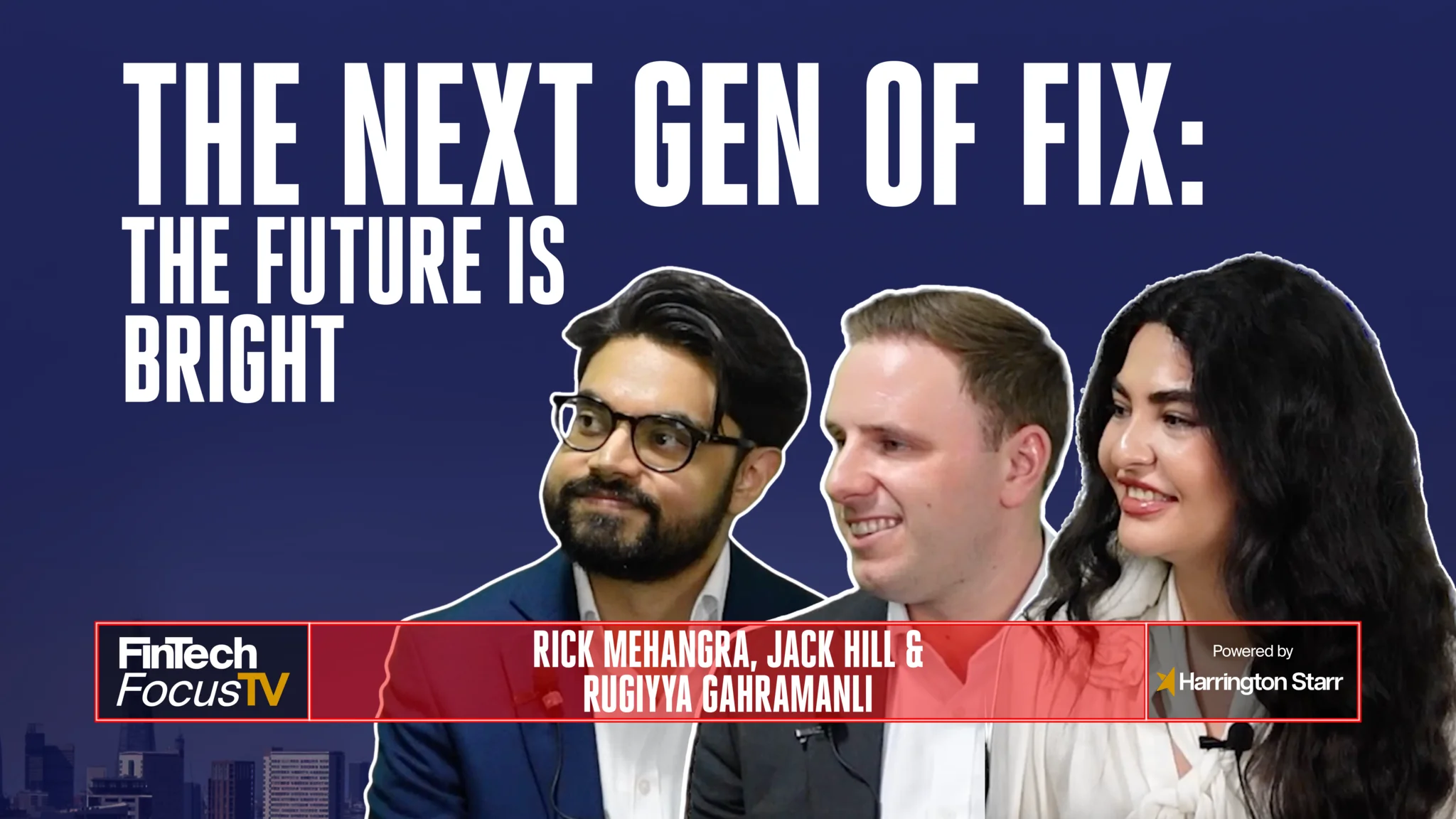
In this episode of FinTech Focus TV, Toby Babb sits down with Jack Hill, Rugiyya Gahramanli, and Rick Mehangra from the FIX NextGen Steering Committee to discuss how the industry is evolving, why community matters more than ever, and how younger professionals are beginning to influence conversations across trading technology, market structure, electronic trading, and financial services.
The discussion is not simply about career progression. It is about changing the culture of the industry itself. Across the conversation, the panel explores mentorship, networking, diversity of thought, public speaking, industry accessibility, leadership development, and the growing importance of creating space for emerging voices across FinTech and capital markets.
As the trading industry continues to evolve through AI, tokenisation, retail participation, and 24/5 trading discussions, the episode highlights why attracting, developing, and retaining the next generation of talent is becoming one of the most important priorities across financial markets.
FinTech Careers and the Evolution of the FIX NextGen Community
Early in the episode, Toby introduces the purpose behind the FIX NextGen Steering Committee and why its role has become increasingly important within the wider FIX Trading Community.
Jack Hill explains that the initiative was originally created to support future leaders in the trading industry and help younger professionals develop earlier in their careers. Rather than waiting years before gaining visibility or influence, the committee aims to create opportunities for emerging professionals to contribute much sooner.
Rugiyya Gahramanli expands on this idea by discussing how the industry historically required professionals to reach a significant level of seniority before being given a voice on panels, committees, or industry discussions. The committee recognised that times have changed and that the industry benefits when younger professionals are included in conversations earlier.
This becomes one of the central themes throughout the episode. The panel repeatedly returns to the idea that financial markets can no longer rely on traditional hierarchical structures if they want to remain innovative, attractive, and competitive.
For organisations operating within FinTech, electronic trading, market infrastructure, or capital markets technology, this conversation mirrors wider hiring trends currently taking place across the industry. Businesses are increasingly recognising the importance of leadership development, mentorship programmes, internal mobility, and employee engagement as part of long-term talent retention strategies.
For FinTech recruitment businesses like Harrington Starr, these themes continue to shape conversations with both clients and candidates across trading technology, data, software engineering, infrastructure, AI, and capital markets transformation roles.
Financial Services Networking and Why Community Matters in FinTech
One of the strongest themes across the discussion is the importance of networking and community within financial services.
Rick Mehangra discusses how many people entering the industry initially only know the small network within their own organisation. The committee’s goal is to help individuals build relationships across the wider market, including the buy side, sell side, exchanges, vendors, and market infrastructure providers.
The conversation highlights how the strongest industries are often built through long-term professional relationships. Toby reflects on his own experience attending the FIX EMEA Trading Conference over many years and describes how the sense of community continues to grow every year.
This discussion is particularly relevant within financial technology recruitment because relationship-building remains one of the most valuable assets professionals can develop across the industry. Whether someone works within trading technology, software engineering, quantitative finance, electronic trading, or capital markets infrastructure, career progression is often accelerated through collaboration, visibility, and shared industry participation.
The panel also discusses how networking becomes significantly less intimidating when younger professionals are surrounded by peers who are at similar stages in their careers. This creates an environment where people feel more comfortable asking questions, sharing ideas, and developing confidence.
That confidence-building aspect becomes increasingly important throughout the episode.
Trading Technology Leadership and Building Confidence Through Industry Exposure
A major focus of the conversation is how FIX NextGen is helping younger professionals develop leadership skills and industry confidence.
Toby references previous NextGen panels where several speakers were presenting publicly for the first time. He reflects on how quickly individuals developed confidence simply through being given the opportunity to participate.
The committee has intentionally built initiatives around this idea. Throughout the episode, the guests discuss public speaking opportunities, debates, roundtables, educational sessions, networking events, and podcasts designed specifically to help younger professionals gain exposure.
One particularly interesting discussion focuses on the introduction of NextGen roundtables during the FIX EMEA Trading Conference. Jack explains that these sessions were created as safe environments where early-career professionals could openly discuss major industry topics such as 24/5 trading, market structure evolution, and changing trading mechanisms.
The objective was not only to educate participants but to encourage individuals to contribute their own opinions.
This is particularly important within capital markets and trading technology because many professionals spend years observing conversations before feeling confident enough to actively contribute. By creating environments specifically designed for younger professionals, the committee is accelerating both learning and participation.
The panel also discusses how these initiatives are helping develop future industry leaders who may eventually contribute to FIX working groups, steering committees, and broader market structure discussions.
For firms hiring within FinTech and financial services, this focus on leadership development reflects a growing market trend. Companies increasingly want candidates who can communicate effectively, collaborate cross-functionally, and contribute strategic thinking alongside technical expertise.
The Future of Capital Markets Technology and the Shift Towards Action
As the conversation moves towards broader market trends, the panel reflects on the changing priorities within financial markets and capital markets technology.
Rugiyya describes 2026 as the “year of action” for the industry. Rather than simply discussing ideas theoretically, firms are now beginning to implement many of the concepts that have dominated conference agendas over recent years.
Topics such as 24/5 trading, tokenisation, retail participation, and the consolidated tape are no longer purely hypothetical discussions. According to the panel, the industry is now moving from planning into execution.
This shift reflects wider trends happening across financial technology and trading infrastructure. Capital markets firms are increasingly investing in platform modernisation, AI adoption, cloud transformation, trading analytics, automation, and interoperability across systems.
For professionals working within trading technology, data engineering, software engineering, infrastructure support, cloud engineering, AI, or quantitative finance, this creates enormous opportunities for career growth and innovation.
Toby also praises the structure of the FIX EMEA Trading Conference agenda, particularly its focus on technology, regulation, people, and industry transformation happening simultaneously.
The discussion repeatedly reinforces the idea that the industry is entering a period of rapid evolution, where collaboration and adaptability will become increasingly important.
FinTech Podcasts, Education, and Creating Industry Accessibility
Another major topic throughout the episode is education.
The guests discuss the growing FIX NextGen podcast initiative and how it is helping create accessible educational content for professionals entering the industry.
Rugiyya explains that when she first joined the industry, there was no single resource or textbook available to quickly learn how markets, trading technology, and financial services operated. Much of the learning process relied on attending meetings, observing colleagues, reading independently, and gradually piecing knowledge together over time.
The podcast series aims to simplify that process by creating conversations specifically designed for younger professionals entering financial markets.
The committee interviews experienced industry leaders across different subjects, helping build a repository of educational discussions covering areas such as liquidity, market structure, trading technology, and broader financial markets topics.
Importantly, the initiative is designed not only for the NextGen audience but eventually for the wider trading industry itself.
This focus on accessible education aligns closely with broader recruitment and retention trends across financial technology. Increasingly, firms are recognising that strong onboarding, learning opportunities, mentorship, and continuous development are essential for attracting younger talent into the industry.
The panel also highlights the introduction of free FIX conference tickets for NextGen members, helping remove accessibility barriers that may prevent early-career professionals from attending major industry events.
Why Financial Markets Remain One of the Most Exciting Industries in the World
Towards the end of the episode, Toby asks the panel why financial markets remain such an exciting industry for younger professionals entering their careers today.
Jack describes the industry as dynamic, fast-changing, and constantly evolving. He reflects on how dramatically trading and electronic markets have already transformed and how exciting it is to think about where the industry could move next over the coming decades.
Rugiyya offers another perspective, explaining that the industry feels both incredibly large and surprisingly small at the same time. Despite being a multi-trillion-dollar global ecosystem, relationships and reputations still matter enormously, particularly within financial centres such as London.
This observation resonates strongly throughout the conversation. One of the recurring themes across the episode is how interconnected the financial markets community truly is.
Rick adds another powerful perspective by discussing London’s role as a global financial centre. He reflects on learning about financial services during school and later realising the enormous complexity, scale, and influence of the industry itself.
Toby expands on this point by describing financial markets as one of the few industries capable of attracting some of the world’s sharpest minds to solve highly complex problems with global impact.
For professionals considering careers within financial technology, capital markets, software engineering, AI, quantitative finance, data, cyber security, infrastructure, or trading technology, the episode reinforces why the sector continues to offer extraordinary opportunities for innovation and long-term career growth.
The Future of FinTech Talent and Leadership Development
As the episode concludes, the conversation returns to the broader purpose behind FIX NextGen and why its work matters for the future of the industry.
The guests discuss mentorship programmes, public speaking training, personal branding sessions, networking initiatives, and educational events designed to help younger professionals navigate their careers more effectively.
Importantly, they also stress that participation is flexible. Individuals can engage as much or as little as they wish, whether through mailing lists, podcasts, conferences, networking events, or mentoring relationships.
Toby reflects on how much the initiative has evolved over recent years and how clearly the progress can now be seen across the wider industry. Rather than simply discussing future change, the industry is actively implementing new structures designed to support the next generation of talent.
That may ultimately be the biggest takeaway from the episode.
The future of financial markets will depend not only on technology innovation but on the people capable of leading that innovation forward. Initiatives like FIX NextGen are helping ensure that younger professionals entering FinTech and capital markets today are given the confidence, opportunities, and visibility needed to shape the future of the industry itself.
For businesses operating across financial services, trading technology, electronic markets, and FinTech recruitment, the conversation serves as an important reminder that long-term industry growth depends on investing in people just as much as platforms, products, or infrastructure.