The Quant Advantage is Disappearing
14 October, 2026


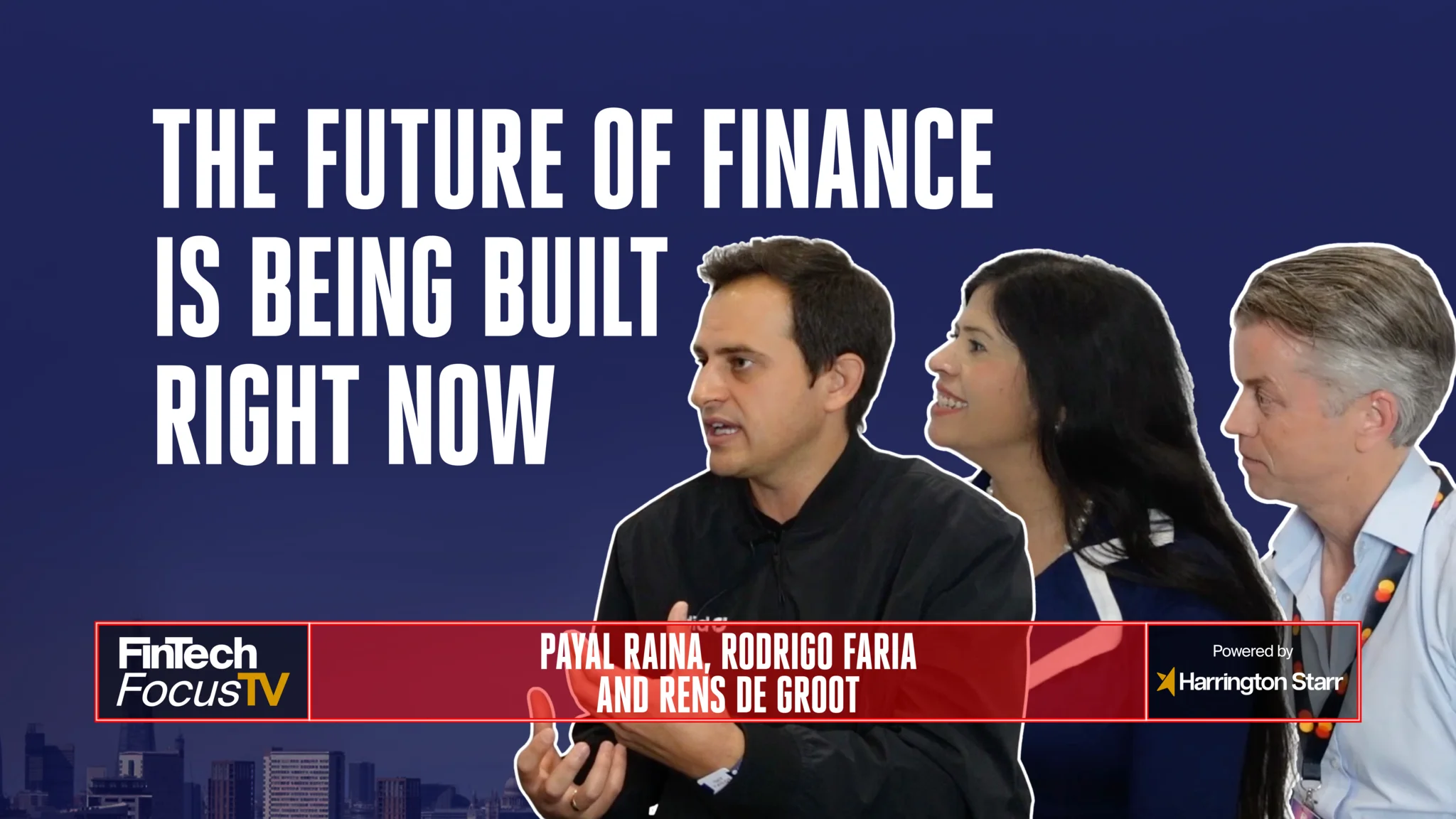
The future of finance is no longer a distant concept. Across payments, digital assets, stablecoins and financial infrastructure, organisations are actively building the technologies that will define the next generation of financial services. In this special episode of FinTech Focus TV, recorded live at PAY360 2026 in London, Ian Bailey is joined by Rodrigo Faria, Head of Technology at Bitso, Payal Raina, Founder of the Fin.Tech Marketing Community, and Rens de Groot, Chief Commercial Officer at Zerohash.
Together, the guests provide a unique perspective on how the financial technology industry continues to evolve. While each guest approaches the future from a different angle, ranging from fintech community building and marketing leadership to digital assets infrastructure and cross-border payments, the conversation highlights a common theme: the future of finance is already being built.
For professionals working across financial technology, payments, digital assets, fintech recruitment and technology leadership, the discussion offers valuable insight into where the industry is heading and the opportunities that are emerging as innovation accelerates.
Payal Raina discusses the growth of the Fin.Tech Marketing Community and the role that collaboration plays in accelerating innovation across financial services and technology.
Founded more than five years ago during the COVID period, the community was created with a clear objective: bringing together business leaders, marketing leaders and technology professionals across the fintech ecosystem. The goal was simple but powerful: create a platform where people could connect, learn and grow from one another.
What began as a community initiative has grown into a global movement. The organisation now operates chapters across London, New York, Hong Kong and Singapore and has attracted more than 23,000 subscribers and members worldwide.
The growth of these types of professional communities reflects a broader trend within financial technology. As innovation cycles accelerate and competition for specialist talent increases, organisations are increasingly recognising the importance of ecosystem development. Whether through networking, thought leadership, events or collaborative learning, communities play a critical role in connecting professionals and helping businesses remain at the forefront of industry developments.
For companies focused on fintech hiring, fintech recruitment and financial technology talent acquisition, these communities also provide an important avenue for attracting, engaging and developing future leaders.
During the discussion, Payal also shares her perspective on gender representation and leadership within financial services and technology.
She highlights how traditional societal expectations have often influenced career choices, with women frequently encouraged towards customer-facing, nurturing or relationship-driven professions while men have historically been steered towards technical disciplines and technology-focused careers.
However, she notes that attitudes are continuing to shift. More women are entering leadership positions across marketing, revenue generation and business leadership functions, creating visible role models for future generations.
The conversation reflects an ongoing challenge across financial technology and wider technology sectors. While progress continues, organisations remain focused on improving representation across leadership teams, technology functions and executive positions.
For fintech employers, attracting diverse talent pools remains a critical component of long-term success. As competition for skilled professionals intensifies across software engineering, data, AI, cyber security, product management and leadership roles, creating inclusive environments that support career progression continues to be a significant differentiator.
Rodrigo Faria provides insight into Bitso's evolution from a cryptocurrency exchange into a broader financial infrastructure provider supporting businesses across multiple regions.
Founded in Mexico more than a decade ago, Bitso was initially created to help individuals access cryptocurrency technology. One of the major challenges during those early years was enabling users to move seamlessly between traditional currencies and digital assets.
Building that capability required significant infrastructure investment. Bitso developed connections across banking systems throughout Latin America and established regulatory frameworks across multiple jurisdictions including Mexico, Brazil, Colombia and Argentina.
Over time, the company recognised that the same infrastructure could solve challenges for businesses as well as consumers.
Today, Bitso supports organisations seeking to move money efficiently across borders by leveraging a combination of traditional financial infrastructure and stablecoin technology. The business now operates across both retail and business markets, providing services that include investment platforms, cross-border payments and multi-currency wallet solutions.
The discussion highlights a broader trend occurring across global financial services. Businesses increasingly require faster, more efficient and more transparent methods of moving capital internationally. As global commerce expands and digital payments continue to grow, infrastructure providers are playing a crucial role in enabling seamless transactions between markets.
One of the most significant themes emerging from the conversation is the growing role of stablecoins within financial services.
Rodrigo explains how Bitso connects traditional financial systems with stablecoin infrastructure, enabling organisations to move value more efficiently across borders. Through these payment rails, businesses can access both fiat currencies and stablecoins when conducting transactions throughout Latin America and beyond.
What is particularly notable is the expanding range of use cases. While early adoption often centred around remittance companies and payment service providers, stablecoin usage is now extending into treasury management, foreign exchange activities and broader corporate finance functions.
Businesses paying suppliers across international markets can increasingly utilise stablecoin solutions to facilitate transactions, helping reduce friction within traditional payment systems.
The discussion demonstrates how digital assets are gradually moving from niche applications towards mainstream financial infrastructure. Rather than being viewed solely as investment vehicles, stablecoins are increasingly being recognised as practical tools for payments, liquidity management and cross-border commerce.
For financial technology professionals, product leaders and fintech employers, this evolution is creating new opportunities for innovation, product development and specialist hiring.
One of the most compelling moments of the episode centres around regulation and its relationship with innovation.
Rather than viewing regulation as a barrier, both Rodrigo and Rens emphasise its importance in supporting long-term growth and institutional adoption.
Rens explains that Zerohash actively embraces regulation. The company operates under MiCAR licensing in Europe and views regulatory approval as a valuable asset that enhances credibility and trust.
This perspective represents a significant shift in how many organisations approach regulatory frameworks. Historically, regulation was often portrayed as slowing innovation. Today, many fintech firms recognise that clear regulatory standards provide certainty for investors, customers and institutions alike.
The emergence of frameworks such as MiCAR is helping create consistency across markets while encouraging greater participation from banks, brokerages and financial institutions.
As digital assets continue to mature, regulation is becoming one of the key foundations supporting sustainable industry growth.
Rens de Groot provides a fascinating overview of how financial institutions are approaching digital assets, tokenisation and stablecoin services.
Zerohash provides infrastructure that enables banks, brokers, merchants and financial institutions to offer digital asset services directly to their customers.
The company works behind the scenes, allowing organisations to integrate digital asset capabilities into their existing technology stacks while maintaining their own customer relationships.
According to Rens, demand continues to accelerate across Europe. Banks, brokerages and payment service providers are increasingly exploring how digital assets can complement traditional financial offerings.
This trend reflects a broader shift occurring throughout financial markets. Digital assets are no longer being viewed solely through a speculative lens. Instead, institutions are evaluating practical applications ranging from trading and payments to tokenisation and asset servicing.
The conversation suggests that the industry may be approaching a significant inflection point as more traditional institutions move from exploration to implementation.
While the conversation focuses primarily on technology, infrastructure and financial innovation, there are clear implications for fintech recruitment and talent acquisition.
As stablecoins, digital assets, tokenisation and financial infrastructure continue to evolve, demand for specialist talent will inevitably increase.
Financial institutions and fintech companies require professionals capable of navigating highly regulated environments while also driving technological innovation. Product managers, software engineers, payments specialists, compliance professionals, infrastructure experts and digital asset specialists will all play important roles in shaping the next generation of financial services.
The rapid pace of innovation also means that adaptability is becoming increasingly valuable. Organisations are seeking professionals who can operate across traditional financial systems while understanding emerging technologies and evolving market structures.
For fintech recruitment businesses and financial technology employers, identifying and attracting this talent will remain a strategic priority.
Perhaps the strongest message from this episode is that financial services is entering a period of significant transformation.
Across payments, digital assets, stablecoins, community building and financial infrastructure, organisations are actively creating the foundations of tomorrow's financial ecosystem.
Payal Raina highlights the importance of connecting people and fostering collaboration. Rodrigo Faria demonstrates how infrastructure can bridge traditional finance and emerging technologies. Rens de Groot showcases how regulated digital asset solutions are enabling institutional adoption at scale.
While each guest represents a different part of the ecosystem, their perspectives converge around a shared belief: innovation is accelerating, adoption is increasing and the future of finance is already taking shape.
For financial technology leaders, fintech professionals and organisations navigating the changing landscape, the message is clear. The future is not something to prepare for eventually. It is being built right now, and those who engage with these changes today will be best positioned to benefit from the opportunities that lie ahead.