Babb talks to BABB. London & The Future of On Chain Finance
01 April, 2026
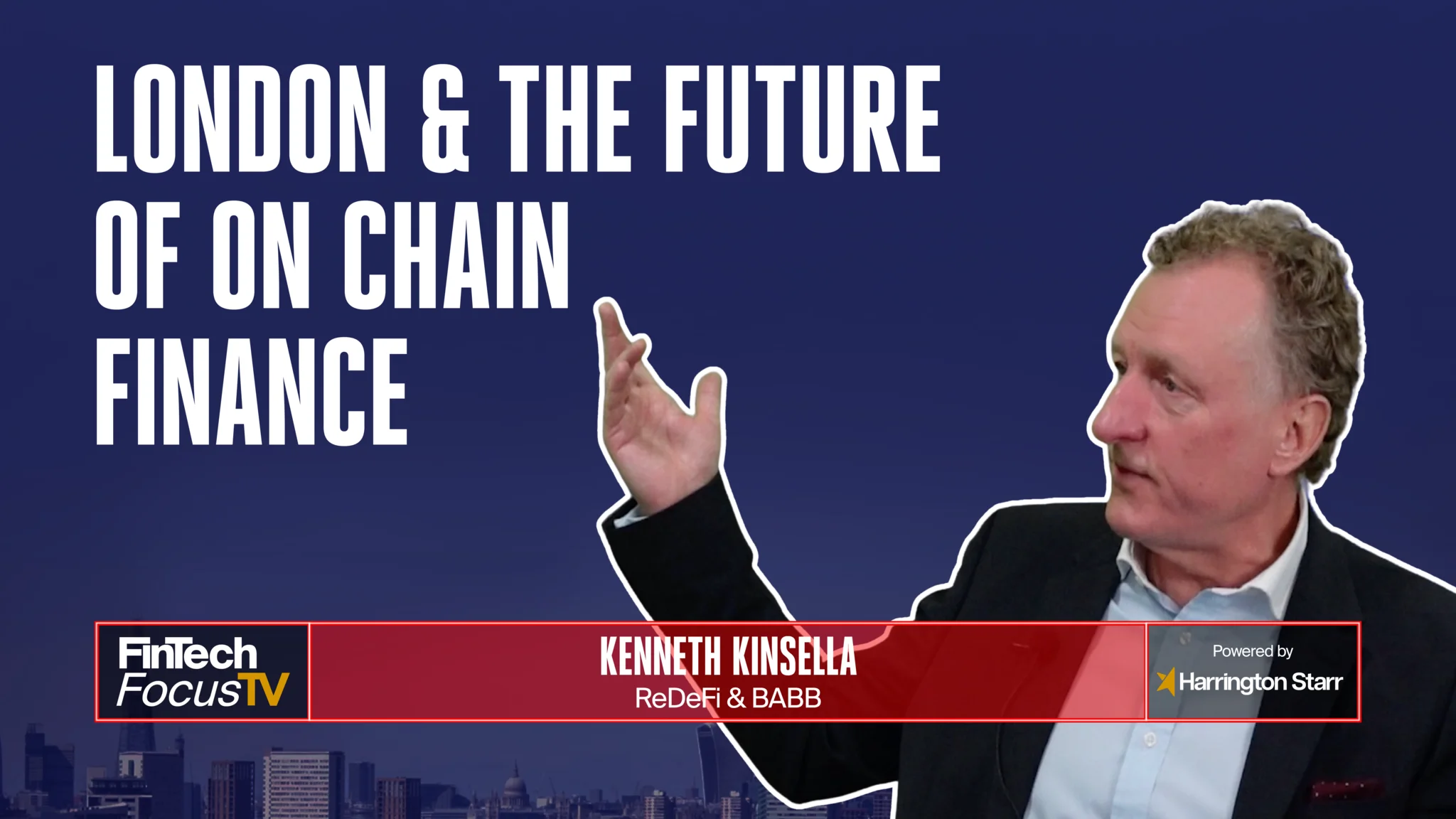

The Christmas special of FinTech Focus TV brings together everything the festive season should: good humour, brilliant guests, unexpected challenges, and meaningful conversations about the future of financial technology. This episode welcomes two standout voices from one of the most exciting AI startups in financial services today: Sophonie Robichon, Head of Marketing & Communications and Business Development EMEA at Boltzbit, and Neil Weatherall, part of the growing Business Development function at the company.
From workplace culture to exponential AI adoption to London’s most structurally unstable Christmas sandwich, the episode is part festive competition, part deep dive into the future of AI in finance.
One of the most compelling threads in the conversation is Boltzbit’s mission to reshape how financial services companies use AI. As a FinTech recruitment business, Harrington Starr speaks with thousands of leaders across trading, data science, quantitative finance, and software engineering, and the rise of AI-first business strategies has been impossible to ignore.
Boltzbit sits at the centre of this shift. Their core proposition is the development of customised AI models capable of real-time learning, a breakthrough that solves one of the industry’s biggest challenges: the gap between powerful consumer AI tools and the more rigid technologies traditionally used in institutional finance.
Neil explains that while AI has been embedded in home life for years, businesses have historically struggled to take small AI experiments and turn them into live, production-level systems. He notes that much of the sector has been trapped in cycles of pilots and proofs-of-concept that never scale. The bottleneck has not been interest, but implementation. With AI adoption now accelerating quickly across financial markets, firms are beginning to understand what they want AI to do, and how crucial customised models are when operating in high-stakes, data-dense environments such as trading, risk, fraud, and compliance.
Where generative AI models offer general intelligence, Boltzbit’s approach is different: the AI evolves with the user and with each interaction. Sophonie explains that this model is never frozen in time and continues learning as the market changes, which is essential for financial institutions handling vast volumes of constantly shifting data. The instant-learning capability is especially important in environments where models must remain up to date to make accurate predictions or support fast-moving decisions.
From a FinTech recruitment perspective, innovations like this reshape the skill sets required across data engineering, quantitative research, and AI product development. The demand for candidates who understand both domain expertise and machine learning architectures continues to rise, and Boltzbit’s journey illustrates exactly why.
One of the highlights of this festive episode is hearing how Boltzbit has grown internally. Neil jokes that he is “one of the longest standing” employees despite having only joined three months ago, which highlights the company’s rapid hiring trajectory in 2025.
Their team has doubled, if not quadrupled, in size, with new specialists joining across AI research, engineering, and customer-facing roles. Sophonie describes how energising it is to leave the heavily structured corporate environment of financial institutions and step into a startup where the playbook doesn’t yet exist.
Culturally, Boltzbit stands out from traditional financial markets environments. Daily team lunches, open collaboration, and cross-disciplinary conversations with AI PhDs create a workplace where ideas stretch far beyond job titles. This is particularly interesting from the standpoint of FinTech hiring: the most competitive businesses today are the ones that create cultures where diverse thinking thrives.
In a market where top FinTech candidates now prioritise working environments that allow them to contribute ideas, build across departments, and help define product direction, Boltzbit’s approach positions them strongly, and mirrors what we see across the companies Harrington Starr supports globally.
The episode also highlights the extraordinary demand for AI solutions within financial markets. Sophonie recalls attending FILS (Fixed Income Leaders Summit) on her first day at Boltzbit and being struck by the volume of inbound interest the company received. Attendees approached their stand all day without the team needing to chase conversations, a clear marker of how urgent and widespread AI adoption has become.
She notes that compared to the beginning of the year, financial institutions are no longer asking “Should we be using AI?” but instead asking, “How can we apply AI to this specific use case?” The industry has matured rapidly, with leaders now arriving at events equipped with defined problems and seeking vendors capable of delivering tailored solutions.
This reinforces a seismic trend we have seen across FinTech recruitment: employers are not simply hiring AI talent, they are rethinking entire business units, organisational charts, and delivery pipelines to ensure AI becomes part of long-term strategy rather than a standalone investment.
Another powerful insight Neil shares is about data governance and intellectual property. Many financial organisations are reluctant to use generic AI because they do not want their data absorbed into external models. They need bespoke systems built on their proprietary datasets, kept entirely in-house. For hedge funds, trading firms, and banks working with sensitive or edge-derived datasets, this is not a preference, it is a regulatory and competitive necessity.
This explains why so many FinTech clients are building specialist AI teams from the ground up, prioritising data engineers, ML ops specialists, quantitative technologists, and cross-functional delivery roles. It is also why businesses like Boltzbit are seeing intense demand: their technology aligns perfectly with what these firms need next.
Of course, no Christmas special would be complete without something unexpected, and Toby, Neil, and Sophonie embrace the festive spirit by hosting an in-studio competition to identify London’s best Christmas sandwich.
Armed with a scoring sheet featuring criteria such as appearance, moisture, structural integrity, filling-to-bread ratio, height-of-sandwich versus height-of-mouth, and “can you eat it without getting messy?”, the trio embark on what quickly becomes a chaotic and hilarious tasting journey.
The contestants span everything from supermarket staples (M&S, Sainsbury’s) to favourites (Dom Subs, Black Pig from Borough Market) and curveballs like Subway’s unexpectedly spicy “festive” sub. Some sandwiches impress with strong flavours and Christmas authenticity.
Key moments included:
• Dom Subs delivering great flavour but absolutely no structural stability.
• Black Pig earning praise for taste and gravy, despite its total disregard for neat eating.
• Subway surprising everyone by being better than expected but “not Christmas at all”.
• M&S and Pret showcasing consistent high-street craftsmanship.
• Sandwich Sandwich delivering quantity, ambition, and unavoidable chaos.
Ultimately, the team crowned Black Pig and Dom Subs among the top contenders, though the methodology is as delightfully inconsistent as the sandwiches themselves.
This playful segment accomplishes something powerful for employer branding and FinTech storytelling: it reminds viewers that technology businesses are built by people, culture, humour, and shared experiences. It humanises innovation and highlights why culture-led hiring is critical in a competitive FinTech recruitment market.
Throughout the episode, Toby praises Boltzbit’s distinctive marketing, particularly their educational LinkedIn content, which demystifies AI for financial services audiences without losing the character or personality of the brand. Sophonie has played a defining role in shaping this voice, blending her years of experience in regulated financial institutions with the creative freedom of an AI startup.
She notes that working in AI means inventing the playbook as you go: there are no established norms for how an AI company should communicate, define its identity, or educate the market. This creative environment is one of the reasons she joined Boltzbit, having originally met the team during a project between Boltzbit and Liquidnet.
Effective FinTech marketing is no longer about features and functions, it is about building trust, clarity, and accessibility in a rapidly evolving technological landscape. Boltzbit’s commitment to this aligns strongly with what Harrington Starr sees across high-performing FinTech scaleups: brands that communicate openly and educate the industry are the brands that attract top talent.
At the close of the episode, Sophonie directs viewers to two key places to learn more about Boltzbit: their newly launched website and their active LinkedIn presence, where they regularly publish educational content and updates about their expanding work in AI. Toby echoes this recommendation, praising the clarity, creativity, and accessibility of the company’s public content.
For financial services leaders looking to modernise data strategy, enhance predictive capabilities, or understand how customised, instant-learning models can unlock value across their organisation, Boltzbit represents one of the most forward-thinking solutions in the market.
For Harrington Starr, a global FinTech recruitment business supporting clients in London, New York, and Europe, episodes like this highlight exactly why talent remains at the heart of transformation. Companies like Boltzbit do not grow because of technology alone, they grow because of the people behind it, the culture they build, and the curiosity that drives them.
Whether you tune in for the AI insights or stay for the sandwich chaos, this is one of the most enjoyable and insightful FinTech Focus TV episodes of the year, and a perfect reminder of why the FinTech community continues to thrive.