Babb talks to BABB. London & The Future of On Chain Finance
01 April, 2026
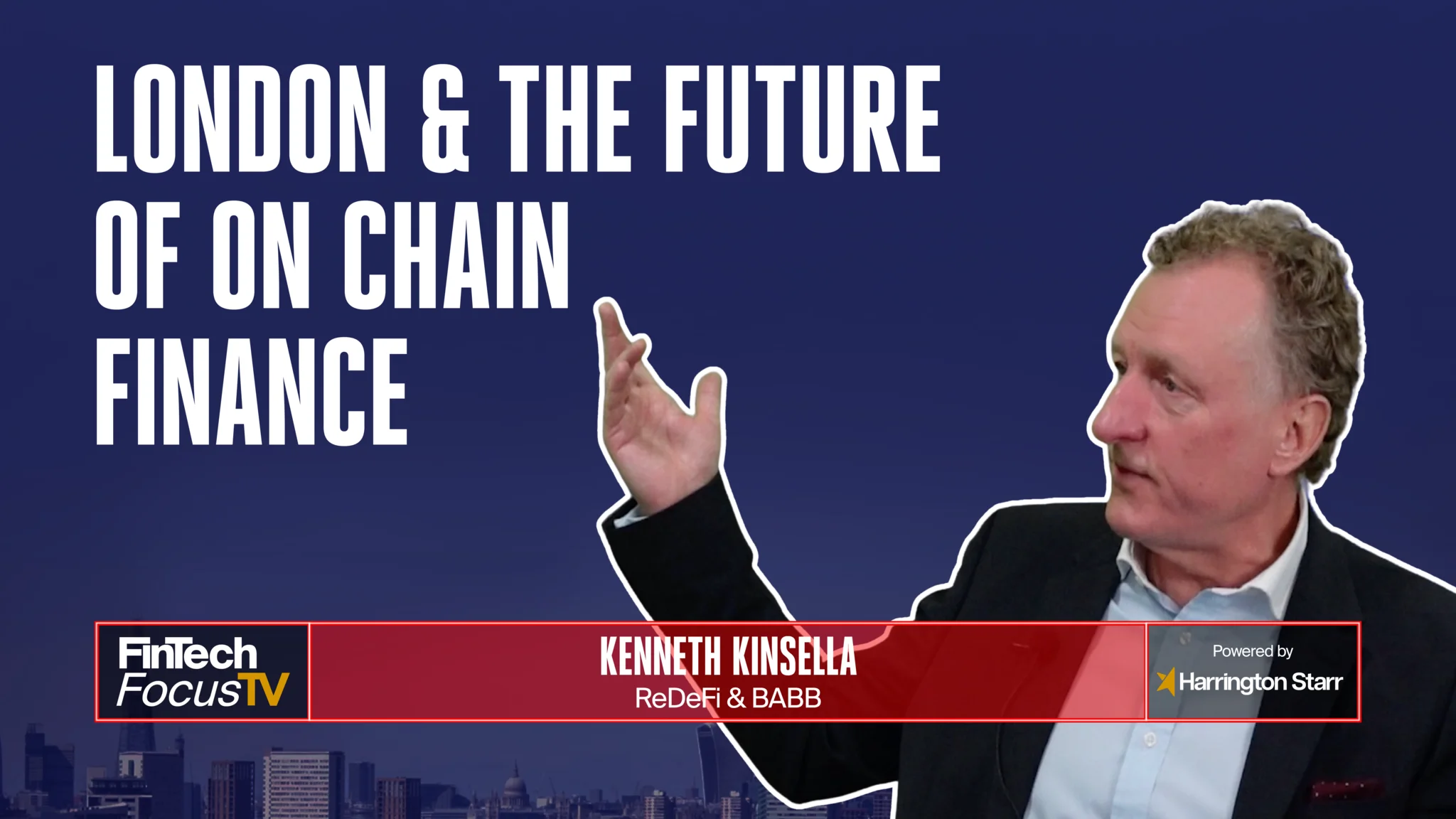

In this episode of FinTech Focus TV, Steven Petersen, Co-Founder of Stavtar Solutions Inc., joins Toby for an in-depth conversation that explores what happens when deep operational experience collides with a refusal to accept “this is just how it’s done.” Rather than focusing solely on technology or product features, the discussion traces Steven’s journey through global financial institutions, hedge funds, and private equity firms, revealing how years of lived frustration with broken processes ultimately led to the creation of a FinTech platform designed to support scale, complexity, and long-term growth. For FinTech leaders, founders, and hiring managers navigating rapid expansion, this episode offers rare, practical insight into how sustainable businesses are really built.
Steven Petersen’s career began far from the world of startups. Starting in accounting at Arthur Andersen before moving into JP Morgan, he spent eight years working on a proprietary trading desk that functioned as an internal hedge fund. It was an environment defined by growth, pressure, and constant change, and one that shaped his view of how financial services organisations should operate. Rather than simply running processes, Steven describes being encouraged to question them, to build workflows manually and then sit alongside technologists to automate those workflows entirely.
As the business expanded from a small team into a large operation managing tens of billions of dollars, Steven saw first-hand how quickly manual processes become liabilities. Complexity increases, risk multiplies, and without the right infrastructure, even the most talented teams spend their time managing workarounds rather than adding value. These early lessons stayed with him as he moved on to his next role.
Steven’s move to TPG Axon, a hedge fund backed by Texas Pacific Group, marked a significant step in his leadership journey. Joining as global controller and later becoming CFO, he worked in an environment where leadership prioritised building the best possible infrastructure rather than focusing narrowly on budgets. Starting with $3 billion and growing rapidly to around $16 billion in assets, the firm invested heavily in systems that could support scale without sacrificing control or visibility.
It was here that Steven worked closely with senior technologists to build platforms capable of handling complexity across the business. Rather than layering spreadsheets on top of existing systems, teams focused on automation, integration, and real-time insight. This experience reinforced Steven’s belief that operational excellence is not a nice-to-have, but a critical foundation for growth in financial services. It was also at TPG Axon that he met the technology leader who would later become his co-founder at Stavtar Solutions.
After leaving TPG Axon, Steven joined Hudson Bay Capital as CFO, stepping into a business that had grown significantly while outsourcing much of its back-office function. One of the first challenges he encountered was a familiar one: the lack of a single place where leadership could see, in real time, what it actually cost to run the business. Like many firms across hedge funds and private equity, Hudson Bay relied on multiple systems, spreadsheets, and manual processes to manage vendors, contracts, invoices, and expense allocations.
Steven explains that this fragmentation is common across the industry. Businesses are split between fund entities and management companies, supported by different systems and teams, with a huge amount of pre- and post-processing happening in spreadsheets. The result is a lack of visibility, delayed reporting, and teams spending time on administration rather than insight. Importantly, this was not a problem unique to one firm. It was a systemic issue across alternative investment managers of all sizes.
The idea that would eventually become Stavtar Solutions emerged from an internal proposal that did not land as planned. Steven suggested building software that would sit above all existing systems, capturing vendors, contracts, and invoices in one place and allocating expenses in unlimited ways based on attributes such as asset value, committed capital, deals, departments, strategies, and individuals. The goal was to create true transparency around where money was being spent and what return it was generating.
The response was sceptical. The cost seemed high, and the value was difficult to quantify upfront. Yet rather than ending the idea, that rejection became the catalyst for something larger. Steven took the concept to peers across the industry, speaking with CFOs who shared stories of manual processes, spreadsheet dependency, and operational blind spots. What struck him most was not how bad the stories were, but how normal they had become. Broken processes had been accepted as part of the job.
That realisation convinced Steven that the problem was industry-wide and that incremental fixes would never be enough. The industry needed a platform designed specifically to handle complexity, scale, and constant change.
With approval to pursue the idea externally, Steven partnered with his former colleague from TPG Axon to begin building the product that would become Stavtar Solutions. Initially developed while Steven was still CFO at Hudson Bay, the platform launched in early 2019 with a small number of funds, including his own. This approach allowed the product to be shaped directly by real-world use rather than theoretical requirements.
Over the next few years, the platform evolved rapidly as new managers joined and new challenges emerged. Rather than chasing growth at all costs, the focus remained on solving genuine operational pain points. By late 2021, Stavtar Solutions was supporting multiple hedge funds and private equity firms, and Steven faced a decision familiar to many FinTech founders: whether to remain in a senior corporate role or commit fully to building the business.
In the episode, Steven speaks candidly about the personal considerations behind leaving a successful CFO career to focus entirely on Stavtar Solutions. With a family and years of experience behind him, the decision was not taken lightly. What gave him confidence was not blind optimism, but a combination of belief in the product, trust in his co-founder and team, and experience gained from watching other businesses scale successfully from the inside.
This part of the conversation resonates strongly with FinTech leaders and operators considering similar transitions. It highlights that entrepreneurship in financial services is rarely about a single leap of faith. Instead, it is built on accumulated experience, pattern recognition, and an understanding of how businesses grow and change over time.
Stavtar Solutions' client base spans hedge funds, private equity firms, and family offices, with adoption spread evenly across different asset sizes. This diversity reflects a core principle discussed in the episode: complexity exists at every scale, and even relatively small firms face operational challenges that require sophisticated solutions.
Growth, Steven explains, did not come from aggressive sales tactics. Instead, it came from credibility and clarity. Having lived the problem himself, he was able to articulate the value of the platform in a way that resonated with peers. Sales became less about persuasion and more about influence, a theme that aligns closely with how senior FinTech leaders make decisions.
As Stavtar Solutions scaled, the demands on leadership changed. Steven describes the need to bring in more senior professionals, people who had already navigated growth and could take ownership of key areas such as finance, operations, client success, and technology. He refers to this phase as adding more adults to the room, recognising that founder-led decision-making must evolve as businesses grow.
For Harrington Starr’s audience, this discussion is particularly relevant. It highlights the increasing demand for FinTech talent with cross-functional experience, individuals who understand finance, technology, and operations and can operate effectively in complex environments. Steven’s approach underscores why recruitment plays such a critical role in scaling FinTech businesses sustainably.
The episode also explores how Stavtar Solutions has continued to evolve its product offering, particularly in areas such as payments, treasury, and artificial intelligence. Client demand led to the development of integrated payment capabilities, allowing firms to initiate wires and ACH payments directly within the platform rather than relying on disconnected banking systems. This move reflects a broader trend within FinTech toward consolidation, control, and risk reduction.
Steven also discusses how AI is embedded within the platform, not as a headline feature but as a practical tool to reduce friction. From document processing to contract analysis and data extraction, AI is positioned as a way to free teams from manual work and allow them to focus on judgment and decision-making. This pragmatic approach mirrors how many mature FinTech firms are adopting AI today, prioritising real value over experimentation.
This episode of FinTech Focus TV is not simply a product overview. It is a thoughtful exploration of leadership, growth, and the realities of building infrastructure that can support complex financial organisations. Steven Petersen’s story illustrates how meaningful innovation often comes from deep industry experience combined with a willingness to challenge accepted norms.
For FinTech founders, operators, and hiring managers, the conversation offers insight into the skills, mindsets, and leadership qualities required to scale successfully. It reinforces why demand for experienced FinTech professionals continues to grow, particularly those who can bridge the gap between finance and technology. As a FinTech recruitment business working closely with firms facing these challenges, Harrington Starr is at the centre of these conversations.