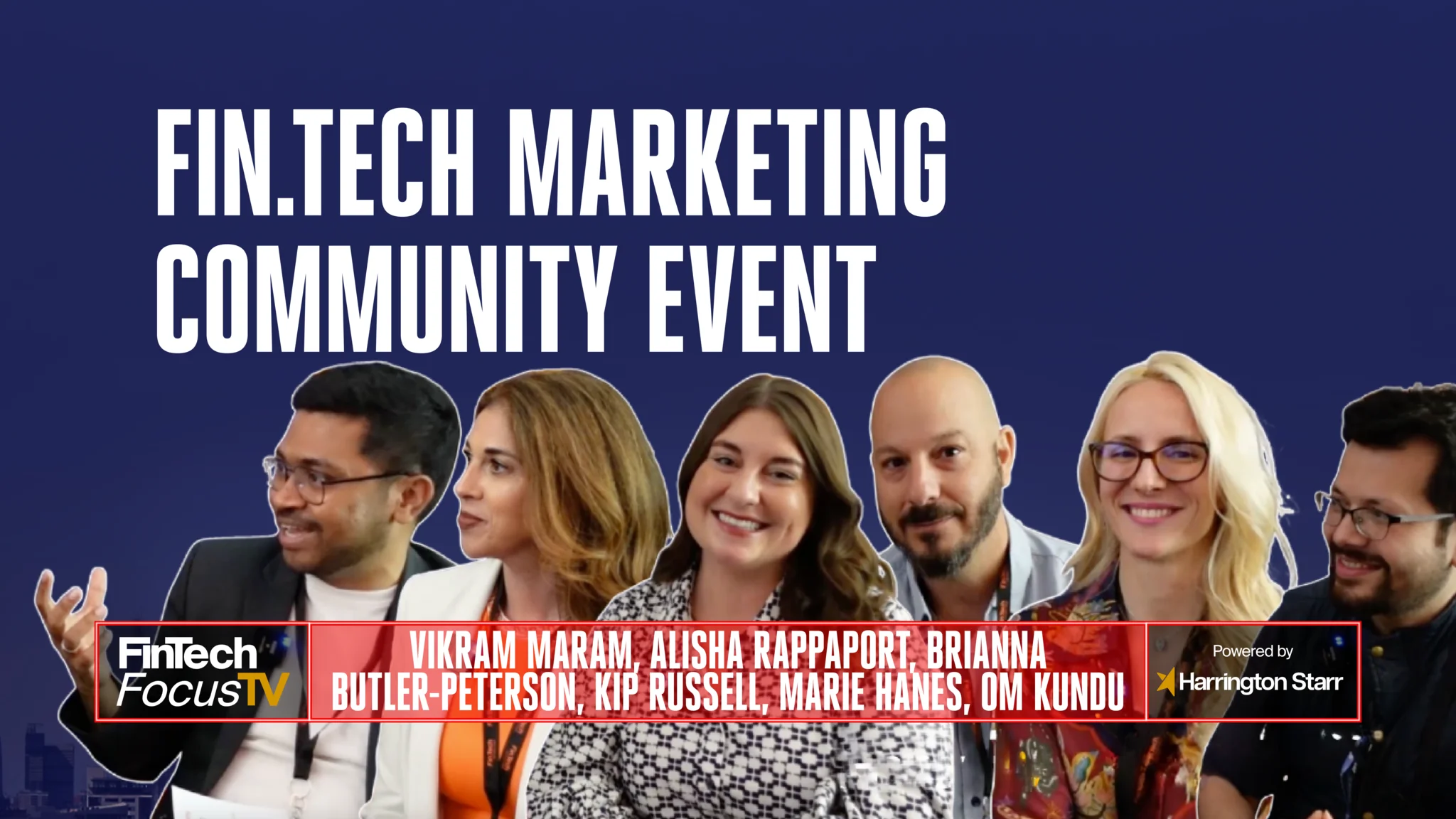
FinTech Focus TV has long explored the people, technology and ideas shaping financial services, and this special episode, recorded live at the Fin.Tech Marketing Community event in New York City, shines a spotlight on one of the industry's fastest-moving disciplines: marketing. Hosted by Kaitlin Edwards, the discussion brings together Alisha Rappaport from Fitch Group, Brianna Butler-Peterson from Allego, Kip Russell fromSpinutech, Marie Haynes from Evara, Om Kundu from SaveAway, and Vikram Maram from SMARTe. Together, they explore how artificial intelligence, changing buyer behaviour, evolving go-to-market strategies and the growing importance of authentic content are transforming the way financial technology companies build relationships with customers. For organisations operating in financial services, these conversations also reinforce why attracting the right marketing, technology and commercial talent is becoming just as important as hiring software engineers, product specialists and sales professionals in today's increasingly competitive FinTech recruitment market.
FinTech Marketing Is Entering a New Era
The overriding message from every conversation throughout the episode is that FinTech marketing is undergoing one of its biggest transformations in years. While artificial intelligence is often positioned as the headline story across financial services, the guests explain that AI is only one piece of a much wider shift. Customer expectations have changed. Buying journeys have evolved. Content is being consumed differently, and traditional marketing tactics alone are no longer enough to support sustainable business growth.
Rather than seeing marketing as simply generating leads, the discussion highlights how modern go-to-market teams must connect sales, customer success, technology and product functions into a single commercial strategy. For businesses operating within financial technology, capital markets and financial services, this represents a significant cultural change. Marketing is becoming increasingly data-driven while simultaneously becoming more human, with thought leadership, educational content and trusted expertise playing a much larger role in influencing buying decisions.
This evolution is particularly relevant for companies competing for specialist technology talent. As organisations continue investing in software engineering, AI, cloud technology, data platforms and digital transformation, employer branding and marketing have become essential tools for attracting candidates alongside customers. It is another reminder that recruitment and marketing are becoming increasingly interconnected across the FinTech ecosystem.
Solving Real Problems Through Innovation
Opening the discussions, Om Kundu explains the vision behind SaveAway, a platform designed to tackle affordability challenges through technology rather than traditional finance products. While affordability is often discussed politically, Om believes there is a much more personal dimension that technology can solve by creating sustainable purchasing pathways for consumers.
Instead of focusing purely on financial transactions, SaveAway has developed technology that encourages collaboration between buyers and their wider communities. Friends and family are able to contribute towards meaningful purchases, creating both emotional engagement and greater purchasing power for users. This community-first approach has become central to the company's growth strategy.
Perhaps most interesting is Om's explanation of how marketing has followed naturally from the customer experience itself. Rather than relying heavily on outbound campaigns, the business has focused on creating genuine value that encourages users to share the platform organically. Every satisfied customer effectively becomes an advocate, driving further growth without significant marketing expenditure.
His comments reinforce an important lesson for FinTech businesses: successful marketing often begins with building products that genuinely solve customer problems. Technology may power innovation, but authentic customer experiences remain one of the strongest drivers of long-term commercial success.
Why Podcasting Has Become A Strategic Marketing Channel
One of the most insightful conversations comes from Alisha Rappaport, who recently joined Fitch Group in a newly created role responsible for podcast content strategy and publicity. Her appointment alone demonstrates how seriously major financial services organisations are beginning to treat long-form content as part of their wider marketing strategy.
Alisha explains that her role involves bringing together multiple areas of Fitch Group into a unified podcast strategy, creating opportunities for both internal experts and external guests to share valuable industry insight. Rather than viewing podcasts as standalone content, the objective is to build an ecosystem where different business units contribute towards a broader brand narrative.
This reflects a wider shift occurring across financial technology marketing. Buyers are increasingly looking for educational content rather than traditional advertising. Podcasts allow organisations to showcase expertise, demonstrate thought leadership and create trust with prospective customers before any sales conversation even begins.
She also highlights how audiences now consume information in multiple formats. Some prefer listening while travelling, others engage through video, while many want concise content they can quickly absorb during busy working days. Podcasting supports all of these behaviours by creating audio, video and written content from a single conversation, dramatically increasing the return on every recording.
For businesses competing in highly specialised sectors such as capital markets, payments, data, trading technology and financial infrastructure, this creates an opportunity to build credibility with highly targeted audiences while simultaneously strengthening employer brand awareness among potential candidates searching for financial services careers.
Measuring Marketing Beyond Traditional Metrics
One challenge frequently discussed within modern marketing is proving commercial value, and Alisha addresses this directly when discussing podcast performance.
Unlike many traditional marketing activities, podcasts are rarely responsible for generating an immediate sale. Instead, they become one of many touchpoints that gradually build trust throughout a buyer's journey. She explains that measuring this impact requires far more sophisticated tracking than simply counting downloads or subscribers.
By using campaign coding, attribution tracking and close collaboration with sales and customer success teams, marketing departments can begin connecting content consumption with commercial opportunities. Individual podcast episodes become assets that sales teams can share during prospecting conversations, providing educational value while strengthening customer relationships.
This reflects a broader trend across FinTech marketing, where success is increasingly measured through influence rather than immediate conversion. Prospective customers often require multiple interactions before making purchasing decisions, particularly within financial technology where buying cycles can be long and involve numerous stakeholders.
For organisations investing in growth, these insights reinforce why modern marketing professionals require increasingly technical skill sets. Understanding attribution, data analytics, AI-powered automation and revenue operations is becoming just as valuable as creativity and storytelling, creating growing demand for specialist marketing talent across financial services.
Artificial Intelligence Is Expanding Marketing Capabilities
Artificial intelligence naturally features throughout the discussions, but what stands out is the balanced perspective shared by every guest. Rather than suggesting AI will replace marketers, the consensus is that it will enable teams to become significantly more productive.
Alisha explains that AI already plays an important role in identifying emerging topics, monitoring industry conversations and helping shape editorial calendars around the issues that matter most to business leaders. Once podcasts have been recorded, AI also enables teams to transform transcripts into blogs, articles, frequently asked questions and multiple additional content assets, allowing a single conversation to generate value across numerous channels.
Brianna Butler-Peterson expands on this further by explaining how Allego is using AI to support sales enablement and content creation simultaneously. Marketing teams can rapidly develop battle cards, case studies and sales resources by drawing from existing presentations, customer conversations and recorded content. Instead of replacing marketers, AI removes repetitive manual tasks and allows teams to spend more time focusing on strategy, creativity and customer engagement.
The discussion consistently returns to the idea that AI should enhance human expertise rather than replace it. For organisations across financial technology, this balanced approach will likely become one of the defining characteristics of successful marketing teams over the coming years, particularly as demand continues to grow for professionals with experience across AI, digital transformation, FinTech recruitment and technology-driven commercial strategy.
Why Traditional SEO Is No Longer Enough
One of the most thought-provoking conversations of the episode comes from Kip Russell of Spinutech, who argues that the biggest challenge facing marketers today is not artificial intelligence itself, but the changing way people discover information online. According to Kip, businesses are experiencing one of the largest shifts in digital marketing since the rise of social media, with customer journeys no longer beginning solely through search engines.
Instead, prospective buyers are increasingly starting their research inside large language models, YouTube, LinkedIn and other content-driven platforms before ever visiting a company's website. As a result, many organisations have noticed declining website traffic, even while lead generation and conversions remain healthy. Rather than signalling a marketing failure, this simply reflects a changing buyer journey where customers are becoming more informed before reaching a business directly.
Kip explains that this doesn't mean traditional search engine optimisation has become obsolete. The fundamentals still matter, particularly for businesses wanting to establish credibility and rank highly in search results. However, SEO now represents only part of the wider picture. Companies must also invest in authority-building content that demonstrates expertise across multiple platforms. Thought leadership articles, podcasts, video content and conversations taking place on LinkedIn all contribute towards building the authority that AI-powered search experiences increasingly rely upon.
This is particularly significant for financial technology companies operating in highly competitive markets. Buyers researching trading platforms, payments technology, market infrastructure, digital assets or AI solutions are looking for trusted experts rather than simply websites ranking highest on Google. Businesses that consistently educate their audience through valuable content are placing themselves in a much stronger position for both customer acquisition and employer branding.
For recruitment businesses like Harrington Starr, these trends are equally relevant. Candidates researching financial services careers are increasingly discovering employers through educational content, podcasts, market insight and thought leadership before engaging with recruiters directly. Building authority has become just as important for attracting exceptional talent as it is for winning new clients.
Building AI Around People Rather Than Technology
Marie Haynes from Evara offers another important perspective by shifting the conversation away from technology itself and towards organisational readiness. While many businesses are eager to introduce artificial intelligence into their operations, she explains that implementation often begins in the wrong place.
Rather than asking which AI tools to purchase, organisations should first examine how their existing teams work. Understanding workflows, identifying repetitive tasks and recognising genuine operational challenges creates a much stronger foundation for successful AI adoption. Technology should solve real business problems rather than existing simply because budgets have been allocated.
Marie also highlights another challenge facing many organisations: preparing internal systems before implementing AI. Businesses frequently invest in new technologies without addressing fragmented processes, disconnected platforms or inefficient data structures. In reality, improving existing systems often delivers greater value than introducing entirely new ones.
Her comments underline an important lesson repeated throughout the episode. Successful digital transformation rarely begins with software. Instead, it starts with understanding people, improving processes and then selecting technology that supports those improvements.
Looking ahead, Marie believes every employee will eventually benefit from having AI assistants supporting their daily work, allowing individuals to become more productive while continuing to focus on high-value activities that require human judgement, creativity and collaboration. This vision aligns closely with the broader conversation taking place across financial services, where AI is increasingly viewed as an enhancement to human capability rather than a replacement for skilled professionals.
Data, AI And The Future Of Go-To-Market Strategy
Vikram Maram from SMARTe continues the discussion by exploring how artificial intelligence is reshaping go-to-market strategy through better data and deeper customer intelligence. As organisations attempt to personalise every interaction, the demand for richer, more relevant information continues to grow.
He explains that SMARTe is using AI to build custom data signals that reflect each client's unique commercial priorities. Rather than relying solely on traditional company information, businesses can now create highly specific insights that directly support their own products, markets and customers. This enables sales teams to engage prospects with greater relevance while reducing the manual research traditionally required.
Internally, Vikram is equally clear that AI should empower employees rather than replace them. Success should not be measured by how many jobs technology eliminates, but by how much more productive teams become. Whether through AI-powered research agents, knowledge sharing or workflow automation, the objective remains helping people spend more time on valuable work rather than repetitive administrative tasks.
One particularly interesting example involves using AI to support smaller prospective customers that previously received limited attention due to resource constraints. By introducing agentic workflows capable of responding to enquiries automatically, SMARTe has generated additional revenue opportunities that would otherwise have been missed. Rather than replacing existing commercial teams, AI has expanded the company's ability to serve more customers effectively.
These examples demonstrate how rapidly AI is becoming embedded throughout sales, marketing and customer success functions. As businesses continue investing in data platforms, automation, software engineering and digital transformation, demand for professionals capable of combining commercial understanding with technical expertise will continue to increase across the financial technology recruitment market.
The Skills That Will Define The Next Generation Of FinTech Marketing
While each guest approaches marketing from a different perspective, a clear consensus emerges throughout the episode. Future marketing leaders will require a much broader combination of skills than ever before. Creativity remains essential, but it must now be supported by data literacy, AI understanding, commercial awareness and an ability to work collaboratively across entire organisations.
Modern marketing teams are expected to understand attribution, revenue operations, content strategy, automation, customer experience and analytics alongside traditional brand and communications responsibilities. Equally, businesses increasingly need professionals capable of translating technical innovation into clear commercial messaging that resonates with both customers and prospective employees.
This changing landscape is creating new opportunities across financial services careers, particularly within FinTech organisations investing heavily in artificial intelligence, cloud technologies, software engineering, cybersecurity, product management and digital transformation. As these businesses continue to scale, attracting the right marketing talent will become just as important as hiring exceptional developers, engineers and technology specialists.
For recruitment partners specialising in financial technology recruitment, these conversations reinforce how rapidly hiring requirements are evolving. Organisations no longer need isolated marketing specialists or standalone technology experts. Instead, they are searching for individuals capable of operating across multiple disciplines while understanding the wider commercial objectives of modern FinTech businesses.
A New Playbook For Financial Technology Growth
This special edition of FinTech Focus TV, recorded live at the Fin.Tech Marketing Community event in New York City, provides a compelling snapshot of where financial technology marketing is heading. Through conversations with Om Kundu, Alisha Rappaport, Brianna Butler-Peterson, Kip Russell, Marie Haynes and Vikram Maram, host Kaitlin Edwards uncovers a common message that extends far beyond marketing alone.
Artificial intelligence is undoubtedly transforming financial services, but the businesses achieving the greatest success are those combining technology with authentic human expertise. Whether discussing podcasts, sales enablement, AI implementation, customer data, digital marketing or changing buyer behaviour, every guest returns to the importance of creating genuine value before pursuing growth.
For financial technology companies, this means building authority rather than simply increasing visibility. It means investing in people alongside platforms, improving systems before adding new technology and recognising that modern buyers expect educational, trusted content throughout every stage of their decision-making journey.
These insights also reflect wider changes taking place across the FinTech recruitment landscape. As organisations continue hiring software engineers, AI specialists, product leaders, sales professionals, marketers and digital transformation experts, the demand for adaptable, commercially minded talent has never been greater. Companies capable of combining innovation with strong employer branding, thought leadership and customer-focused marketing will be best positioned to attract both exceptional clients and exceptional people.
Ultimately, this episode demonstrates that the future of FinTech marketing is not defined by artificial intelligence alone. It is defined by organisations that embrace change, empower their people and build meaningful relationships through expertise, education and trust. As financial services continues to evolve, those principles will remain at the heart of sustainable growth for the industry's most successful businesses.