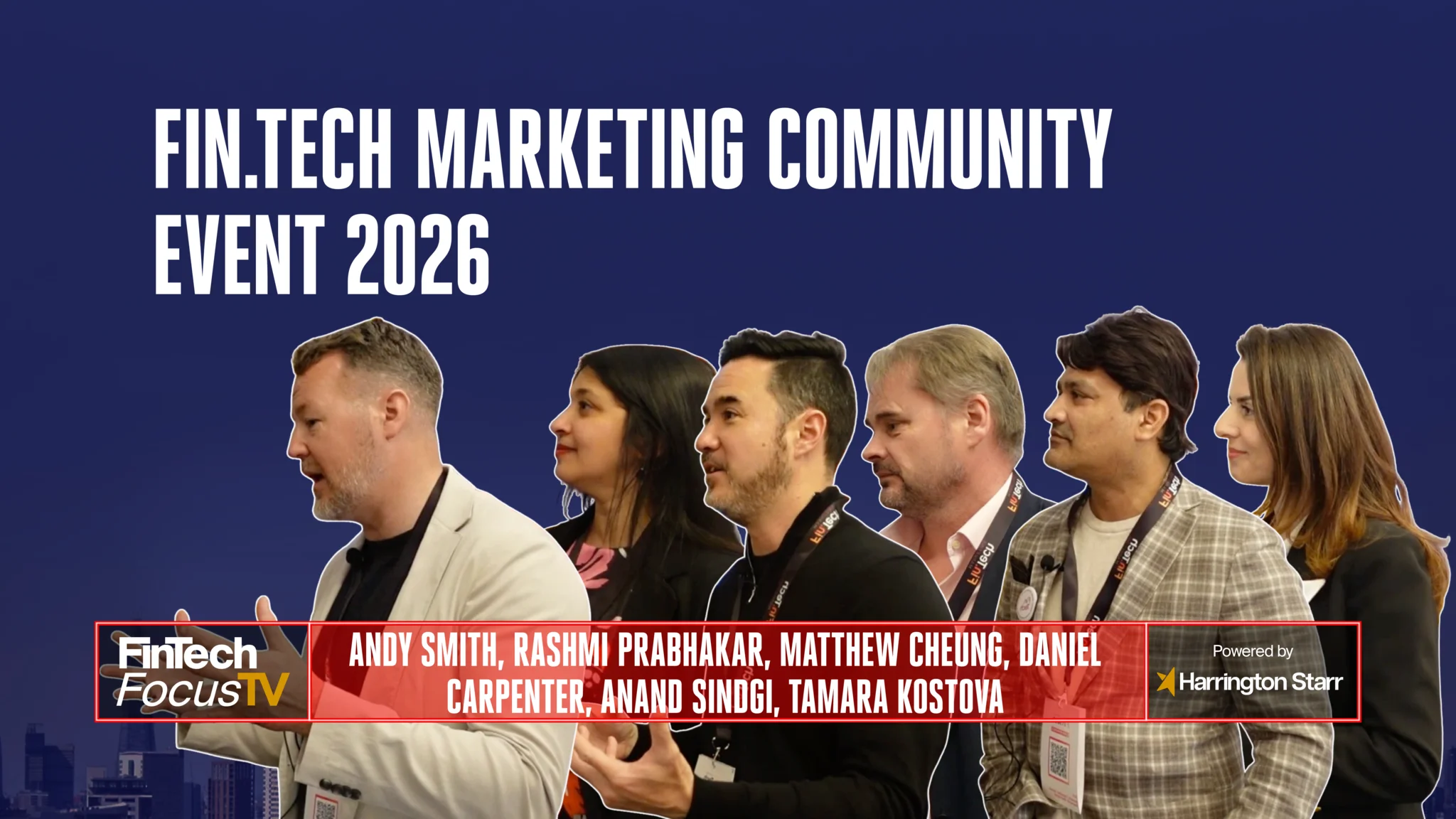
This episode of FinTech Focus TV, hosted by Carl Charlson and recorded live at the Fin.Tech Marketing Community Event 2026, brings together some of the industry's leading voices to discuss one of the biggest talking points in financial technology today: artificial intelligence. Featuring insights from Daniel Carpenter, Tamara Kostova, Rashmi Prabhakar, Anand Sindgi, Andy Smith and Matt Cheung, the conversation explores how AI in FinTech is rapidly moving from experimentation to everyday business reality. Rather than focusing on the hype surrounding artificial intelligence, each guest shares practical examples of how organisations are already embedding AI into products, operations, customer experiences and marketing strategies, while also addressing the challenges that continue to shape adoption across the financial services industry. For businesses navigating digital transformation and professionals building careers in financial technology, the discussion offers valuable perspectives on what the next phase of AI adoption will look like and why the organisations that embrace change today will be best positioned for tomorrow.
AI in FinTech Is Moving Beyond Experimentation
Carl Charlson opens the discussion by asking each guest how they see AI evolving over the next year and how it will positively impact the industry. It quickly becomes clear that the conversation has shifted away from questioning whether artificial intelligence has a place within financial services. Instead, the focus is firmly on how organisations can implement AI effectively and responsibly to create better outcomes for both businesses and customers.
Rashmi Prabhakar, Head of SaaS Transformation at Temenos, explains that AI is becoming embedded into everyday business activity rather than existing as a standalone technology. She describes a future where AI handles much of the preparation work that traditionally consumes valuable time, from researching information and analysing data to supporting activities before, during and after meetings. Rather than replacing expertise, AI enables professionals to spend less time on repetitive manual tasks and more time making informed decisions, collaborating with clients and driving innovation across their organisations.
Her perspective reflects a broader trend emerging across financial technology recruitment and digital transformation projects. Organisations are increasingly looking for professionals who can combine technical capability with commercial understanding, using AI as an enabler rather than viewing it as a replacement for human expertise. As financial services continue to invest in automation, demand for technology leaders, transformation specialists and AI-focused professionals continues to grow.
Digital Transformation Is Accelerating Across Financial Services
Daniel Carpenter expands on this idea by discussing AI from the perspective of a technology platform provider. For organisations operating within capital markets, artificial intelligence represents an opportunity on two fronts. Internally, it enables development teams to build products faster, improve operational efficiency and enhance the quality of technology delivered to clients. Externally, it allows customers to interact with platforms more intelligently, automate operational processes and unlock predictive capabilities that can improve performance across their businesses.
Daniel believes adoption will continue to accelerate over the coming years as businesses identify practical use cases that deliver measurable value. While predictive analytics has already begun transforming areas of financial services, organisations are now exploring how AI can improve customer servicing, reduce operational costs and strengthen decision-making across increasingly complex technology environments. These developments are creating significant opportunities for businesses investing in financial technology while also driving demand for experienced professionals capable of leading large-scale digital transformation programmes.
The discussion highlights how AI is no longer viewed simply as another technology initiative. Instead, it is becoming a core component of business strategy, influencing how products are built, how services are delivered and how organisations compete within increasingly competitive financial markets. For recruitment specialists operating within FinTech, this evolution is also reshaping hiring priorities as employers seek candidates who understand both emerging technologies and the commercial realities of financial services.
Customer Experience Is Becoming More Intelligent
Tamara Kostova brings the conversation into the wealth management sector, where she believes agentic AI has the potential to fundamentally transform customer outcomes. Rather than offering generic digital experiences, financial institutions are beginning to explore how intelligent systems can personalise investment journeys for every individual customer.
She explains that one of the industry's biggest opportunities lies in encouraging greater participation in capital markets by making investing more accessible to retail customers. Agentic AI has the potential to deliver highly personalised recommendations, investment plans and product propositions based on an individual's goals, preferences and appetite for risk. As financial institutions continue investing in customer-centric technology, the ability to create dynamic, personalised experiences will become an increasingly important competitive advantage.
For organisations across financial services, this shift reinforces the importance of attracting professionals who understand both technology and customer behaviour. As AI capabilities continue to evolve, the demand for product specialists, AI engineers, customer experience professionals and digital transformation leaders is expected to increase alongside continued investment in financial technology innovation.
AI Is Transforming FinTech Marketing and Business Productivity
The conversation also explores the impact artificial intelligence is having beyond product development and financial services operations. Anand Sindgi explains that AI is becoming an increasingly valuable tool for marketing teams across the FinTech industry. Rather than replacing marketers, AI is helping them streamline many of the time-consuming tasks that sit behind successful campaigns, allowing teams to focus more on creativity, strategy and delivering better customer engagement.
From campaign implementation to audience targeting, Anand believes AI will enable marketing professionals to become more efficient while improving the effectiveness of their work. As financial technology companies continue competing for attention in an increasingly crowded marketplace, intelligent automation offers an opportunity to launch campaigns more effectively while making better use of customer data. For FinTech businesses investing in growth, this combination of automation and human creativity will become increasingly important.
Andy Smith echoes many of these themes from an agency perspective. Rather than expecting dramatic overnight changes, he believes the next year will be about organisations becoming more mature in how they use the tools already available to them. AI platforms are evolving rapidly, but so too are the people learning how to use them effectively. As businesses gain experience, mistakes should reduce, integrations will improve and organisations will become increasingly confident in embedding AI into everyday workflows.
His comments highlight an important point that runs throughout the discussion. Artificial intelligence alone is not enough to create competitive advantage. Success depends on the people implementing the technology, understanding its capabilities and integrating it into existing business processes. That reinforces why investment in talent remains just as important as investment in technology. For organisations undertaking digital transformation programmes, recruiting professionals with AI knowledge, change management expertise and strong commercial awareness is becoming a significant competitive differentiator.
AI Adoption Still Depends on Trust, Governance and Compliance
While the panel is overwhelmingly optimistic about the opportunities AI presents, Carl Charlson also asks each guest about the challenges organisations continue to face when adopting these technologies. Across the discussion, one theme consistently emerges above all others: trust.
Daniel Carpenter explains that risk remains one of the biggest concerns for financial institutions. Organisations must carefully consider how AI is used, particularly when handling sensitive information or interacting directly with customers. Internal use cases often provide the safest starting point because businesses have greater control over their own data, processes and governance frameworks. Once AI begins communicating externally or influencing customer interactions, compliance requirements become significantly more complex. Guardrails, regulatory compliance and responsible governance therefore remain essential components of every AI strategy.
Tamara Kostova identifies education as another critical challenge. While the potential of agentic AI is becoming increasingly clear, many financial institutions are still exploring practical use cases, particularly within wealth management. The real opportunity lies in using AI to deliver highly personalised investment experiences that reflect each individual's unique financial goals and appetite for risk. Achieving this requires not only sophisticated technology but also professionals who understand both financial services and artificial intelligence.
Anand Sindgi also highlights compliance and education as key barriers to wider adoption. AI models continue evolving at an extraordinary pace, making it difficult for organisations to remain current with the latest capabilities while ensuring employees understand how to use them responsibly. He believes continuous learning, experimentation and internal testing will be vital if businesses are to maximise AI's potential without introducing unnecessary risk.
The AI Skills Gap Is Becoming One of FinTech's Biggest Challenges
One of the most thought-provoking contributions comes from Matt Cheung, who reflects on just how quickly AI has accelerated over recent months. While artificial intelligence has been developing for years, he believes recent advances have fundamentally changed how businesses operate. Tools are now enabling professionals to automate routine work, access organisational knowledge more easily and significantly improve productivity.
However, Matt also introduces a wider societal challenge. He compares AI adoption to a 100-metre race where some participants have already sprinted ahead while others remain on the starting line. Even more concerning, many people are unaware that the race has begun at all. His analogy perfectly captures one of the defining themes of the episode. The organisations and individuals embracing AI today are rapidly increasing the gap between themselves and those choosing to wait.
For professionals working in financial technology, this represents both a challenge and an opportunity. AI literacy is quickly becoming a valuable career skill across software engineering, product management, marketing, digital transformation and leadership roles. Those willing to invest time exploring emerging technologies will be better positioned as organisations continue accelerating AI adoption throughout financial services.
For employers, this widening skills gap reinforces the importance of attracting, developing and retaining people who are comfortable working alongside emerging technologies. FinTech recruitment is therefore evolving beyond traditional technical hiring, with businesses increasingly seeking adaptable professionals capable of learning continuously as technology advances.
The Future of FinTech Will Be Built by People and AI Together
Throughout this special edition of FinTech Focus TV, recorded live at the Fin.Tech Marketing Community Event 2026, Carl Charlson brings together a diverse group of industry leaders who collectively paint a realistic picture of artificial intelligence's future within financial services. Rather than presenting AI as a replacement for people, every guest describes technology as an enabler that allows professionals to spend less time on repetitive work and more time creating value through innovation, strategic thinking and stronger customer relationships.
Whether discussing wealth management, capital markets, SaaS transformation, enterprise technology, marketing or business productivity, a common message emerges. The organisations that will benefit most from AI are those investing equally in technology, governance and people. Artificial intelligence may accelerate decision-making and improve operational efficiency, but successful implementation still depends on experienced professionals who understand how to apply these tools responsibly.
For Harrington Starr, these conversations reflect the changing landscape of FinTech recruitment and financial technology recruitment. As businesses continue investing in AI in FinTech, digital transformation, capital markets technology, wealth management technology and financial services innovation, demand for exceptional talent will only continue to grow. The future of financial services will not simply be shaped by artificial intelligence. It will be shaped by the people capable of using AI to solve real business challenges, create better customer experiences and drive meaningful innovation across the global FinTech industry.