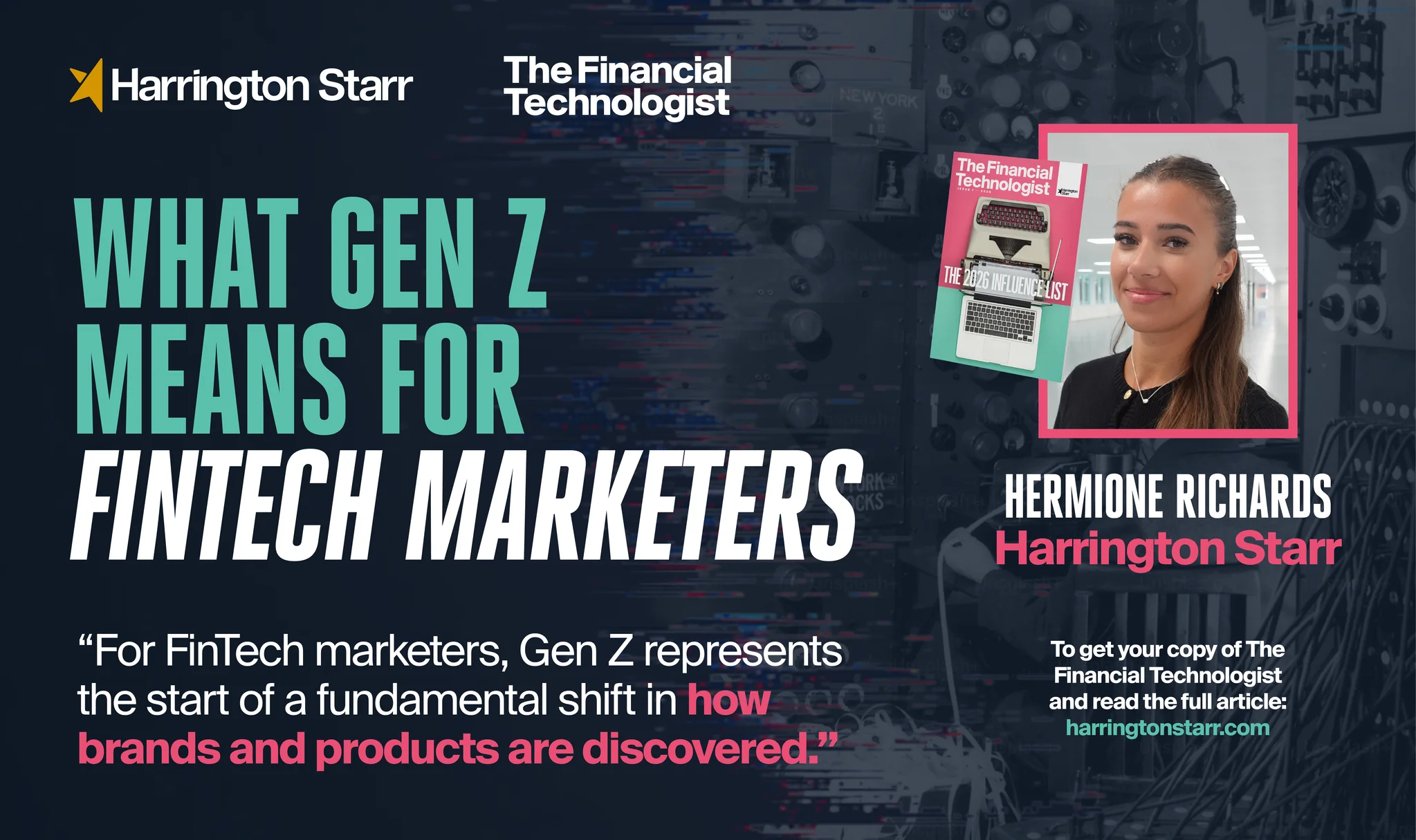
The way consumers discover financial products has always evolved in line with technology, culture, and trust dynamics. However, for FinTech marketers, Gen Z represents the start of a fundamental shift in how brands and products are discovered.
Gen Z doesn’t search for new products in the traditional sense. Instead, discovery is driven by algorithms, trends and a social-first approach. Google isn’t the search engine of choice; instead, those born between 1997 and 2012 opt for platforms such as TikTok, Instagram and X (formerly Twitter). On these platforms,content is surfaced based on behaviour rather than intent. Instead of actively seeking products, Gen Z encounters them through curated feeds and creators they trust.
This has led to the rise of “finfluencers”, content creators who share investing tips, saving strategies, and explanations of financial concepts in a way that is accessible and engaging. Short-form video formats, such as TikTok and Instagram Reels, play a critical role here. They deliver digestible, relatable content that feels more like entertainment than education, lowering the barrier to entry for financial engagement.
It’s not just “finfluencers” that consumers trust. Word of mouth has also taken on a digitally amplified form. Recommendations are no longer confined to close networks but are scaled through social platforms, where shared experiences build trust far more effectively than traditional brand messaging. For Gen Z, authenticity is key. Real-world experiences, peer validation, and creator-led narratives carry significantly more weight than a bank’s marketing campaign.
In a recent FinTech Focus TV episode I helped produce with Julia Streets, she highlighted a critical shift: if organisations fail to demonstrate authentic culture and inclusion, Gen Z will simply disengage, reinforcing how trust is now earned through action, not messaging.
For FinTech marketers, reaching Gen Z needs a shift in the traditional ways financial products are communicated, distributed and trusted. Unlike the traditional consumer journey, their decision-making process is fragmented and non-linear. Rather than visiting a website and comparing product and brand features, Gen Z turns to peer discussions and creator opinions. Trust is built by real experiences rather than messaging led and curated by brands. A single piece of content rarely drives actions; instead, it’s the effect of repeated exposure and credibility. For FinTech marketers, the funnel is no longer something to control, but something to participate in. Success comes from showing up consistently across the consumer’s discovery journey and building trust within the target demographic communities.
Gen Z isn’t just adopting financial products differently; they are redefining how product and brand discovery itself works. What was once a structured, brand led journey is now social and shaped by algorithms and communities.
For FinTech marketers, the challenge isn’t simply to keep up, but to rethink the way that products have traditionally been marketed. Those that succeed will move beyond campaigns and into conversations, building credibility in the same spaces where Gen Z forms trust.
This is an article from The Financial Technologist: Influence List - page number: 98-99