Will Perpetual Futures Revolutionise Trading?
25 Nov, 2026


Fintech’s obsession with frictionless automation and ‘instant’ decisioning...

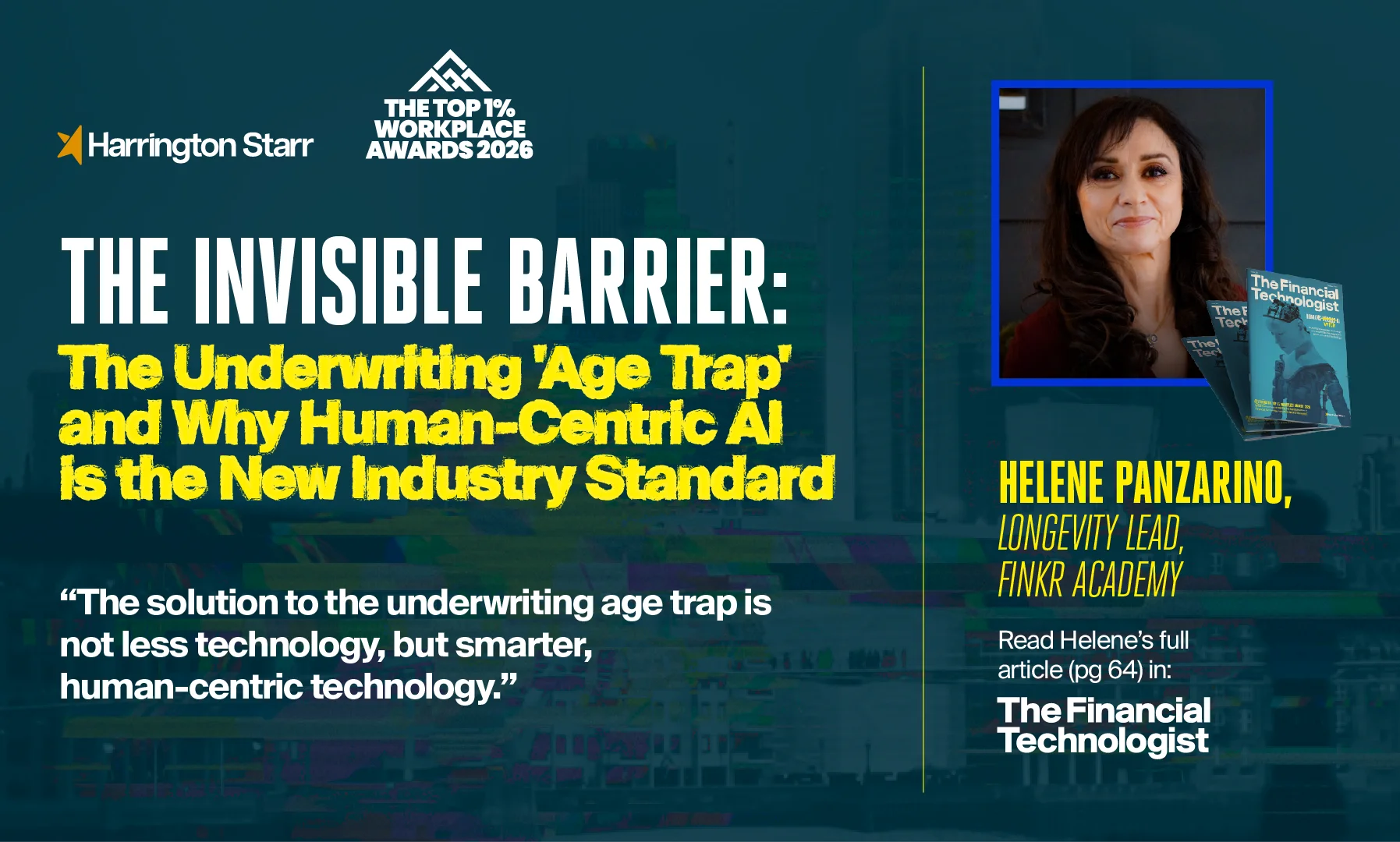
Fintech’s obsession with frictionless automation and ‘instant’ decisioning has inadvertently built a digital glass ceiling when it comes to underwriting. UK financial services have fallen into an 'age trap’, a systemic failure where rigid underwriting algorithms penalise applicants based on narrow, age-related data points. Whether it’s a young professional being locked out of the housing market or an older saver being 'de-risked' out of a bespoke product, purely automated models are increasingly proving themselves unfit for purpose.
Traditional, "black box" underwriting models are failing to navigate the complexities of modern demographics because:
Algorithmic Rigidity: Pure automation cannot account for the "complex lending" scenarios that define modern lives, often rejecting viable candidates who don’t fit a historical data template.
The Guidance Gap: Algorithms are incapable of providing the "tailored support and guidance" necessary for customers navigating significant life milestones in their longer lives.
Data Myopia: By relying on proxy data for age and wealth, these models overlook the "long-term fair value" of a customer, prioritising immediate efficiency over lifetime loyalty.
Ultimately, everyone suffers from underwriting processes that don’t take nuance into consideration.
In the UK, millions of individuals on a low or unstable income, those without a long-term record of citizenship or residency, those with disabilities, and young adults, are greatly impacted by rigid systems that lock them out of financial services, thereby impacting the economy.
Rural and digitally disconnected communities
Nearly one million people in the UK are unbanked or “debanked,” according to the Financial Conduct Authority (FCA), with many communities still heavily relying on cash, particularly in rural parts of the UK. With little to no digital trail and deemed as ‘off the grid’ spenders, rules-based underwriting will not capture those without a digital footprint and penalise them for their reliance on cash, despite, on paper, being liquid enough to make use of banking products and services responsibly.
Gig-economy workers
Creditworthiness and affordability have long been measured by an individual’s income and the regularity of that payment. Different reports suggest that there are hundreds of thousands to millions of those working in the gig economy bracket in the UK. As people working in gig economy roles have income that is deemed infrequent, systems are unable to realistically predict an individual’s affordability rating.
Around one in five people from minority ethnic groups have experienced financial discrimination due to race. Few reports have outlined the historic underwriting rules that used postcodes and urban planning to underpin credit decisions at credit bureaus and banking institutions. Left largely unchallenged and unchanged, these rules rely on outdated, biased information to train modern AI models, creating further disparity in who gets approved for loans, products and services.
The regulatory imperative to do better: The demise of ‘set-and-forget’ AI
The UK’s Consumer Duty framework has put an end to the era of "set-and-forget" AI. It is no longer enough for an algorithm to be efficient; it must be demonstrably fair and try to prevent harm. The mandate to ensure "good customer outcomes" means that any model found to be entrenching bias (age-related or otherwise) is a direct regulatory liability.
Those who fail to address these biases will face more than just a loss of trust; they will face the full weight of regulatory scrutiny. The competitive advantage now lies with those who ensure their technology delivers "long-term fair value" to every demographic.
The solution to the underwriting age trap is not less technology, but smarter, human-centric technology. "Digital first, human always" is the new standard for operational resilience. Digital capabilities provide the choice and speed members demand, underpinned by "friendly, caring and well-trained employees."
In complex lending, a 'human-in-the-loop' model is far superior to total automation. Human oversight is the essential safeguard for diversity, equity, and inclusion (DEI) for three critical reasons:
Correcting Social Mobility Bias: By participating in initiatives like Progress Together, institutions recognise that socioeconomic backgrounds often skew algorithmic results and create biased data sets.
Contextual Risk Assessment: Professional judgment allows for a nuanced view of "complex lending" that algorithms often misinterpret as high risk, particularly for those at either end of the age spectrum.
Providing Tailored Support: The human element ensures a potential rejection turns into a pathway to homeownership, when a customer’s situation doesn't fit the "standard" box.
Coventry Building Society (CBS) serves as a benchmark for a sector in transition. By anchoring their operations in the purpose of "Making people better off through life," they have demonstrated that ethical banking and technological advancement are not mutually exclusive.
This purpose-led framework ensures that they do not just serve a "standard" customer profile but actively work to dismantle the barriers that automated-only systems tend to reinforce.
The "Age Trap" is a systemic issue that no single firm can solve in isolation. We require a shift toward "non-competitive collaboration." By sharing best practices on algorithmic fairness and social mobility, the industry can raise the floor for the entire sector.
To dismantle age bias and align with the new industry standard, leaders should adopt this three-step checklist:
Audit for Socioeconomic Bias: Review AI models to ensure they aren’t creating barriers to social mobility for applicants from disadvantaged or marginalised backgrounds.
Celebrate Human Intervention: Professional judgment for "borderline" cases. Not a cost, but an investment in operational resilience and long-term customer value.
Target Inclusive Homeownership: Align your digital transformation goals with the specific outcome of inclusive homeownership. Ensure technology is an enabler of access, not a gatekeeper.
By adopting the "Making people better off through life" mindset, both financial institutions and fintech leaders can ensure their institutions provide sustainable "long-term fair value" whilst navigating the complexities of the UK’s regulatory landscape. It is time to dismantle the age trap and build a financial ecosystem that truly serves every member of our 21st century society.
-----------------------------------------------------------------------------------
As AI-driven underwriting becomes more widespread, financial institutions must ensure that greater efficiency does not come at the expense of fair customer outcomes. Automated lending decisions can overlook the complexities of individual circumstances, making human oversight, regulatory understanding and responsible data practices increasingly important. For organisations across Financial Services, building inclusive lending processes requires professionals who can identify potential bias, challenge automated decisions and balance innovation with customer protection.
At Harrington Starr, we recognise that responsible AI adoption creates important considerations for specialist recruitment. From Risk & Compliance to Data & AI, employers need professionals who understand both the technical and human consequences of automated decision-making. As financial institutions respond to Consumer Duty expectations and work to improve financial inclusion, attracting talent with strong analytical judgement, regulatory expertise and an understanding of diverse customer needs will be essential to building fairer, more resilient financial services.


Lorem ipsum dolor sit amet, consectetur adipiscing elit. Etiam sit amet est id augue molestie pharetra suscipit et enim. Donec maximus hendrerit augue, eu posuere eros venenatis eu.