Why Listening Is the Missing Piece in Inclusive Leadership
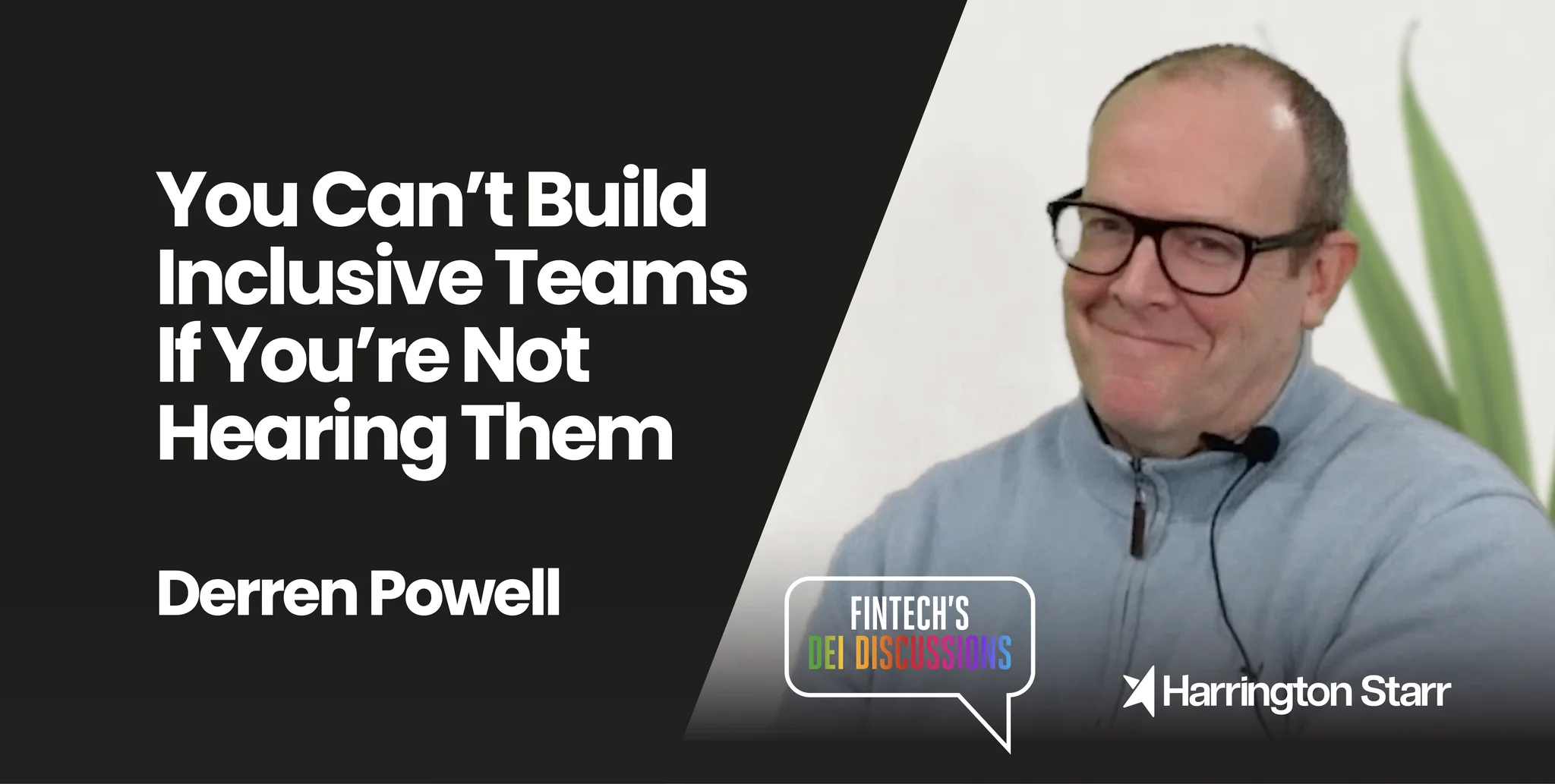
In this episode of FinTech’s DEI Discussions, hosted by Nadia, Derren Powell, Business Development in Payments, brings a grounded and honest perspective to one of the most important conversations shaping the financial technology industry today: what does real inclusion actually look like in practice? Rather than approaching diversity, equity, and inclusion as a checklist or framework, Derren reframes the conversation around something far more fundamental: human connection, leadership behaviour, and the ability to truly listen.
From the outset, the discussion centres on a simple but powerful idea: inclusion is not something that can be defined by a single structure or solved with a one-size-fits-all approach. Across FinTech, financial services, and payments, organisations often attempt to categorise inclusion into neat boxes, but as Derren highlights, this is where many businesses begin to lose sight of what matters. Inclusion is not static. It evolves over time, differs from person to person, and is shaped by individual experiences, circumstances, and needs.
This perspective is particularly relevant in a fast-moving sector like FinTech, where innovation, agility, and performance are often prioritised. Yet, as this conversation reveals, the most high-performing teams are not necessarily those with the most advanced technology or the most aggressive growth strategies, but those where individuals feel heard, safe, and empowered to contribute.
Inclusive Culture in Financial Services: From Corporate to FinTech Environments
Drawing on his experience across both large financial institutions and smaller FinTech firms, Derren reflects on the consistent role that culture plays in shaping successful organisations. Whether operating within global corporations or scaling FinTech businesses, the principles of inclusive leadership remain the same. A strong culture, rooted in collaboration, openness, and respect for different perspectives, is what enables teams to thrive.
In larger organisations, Derren describes environments where inclusion is embedded into the fabric of the business, creating a sense of belonging that goes beyond traditional workplace structures. These are environments where individuals feel part of something meaningful, where opinions are encouraged, and where diversity of thought is seen as a strength rather than a challenge.
Equally, within the FinTech space, where businesses are often smaller and more agile, inclusion can be even more powerful when it is intentionally built from the outset. Derren shares how some of the most effective teams operate with a genuine openness to ideas, creating spaces where everyone, regardless of seniority, can contribute to shaping the direction of the business. This approach not only drives innovation but also strengthens engagement, reinforcing the connection between inclusive culture and performance.
For FinTech recruitment businesses like Harrington Starr, these insights are critical. Clients are not just hiring for technical skills; they are building teams that must collaborate, adapt, and perform in high-pressure environments. Understanding the cultural dynamics that underpin success is therefore essential in placing the right talent into the right organisations.
Leadership in FinTech: Why Inclusion Cannot Be Defined by a Single Framework
A key theme throughout the episode is the challenge of definition. Many organisations struggle with inclusion because they attempt to formalise it into rigid frameworks or policies. While these structures can provide guidance, they often fail to capture the complexity of individual experiences.
Derren emphasises that inclusion should not be segmented or siloed. Too often, businesses focus on specific aspects of diversity, whether related to gender, ethnicity, or other characteristics, without recognising the broader, interconnected nature of inclusion. True inclusion requires a holistic view, one that considers the full spectrum of individual needs and experiences.
This is particularly important in the context of modern FinTech careers, where employees’ expectations are constantly evolving. What an individual needs to succeed today may differ significantly from what they required in the past, and organisations must be prepared to adapt accordingly. The ability to pivot, to listen, and to respond to these changing needs is what separates effective leaders from those who struggle to build inclusive teams.
For hiring managers and leaders across financial technology, this presents both a challenge and an opportunity. It requires moving beyond traditional leadership models and embracing a more flexible, people-centric approach, one that prioritises understanding over assumption.
Psychological Safety at Work: Creating Environments Where People Can Speak Up
One of the most impactful aspects of the conversation is the focus on psychological safety. Derren and Nadia explore what it truly means for individuals to feel safe in the workplace, and why this is such a critical component of inclusion.
Psychological safety is not simply about policies or processes; it is about behaviour. It is about creating an environment where individuals feel comfortable sharing ideas, expressing concerns, and being themselves without fear of judgement or repercussion. As Derren explains, this cannot be forced. Leaders can encourage openness, but unless individuals genuinely feel safe, they will not speak up.
This has direct implications for team performance and innovation. When individuals feel unable to share their perspectives, organisations lose valuable insights, ideas, and opportunities for growth. Conversely, when teams operate within a culture of trust and openness, they are far more likely to collaborate effectively and drive meaningful outcomes.
In the context of FinTech recruitment, this highlights the importance of cultural alignment. It is not enough to match candidates to roles based on skills alone. Understanding whether an organisation fosters psychological safety, and whether a candidate will thrive within that environment, is essential for long-term success.
Kindness Over Cancellation: A Leadership Mindset for Inclusive Teams
A defining moment in the episode comes when Derren introduces the concept of “kindness over cancellation.” This idea encapsulates a broader leadership philosophy, one that prioritises empathy, understanding, and presence over judgement.
In a world where workplaces can often feel high-pressure and transactional, Derren’s emphasis on kindness offers a powerful counterbalance. He speaks about the importance of being present, of recognising that individuals may be dealing with challenges that are not immediately visible, and of creating space for those experiences without making assumptions.
This approach is particularly relevant in the context of invisible challenges and disabilities, which are increasingly recognised within financial services and FinTech. As awareness grows, so too does the need for leaders to respond with sensitivity and understanding, rather than rigid expectations.
Kindness, in this context, is not about lowering standards or avoiding accountability. It is about creating an environment where individuals feel supported, where they can bring their full selves to work, and where they are empowered to perform at their best. For leaders, this requires a conscious shift in mindset, one that places people at the centre of decision-making.
Listening in Leadership: The Difference Between Hearing and Understanding
Another critical theme explored in the episode is the distinction between hearing and truly listening. Derren highlights a common challenge within organisations: individuals ask questions but fail to genuinely engage with the answers.
This behaviour can be particularly damaging in discussions around inclusion, where lived experiences and personal perspectives are essential to understanding the realities of the workplace. When leaders fail to listen, they not only miss valuable insights but also risk alienating those who are trying to contribute.
The conversation emphasises the importance of approaching these discussions with curiosity and openness, rather than defensiveness. Listening is not about waiting for an opportunity to respond; it is about seeking to understand. This requires patience, humility, and a willingness to challenge one’s own assumptions.
For FinTech leaders, this is a crucial skill. As the industry continues to evolve, the ability to listen, to employees, to clients, and to the broader market, will be a key driver of success. It is also a defining characteristic of inclusive leadership.
Building Inclusive Teams in FinTech: The Role of Optionality and Flexibility
A particularly insightful concept introduced in the episode is that of optionality. Derren explains how providing individuals with options, whether in how they work, communicate, or engage, can unlock new levels of creativity, empowerment, and belonging.
Optionality recognises that individuals are not all the same. It acknowledges that different people have different preferences, needs, and ways of working, and that by accommodating these differences, organisations can create more inclusive and effective teams.
This idea is especially relevant in today’s hybrid and flexible working environments, where traditional models of work are being redefined. By offering multiple pathways for engagement, whether through different communication channels, working patterns, or support structures, organisations can create environments that cater to a wider range of individuals.
For FinTech recruitment, this reinforces the importance of understanding both client and candidate needs. It is not simply about filling roles; it is about enabling organisations to build teams that are adaptable, inclusive, and aligned with the realities of modern work.
FinTech Careers and Retention: Why Inclusion Drives Long-Term Success
As the conversation draws to a close, Nadia and Derren reflect on the broader implications of inclusion for careers and retention within the FinTech industry. In a sector characterised by rapid change and intense competition for talent, the ability to retain skilled professionals is a significant challenge.
Inclusion, as this episode makes clear, is a key factor in addressing this challenge. When individuals feel safe, valued, and supported, they are far more likely to remain within an organisation and to build long-term careers within the industry.
This has direct implications for businesses across financial technology. Investing in inclusive culture is not simply a moral or ethical consideration; it is a strategic one. It impacts engagement, performance, and ultimately, business success.
For Harrington Starr, as a FinTech recruitment business, these insights are central to delivering value to clients and candidates alike. By understanding the role of inclusion in shaping successful careers and organisations, we can better support the growth of the industry and the individuals within it.
Walking the Talk in Financial Technology: Small Actions, Lasting Impact
The episode concludes with a powerful reminder that inclusion is not the responsibility of a select few; it is something that everyone can contribute to. Derren highlights the importance of individual action, of recognising that even small behaviours can have a significant impact.
Whether it is taking the time to listen, offering support to a colleague, or creating space for different perspectives, these actions collectively shape the culture of an organisation. They contribute to a ripple effect, amplifying positive behaviours and driving meaningful change.
For leaders and professionals across FinTech, the message is clear. Inclusion is not about grand gestures or complex strategies. It is about consistency, authenticity, and a genuine commitment to understanding and supporting others.
In a rapidly evolving industry, where technology continues to transform how we work, it is these human elements that will ultimately define success. By focusing on listening, kindness, and optionality, organisations can build inclusive cultures that not only attract top talent but also enable individuals to thrive.
This episode of FinTech’s DEI Discussions serves as both a reflection and a call to action, encouraging the financial technology community to move beyond surface-level conversations and to truly walk the talk when it comes to inclusion.