Babb talks to BABB. London & The Future of On Chain Finance
01 April, 2026


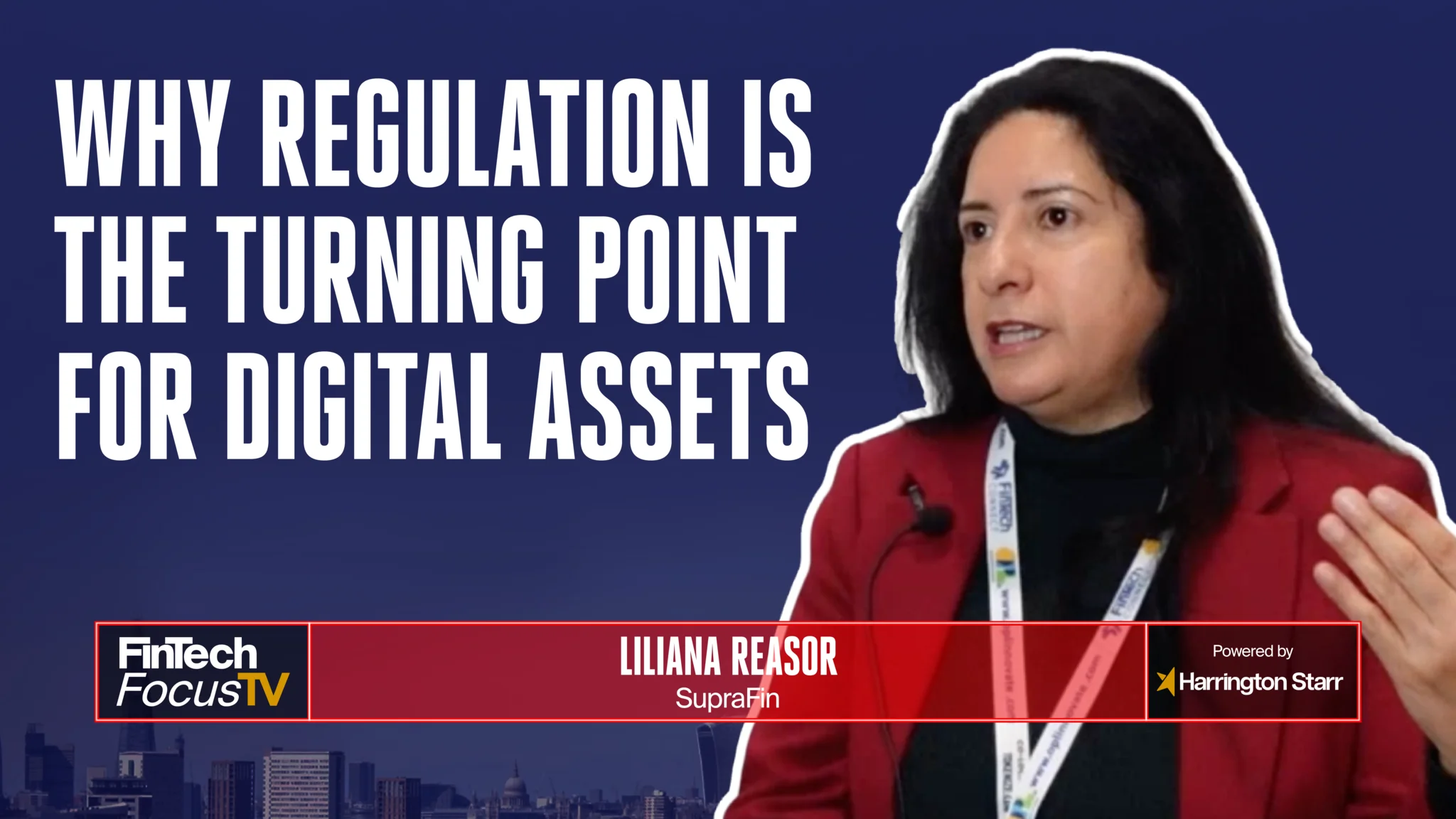
The latest episode of FinTech Focus TV, recorded live at FinTech Connect 2025, brings together deep industry experience, regulatory insight, and a forward-looking perspective on the digital asset ecosystem. Co-host Carl Charlson sits down with Liliana Reasor, Chief Executive Officer at SupraFin, for a wide-ranging conversation that explores risk, regulation, and the future of institutional participation in digital assets.
Filmed at ExCeL London during one of the most important events in the global financial technology calendar, this episode captures the themes that continue to shape FinTech hiring, product development, and leadership priorities in 2025 and beyond. As financial institutions increasingly seek compliant, data-driven ways to engage with digital assets, the insights shared in this conversation highlight why expertise, trust, and robust risk frameworks are now central to both business strategy and FinTech recruitment.
Early in the discussion, Liliana Reasor outlines the depth and breadth of her professional background, setting the context for her perspective on digital asset risk and institutional adoption. With over twenty years of experience across multiple areas of finance, her career spans risk, portfolio analytics, market making, corporate finance, credit, software product management, and investment banking. Her experience includes time at major global institutions such as Morgan Stanley, JP Morgan, Deutsche Bank, and Bank of America.
This multifaceted career journey reflects a broader trend seen across senior FinTech leadership roles today, where technical understanding, regulatory awareness, and commercial acumen increasingly converge. From a FinTech recruitment standpoint, Liliana’s path illustrates how the most effective leaders in financial technology often emerge from diverse roles across traditional finance and modern, technology-driven environments. Her transition from large financial institutions to founding and leading SupraFin underscores how experienced professionals are driving innovation in areas where regulation, data, and emerging asset classes intersect.
A central focus of the episode is SupraFin’s role as a digital asset investment risk and compliance intelligence provider. Liliana explains that SupraFin offers three core products designed to help institutions better understand and manage digital asset exposure. The first is a set of ratings and risk scores that apply to every digital asset, providing a structured and fundamental view of risk. The second offering consists of risk assessment reports that explain these scores and ratings in greater detail, giving institutions transparency into how risks are identified and evaluated. The third product is a wealth technology platform that uses these risk scores to construct lower-risk, medium-risk, and higher-risk portfolios.
According to Liliana, these solutions are designed for institutions rather than retail investors directly. Banks can use SupraFin’s platform to offer digital asset solutions to their retail clients, while asset managers, portfolio managers, traders, payment providers, and other institutions dealing with digital assets can leverage the intelligence to support compliant decision-making. This emphasis on institutional-grade tooling highlights the growing demand for specialised talent across FinTech, particularly in areas such as digital asset compliance, risk analytics, and platform engineering. For FinTech recruitment firms like Harrington Starr, these developments signal sustained demand for professionals who can bridge regulation, technology, and financial markets.
When discussing the broader market environment, Liliana describes 2025 as a particularly significant year for digital assets, largely due to regulatory developments. She points to changes in the United States, where the introduction of regulation around digital assets and crypto has allowed financial institutions to begin entering the space in a more structured and compliant manner. This shift has not only increased demand for SupraFin’s solutions but has also created momentum for institutions outside the US to explore similar opportunities.
Liliana notes that in the UK, she is seeing a growing number of companies enquiring about SupraFin’s offerings as they prepare to enter the digital asset market. Across Europe, the introduction of MiCA regulation has led to increased interest from portfolio managers, asset managers, and other financial institutions seeking compliant pathways into digital assets. From a FinTech recruitment perspective, this regulatory-driven acceleration is reshaping hiring priorities, with firms increasingly seeking candidates who understand both regulatory frameworks and emerging asset classes.
The conversation returns repeatedly to MiCA and its impact on European financial institutions. Liliana explains that MiCA provides a clear regulatory foundation that many institutions were previously waiting for before committing resources to digital assets. Prior to regulation, banks and other established financial players were hesitant to explore crypto and digital assets due to uncertainty and perceived risk. With MiCA coming into effect, that hesitation is giving way to structured planning and investment.
She observes that European banks are now actively trying to get up to speed, focusing on compliance as they look to offer digital asset and cryptocurrency solutions to their clients. This process involves not only technology adoption but also cultural and organisational change, as institutions align internal teams around new regulatory requirements and risk frameworks. In the UK, Liliana expects a similar acceleration as domestic regulation progresses, creating further momentum for institutional adoption.
These developments have direct implications for FinTech recruitment in Europe and the UK, where demand is rising for compliance specialists, product leaders, data scientists, and technologists with digital asset expertise.
One of the most technically insightful segments of the episode focuses on the distinction between fundamental risk and market risk. Liliana explains that fundamental risk acts as a leading indicator, helping institutions understand potential risks that may occur in the future. SupraFin’s risk scores are fundamental in nature, designed to give institutions a forward-looking view rather than a purely reactive one.
In contrast, market risk is described as more reactive and typically associated with short-term trading activity. While both types of risk are complementary, Liliana emphasises that fundamental risk should be the starting point for institutions entering the digital asset space. Understanding fundamental risk first allows firms to build strategies that are resilient, compliant, and aligned with long-term objectives.
This focus on foundational understanding mirrors trends seen across FinTech hiring, where employers increasingly value candidates who can think strategically about risk rather than simply reacting to market movements. As digital assets become more embedded in institutional portfolios, the ability to assess and communicate fundamental risk will remain a critical skill set.
Trust emerges as a recurring theme throughout the discussion, particularly when addressing the question of mainstream adoption of digital currencies. Liliana identifies lack of understanding around risk as one of the main barriers preventing broader adoption. Without clarity on what the risks actually are, individuals and institutions alike struggle to build confidence in digital assets.
She explains that trust is built through understanding, and understanding comes from transparency. SupraFin’s role, as she describes it, is to provide that transparency by clearly explaining the risks associated with different digital assets. By doing so, the platform aims to accelerate adoption by removing uncertainty and enabling informed decision-making.
For FinTech businesses and recruiters, this emphasis on trust underscores the importance of hiring professionals who can communicate complex concepts clearly, whether in product development, client-facing roles, or leadership positions.
Looking ahead, Liliana shares an optimistic outlook for 2026. She explains that SupraFin plans to expand significantly into the United States and Europe, leveraging MiCA regulation to reach financial institutions seeking compliance. Asset managers, portfolio managers, and banks are expected to play a central role in this expansion, particularly those looking to offer digital asset solutions to retail clients through compliant platforms.
She describes 2026 as a year of substantial growth potential, driven by increasing institutional demand for digital asset risk intelligence. This anticipated expansion reflects broader trends across the FinTech sector, where regulatory clarity is unlocking investment, innovation, and hiring at scale.
From a FinTech recruitment perspective, these growth plans highlight why competition for experienced talent in digital assets, compliance, and risk management is likely to intensify. Firms that invest early in the right people will be better positioned to capitalise on emerging opportunities.
Recorded live at FinTech Connect 2025, this episode of FinTech Focus TV captures the real-time conversations shaping the future of financial technology. Liliana Reasor’s insights provide a clear picture of how regulation, risk intelligence, and institutional trust are converging to define the next phase of digital asset adoption.
For Harrington Starr, as a FinTech recruitment business, these themes are directly aligned with what clients and candidates are experiencing across the market. The demand for professionals who can operate at the intersection of technology, regulation, and finance continues to grow, particularly as digital assets move from the periphery to the core of institutional strategy.
This episode serves as a valuable resource for anyone interested in the future of FinTech careers, digital asset innovation, and the leadership required to navigate an increasingly regulated and complex financial landscape.