Why Career Pivots Supercharge Growth in FinTech
31 March, 2026

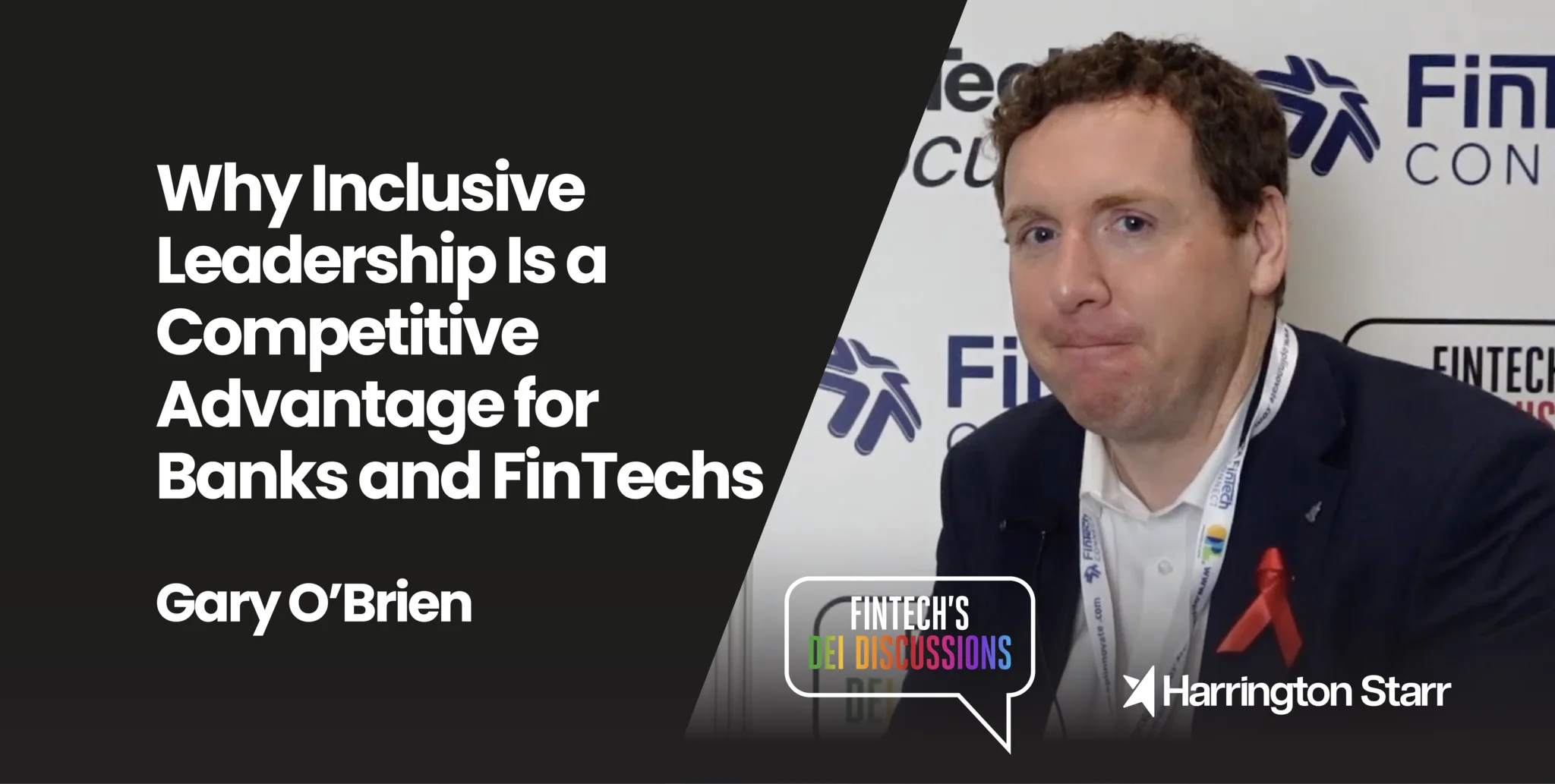
In this episode of FinTech's DEI Discussions, recorded live at FinTech Connect 2025, Nadia Edwards-Dashti is joined by Gary O'Brien, Global Head of Banks and Broker Segment Strategy at BNP Paribas, for a grounded and thoughtful conversation on inclusion, leadership, and what meaningful progress looks like inside financial services and FinTech. The discussion is framed not as a theoretical debate, but as a practical reflection on how inclusive cultures are built, sustained, and connected to performance, innovation, and long-term competitiveness. From the outset, the tone of the episode is clear. This is a conversation about action, responsibility, and leadership behaviour, rather than statements of intent.
Gary begins by outlining his career journey, providing important context for his perspective on leadership and inclusion. Having spent over 20 years at BNP Paribas across operational, product, project management, and strategy roles, and having worked in Australia, Hong Kong, and the UK, he brings a global lens to the conversation. His experience across regions and functions reinforces a central theme of the episode: that strong careers in financial services and FinTech are built through progression, exposure to different challenges, and the opportunity to grow within an organisation. This framing naturally links to broader conversations about FinTech recruitment and retention, particularly the importance of enabling people to develop over time rather than viewing roles or talent as static.
The conversation moves to FinTech Connect itself and the themes shaping the event. Gary highlights the evolution of payments technology, not only in terms of core processing but also around visibility, transparency, and controls. He discusses the growing importance of balancing regulatory requirements such as anti-money laundering and counter-terrorist financing with efficiency and customer experience. What emerges here is a clear link between innovation and trust. Banks and financial institutions, Gary explains, continue to play a vital role because of their regulatory structure, global reach, and the confidence they provide to markets. However, staying competitive depends on how effectively they collaborate with FinTechs, combining stability with agility. This dynamic is central to the modern FinTech ecosystem and shapes how organisations think about hiring, talent strategy, and leadership capability.
A recurring theme in the episode is collaboration rather than competition between banks and FinTechs. Gary is clear that the future marketplace will continue to need banks, but that their role is evolving. He describes a model in which banks act as conduits, bringing together their own platforms with third-party FinTech solutions to offer broader services to clients. This requires leaders who understand ecosystems rather than silos and who can build teams capable of navigating complexity. For FinTech recruitment businesses like Harrington Starr, this reinforces the growing demand for professionals who can operate at the intersection of technology, regulation, and strategy, as well as leaders who can manage partnerships and change.
When the conversation turns explicitly to inclusion, Gary frames it as a business imperative rather than a compliance exercise. He states clearly that inclusion fosters innovation, and that diverse teams bring different perspectives that lead to better solutions over time. At events like FinTech Connect, he observes how inclusion plays out in practice, through the range of ideas, backgrounds, and approaches represented. This emphasis on diversity of thought aligns closely with how high-performing FinTech teams are built and how organisations approach hiring for innovation. The episode reinforces the idea that inclusion is not separate from performance, but deeply connected to it.
Gary references BNP Paribas’ involvement in global agreements focused on validating rights in the workplace, with diversity and inclusion at their core. He explains that inclusion spans many dimensions, including gender diversity, sexuality, background, age, and disability, and that meaningful inclusion means ensuring people have access to opportunity and progression. Importantly, he does not present this as a completed task. Instead, inclusion is described as ongoing work that requires continued focus and accountability. This perspective resonates strongly in FinTech recruitment conversations, where organisations are increasingly expected to demonstrate not just hiring intent but tangible progress across all levels of the business.
One of the most concrete moments in the episode comes when Gary discusses gender diversity within his organisation. He shares that the workforce has reached approximately 52 percent female and 48 percent male representation, while also acknowledging that this is only a starting point. The focus, he explains, must extend beyond overall numbers to how representation is distributed across different layers of the organisation. This emphasis on leadership accountability and progression reflects a broader industry challenge. Hiring diverse talent is only one part of the equation; retaining, developing, and promoting that talent is equally critical. For FinTech leaders and hiring managers, this insight underscores the importance of long-term workforce planning.
Gary highlights the role of short-term targets and key performance indicators alongside longer-term inclusion charters. He explains that while many organisations have aspirational frameworks, real progress often comes from defining specific areas of short-term focus. In his experience, this approach has been powerful in driving tangible steps in the right direction. This balance between vision and execution is a recurring theme throughout the episode and speaks directly to leadership maturity. In the context of FinTech recruitment and talent strategy, it reinforces the need for clarity, measurement, and follow-through when building inclusive teams.
Nadia reflects on the idea that inclusion is never “finished,” describing it as a continuous process rather than an end goal. Gary agrees, reinforcing that inclusive culture must be maintained through ongoing effort rather than one-off initiatives. This part of the conversation highlights the role of leadership behaviour in shaping workplace culture. Policies alone are not enough; leaders must model inclusion through their decisions, communication, and actions. For organisations competing for FinTech talent, this insight is particularly relevant, as candidates increasingly assess culture and leadership credibility when considering roles.
The episode concludes with advice for individuals who want to encourage greater inclusion within their organisations. Gary outlines two complementary approaches. The first is the moral and ethical case for inclusion, ensuring people feel genuinely included and valued at work. The second is demonstrating the tangible business value of diverse teams by showing how they deliver better outcomes. He emphasises the importance of being part of the solution, not simply raising issues and stepping away. This message aligns strongly with the broader theme of leadership responsibility that runs throughout the episode.
For Harrington Starr and others operating in FinTech recruitment, this conversation offers valuable insight into how senior leaders are thinking about inclusion, performance, and competitiveness. The episode reinforces that inclusive leadership is not a standalone initiative but a core component of effective talent strategy. As FinTech and financial services organisations continue to evolve, demand is growing for leaders who can build diverse teams, collaborate across ecosystems, and align culture with strategy. This episode of FinTech’s DEI Discussions captures those dynamics through lived experience rather than abstract theory.
Recorded live at FinTech Connect 2025, this discussion reflects the maturity of DEI conversations within the FinTech and banking sectors. Rather than focusing on slogans or surface-level commitments, Nadia and Gary explore how inclusion connects to trust, innovation, and long-term success. The episode serves as a reminder that leadership decisions shape access, opportunity, and progression, whether intentionally or not. For organisations hiring in FinTech, the implications are clear: inclusive leadership is not only the right thing to pursue, but a strategic necessity in a competitive and fast-moving market.
This episode of FinTech’s DEI Discussions stands out for its practical tone and its emphasis on responsibility, consistency, and action. By grounding the conversation in real organisational experience and avoiding easy answers, it offers listeners a clear sense of what meaningful inclusion looks like in practice. For leaders, hiring managers, and professionals across FinTech and financial services, it provides a thoughtful perspective on how inclusive cultures are built and sustained over time.