Why You’re Hiring Wrong in FinTech
02 April, 2026
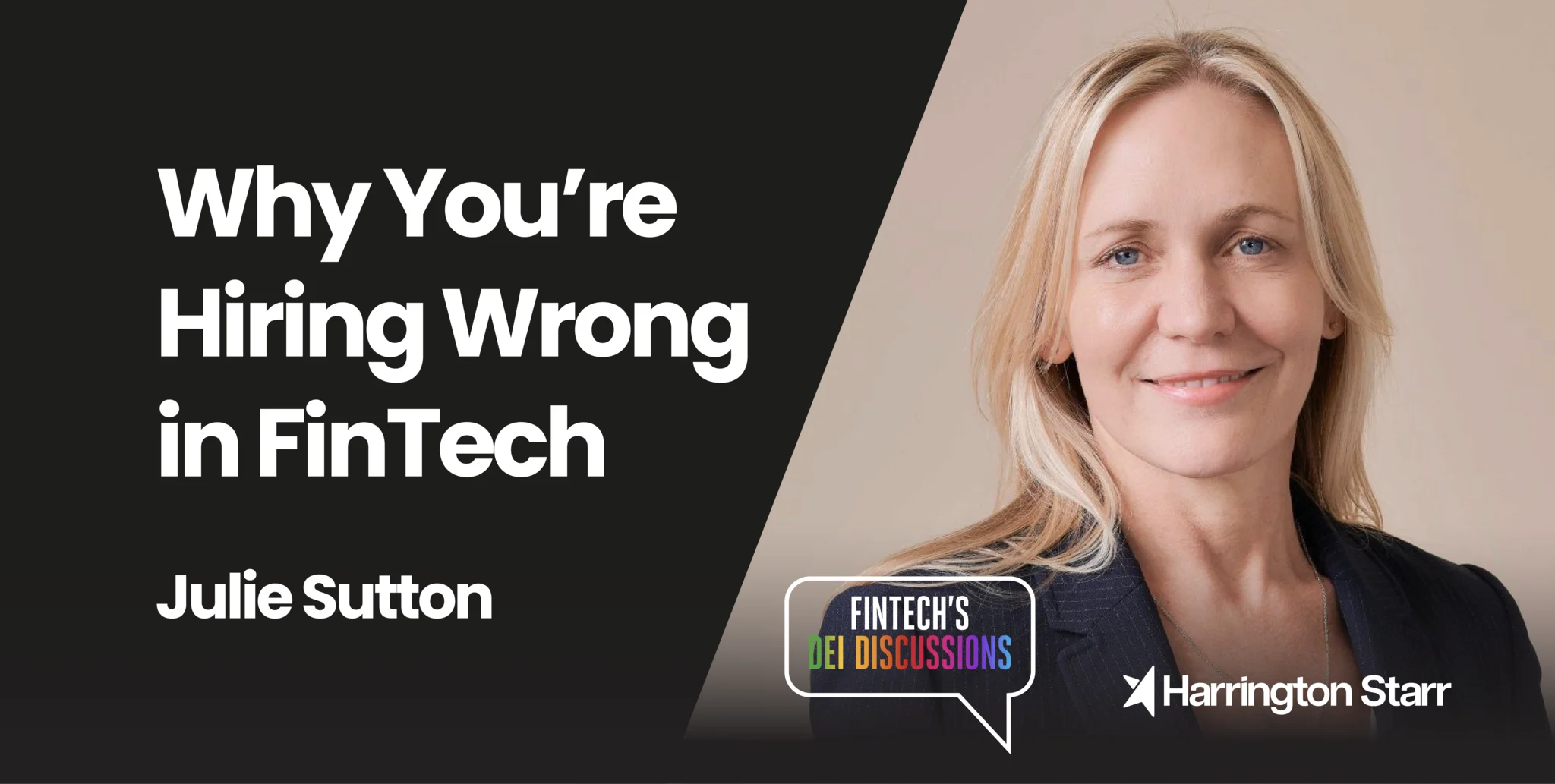

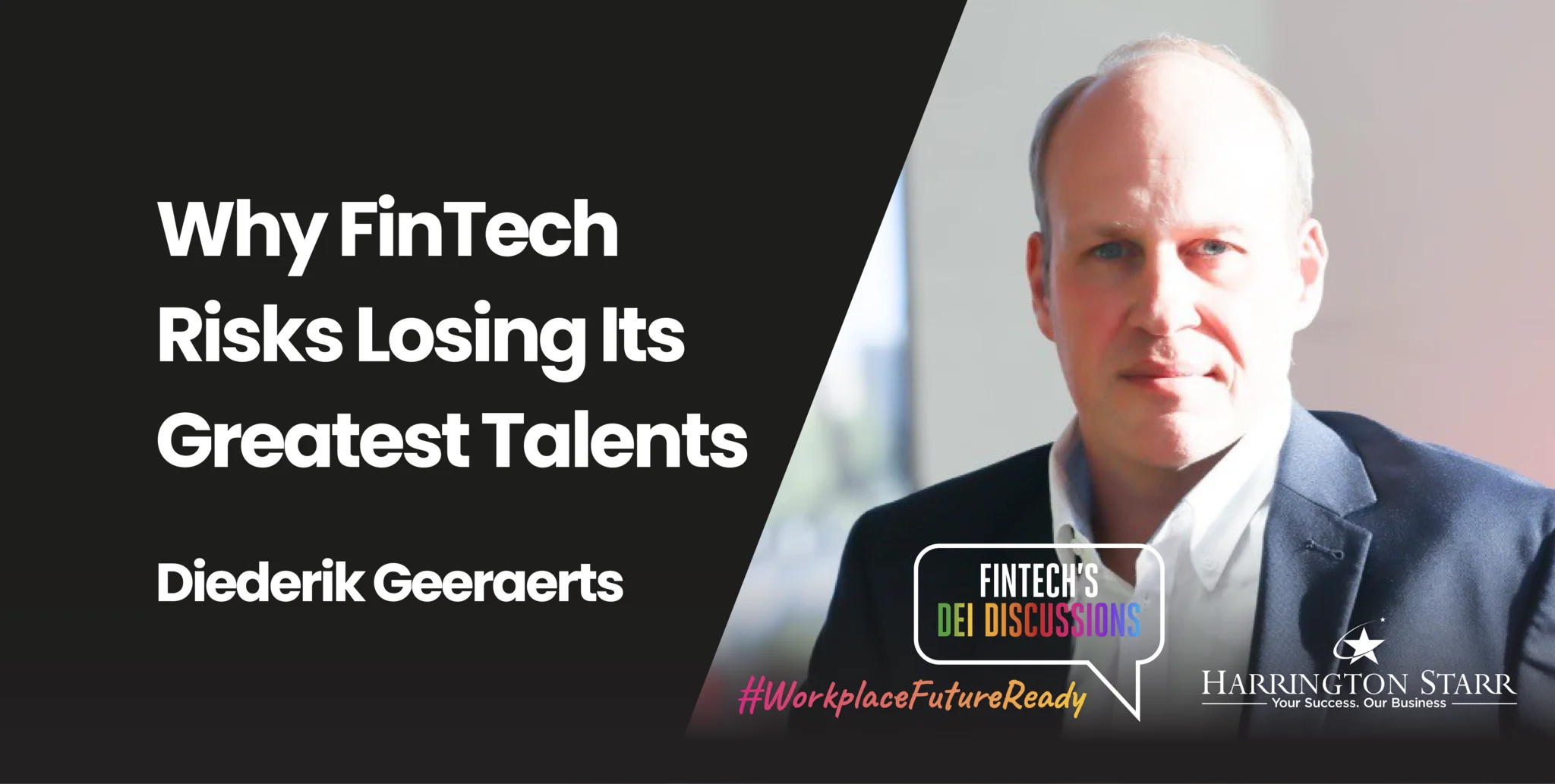
In the latest episode of FinTech’s DEI Discussions, Nadia speaks with Diederik Geeraerts, CEO of Taskize. This discussion forms part of the Workplace Future Ready Series, a podcast exploration into what the world of work needs next, how leaders must evolve, and why inclusion must be at the core of every FinTech, financial services, and wider technology organisation. The episode is rich with insights about leadership, inclusion, generational transitions, the risks facing the financial markets ecosystem, and the deeper people-first mindset required to build sustainable teams.
As a FinTech recruitment business operating across global financial markets, Harrington Starr understands the increasing importance of forward-thinking leadership, inclusive workplaces, and the urgent need to develop environments where talent can thrive. This episode shines a clear light on these themes by examining them through the lens of Diederik’s career experiences, the industry knowledge gap emerging today, and the workplace challenges that financial technology firms must address before 2030.
Nadia begins by welcoming listeners and framing the episode’s purpose: to celebrate wins, raise awareness of challenges, and walk the talk for inclusive change across FinTech. She introduces Diederik Geeraerts, who brings more than two decades of operational, leadership, and client service experience within major financial market infrastructures.
Diederik shares that he spent twenty years at Euroclear Bank, one of the most significant financial market infrastructures globally. His early work involved managing large back-office teams, while his later responsibilities included serving as the Global Head of Client Services, overseeing client-facing teams located across multiple regions. He also spent ten years living in Poland, where he contributed to establishing and scaling the Euroclear Bank branch there, eventually becoming Deputy Branch Manager.
Earlier this year, he stepped into his role as CEO of Taskize, a company fully owned by Euroclear. Taskize is designed to deliver superior operational efficiency and enhanced client service by helping financial institutions resolve breaks, fails, and queries safely, quickly, and securely. The platform replaces slow, traditional email chains with instant communication workflows, allowing counterparties to resolve settlement or operational issues in a fraction of the time.
He explains the technological capabilities Taskize offers: an online SaaS platform that connects counterparties, a workflow model that speeds up resolution, and opportunities for financial institutions to integrate with their data lakes for automation. The company is also investing in AI-driven capabilities to support clients in resolving queries.
His reflections provide a valuable reminder for anyone hiring into FinTech operations, client services, product management, or technology leadership roles. Deep industry experience is rare, operational understanding is invaluable, and leaders with cross-functional career paths often drive the most meaningful change.
As the conversation transitions into leadership, Nadia asks a core question: what does inclusion mean to Diederik? His answer sets the tone for the rest of the discussion and for any FinTech leaders hiring, developing teams, or shaping workplace culture.
For him, inclusion starts with one simple but powerful behaviour: ensuring every person around the table has an equal voice and is genuinely listened to. He clarifies that listening does not mean preparing your answer while someone else is speaking. It means understanding where the comments come from, what motivates them, and what perspectives they bring.
He also challenges the common assumption that diversity automatically equals inclusion. A diverse leadership team without inclusive behaviour is still exclusive, still hierarchical, and still limited in perspective. True inclusion is a behaviour and a mindset, not just a demographic composition. For financial technology businesses, where product development, compliance, client needs, and operational challenges require multidimensional thinking, this distinction is critical.
From a FinTech recruitment perspective, this insight matters deeply. Many firms today aim to build diverse teams but overlook the behavioural shift required to help those teams collaborate effectively. Hiring for diversity without cultivating inclusion ultimately leads to disengaged employees, premature turnover, and missed opportunities for innovation.
Inclusive leadership, as described by Diederik, is about creating environments where individuals feel safe to contribute, valued for their viewpoints, and empowered to bring their authentic perspectives to complex challenges.
One of the most impactful segments of the conversation centres around the rapidly changing workforce demographics in FinTech and financial services. Nadia highlights how the industry today contains a wider variance of age groups than ever before. This is a structural shift compared to two decades ago.
Diederik notes that today’s industry veterans carry a “goldmine” of knowledge and experience. They have lived through multiple financial crises, regulatory transformations, large-scale technology migrations, and structural shifts that newer professionals have yet to experience.
His concern is clear: if these experienced professionals retire in significant numbers over the next five to ten years, the industry will face a critical knowledge gap. The unwritten expertise, the context, decision-making instincts, pattern recognition, and institutional understanding, could disappear if leaders are not proactively investing in succession planning and knowledge transfer.
This challenge has major implications for FinTech hiring, career development, and talent strategy. Many firms focus heavily on hiring junior or mid-level talent, but without effective mentorship or structured development, those individuals cannot acquire the depth of understanding required to replace the veterans who currently carry the heaviest knowledge load.
Diederik questions how many senior leaders are actively thinking about their succession, how many are opening their “book of knowledge” to the next generation, and how many understand that their legacy depends on training the leaders who will come after them.
The conversation turns to the future of the industry. Nadia asks what the financial technology world might look like in 2030. Diederik explains that the rise of AI will transform lower-complexity tasks, automating workflows, improving efficiency, and enabling faster operations. However, high-complexity tasks, the difficult, multifaceted issues that require deep contextual understanding, will remain heavily dependent on human expertise.
The paradox, as he describes it, is that these complex issues are currently resolved by the same industry veterans who may soon retire. AI cannot replace the decades of interconnected insights and instinctive problem-solving that these leaders have accumulated.
For FinTech businesses and global financial firms, this means one thing: younger professionals must be equipped today to handle the high-complexity problems of tomorrow. They must be trained, mentored, challenged, and exposed to real-world scenarios early enough to develop the judgment and maturity required in critical decision-making.
This mirrors what we see across FinTech recruitment trends, where firms increasingly seek candidates who can operate in hybrid spaces: understanding operations but thinking strategically, combining technology expertise with business context, and bringing both analytical and people-first strengths to their role.
When Nadia asks how leaders can best prepare themselves for the future challenges and opportunities, Diederik reflects on his own career. He attributes much of his success to the mentors and bosses who opened their knowledge to him, supported him, challenged him, and exposed him to difficult situations sooner than expected.
He emphasises that learning is not just about reading SOPs or following documented processes. The most important learning often comes from the unwritten knowledge: how to handle unique situations, how to interpret context, how to navigate nuance, and how to deal with the unpredictable realities of operations.
He believes leaders must deliberately pass this experience on. This means giving team members real exposure, offering coaching, encouraging growth, and viewing leadership as an act of enabling others rather than controlling them.
His reflection connects directly with the challenges many FinTech hiring managers face today. Businesses want autonomous, confident, capable professionals, but these capabilities only emerge when leaders give people the room to grow.
Diederik discusses what the industry must upskill on to ensure people come first. He says the starting point is simple but often overlooked: leaders must acknowledge the real problems. He observes that many organisations still avoid uncomfortable discussions about inclusivity, people-centric management, workplace psychological safety, or cultural barriers.
Companies that thrive today, he explains, are those that create safe spaces where diverse teams can shine. These are environments where younger employees feel valued, where individuals from different backgrounds contribute meaningfully, and where people can be proud of their work without needing to fit into outdated leadership moulds.
He stresses that leadership must shift from a model in which managers seek to shine on behalf of their teams to one where leaders help others shine. This mindset shift is foundational for building inclusive, high-performing teams and is increasingly sought after across FinTech recruitment as organisations recognise that culture drives retention and performance.
In one of the most practical sections of the conversation, Diederik outlines the simple approach he recommends for new managers stepping into people leadership roles. He suggests that before focusing on quick wins, managers should ask their team members three key open questions.
First, they must understand what motivates each individual inside and outside work. These motivations vary dramatically from person to person, and understanding them builds trust.
Second, they should ask what success means for that individual. Success might be picking up their children on time, or it might be progression. Understanding this shapes expectations and support.
Finally, managers must ask how they can help that individual be successful. This shifts leadership into a supportive, partnership-based role, ensuring employees feel valued and empowered.
These simple steps help create inclusive, trust-led cultures in FinTech firms, cultures that attract and retain top talent and ultimately improve operational resilience.
The conversation between Nadia and Diederik Geeraerts, CEO of Taskize, is a compelling exploration of leadership, inclusion, knowledge transfer, and the future of work in financial technology. His insights highlight themes that are increasingly shaping FinTech recruitment today: the urgency of building inclusive cultures, the need to equip younger generations for complex challenges, the importance of retaining and learning from industry veterans, and the fundamental role of people-first leadership.
For FinTech businesses seeking to grow, scale, or strengthen their teams, the episode is a reminder that hiring is only the first step. Developing talent, supporting diverse voices, and preparing organisations for the future are what ultimately define long-term success.
This episode of FinTech’s DEI Discussions serves as a powerful call to action for leaders across the global FinTech ecosystem to listen more deeply, lead more inclusively, and invest in the people who will shape the next era of financial technology.