Why You’re Hiring Wrong in FinTech
02 April, 2026
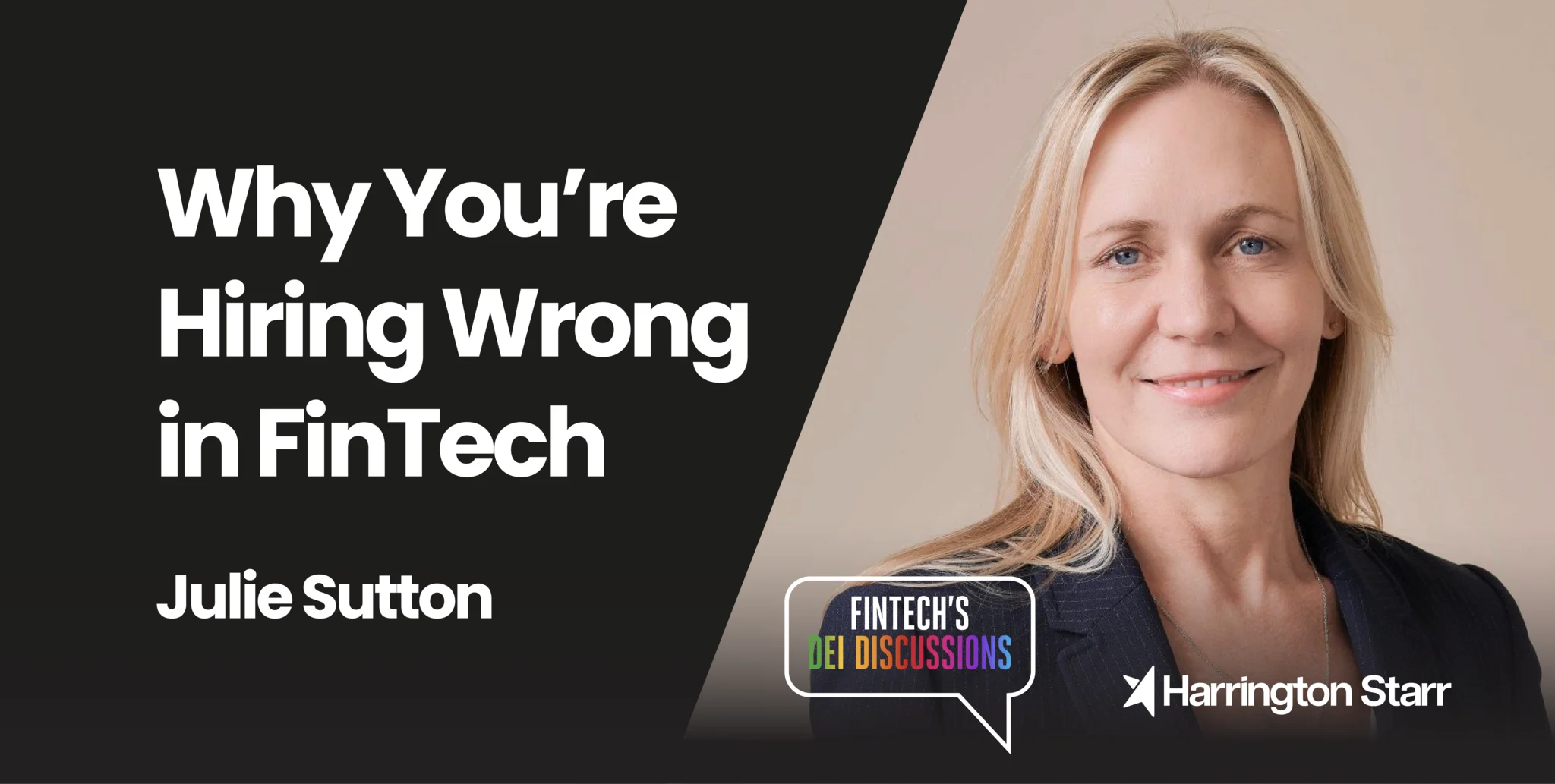

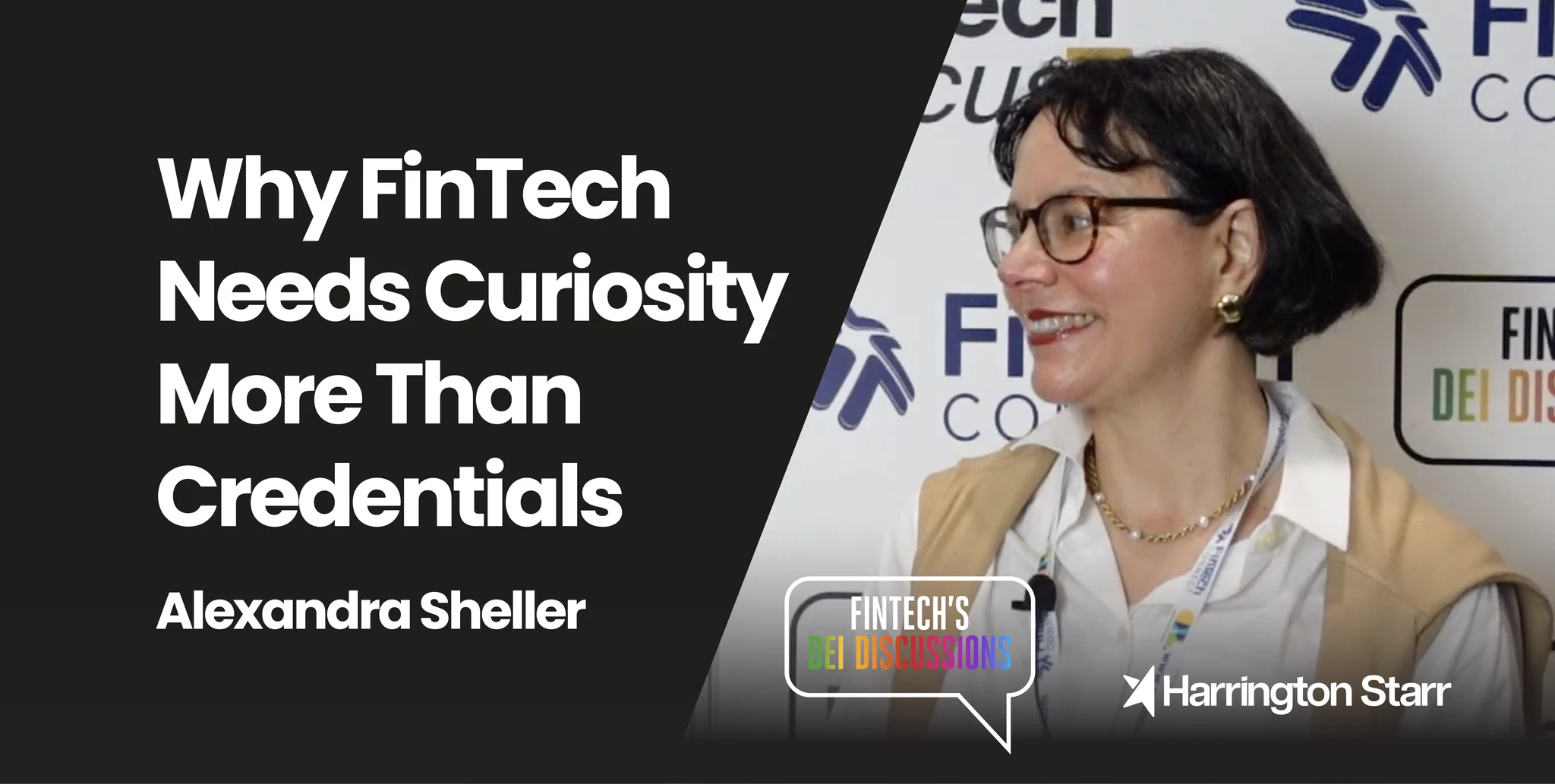
In this episode of FinTech's DEI Discussions, recorded live at FinTech Connect 2025, Nadia Edwards-Dashti sits down with Alexandra Sheller, Advisor and Principal Consultant at The Bridgeview Group Ltd, for a wide-ranging and deeply practical conversation about inclusion, talent, and what sustainable careers in financial technology really look like. Rather than focusing on theory or surface-level commitments, the discussion centres on lived experience, market disruption, and the small but meaningful changes that organisations can make to build stronger, more resilient teams. For leaders thinking about FinTech recruitment, talent retention, and long-term workforce planning, the insights shared throughout this episode are both timely and actionable.
Early in the conversation, Alexandra reflects on her own career journey and challenges the assumption that successful careers in FinTech follow a neat, upward trajectory. She describes her professional path not as a straight line, but as a rollercoaster shaped by market cycles, technological disruption, and organisational change. From working within early-stage ventures that struggled to raise funding as technology overtook their business models, to experiencing the collapse of a large, established firm that went bankrupt overnight, Alexandra has seen firsthand how quickly circumstances can change in financial services.
These experiences, she explains, fundamentally shaped her understanding of resilience, teamwork, and adaptability. In FinTech, where innovation, regulation, and market forces collide, non-linear careers are not an exception but the norm. This reality has important implications for FinTech recruitment strategies. When organisations over-index on linear CVs or narrowly defined career paths, they risk overlooking individuals who have navigated disruption, learned through volatility, and developed the very skills required to thrive in a constantly evolving sector.
When asked what inclusion means to her, Alexandra brings the conversation back to empathy. She references the idea that the vast majority of human DNA is shared, with only a small fraction accounting for difference. Yet within that small percentage lies the richness of perspective, experience, and creativity that organisations need if they are to innovate and serve diverse customer bases effectively. Inclusion, in this sense, is not about categorisation or labels, but about recognising the value of difference and ensuring that systems do not unintentionally exclude it.
For FinTech businesses, particularly those operating at scale or across global markets, this perspective is critical. Financial technology ultimately exists to serve people, and customer experiences are shaped by who is involved in designing, building, and governing products. Inclusive teams are better equipped to understand risk, anticipate unintended consequences, and create solutions that support financial wellbeing across different demographics. This is not just a cultural consideration, but a strategic one that directly affects performance and long-term growth.
Recording the episode live at FinTech Connect 2025 adds another layer of context to the discussion. Alexandra speaks about the value of events that bring together a wide spectrum of organisations, from early-stage innovators pushing boundaries to established institutions with the scale to implement change across markets. She highlights how some of the most interesting developments in financial technology occur at the intersection between these groups, where ideas, capabilities, and perspectives collide.
The themes present at the event, including tokenisation, digitisation, and RegTech, all point towards a future where interoperability, industry standards, and risk management are increasingly important. Alexandra notes that at the heart of these conversations is the question of appropriate risk-taking and customer experience. For FinTech recruitment leaders, this reinforces the need to hire talent that understands both innovation and responsibility, and that can operate effectively within complex, regulated environments.
A significant part of the conversation focuses on the persistent skills and talent gap within the UK FinTech sector. Alexandra discusses her involvement with the Women Pivoting to Digital Taskforce, an initiative sponsored by the City of London Corporation and designed to help close this gap by supporting women into digital and technology roles. She frames the issue not as a lack of available talent, but as a mismatch between traditional hiring practices and the reality of the workforce.
By adopting a skills-first approach to hiring, organisations can tap into pools of talent that are already present, motivated, and capable, but often overlooked due to rigid role requirements or assumptions about career backgrounds. This approach has direct relevance for FinTech recruitment businesses like Harrington Starr, which work closely with clients to identify talent that aligns with both immediate needs and long-term strategy. Skills-based hiring not only broadens access but also supports diversity, resilience, and innovation across teams.
Beyond attracting talent, the episode explores the equally important challenge of retention. Nadia raises the question of how organisations can ensure that people who enter the FinTech industry are supported to stay, grow, and contribute over time. Alexandra responds by emphasising the importance of enabling individuals to bring their full selves to work and to thrive despite, or even because of, their differences.
She shares examples of simple yet powerful practices that can make a significant difference, particularly during recruitment and onboarding. One such example involves interview preparation, where candidates are clearly informed about what to expect, including the key areas they will be assessed on. This transparency reduces stress, levels the playing field, and allows candidates to present their best selves. While such practices may seem small, they can fundamentally change how inclusive and fair the hiring process feels, ultimately influencing who succeeds and who is excluded.
What stands out throughout the discussion is the emphasis on practical inclusion rather than abstract commitments. Alexandra argues that many of the changes required to improve inclusion in FinTech recruitment are well within reach of organisations of all sizes. Clear communication, structured processes, and intentional design choices can remove unnecessary barriers and improve outcomes for both employers and candidates.
For recruitment leaders and hiring managers, this perspective is particularly valuable. In a competitive talent market, where candidates have choices and expectations are rising, inclusive hiring practices can be a differentiator. They signal respect, professionalism, and a genuine commitment to fairness, all of which contribute to employer brand and long-term talent attraction.
When asked what advice she would give to individuals who want to be more active in driving inclusion within their organisations, Alexandra returns to the theme of curiosity. She encourages people to remain open, attend training opportunities, and engage with conversations even when the immediate value is not obvious. Often, she notes, the most impactful outcomes come from unexpected connections, whether through a conference conversation, a webinar, or a collaborative project that emerges over time.
This mindset is equally applicable at an organisational level. Employers that create opportunities for learning, exposure, and participation signal that they value growth and adaptability. Alexandra highlights the example of offering employees access to industry events, even when the organisation itself is not a sponsor. Enabling team members to attend conferences like FinTech Connect, absorb insights, and bring learnings back to the business is a tangible way to invest in people and build collective capability.
Towards the end of the episode, the conversation broadens to consider how the industry defines a career itself. Alexandra challenges the traditional notion of a fixed, forty-year career arc and points to the changing realities of both entry into the workforce and longevity within it. With more routes into technology roles than ever before, and with people working for longer due to demographic trends, FinTech organisations have an opportunity to harness talent at both ends of the spectrum.
This requires a shift in mindset, away from rigid assumptions and towards more flexible, inclusive definitions of experience and potential. For FinTech recruitment strategies, this means valuing transferable skills, lived experience, and adaptability alongside technical expertise. It also means recognising that diverse career paths can strengthen teams by bringing a wider range of perspectives and problem-solving approaches.
A recurring theme throughout the episode is the inseparability of inclusion and talent strategy. In a sector defined by rapid change, regulatory complexity, and global competition, the ability to attract, retain, and develop the right people is a critical success factor. Inclusion is not an add-on to this process, but a core enabler of it.
By designing recruitment and retention practices that recognise non-linear careers, prioritise skills, and cultivate empathy, FinTech organisations can build teams that are better equipped to navigate uncertainty and drive sustainable growth. This is particularly relevant for clients working with specialist FinTech recruitment partners, who increasingly expect insight and guidance on how to future-proof their workforce rather than simply fill roles.
What makes this episode of FinTech’s DEI Discussions particularly compelling is its grounding in real experience. Alexandra’s insights are informed by decades in the industry, exposure to both start-ups and large institutions, and active involvement in initiatives addressing skills gaps and inclusion. Nadia’s thoughtful questioning ensures that the conversation remains focused on action, practicality, and relevance for leaders across financial technology.
Recorded at FinTech Connect 2025, the episode captures a moment where the industry is actively grappling with questions of talent, technology, and transformation. For anyone involved in FinTech hiring, leadership, or workforce strategy, it offers a valuable reminder that inclusion, when approached thoughtfully and intentionally, is not just the right thing to do but a strategic advantage.
As the episode concludes, the message is clear. The future of FinTech depends on the industry’s ability to recognise and nurture talent in all its forms. By staying curious, embracing non-linear careers, and implementing inclusive practices at every stage of the talent lifecycle, organisations can ensure they remain competitive, innovative, and resilient.
For FinTech recruitment businesses and the clients they support, these insights underscore the importance of aligning hiring strategies with the realities of the modern workforce. Inclusion, empathy, and skills-first thinking are no longer optional considerations. They are essential components of building teams that can thrive through change and continue to drive the industry forward.