Babb talks to BABB. London & The Future of On Chain Finance
01 April, 2026
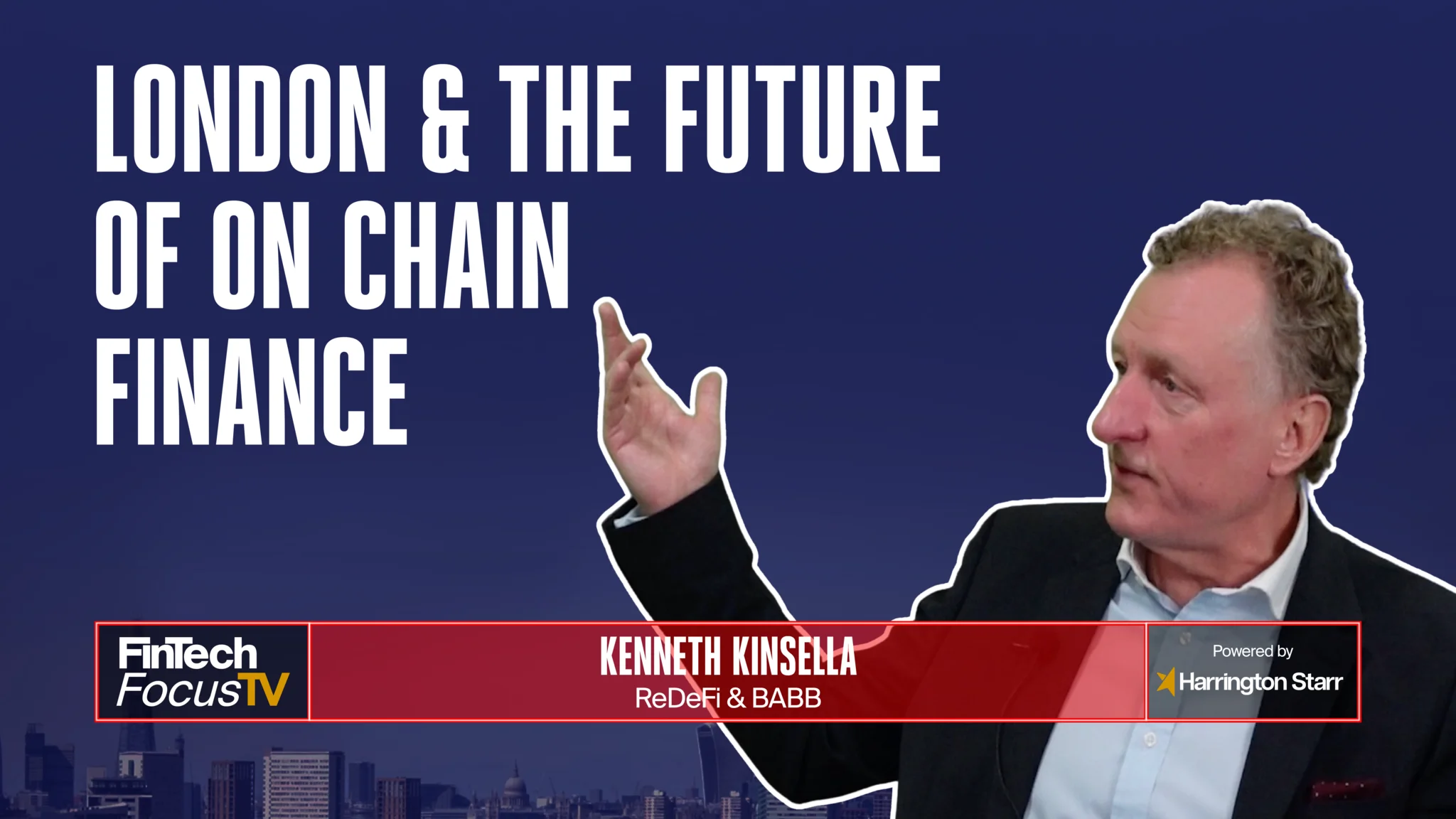

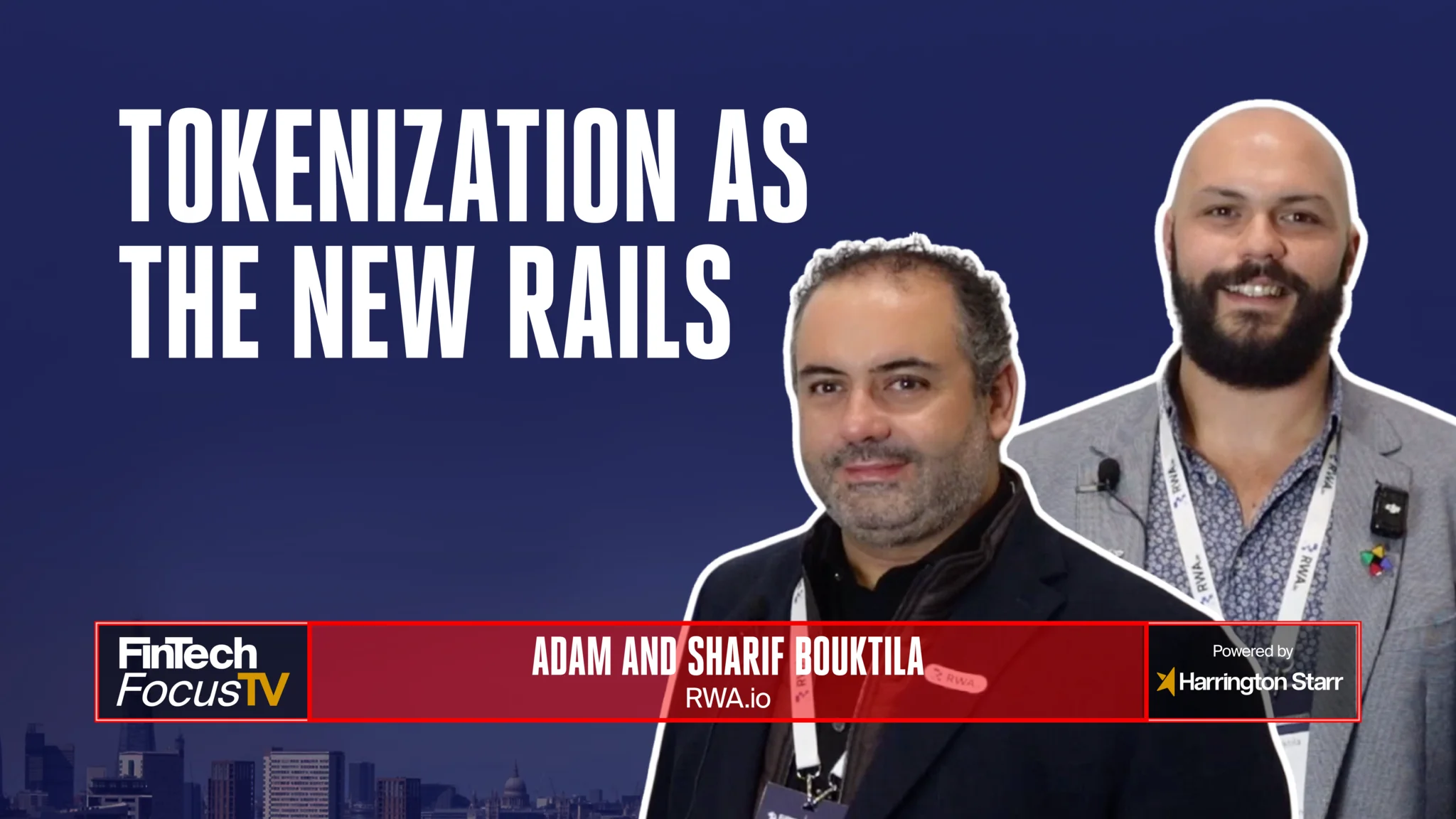
Recorded live at FinTech Connect 2025, this episode of FinTech Focus TV sees Toby in conversation with Sharif Bouktila, CEO, and Adam Bouktila, CSO at RWA.io. Together, they explore how tokenisation is evolving from an emerging innovation into core financial infrastructure, reshaping how institutions think about markets, liquidity, trust, and access.
Rather than positioning tokenisation as a speculative trend, the discussion centres on its role as a foundational layer within modern financial systems. The conversation reflects a broader shift taking place across financial technology, where infrastructure, data, and institutional adoption matter far more than hype cycles. For those working in FinTech, digital assets, data, and capital markets, the episode provides a grounded perspective on where the industry is today and where it is heading next.
A central theme of the episode is the rapid expansion of real-world asset tokenisation. Sharif Bouktila explains that RWA.io has been building its platform long before “tokenisation” became the dominant narrative. Initially focused on tokenised assets and token offerings, the company has witnessed a significant acceleration over the past 18 months, with hundreds of projects now issuing tokenised versions of assets across multiple geographies.
According to Sharif, RWA.io is currently tracking around 500 projects globally, spanning asset classes such as real estate, private credit, equities, bonds, and treasuries. This growth reflects not only technological readiness but also a shift in institutional mindset. Tokenisation is no longer confined to side stages or experimental labs; it is increasingly discussed on main stages alongside traditional financial institutions at major industry events.
The scale of this activity highlights why talent with experience across financial markets, data platforms, blockchain infrastructure, and compliance is becoming more valuable. As tokenisation expands across asset classes, firms require professionals who understand both legacy financial systems and emerging digital frameworks.
Adam Bouktila reflects on the challenge of building long-term strategy in an industry evolving at exceptional speed. Rather than framing this evolution as constant pivoting, he emphasises the importance of agility. When RWA.io entered the space several years ago, technologies such as advanced AI models and dynamically generated user interfaces were not central considerations. Today, they are becoming integral to how financial data platforms operate.
Despite rapid technological change, Adam stresses that the core problem remains consistent: market participants need reliable data, the ability to conduct due diligence, and access to assets. The long-term strategy for RWA.io is built around serving as a central hub that enables these functions, regardless of how underlying technologies evolve.
This focus on infrastructure rather than surface-level innovation mirrors a broader trend across FinTech. For employers, it reinforces the need to hire technologists, product leaders, and data specialists who can build adaptable systems capable of evolving alongside regulation, market structure, and user expectations.
One of the most compelling discussions in the episode centres on institutional adoption and how financial “rails” are changing. Sharif highlights that stablecoins are already being used at significant scale, describing them as deeply liquid and increasingly efficient tools for moving large sums of money. In practical terms, he notes that moving substantial capital can now be easier using stablecoins than through traditional payment networks.
This observation reframes the conversation around adoption. Rather than asking whether institutions will engage with digital assets, the episode illustrates that many already are. The transition, however, is not instantaneous. Sharif describes the process as gradual before reaching a tipping point, echoing the idea that major infrastructure shifts often feel slow until they suddenly become ubiquitous.
For FinTech leaders and hiring managers, this moment represents a growing demand for professionals who understand payments infrastructure, blockchain-based settlement, and institutional risk frameworks. As new rails emerge, the competition for talent capable of operating across both traditional and digital systems intensifies.
Another key theme explored by Toby and Adam is the relationship between traditional finance and decentralised finance. Adam challenges the assumption that large institutions will fully integrate with decentralised startups or adopt decentralised models wholesale. Instead, he argues that many decentralised concepts will gradually be absorbed into traditional finance.
Rather than a future defined by “TradFi versus DeFi,” Adam envisions a convergence where financial services simply become “Fi.” Concepts such as 24-hour trading, improved access to liquidity, and more efficient settlement mechanisms are likely to become embedded within existing financial institutions, even if the underlying architecture differs from decentralised models.
This perspective aligns with how innovation historically enters financial markets. For professionals working in financial technology, it underscores the importance of hybrid skill sets. Understanding decentralised concepts without losing sight of regulatory, operational, and institutional realities is becoming essential.
Trust emerges as a recurring theme throughout the episode. Following events that have shaken confidence in digital assets, such as high-profile failures within the crypto industry, rebuilding trust has become a priority. Sharif explains that RWA.io addresses this by focusing on verification at a foundational level.
Projects issuing assets through the platform are verified, with clear identification of who is behind each asset and where accountability lies. This includes technical verification mechanisms that ensure issuers are who they claim to be. By establishing these trust layers, RWA.io aims to make it easier for investors and institutions to allocate capital with confidence.
For the broader FinTech ecosystem, trust is increasingly intertwined with data, transparency, and governance. As tokenisation and digital assets move closer to the core of financial markets, firms must invest in talent that understands compliance, verification, and risk management alongside innovation.
Looking ahead, Adam discusses the role of AI in addressing one of the industry’s biggest challenges: fragmentation. With hundreds of projects and asset classes emerging, making sense of the landscape requires intelligent systems capable of synthesising data and surfacing meaningful insights.
RWA.io’s roadmap includes embedding AI intelligence directly into its data platform, enabling users to identify credible issuers and assess opportunities more effectively. This reflects a broader shift within financial technology, where AI is increasingly used not just for automation but for decision-making support and market analysis.
From a recruitment perspective, this evolution is driving demand for professionals with experience in AI, machine learning, and financial data engineering. As platforms become more sophisticated, the ability to combine technical expertise with financial domain knowledge becomes a critical differentiator.
Sharif outlines a long-term vision in which tokenisation expands access to assets on a global scale. With millions of private companies worldwide and countless asset classes yet to be digitised, the potential market is vast. Tokenisation opens the possibility for individuals, even those in developing economies, to gain exposure to assets that were previously inaccessible.
This vision extends beyond institutional markets to a more inclusive financial ecosystem, where investors can conduct due diligence using AI-driven tools and build portfolios across a diverse range of assets. While this transformation will not happen overnight, the foundations are being laid through platforms that prioritise data, verification, and accessibility.
For FinTech employers, this signals long-term growth in roles related to platform development, product strategy, and global market expansion. As tokenisation matures, competition for skilled professionals will continue to increase.
The fact that this episode was recorded at FinTech Connect 2025 is significant. Throughout the discussion, both Sharif and Adam note that tokenisation and digital assets are no longer peripheral topics. Instead, they are central to conversations involving some of the largest institutions in the world.
This shift reflects how quickly financial technology evolves once infrastructure reaches a certain level of maturity. What was once experimental becomes operational, and with that transition comes a need for leadership, governance, and talent capable of sustaining growth.
For Harrington Starr, as a FinTech recruitment business, these conversations highlight why demand for skilled professionals across financial technology, digital assets, data, and infrastructure continues to rise. As firms adapt to new rails, they require teams that can build, manage, and scale the systems underpinning modern financial markets.
As the episode concludes, the conversation returns to the idea that trust is the final frontier of adoption. Building confidence in new financial infrastructure requires more than technology; it demands transparency, accountability, and skilled people capable of bridging innovation with established financial practice.
This episode of FinTech Focus TV offers a clear snapshot of where the industry stands today. Tokenisation is no longer speculative, institutional adoption is underway, and the convergence of traditional and decentralised finance is reshaping how markets operate. For professionals working in FinTech, and for companies hiring within the space, understanding these dynamics is essential.
By focusing on infrastructure, data, and trust, Sharif Bouktila and Adam Bouktila provide a grounded perspective on the future of financial markets. Their insights reflect a broader reality across financial technology: the next phase of growth will be driven not by headlines, but by the people and systems building the rails beneath them.