Why There Is No Single Path Into Financial Technology
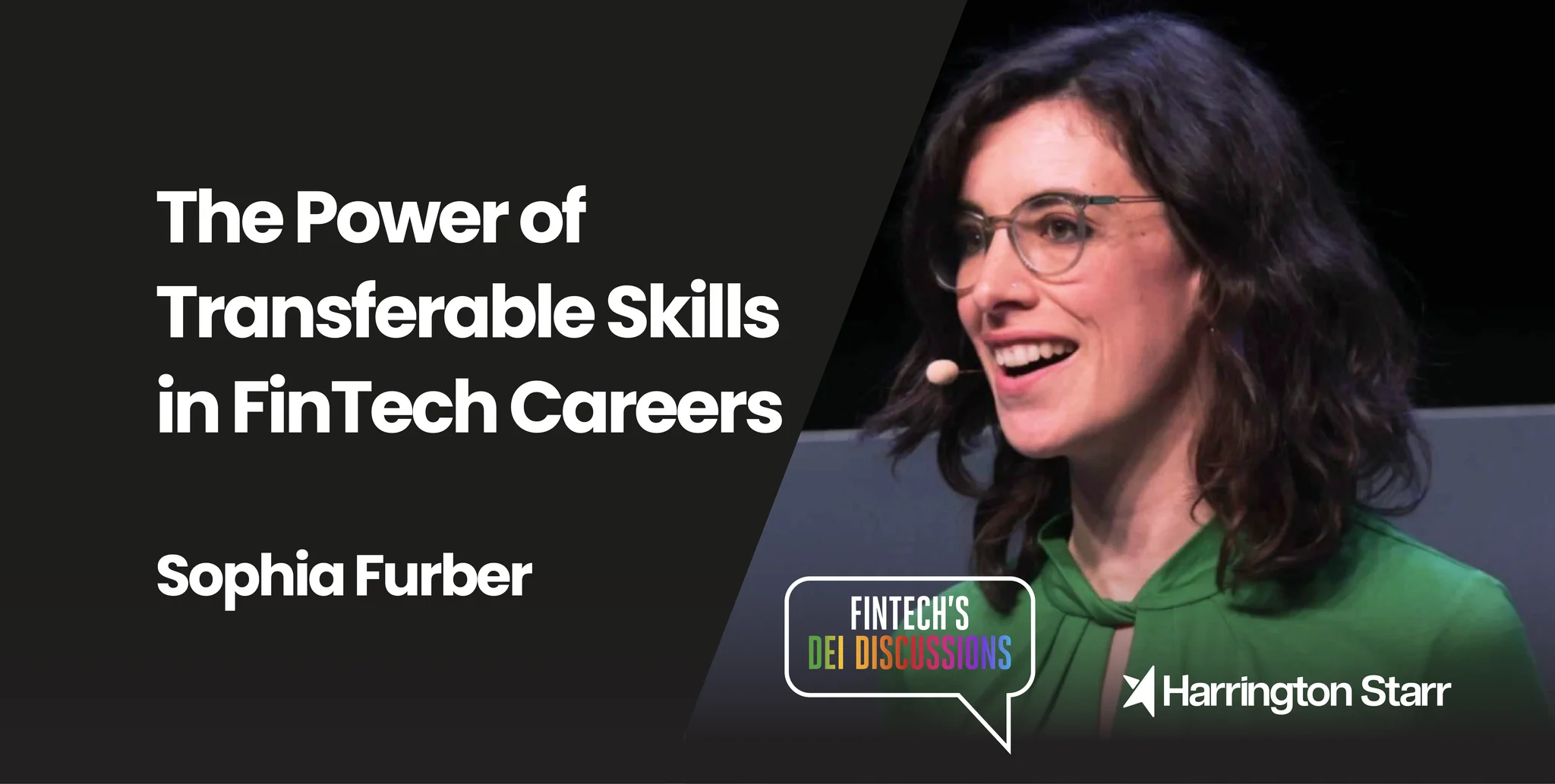
In this episode of FinTech’s DEI Discussions, hosted by Nadia, Sophia Furber, FinTech Research Analyst, EMEA at S&P Global, shares a powerful and refreshingly honest perspective on what it really takes to build a successful career in financial technology. From her own non-linear journey into the industry to her views on inclusion, opportunity, and talent, this conversation is a must-listen for anyone navigating FinTech careers or hiring within the sector.
Sophia begins by outlining her current role at S&P Global Market Intelligence, where she covers FinTech trends across the EMEA region. Her day-to-day involves analysing the industry, identifying companies that are “moving the dial,” and producing research that helps shape understanding of the financial technology landscape. Through this lens, she is uniquely positioned to see not only how the industry is evolving, but also the types of talent driving that evolution.
Her perspective is particularly valuable for a FinTech recruitment audience because it challenges one of the most persistent myths in the industry: that there is a single, defined pathway into FinTech. Instead, Sophia’s story highlights the growing importance of transferable skills, diverse backgrounds, and non-traditional career journeys in shaping the future of financial services.
Career Pivot Into FinTech: From Journalism to Research Analyst
Sophia describes her career as “quintessential squiggly,” a phrase that perfectly captures the reality for many professionals entering FinTech today. Before becoming a FinTech research analyst, she spent the majority of her career in financial journalism, covering sectors such as banking, real estate, infrastructure, and ultimately FinTech. It was through this exposure that she developed both a deep interest in the industry and a strong foundation of analytical and communication skills.
Her journey was far from linear. Early in her career, she explored other fields, including political risk analysis, and even spent nearly two years in Nepal working as an international observer during the peace process. These experiences, while seemingly unrelated, contributed to the broader skill set she would later bring into her role in FinTech.
The turning point came when S&P Global acquired the company she was working for, alongside a boutique research firm, 451 Research. Through building relationships and engaging in conversations about the FinTech landscape, Sophia positioned herself close to opportunity without necessarily realising it at the time. When a FinTech analyst role opened up, she made a conscious decision to overcome imposter syndrome and apply.
Her story is particularly relevant for both candidates and hiring managers in FinTech recruitment. It demonstrates that the skills required for roles in financial technology are often already present in adjacent industries. Writing, analysis, relationship-building, and curiosity are not just complementary skills; they are core to many FinTech roles, particularly in research, product, strategy, and marketing functions.
FinTech Industry Opportunities: A Sector Open to Diverse Backgrounds
One of the most compelling themes throughout this episode is Sophia’s passion for showcasing the breadth of opportunities available within FinTech. As an analyst, she interacts with a wide cross-section of professionals, from CEOs and founders to product managers, engineers, and fraud specialists. This exposure has given her a front-row seat to the diversity of talent shaping the industry.
She emphasises that FinTech is not limited to those with traditional finance or technical backgrounds. In fact, many of the most interesting and successful individuals in the sector have come from entirely different fields. Sophia shares examples of professionals who transitioned from law, regulation, fashion PR, astrophysics, and even classical music into FinTech roles.
This diversity reflects the complexity of the industry itself. Moving money safely, building financial infrastructure, and delivering innovative financial products require a wide range of skills and perspectives. From cybersecurity and data analysis to customer experience and regulatory expertise, FinTech is inherently multidisciplinary.
For a FinTech recruitment business like Harrington Starr, this insight is critical. It reinforces the importance of looking beyond traditional CVs and recognising the value of transferable skills when hiring. It also highlights the opportunity for organisations to tap into broader talent pools, particularly as demand for FinTech talent continues to outpace supply.
Inclusion in FinTech: Why Visibility Is Not Enough
The conversation then shifts to one of the core themes of the FinTech’s DEI Discussions podcast: inclusion. Sophia offers a nuanced and thought-provoking definition, explaining that inclusion must go beyond visibility. While representation of women and minority groups is important, it is only the starting point.
True inclusion, she argues, requires addressing the structural barriers that prevent equal participation in the workplace. These barriers can take many forms, from maternity discrimination to unequal access to opportunities and networks. They are often systemic and cannot be overcome through individual effort alone.
Sophia makes a particularly powerful point when she notes that there are some challenges that people “cannot just girl boss their way out of.” This statement encapsulates the limitations of focusing solely on individual resilience or empowerment without tackling the underlying structures that create inequality.
For FinTech leaders and hiring managers, this is a crucial takeaway. Building inclusive workplaces requires more than hiring diverse talent; it requires actively identifying and removing the barriers that hinder progression. This includes reviewing policies, fostering equitable access to opportunities, and creating environments where all employees can thrive.
Career Change and FinTech Hiring: Lessons from Real-Life Pivots
Sophia also shares inspiring examples of career pivots from her own network, particularly from her time on maternity leave. She describes connecting with other women who, like her, had academic backgrounds in English literature but chose to pursue entirely different career paths upon returning to work.
One individual transitioned from academia into a data analyst apprenticeship, opening up new opportunities in a highly in-demand field. Another moved into cybersecurity, embracing a completely different career direction and becoming an advocate for encouraging more women into the space.
These stories reinforce the idea that career change is not only possible but increasingly common in today’s FinTech landscape. They also highlight the role of life stages, such as maternity leave, as moments for reflection and reinvention.
For organisations focused on FinTech recruitment, these examples underline the importance of supporting career returners and creating pathways for individuals to transition into new roles. This could include apprenticeships, training programmes, or flexible working arrangements that enable people to re-enter the workforce on their own terms.
Transferable Skills in Financial Technology: Stop Underselling Your Value
A key message throughout the episode is the importance of recognising and valuing transferable skills. Sophia reflects on her own experience of underestimating the value of her abilities, particularly her communication and analytical skills.
She explains that these skills are highly sought after in the FinTech market, yet are often overlooked by candidates who assume that technical expertise is the only route into the industry. In reality, the ability to communicate complex ideas clearly, analyse trends, and build relationships is critical across a wide range of roles.
Sophia encourages individuals, particularly those from non-technical backgrounds, to stop underselling themselves. Instead, they should focus on how their existing skills can be applied in new contexts. She also highlights the importance of combining different skills and experiences to create a unique value proposition.
For example, someone with strong writing skills and deep knowledge of a specific industry, such as e-commerce or banking, can position themselves as a valuable asset in FinTech. Similarly, individuals with business acumen and entrepreneurial thinking can bring fresh perspectives to product development or strategy roles.
This insight is particularly relevant for FinTech recruitment strategies. By focusing on skills rather than rigid role definitions, organisations can unlock new talent pools and build more diverse, innovative teams.
FinTech Workplace Culture: The Importance of Connection and Opportunity
Another important theme explored in the episode is workplace culture, particularly in the context of hybrid and remote working. Sophia acknowledges the benefits of flexible working arrangements but also highlights the potential downsides, including a lack of personal connection and visibility.
She notes that career progression is not solely based on performance or talent. It also depends on understanding how organisations operate, knowing where opportunities exist, and building relationships with colleagues. In more impersonal work environments, these factors can become harder to navigate, particularly for individuals early in their careers or those from underrepresented groups.
Sophia advocates for a more proactive approach to building connections within the workplace. This includes taking the time to get to know colleagues, understanding their skills and ambitions, and identifying opportunities for collaboration.
For leaders, this means creating environments where knowledge and opportunities are shared openly rather than gatekept. It also involves recognising the importance of informal networks and ensuring that all employees have access to them.
FinTech Leadership and Inclusion: Bringing Others With You
The episode concludes with a powerful message about leadership and responsibility. Sophia emphasises that those who are progressing in their careers have a role to play in supporting others. This does not require formal management responsibilities; it can be as simple as making introductions, sharing information, or advocating for someone’s potential.
She encourages individuals to “bust through silos” and actively look for ways to connect people and create opportunities. By doing so, they can help ensure that workplaces remain inclusive and that talent does not fall through the cracks.
This message resonates strongly within the context of FinTech recruitment and talent strategy. As the industry continues to grow and evolve, the ability to attract, develop, and retain diverse talent will be a key differentiator for organisations.
For Harrington Starr, and for the wider financial technology sector, this episode serves as a reminder that talent comes in many forms. By embracing transferable skills, supporting career pivots, and prioritising inclusion, organisations can build stronger, more resilient teams.
Ultimately, Sophia’s story is one of possibility. It demonstrates that there is no single path into FinTech, and that with the right mindset, support, and opportunities, anyone can find their place in the industry.