Why You’re Hiring Wrong in FinTech
02 April, 2026
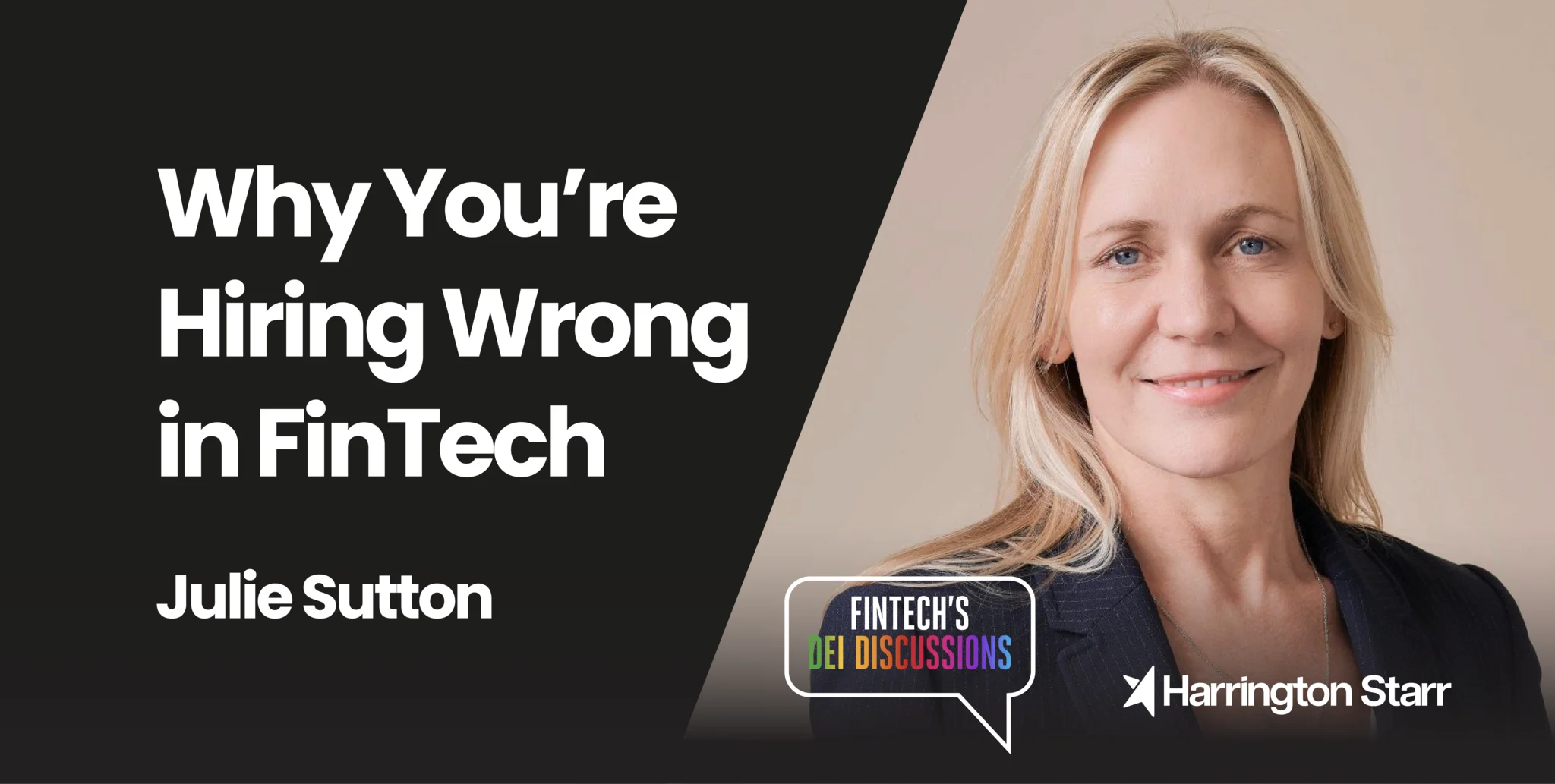

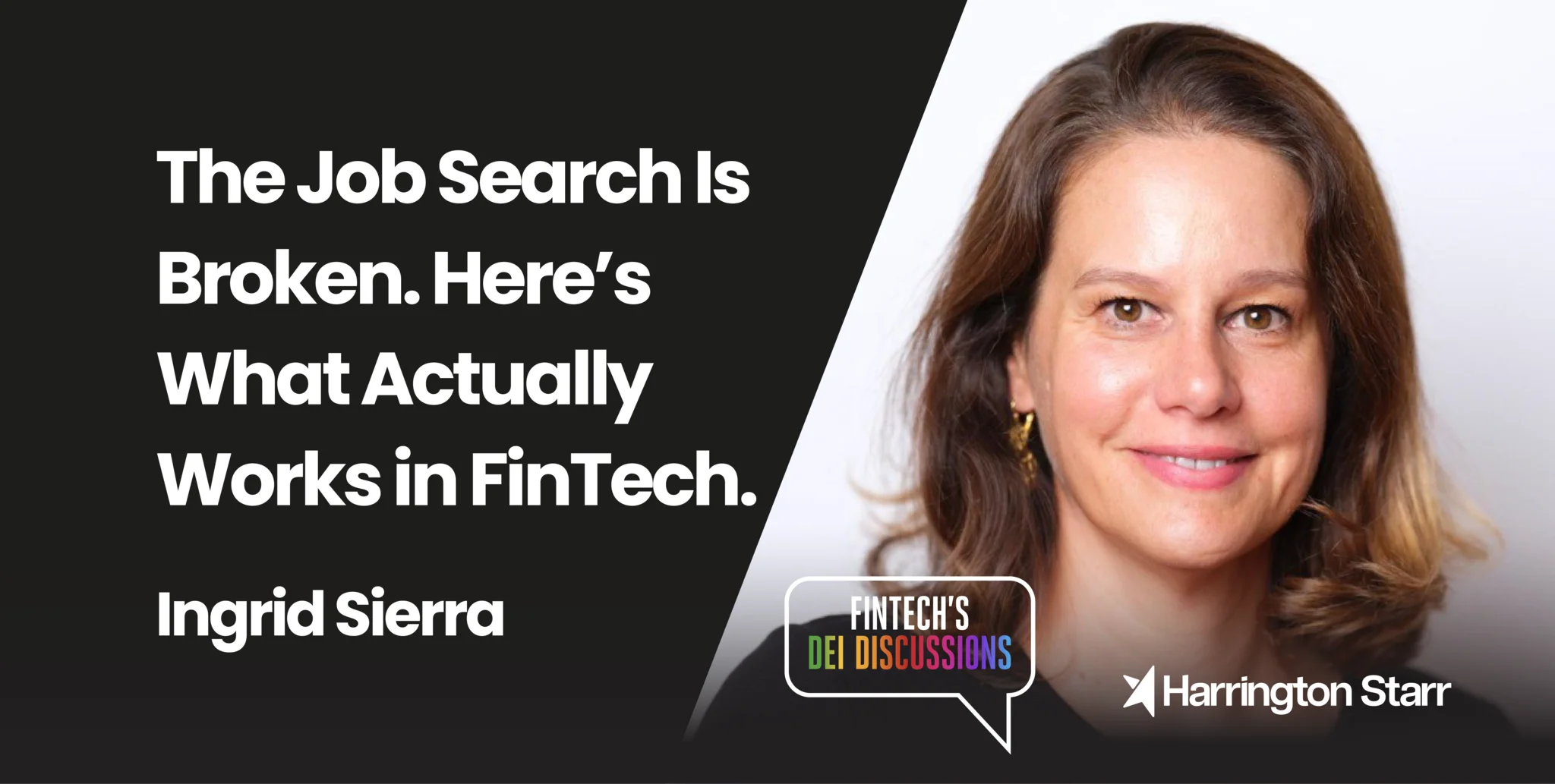
In this episode of FinTech’s DEI Discussions, hosted by Nadia, Ingrid Sierra, Brand & Marketing Director at Zego, shares a deeply insightful perspective on career development, inclusive leadership, and the evolving reality of hiring in financial technology. Drawing from over 20 years of experience across marketing, technology, and FinTech, Ingrid offers a grounded, honest view of what it takes to succeed in today’s market, whether you are hiring talent or navigating your own career.
For those working in FinTech recruitment, financial services hiring, or technology talent acquisition, this conversation provides a valuable lens into both sides of the market. It highlights not only how hiring has changed, but also how companies and individuals must adapt to build stronger, more inclusive, and more effective teams.
Ingrid’s journey into FinTech is rooted in a career that spans multiple industries, geographies, and disciplines. Beginning in France within customer marketing and CRM at a large telecommunications company, she made an early decision to focus on data-driven marketing, an area that, at the time, provided measurable performance insights. This decision proved pivotal as marketing evolved into a data-led discipline across industries.
Her career progression saw her move into the retail sector, leading CRM functions across Europe, before transitioning into the B2B technology space. Eventually, she entered the world of FinTech startups in the United States, gaining experience in high-growth, fast-paced environments. Today, at Zego, she brings together brand, performance marketing, partnerships, CRM, and design under one strategic vision, focused on accelerating business growth.
This breadth of experience is particularly relevant in today’s FinTech recruitment market, where employers increasingly value professionals who can operate across multiple disciplines and adapt to rapidly changing environments. Ingrid’s career demonstrates how transferable skills and cross-sector experience can become a powerful advantage in financial technology hiring.
At the heart of Ingrid’s current role is Zego, a business founded to support drivers in the gig economy. Originally focused on providing flexible insurance solutions for delivery drivers, the company has expanded its offering to include broader consumer products powered by telematics.
Zego’s approach reflects a core principle that resonates strongly across the FinTech sector: solving real customer problems through innovation. By allowing drivers to pay for insurance based on when they work, the business directly addresses the needs of a modern, flexible workforce. Its use of telematics, via mobile applications rather than traditional hardware, enables real-time insights into driving behaviour, helping customers improve performance and receive rewards.
However, what stands out most is not just the product innovation, but the culture underpinning the business. Ingrid highlights the company’s “Ego, no ego” value, which reflects a commitment to collaboration, humility, and inclusivity. This cultural foundation is critical in attracting and retaining top FinTech talent, particularly in competitive markets like London and New York, where companies must differentiate themselves not just through salary, but through purpose and working environment.
Inclusion is a central theme of the conversation, and Ingrid’s perspective is shaped by her experience leading teams across more than 15 countries. For her, inclusion is not a theoretical concept, it is a practical necessity for building high-performing, globally distributed teams.
She explains that true inclusion begins with creating an environment where people from different cultures, backgrounds, and perspectives can collaborate effectively. This requires intentional leadership, open communication, and a willingness to acknowledge and learn from mistakes. In global teams, misunderstandings are inevitable, but what matters is how organisations respond to them.
This approach is particularly relevant in financial services recruitment, where firms are increasingly operating across international markets and must build teams that reflect diverse client bases. Inclusive leadership, as Ingrid describes it, involves actively facilitating collaboration, ensuring every voice is heard, and creating a shared sense of purpose.
For hiring managers, this means moving beyond surface-level diversity metrics and focusing on how inclusion is embedded into day-to-day operations. For candidates, it highlights the importance of seeking out organisations where they can genuinely contribute and grow.
One of the most powerful parts of the episode is Ingrid’s honest assessment of today’s job market. She describes the current environment as one of the most challenging she has seen, particularly for candidates navigating competitive hiring processes.
However, rather than framing this as a negative, she offers a practical reframe: the job search has changed, and success now requires a different approach. Traditional methods, such as submitting large volumes of applications, are no longer the most effective strategy.
Instead, Ingrid introduces a shift in mindset. Candidates should rethink how they allocate their time and energy, focusing less on applications and more on building meaningful relationships. This reflects a broader trend in FinTech recruitment, where networks, referrals, and personal connections increasingly drive hiring outcomes.
For employers, this also signals the importance of employer branding and engagement within the FinTech community. Companies that invest in building strong networks and maintaining visibility are more likely to attract high-quality talent.
Ingrid places significant emphasis on networking as the most effective tool in today’s job market. She describes how candidates should prioritise building relationships, attending events, and engaging in conversations that extend beyond immediate job opportunities.
This approach aligns closely with what leading FinTech recruitment firms, including Harrington Starr, observe in the market. The most successful candidates are those who actively build their networks over time, rather than only engaging with recruiters when they are actively looking for a role.
Ingrid highlights the concept of the “100 coffees” approach, where individuals commit to meeting new people regularly and expanding their network organically. This creates a snowball effect, where each conversation leads to new introductions and opportunities.
Importantly, this strategy is not just about finding a job. It is about building a community of peers, mentors, and collaborators who can support long-term career growth. For professionals in financial technology, where innovation and change are constant, this network becomes an invaluable resource.
Another key insight from the episode is the importance of mindset during a job search. Ingrid introduces the idea of reframing oneself as an “in-betweener” rather than someone who is unemployed.
This subtle shift has a significant impact on confidence and self-perception. By viewing the job search as a transitional phase rather than a setback, candidates can approach conversations with greater positivity and openness.
She also emphasises the importance of redefining success metrics. Instead of focusing solely on securing a role, individuals should track progress through smaller, more achievable goals, such as the number of conversations they have, the connections they build, or the insights they gain.
For professionals in FinTech and financial services, where hiring cycles can be lengthy and competitive, this approach helps maintain motivation and momentum. It also encourages a more proactive and strategic approach to career development.
The conversation also explores the concept of transferable skills, a topic that is particularly relevant in today’s evolving job market. Ingrid acknowledges that while the idea is widely discussed, it can be difficult for candidates to articulate in practice.
Her advice is to move beyond simply stating what you can do and instead focus on the value you bring to a business. This involves understanding how your experience can solve specific challenges and contribute to organisational goals.
Drawing on her own transition from a large corporate environment to a startup, Ingrid explains how she positioned her experience as a strength. Rather than viewing her corporate background as a limitation, she highlighted how her knowledge of structure, processes, and best practices could help a startup navigate growth and complexity.
For hiring managers, this reinforces the importance of looking beyond traditional experience criteria and recognising the potential value of diverse backgrounds. For candidates, it provides a clear framework for positioning themselves effectively in competitive FinTech hiring processes.
As the conversation concludes, Ingrid returns to the theme of inclusion, offering practical advice for organisations looking to build more diverse and effective teams. She highlights the importance of actively seeking out different perspectives and avoiding the tendency to hire individuals who mirror existing teams.
She also stresses the need for self-awareness, encouraging leaders to reflect on their own biases. This is a critical step in creating fair and equitable hiring processes, particularly in industries like financial technology, where unconscious bias can influence decision-making.
From a leadership perspective, inclusion involves more than just hiring diverse talent. It requires ongoing effort to create an environment where individuals feel safe, supported, and able to contribute fully. This includes listening to team members, understanding their goals, and helping them find their place within the organisation.
For companies operating in FinTech and financial services, this approach is not just a moral imperative, it is a business advantage. Diverse teams bring broader perspectives, drive innovation, and ultimately deliver better outcomes for clients and stakeholders.
This episode of FinTech’s DEI Discussions offers a compelling and practical perspective on the future of hiring in financial technology. Ingrid Sierra’s insights highlight the need for both individuals and organisations to adapt to a rapidly changing landscape.
For candidates, success lies in building networks, embracing transferable skills, and maintaining a positive, proactive mindset. For employers, it involves creating inclusive cultures, recognising diverse talent, and rethinking traditional hiring approaches.
At Harrington Starr, these themes are central to how we support our clients and candidates across the FinTech ecosystem. As a global FinTech recruitment business, we understand that the future of financial technology depends on attracting, developing, and retaining the best talent.
This conversation reinforces that hiring is no longer just about filling roles. It is about building communities, fostering inclusion, and creating environments where people can thrive. As the industry continues to evolve, those who embrace these principles will be best positioned to succeed.
Ultimately, the message is clear: the job search may have changed, but with the right approach, there is more opportunity than ever for those willing to adapt, connect, and walk the talk on inclusion.