Why You’re Hiring Wrong in FinTech
02 April, 2026
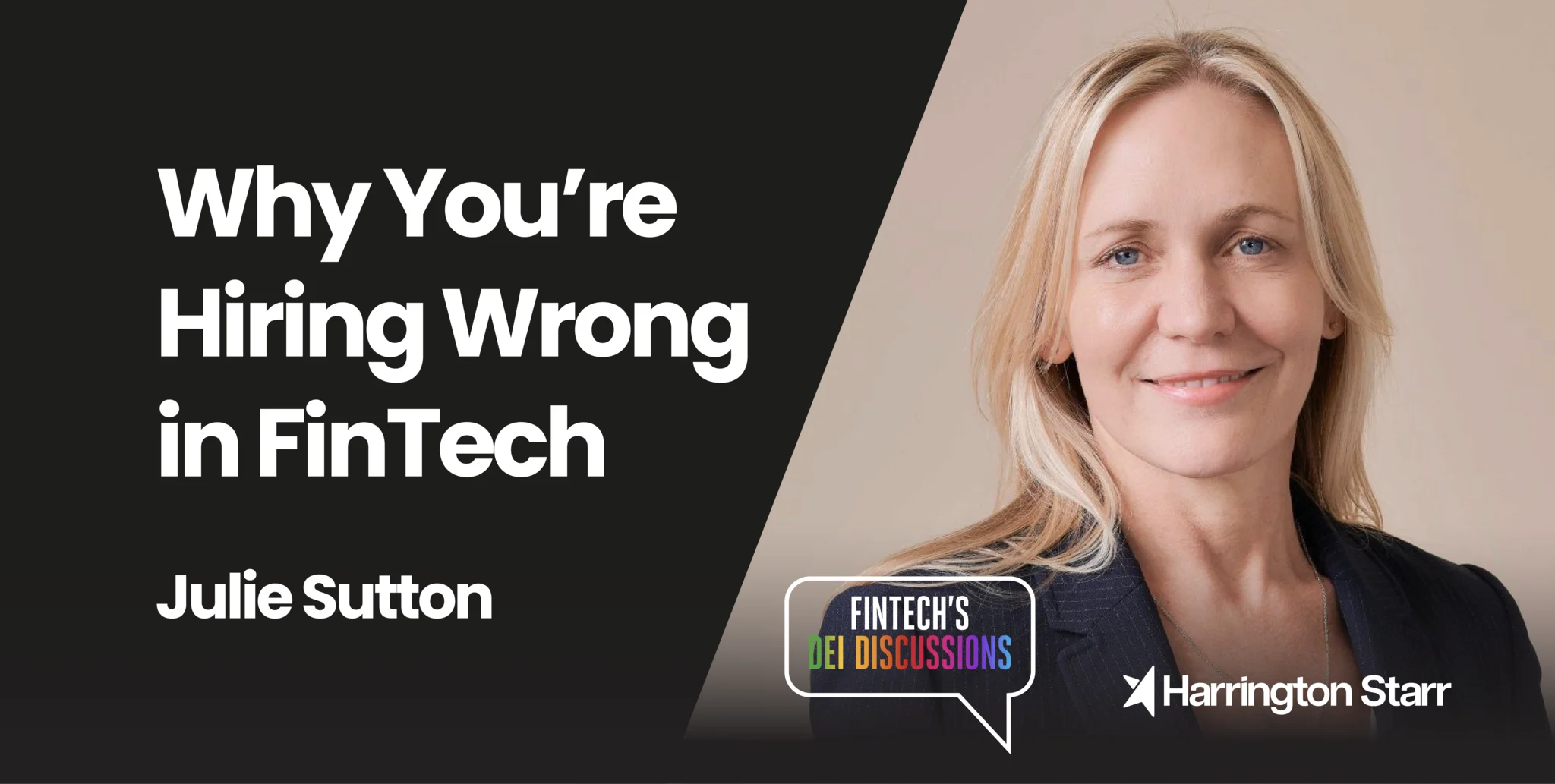

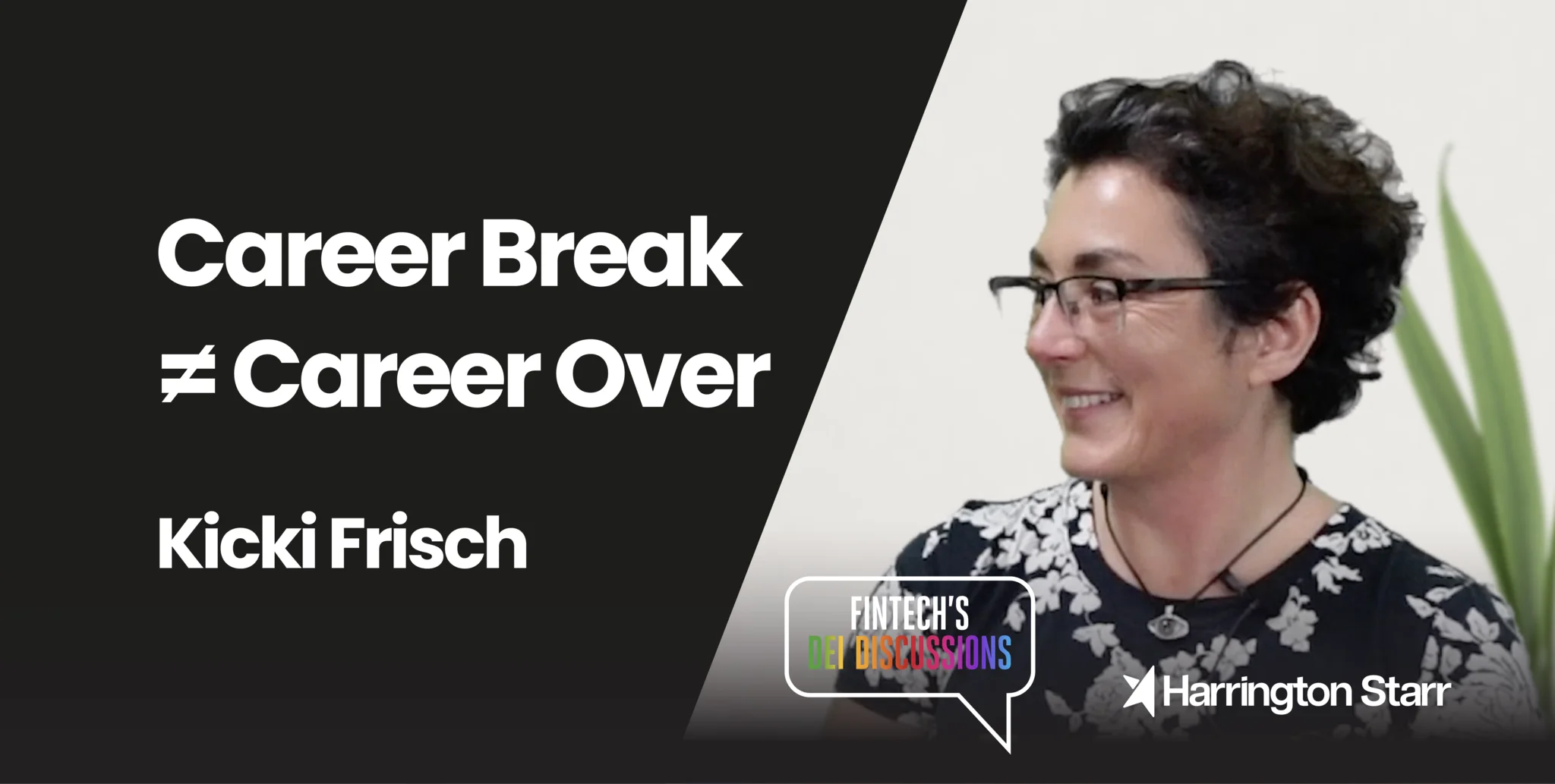
In this episode of FinTech’s DEI Discussions, hosted by Nadia Edwards-Dashti, the conversation centres on a theme that is increasingly shaping the future of FinTech recruitment and inclusive leadership in financial technology: non-linear careers. Nadia is joined by Kicki Frisch, Software Engineering Manager at T. Rowe Price, who shares a candid and deeply personal account of her career journey, including a significant career break and her eventual return to leadership in technology.
Kicki’s story begins far from where she is today. She did not originally plan to build a career in financial technology. In fact, she initially thought she would become a doctor. It was only after discovering mathematics and computer science that she shifted direction, eventually becoming a C++ developer. Her early work was in medical devices, a sector that aligned closely with her original ambition to work in medicine. This connection between purpose and technical work shaped her early professional identity.
Her career path, however, was far from linear. After relocating and navigating new professional environments, she transitioned into FinTech. What initially seemed like a departure from her earlier ambitions turned out to be more connected than expected. She recognised strong commonalities between heavily regulated medical technology environments and financial services technology. This insight into transferable skills and regulated markets becomes a recurring theme throughout the episode, and one that is highly relevant to organisations hiring within FinTech today.
A core part of this conversation focuses on career breaks, particularly those that are not entirely chosen. Kicki shares her personal experience of having two children within a short period of time while living in the UK, away from her established social and support networks. Navigating childcare systems, school structures and cultural differences while leading teams in a large software organisation proved overwhelming. The result was a career break that, while partly a decision, was also driven by stress and circumstance.
This discussion resonates strongly in the current FinTech hiring market. Career breaks now occur for many reasons, from parental responsibilities to redundancy and economic shifts. Nadia highlights the rise in forced career breaks over recent years, especially those triggered by redundancies and difficulties re-entering the workforce. For financial technology employers and FinTech recruitment specialists, this represents a significant and often overlooked talent pool.
Kicki’s advice to individuals returning to work is simple yet powerful: do not give up. She emphasises the importance of speaking to others, seeking support from unexpected places, and recognising that career breaks affect both women and men. Inclusion, in her view, means understanding that professional journeys are complex and that life circumstances shape careers in ways that are not always visible on a CV.
A particularly valuable part of this episode for FinTech recruitment professionals and hiring managers is the exploration of transferable skills. Kicki reflects on how her experience in medical technology, a highly regulated industry, prepared her for financial technology roles. Initially, she did not see herself as particularly interested in financial technology. However, once she began working in the sector, she identified clear overlaps in regulatory requirements, precision, accountability and product responsibility.
This reframing of experience is crucial in today’s FinTech jobs market. Too often, job specifications are written with rigid criteria, unintentionally excluding candidates who bring diverse but relevant backgrounds. Kicki speaks openly about imposter syndrome, particularly among women in technology. She notes how many professionals read a job description, identify one or two criteria they do not meet, and decide not to apply. The result is lost talent and missed opportunities for innovation.
From a FinTech recruitment perspective, this reinforces the importance of looking beyond linear career progression. Organisations seeking to build high-performing engineering teams must evaluate capability, adaptability and regulatory understanding alongside technical experience. Candidates who have worked in adjacent sectors may bring precisely the mindset required to navigate complex financial systems.
For Kicki, inclusion is not confined to visible diversity metrics. It is about having the courage to hire people from different backgrounds, with different experiences and unconventional career paths. She reflects on how diversity extends beyond gender and ethnicity to include neurodiversity and personal challenges that may not be immediately visible.
This broader definition of inclusion aligns closely with evolving expectations in financial services and technology recruitment. FinTech companies building products for global markets require teams that reflect diverse perspectives. Kicki makes a compelling point: teams should aim to build the products people truly need, rather than simply the products teams assume are wanted. That shift requires diversity of thought and lived experience.
Inclusive hiring in financial technology therefore becomes not only a moral objective but a strategic one. Recruitment decisions shape product development, risk management and long-term innovation. Leaders in FinTech who prioritise inclusive hiring practices are better positioned to respond to regulatory complexity, customer diversity and rapid technological change.
One of the most powerful sections of the episode focuses on the unexpected challenges of returning to work after an extended absence. Kicki was away from corporate life for approximately ten years in two separate periods. When she returned, she initially assumed she could step back into professional life exactly as she had left it. Instead, she encountered a learning curve she had not anticipated.
Corporate environments evolve. Technologies change. Social dynamics shift. Leading teams after a long break requires adjustment. Kicki describes the process of reframing herself, re-evaluating how she engages with colleagues and understanding how to operate effectively within a large organisation again.
What made the difference was not technical knowledge alone. It was relationship building. She actively sought to build internal networks, connect with colleagues outside her immediate team and understand how the organisation functioned beyond formal structures. Informal conversations, coffee meetings and curiosity about others played a crucial role in rebuilding her confidence and establishing her leadership presence.
For FinTech recruitment businesses advising candidates and clients alike, this insight is invaluable. Onboarding returning professionals requires supportive environments. Employers must recognise that re-entry involves both technical and social adaptation. Internal networks, mentoring and inclusive cultures accelerate integration and unlock long-term value.
The episode concludes with a discussion about how individuals can actively support inclusion in their own workplaces. Kicki highlights the importance of mentoring circles and internal initiatives. In her case, joining a women in technology circle early in her tenure at T. Rowe Price proved instrumental. It enabled her to build relationships across divisions, gain visibility and understand organisational dynamics more quickly.
Importantly, she emphasises that such networks do not always have to exist formally. Professionals can request mentoring, initiate conversations and create informal support structures. Asking for guidance is not a weakness; it is a strategic step towards growth.
For financial technology organisations focused on leadership development, this reinforces the role of structured and informal mentoring programmes. For FinTech recruitment specialists like Harrington Starr, who work closely with clients on talent strategy, it highlights the importance of advising businesses on culture as well as capability. Recruitment is not solely about filling roles. It is about building environments where diverse talent can thrive.
Throughout the conversation, imposter syndrome surfaces as a recurring barrier, particularly for women considering roles in technology. Kicki notes how job descriptions can unintentionally discourage capable candidates. Rather than focusing on what they can bring, individuals often focus on perceived gaps.
In a competitive FinTech jobs market, this has significant implications. Companies aiming to attract high-quality engineering talent must communicate openness to diverse backgrounds and transferable skills. Clear messaging around inclusion, flexibility and growth opportunities can broaden applicant pools and strengthen employer branding.
Nadia’s recruiter perspective underscores this point. Recognising potential, reframing experience and championing transferable skills are central to effective FinTech recruitment. When hiring managers and recruitment partners collaborate to challenge rigid criteria, they unlock a wider spectrum of talent.
Ultimately, this episode of FinTech’s DEI Discussions is a conversation about resilience. Kicki’s journey from aspiring doctor to C++ developer, from medical devices to financial technology, from extended career break to senior leadership, illustrates the power of adaptability.
For financial technology businesses navigating regulatory change, AI-driven transformation and competitive markets, resilience is critical. Teams composed of individuals with varied life experiences are better equipped to anticipate challenges and innovate responsibly. Inclusion becomes a driver of performance rather than a separate initiative.
Harrington Starr, as a FinTech recruitment business, understands that talent strategies must evolve alongside market demands. Identifying leaders who bring diverse perspectives, regulatory insight and growth mindset thinking is essential to shaping the future of financial technology.
As Nadia closes the episode, she reiterates the central theme of the podcast: celebrating wins, raising awareness of challenges and walking the talk for inclusive change across financial technology. Kicki’s experience exemplifies this ethos.
Inclusion is not achieved through statements alone. It is built through courageous hiring decisions, supportive onboarding, mentoring networks and recognition of transferable skills. It is reinforced when organisations view career breaks not as red flags but as chapters of growth.
For professionals navigating their own FinTech careers, this episode offers reassurance that non-linear paths can lead to leadership. For employers and hiring managers, it offers a reminder that talent is not defined by uninterrupted timelines.
In a sector as dynamic as financial technology, the ability to see potential beyond the surface may be one of the most valuable leadership skills of all. And for FinTech recruitment partners committed to advancing inclusive hiring practices, conversations like this one are an essential part of driving meaningful change.
Listen to the full episode of FinTech’s DEI Discussions to explore how inclusive leadership, career reinvention and strategic hiring are shaping the future of financial technology.