Babb talks to BABB. London & The Future of On Chain Finance
01 April, 2026

Global markets are entering a new structural phase.
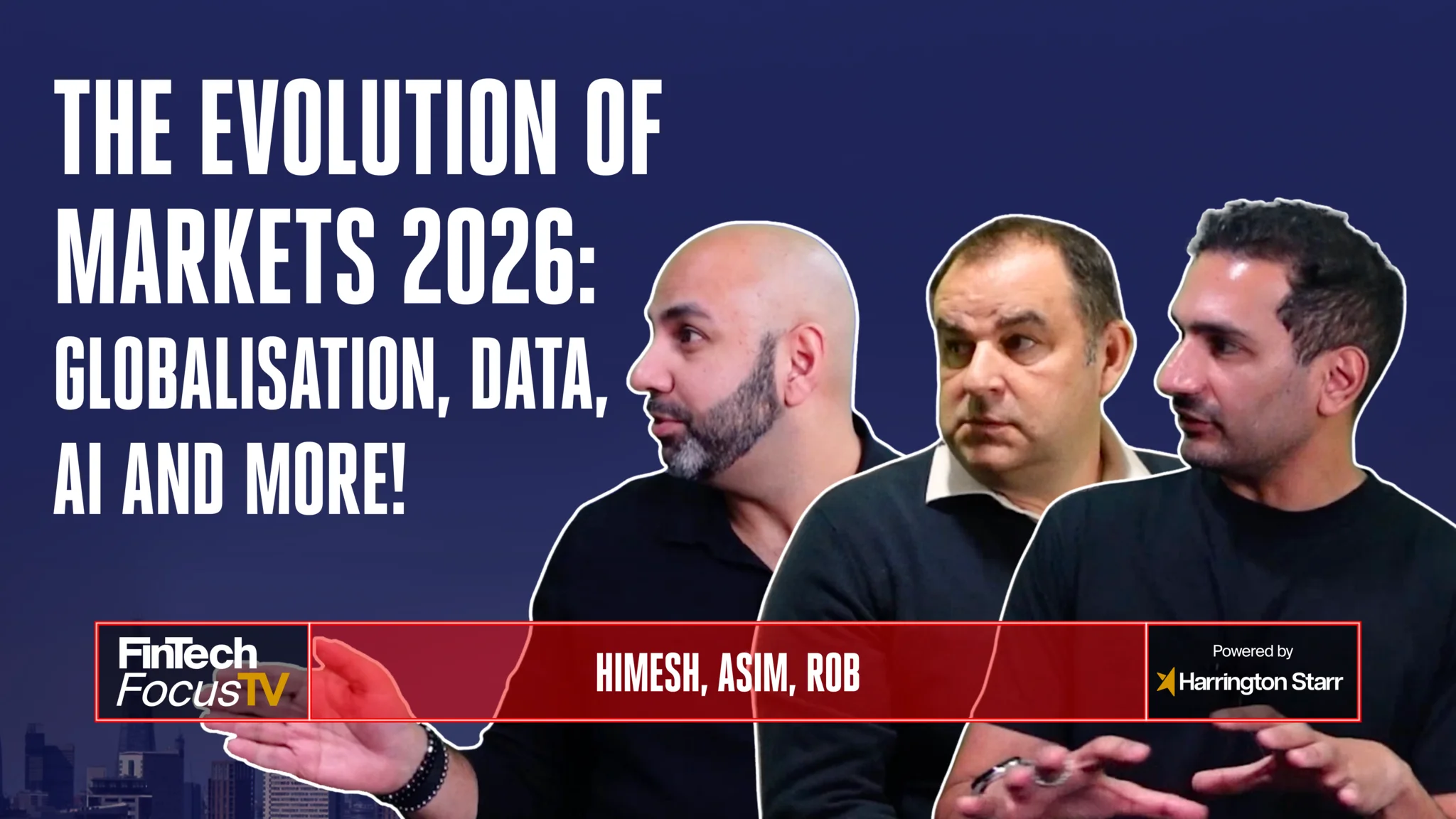
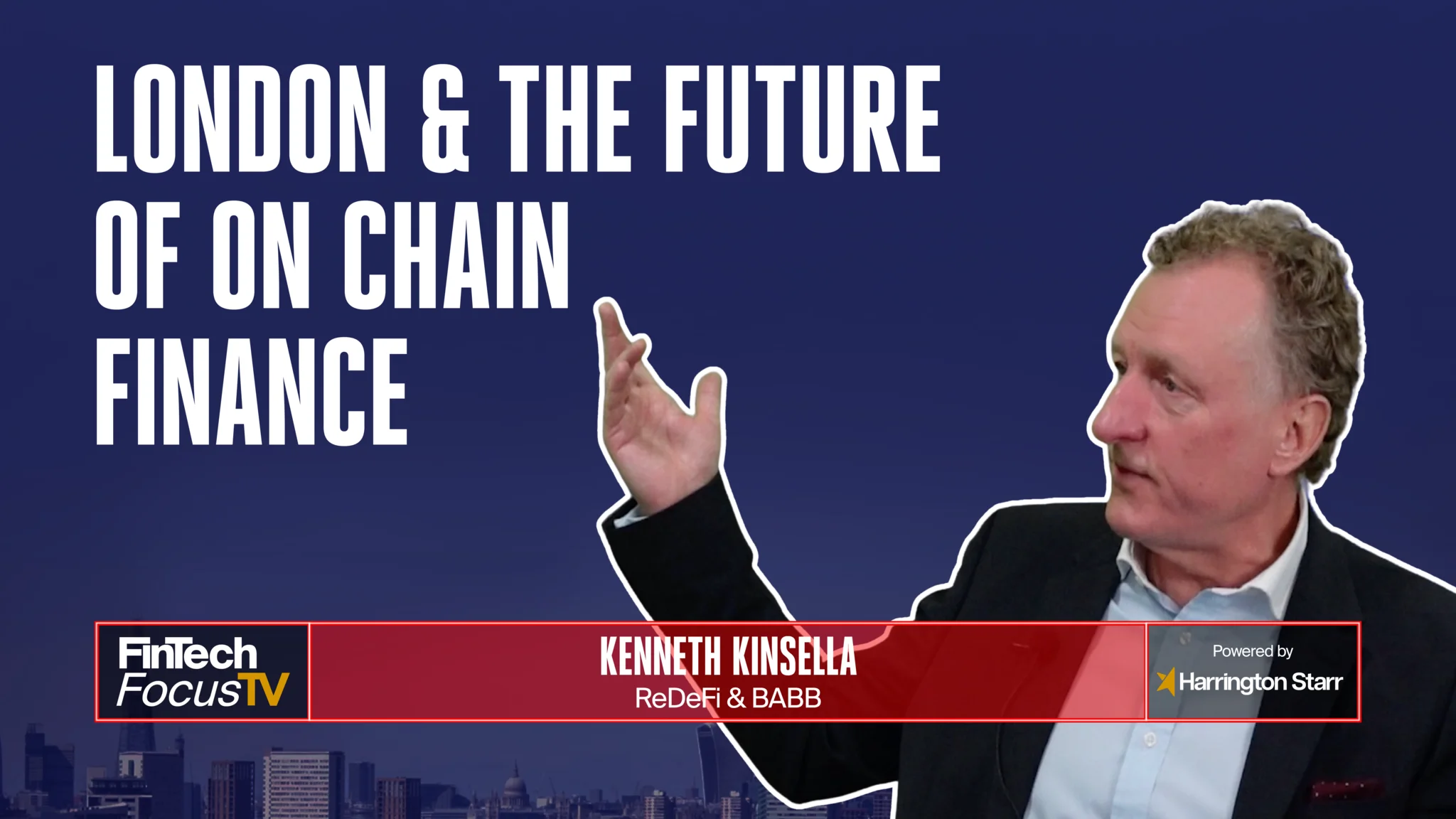
In this episode of FinTech Focus TV, recorded in our studio, Toby Babb sits down with Rob Lane of LSEG, Himesh Soneji of Tech Advocates, and Asim Farooq of a proprietary trading firm to unpack what 2026 may hold for capital markets. The discussion moves beyond surface-level predictions and instead focuses on the deeper forces reshaping trading infrastructure, global participation, artificial intelligence, and competitive advantage.
Two themes stand out clearly from the conversation: the expanding accessibility and importance of Asian markets, and the evolving role of artificial intelligence as augmentation rather than replacement within trading and portfolio management. Together, these themes point to a market environment that is becoming both more geographically interconnected and more technologically layered.
For professionals working across capital markets, trading technology, quantitative finance, infrastructure engineering and FinTech recruitment, the signals discussed in this episode are highly relevant.
One of the strongest threads in the discussion is the growing structural importance of Asia within global capital markets.
The panel highlights how accessibility to Asian markets, including Mainland China and Hong Kong, continues to evolve. Compared to previous cycles, there is now greater openness, more international participation and increased cross-border integration. As firms look ahead to 2026, Asia is increasingly viewed not as an emerging opportunity but as a core strategic region.
The accessibility of China in particular has changed significantly over the past decade. Mechanisms that once felt opaque or difficult to navigate are becoming more standardised, and international firms are showing greater appetite to establish presence and connectivity within Asian exchanges. The panel notes that Asia is becoming easier to engage with from an infrastructure and market participation standpoint.
This shift is not one-directional. While Western firms look East, Eastern firms are also expanding West. Capital, liquidity and technology are flowing in multiple directions. The era of markets operating in isolated regional silos is diminishing. Instead, global participation is accelerating.
For exchanges such as those operating in Singapore and Hong Kong, this means increased strategic positioning. For infrastructure providers and market data specialists, it means greater demand for cross-border latency optimisation, multi-venue connectivity and scalable trading architecture.
From a capital markets recruitment perspective, this expansion has clear implications. Firms seeking to build or enhance Asian market access require experienced low-latency engineers, network specialists, exchange connectivity experts and quantitative trading professionals who understand both regional nuances and global strategy. Recruitment demand increasingly reflects a need for talent comfortable operating across jurisdictions and regulatory environments.
Closely connected to Asia expansion is the broader shift toward extended and potentially 24-hour trading environments.
As markets become more globally integrated, traditional opening and closing boundaries matter less. Liquidity flows across time zones. Exchanges are experimenting with longer trading windows. Technology must adapt accordingly.
The panel touches on how infrastructure must evolve to support these changes. Continuous markets place greater strain on systems, requiring higher reliability, lower latency and more resilient architecture. For proprietary trading firms and hedge funds, this means rethinking infrastructure planning, resource allocation and cost control.
The conversation also references the growth in options trading, including the rapid rise of zero-days-to-expiry (zero-DTE) options. These products are gaining prominence, altering intraday dynamics and increasing volume intensity within specific segments of the market. As trading strategies adapt, technology stacks must adjust to handle higher message rates, complex risk calculations and tighter execution windows.
For FinTech recruitment specialists operating within capital markets, these structural changes translate into increased demand for high-performance computing specialists, FPGA developers, quantitative risk engineers and market microstructure experts. The evolution of market access is not merely geographical; it is computational.
While globalisation forms one pillar of the discussion, artificial intelligence forms the other.
Importantly, the panel does not frame AI as a replacement for portfolio managers or traders. Instead, the consensus is that AI remains an augmentation tool rather than an autonomous decision-maker. There is recognition that artificial intelligence can assist with data processing, pattern recognition and optimisation, but human oversight remains critical.
One of the panellists emphasises that there is still a significant distance between current AI capabilities and the idea of fully automated portfolio construction without human input. Risk management, judgement, and contextual awareness remain human strengths. AI can enhance decision-making, but it does not eliminate the need for experienced professionals.
This is a crucial distinction. In broader media narratives, AI is often portrayed as an imminent replacement for financial professionals. In contrast, practitioners within capital markets recognise its limitations and practical boundaries. Augmentation rather than substitution is the operating principle.
The discussion also touches on the complexity of implementing AI within live trading environments. Integrating models into production systems requires robust validation, infrastructure scalability and regulatory awareness. Model risk management and explainability remain central concerns.
For professionals working in quantitative finance, machine learning engineering and capital markets data science, this reinforces the importance of hybrid skillsets. The most valuable talent is not purely technical nor purely financial, but capable of bridging both domains.
From a FinTech recruitment standpoint, demand for AI-literate market professionals is likely to grow, but in roles that combine domain expertise with technical capability. Firms are not replacing traders wholesale; they are hiring technologists who can support and enhance existing teams.
Another theme woven into the conversation is cost control within multi-strategy hedge funds and proprietary trading firms.
As competition increases and margins compress, cost discipline becomes a differentiating factor. Infrastructure spend, data costs, colocation fees and technology investments must be justified against performance outcomes. Firms are scrutinising where they allocate capital, particularly within complex, multi-venue trading environments.
AI and automation can contribute to operational efficiency, but they also introduce new cost layers. Balancing innovation with fiscal discipline becomes a strategic necessity.
The panel suggests that 2026 may be characterised less by speculative exuberance and more by disciplined execution. Infrastructure inflation and vendor pricing pressures are real considerations. Firms must optimise not only for speed but for sustainability.
This environment heightens demand for professionals who understand both technology architecture and commercial impact. Infrastructure leaders, CTOs, quantitative strategists and operations specialists must operate with cost awareness as well as performance focus.
Within capital markets recruitment, the emphasis increasingly falls on individuals who combine technical excellence with strategic judgement.
Beyond specific technologies, the conversation reflects a broader structural rebalancing between East and West.
Asia’s growing influence is not framed as a simple replacement of Western dominance, but as a redistribution of opportunity and liquidity. As markets evolve, firms that can operate globally rather than regionally may gain advantage.
The interplay between Hong Kong and Mainland China, the positioning of Singapore, and the continued relevance of US markets all contribute to a complex ecosystem. Capital markets are no longer centred on a single geography. Instead, liquidity and innovation move dynamically across regions.
For trading firms, this means evaluating strategy deployment across time zones. For exchanges, it means considering competitive positioning. For infrastructure providers, it means building globally resilient systems.
For recruitment businesses specialising in financial technology and capital markets, it means identifying talent capable of navigating this multi-regional complexity.
For Harrington Starr, operating as a specialist FinTech recruitment business, episodes like this highlight where hiring demand is likely to concentrate.
The expansion of Asian market access increases demand for exchange connectivity specialists and low-latency network engineers. The rise of zero-DTE and high-volume options trading increases demand for quantitative developers and risk engineers. The integration of AI into trading workflows increases demand for machine learning engineers with financial domain knowledge.
Meanwhile, cost discipline and infrastructure optimisation increase demand for senior technology leaders capable of balancing innovation with operational efficiency.
Across London, New York, Asia and Europe, the capital markets hiring landscape continues to evolve in response to structural market shifts. The intersection of geography and technology defines the next chapter.
This FinTech Focus TV episode stands out not because it predicts dramatic disruption, but because it reflects practitioner realism.
Markets in 2026 are unlikely to be transformed overnight by AI. Portfolio managers will not disappear. Instead, markets will become more globally integrated and technologically layered. Asia will continue to expand in relevance. AI will continue to enhance decision-making. Infrastructure will become more sophisticated. Cost control will remain central.
For professionals operating in financial technology, quantitative finance and capital markets infrastructure, these signals matter.
For organisations hiring within these domains, the challenge is clear: secure talent capable of operating at the intersection of global expansion and intelligent automation.
The conversation between Toby Babb, Rob Lane, Himesh Soneji and Asim Farooq reinforces a broader truth. The future of markets is not defined by singular disruption but by structural evolution. Geographic expansion and technological augmentation will define the next phase.
As capital markets continue to rebalance globally and integrate AI within human-led frameworks, firms that align strategy, infrastructure and talent effectively will be best positioned for 2026 and beyond.