Who's Missing From the Room?
05 October, 2026


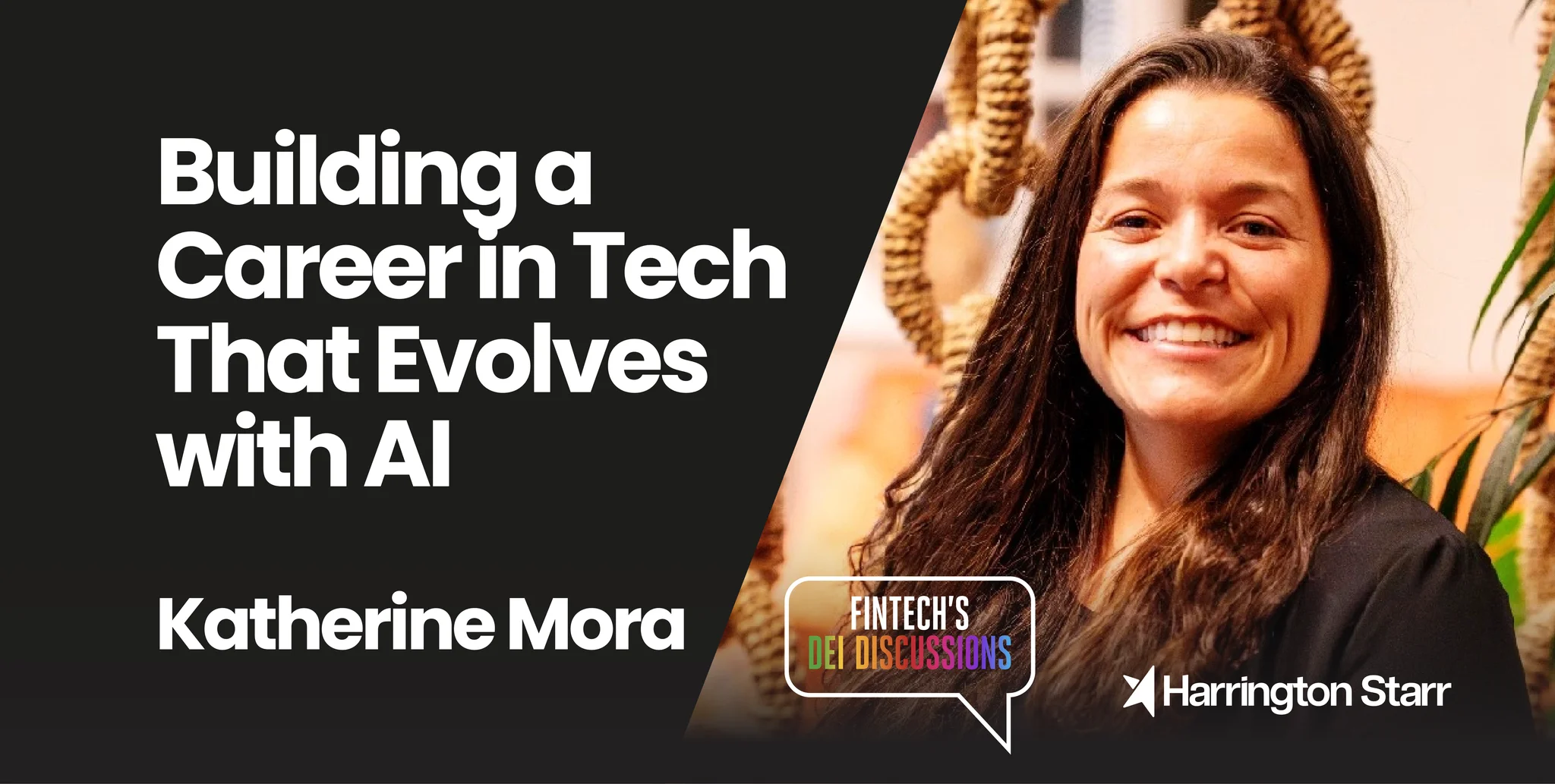
In this episode of FinTech’s DEI Discussions, hosted by Nadia Edwards-Dashti, the conversation centres on one of the most pressing topics in today’s financial technology landscape: how professionals can build careers that not only survive but thrive in an AI-driven world. Joined by Katherine Mora, Founder and Director of Amanzi IO and a Tech and AI Strategist, the discussion explores the intersection of technology, career agility, networking, and inclusion, offering a grounded and practical perspective for anyone navigating change in FinTech and financial services.
Katherine begins by explaining her role as a Tech and AI Strategist, a position that sits at the critical intersection between business and technology. Her work focuses on helping business leaders make confident decisions about technology and AI without needing to become technical experts themselves. This is particularly relevant in today’s market, where many organisations, especially scaling businesses, lack the internal technical leadership required to translate ambition into execution. Katherine positions herself as the bridge between business goals and technology strategy, ensuring that companies invest in the right solutions rather than being swept up in the noise of AI hype.
The conversation quickly moves into the reality of AI adoption within FinTech and financial services. Katherine highlights that while AI is dominating conversations across industries, many organisations still struggle to understand what is genuinely valuable versus what is simply noise. Her role involves cutting through this complexity, identifying what is worth pursuing, and aligning it with the organisation’s growth strategy.
She shares that much of her work involves understanding the unique context of each business. No two companies are the same, and while common challenges such as scattered data, unclear priorities, and fear of making the wrong decisions appear frequently, the solutions must be tailored. This is particularly important in financial technology, where regulatory considerations, data sensitivity, and competitive pressures require careful decision-making.
Katherine also emphasises that her day-to-day work is less about coding and more about communication. She often finds herself translating between different teams who are not speaking the same “language”, whether that is technical, commercial, or strategic. This ability to connect people and ideas is increasingly valuable in FinTech recruitment, where organisations are not just looking for technical skills but for individuals who can bridge gaps and drive alignment across teams.
One of the most powerful themes in the episode is the importance of career agility. Katherine makes it clear that the pace of change driven by AI is unlike anything seen before. While previous technological shifts, such as the rise of the internet or mobile technology, allowed time for gradual adaptation, AI is accelerating change at a much faster rate. As a result, professionals can no longer rely on their existing knowledge to carry them forward for the next decade.
However, rather than framing this as a threat, Katherine presents it as an opportunity. She reassures listeners that they do not need to abandon their existing expertise. Instead, the focus should be on building around it. In the context of FinTech careers, this means understanding how AI can enhance domain knowledge rather than replace it. Subject matter expertise remains incredibly valuable, particularly in financial services, where deep understanding of markets, products, and regulations is essential.
The real competitive advantage, she explains, lies in combining that expertise with an understanding of AI. Professionals who can do this effectively position themselves at the forefront of the industry. This insight is particularly relevant for those working in areas such as data, product management, cyber security, and quantitative finance, where the integration of AI is rapidly reshaping roles and responsibilities.
The discussion then shifts to a topic that resonates strongly with career progression in financial services and FinTech recruitment: networking. Katherine shares her personal experience of working hard within a corporate environment yet feeling limited by the boundaries of her organisation. It was only when she began to look beyond her immediate environment and engage with professionals in other companies that her perspective began to shift.
Networking, she explains, is not about transactional exchanges but about genuine conversations. It is through these conversations that new ideas, perspectives, and opportunities emerge. She highlights that a single conversation can have a lasting impact, introducing new ways of thinking or opening unexpected doors.
This perspective is particularly relevant in today’s FinTech job market, where career mobility and opportunity often extend beyond traditional pathways. For candidates and clients alike, understanding the value of networks is critical. For organisations, this reinforces the importance of hiring individuals who are not only skilled but also connected, curious, and open to learning from others.
Katherine also shares examples of opportunities that have come from her networking efforts, including speaking engagements and collaborations. These were not planned outcomes but rather the result of building authentic relationships. This reinforces the idea that career growth is no longer solely determined by performance within a role but by the broader ecosystem of connections and interactions.
While in-person events remain valuable, Katherine highlights the growing importance of online networking, particularly through platforms like LinkedIn. She describes how reaching out to individuals for conversations, often with no specific agenda, has led to meaningful exchanges with professionals across different industries and geographies.
This approach has allowed her to connect with individuals ranging from academics to AI specialists, gaining insights that she would not have encountered within her immediate network. These conversations often evolve into ongoing relationships, where knowledge and ideas are shared regularly.
For professionals in FinTech and financial services, this shift towards online networking presents a significant opportunity. It removes geographical barriers and enables individuals to build diverse, global networks. From a recruitment perspective, it also highlights how talent is becoming increasingly interconnected, with professionals drawing insights and opportunities from a wide range of sources.
As the episode moves towards its conclusion, the focus turns to inclusion and the role individuals play in creating more equitable workplaces. Katherine emphasises that while awareness of diversity and inclusion challenges is important, the real impact comes from action.
She highlights that these actions do not need to be large or complex. Simple behaviours, such as ensuring someone’s voice is heard in a meeting or advocating for a colleague’s progression, can have a significant impact. This perspective aligns closely with the broader goals of FinTech’s DEI Discussions, which aim to move beyond conversation and into tangible change.
One of the key distinctions Katherine makes is between mentorship and sponsorship. While mentorship provides guidance and advice, sponsorship involves actively advocating for someone when they are not in the room. This could mean supporting a promotion, recommending someone for an opportunity, or ensuring they are recognised for their contributions.
This distinction is particularly important in financial technology, where access to opportunities can significantly influence career progression. For organisations, it reinforces the need to build cultures where sponsorship is encouraged and embedded into leadership behaviours.
Katherine also reflects on her involvement in initiatives aimed at increasing representation in technology, including her work with communities supporting women in tech. She acknowledges that while progress has been made, there are still barriers that need to be addressed.
One of the key challenges is perception. Many individuals still view technology careers as limited to coding or highly technical roles, which can deter them from exploring opportunities in the space. Katherine highlights that there are many different pathways within technology, from strategy and product to data and operations, and that increasing awareness of these options is essential.
For FinTech recruitment businesses and hiring organisations, this insight is particularly valuable. Expanding the talent pool requires not only attracting candidates but also reshaping how careers in technology are perceived. By highlighting diverse career paths and showcasing real examples, organisations can encourage a wider range of individuals to consider roles within the sector.
Throughout the episode, a consistent theme emerges: the future of work in FinTech will be defined by adaptability, connectivity, and inclusivity. AI is not simply a technological shift; it is a catalyst for broader change across how organisations operate and how individuals build their careers.
For professionals, this means embracing continuous learning and being open to evolving their skill sets. For organisations, it means creating environments that support growth, encourage collaboration, and prioritise inclusion. For the FinTech recruitment market, it presents both a challenge and an opportunity to connect the right talent with the right roles in an increasingly complex landscape.
Katherine’s insights provide a clear message: the combination of expertise, AI awareness, and strong networks will define success in the years ahead. Those who can bring these elements together will not only remain relevant but will lead the next phase of innovation in financial technology.
This episode of FinTech’s DEI Discussions offers a practical and insightful look at what it takes to build a career that evolves with AI. Through Katherine Mora’s experiences and perspectives, listeners gain a deeper understanding of how to navigate change, leverage technology, and create opportunities for themselves and others.
The conversation reinforces that while the pace of change may feel overwhelming, it also presents unprecedented opportunities. By focusing on continuous growth, building meaningful connections, and taking intentional action towards inclusion, professionals can shape careers that are both resilient and impactful.
For those working in or entering the FinTech space, the message is clear. The future belongs to those who are willing to adapt, collaborate, and contribute to a more inclusive and innovative industry.