Building Resilient Careers in Financial Technology
26 March, 2026

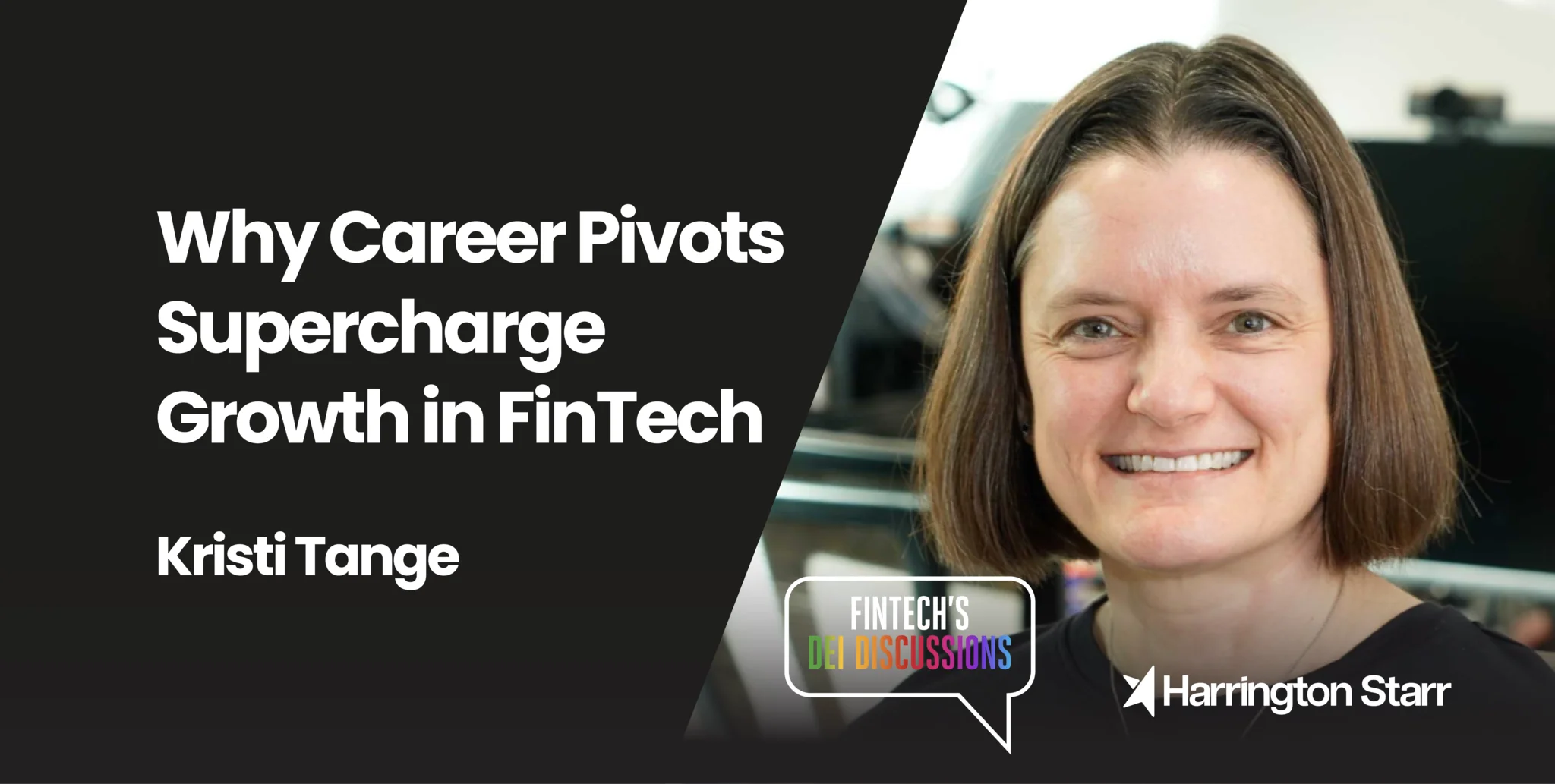
In this episode of FinTech’s DEI Discussions, Nadia Edwards-Dashti is joined by Kristi Tange, Group Chief Risk Officer at ClearToken, for a conversation that cuts through surface-level discussions of diversity and instead explores what inclusion truly looks like in practice across financial technology. Drawing on a career spanning almost three decades, multiple geographies, and leadership roles across operations, finance, and risk, Kristi shares a perspective grounded in lived experience rather than theory. This episode is not simply about inclusion as a concept; it is about how inclusive cultures are built, how careers evolve in fintech, and how leaders can create environments where people feel valued, heard, and able to contribute at their highest level.
Kristi’s journey begins with 27 years at Goldman Sachs, where she developed deep expertise across core financial functions before taking a deliberate career break. That pause, which included travel, personal development, and even walking the length of the River Thames, became a pivotal moment. It created the space to reflect, reset, and ultimately step into a new opportunity with ClearToken. Her transition into this role was not a traditional recruitment process, but rather a mutual evaluation between candidate and company. This approach speaks directly to evolving hiring practices within fintech, where cultural alignment, shared purpose, and long-term value are increasingly prioritised alongside technical capability.
A central theme in this discussion is the importance of purpose when joining a fintech organisation. Kristi highlights that her decision to join ClearToken was driven by multiple factors, beginning with belief in the company’s mission. The vision of enabling settlement “anywhere, by anyone, at any time” represents the kind of transformation that defines modern financial technology. It reflects a broader industry shift towards digital markets, infrastructure innovation, and the reimagining of traditional financial systems. For professionals navigating fintech careers, aligning with this kind of forward-looking vision is increasingly critical.
However, purpose alone is not enough. Kristi emphasises the importance of regulatory integrity and operational discipline, particularly in a sector as complex and scrutinised as financial services. ClearToken’s ambition to operate as a regulated financial market infrastructure, requiring authorisation from both the Bank of England and the Financial Conduct Authority, demonstrates the balance between innovation and governance that defines successful fintech businesses. For employers and hiring managers, this highlights the growing demand for talent that can bridge both worlds: individuals who understand cutting-edge technology while also bringing high-risk, compliance, and control frameworks.
From a fintech recruitment perspective, this is a crucial insight. The market is no longer simply looking for technical specialists or traditional finance professionals in isolation. Instead, there is increasing demand for individuals who can operate at the intersection of technology, regulation, and strategy. Kristi’s role as Group CRO embodies this intersection, reinforcing the importance of hiring talent that can contribute to both innovation and stability within financial technology firms.
When asked what inclusion means, Kristi offers a definition that moves beyond common buzzwords. She describes inclusion not as a single initiative or policy, but as “the microculture of many things” that collectively enable individuals to feel valued, influential, and able to contribute. This perspective is particularly relevant in fintech, where fast-paced environments and rapid growth can sometimes overshadow the importance of culture.
Inclusion, as described in this episode, is not about large-scale programmes alone. It is about the everyday interactions that shape how people experience their workplace. It is about whether individuals feel heard in meetings, whether their ideas are considered, and whether they have genuine opportunities to influence outcomes. Kristi shares a powerful example from her own experience at ClearToken, where she explicitly discussed her desire to have a seat at the table before committing fully to the role. The response she received, and the subsequent reality of her contributions being heard and implemented, reinforced the organisation’s commitment to inclusion in action rather than rhetoric.
For fintech leaders and hiring managers, this highlights a critical shift. Inclusion is no longer a standalone initiative led by HR or DEI teams. It is embedded in leadership behaviours, decision-making processes, and organisational culture. Companies that succeed in attracting and retaining top talent are those that create environments where individuals feel their contributions matter. This is particularly important in a competitive fintech recruitment landscape, where candidates are increasingly evaluating employers based on culture, purpose, and growth opportunities alongside compensation.
Another key theme in this episode is the value of transferable skills. Kristi reflects on her own career moves, noting that the most challenging transition was her first internal move within Goldman Sachs. Moving from one group to another required her to rebuild confidence, learn new systems, and establish new networks. However, over time, these transitions became less intimidating and more exciting, as she recognised the power of the skills she carried with her.
Transferable skills, as discussed in this conversation, are not limited to technical knowledge. They include problem-solving ability, cultural awareness, relationship-building, and the ability to navigate complex environments. These are the skills that enable professionals to add value quickly, even when entering unfamiliar roles or industries. In fintech recruitment, this is a particularly important consideration. As the industry evolves, many roles require a blend of expertise that cannot always be found in a single career path.
For candidates, this reinforces the importance of recognising and articulating their transferable skills when exploring new opportunities. For employers, it highlights the need to look beyond traditional CVs and consider the broader capabilities that individuals bring to the table. Kristi’s experience demonstrates that the ability to adapt, learn, and apply knowledge in new contexts is often more valuable than deep specialisation in a single area.
The idea that careers are not linear is another powerful insight from this episode. Kristi describes careers as something that “unfolds” rather than something that can be strictly planned. While individuals can pursue opportunities, many of the most significant career moments come from unexpected chances that require readiness and openness to change.
Her move into resolution planning at Goldman Sachs serves as a clear example. Despite having extensive experience, she initially felt unprepared for the complexity of the role. However, a key piece of advice from a colleague changed her perspective: no one has the full knowledge required for any role. Instead, individuals bring what they know and learn the rest. This mindset is particularly relevant in fintech, where rapid technological change means that no professional can ever be fully “complete” in their knowledge.
For organisations, this has significant implications for hiring and talent development. It suggests that potential, adaptability, and willingness to learn are just as important as existing expertise. It also reinforces the importance of creating environments where employees feel supported in their learning journeys. In fintech recruitment, this means identifying candidates who are not only capable but also curious, resilient, and open to growth.
Kristi’s background in risk and her current role as Group CRO bring an additional layer of depth to the conversation. She discusses the importance of building resilient organisations, particularly in the context of financial market infrastructure. Concepts such as safety, liquidity, capital, and even wind-down planning are not just regulatory requirements; they are fundamental to the stability of the financial system.
Her experience in resolution planning, which involves preparing for scenarios where a firm may need to be safely wound down, highlights the level of complexity involved in managing risk within financial services. This perspective is particularly relevant for fintech firms seeking regulatory approval and scaling their operations. It underscores the need for strong risk management frameworks and the importance of hiring talent with the expertise to navigate these challenges.
From a recruitment standpoint, this reinforces the growing demand for risk, compliance, and governance professionals within fintech. As the industry matures, these roles are becoming increasingly critical, not only for meeting regulatory requirements but also for building trust with clients, partners, and the broader market.
As the conversation draws to a close, the focus shifts to practical actions that individuals can take to drive inclusion within their workplaces. Kristi emphasises the importance of small, everyday behaviours, such as understanding colleagues’ strengths, creating opportunities for others to contribute, and operating with transparency. These actions, while seemingly simple, have a significant impact on workplace culture.
Inclusion, in this context, is about creating an environment where people feel comfortable asking questions, sharing ideas, and influencing outcomes. It is about recognising that every individual has something valuable to contribute and ensuring that they have the opportunity to do so. For fintech organisations, this is particularly important in fostering innovation, as diverse perspectives often lead to better solutions and stronger outcomes.
This approach also aligns with broader trends in fintech talent management, where organisations are increasingly focused on employee engagement, retention, and development. Creating inclusive environments is not just a moral imperative; it is a strategic advantage in attracting and retaining top talent.
This episode of FinTech’s DEI Discussions offers a compelling perspective on the future of work within financial technology. It highlights the importance of purpose, the value of transferable skills, and the need for inclusive cultures that enable individuals to thrive. For Harrington Starr and the wider fintech recruitment market, these insights are highly relevant.
As the industry continues to evolve, the demand for talent that can navigate complexity, embrace change, and contribute to inclusive environments will only increase. Organisations that succeed will be those that align their hiring strategies with these priorities, focusing not just on technical skills but also on cultural fit, adaptability, and potential.
Kristi Tange’s career journey and leadership insights provide a clear example of what this looks like in practice. Her emphasis on learning, contribution, and value creation reflects the mindset required to succeed in modern fintech careers. It is a reminder that while technology continues to reshape the industry, the human element remains at the centre of everything.
Ultimately, this conversation reinforces a simple but powerful idea: careers in fintech are built not on having all the answers, but on the willingness to learn, adapt, and contribute. By bringing what you know and learning the rest, individuals can unlock new opportunities, drive innovation, and play a meaningful role in shaping the future of financial technology.