The Power of Transferable Skills in FinTech Careers
09 April, 2026
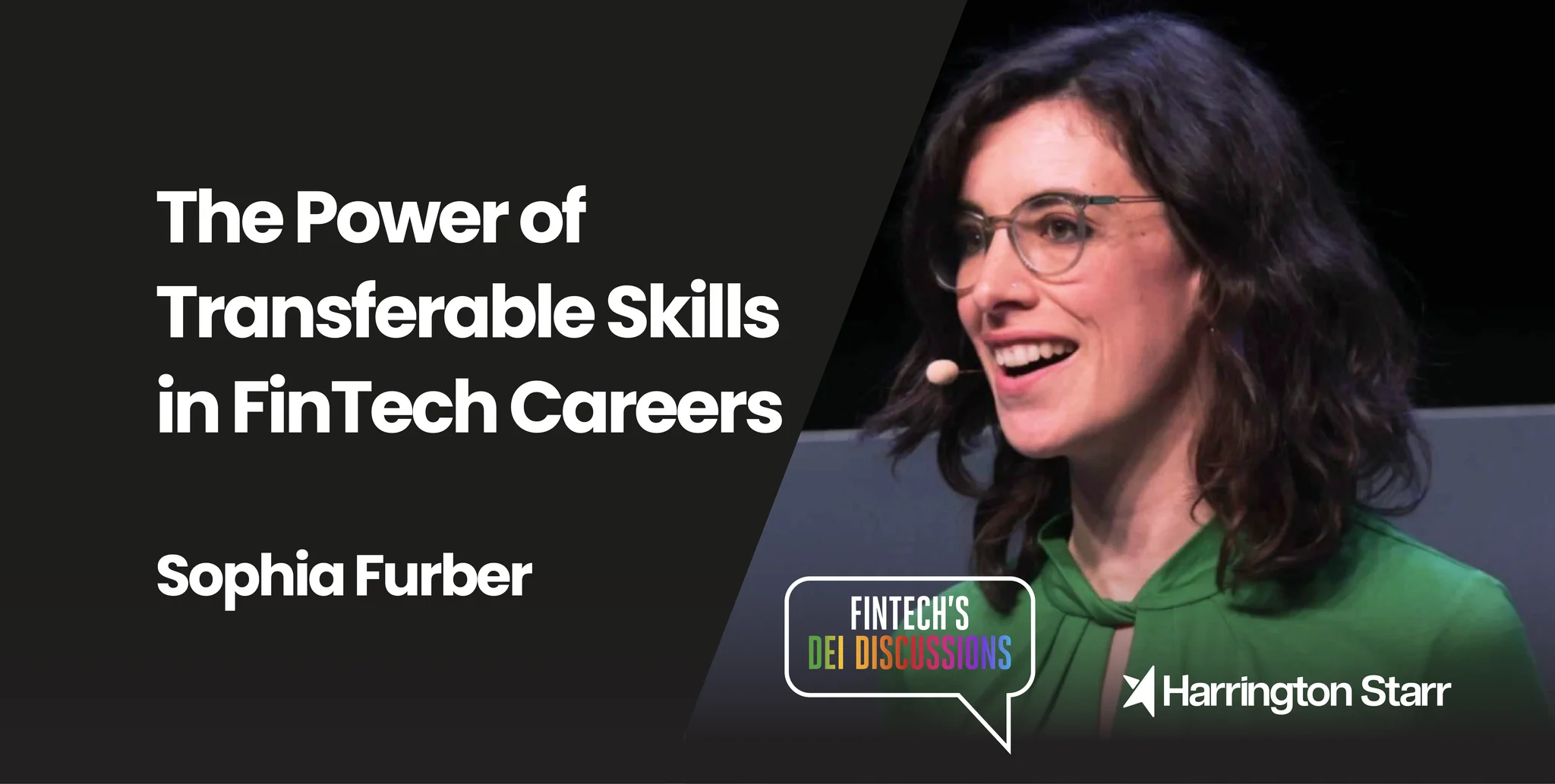

In this episode of FinTech’s DEI Discussions, hosted by Nadia Edwards-Dashti, the conversation with Rachael Grieve, Global Head of Learning and Development for Technology at Nomura, offers a powerful and grounded perspective on one of the most overlooked opportunities in FinTech recruitment today: returner talent. This discussion is not theoretical. It is rooted in lived experience, operational change, and measurable impact within a global financial institution.
Rachael begins by outlining her current role, leading learning and development within the CIO division at Nomura. Her remit focuses on technical upskilling across the organisation, ensuring that technology teams remain competitive and capable in a rapidly evolving financial services landscape. However, what makes her perspective particularly compelling is her career journey. Starting as a programmer, transitioning into project management, and then stepping away from the corporate world for 12 years to raise her children, Rachael’s return to work was not linear, nor was it strategically planned at the time. Yet, as she reflects, each experience ultimately aligned to create the foundation for her current leadership position.
This story alone challenges traditional hiring narratives in FinTech and financial technology recruitment. It raises an important question for hiring managers and leaders: how much talent is being missed simply because career paths do not fit a conventional timeline?
A central theme throughout the episode is the systemic loss of talent due to rigid hiring practices. Rachael highlights that there is a significant pool of highly capable professionals who struggle to re-enter the corporate workforce after a career break. This is not due to a lack of ability, but rather a lack of structured pathways back in.
From a FinTech recruitment perspective, this is a critical insight. Organisations often focus heavily on sourcing new talent while overlooking experienced professionals who already possess industry knowledge, transferable skills, and the ability to contribute quickly. Rachael explains how Nomura addressed this gap by implementing structured returner programmes, working in partnership with HR and specialist agencies. These programmes are designed to provide a short period of support, typically in the early months, enabling individuals to regain confidence and reintegrate into the workplace.
What is particularly striking is the outcome. According to Rachael, once this initial support is in place, individuals become highly productive very quickly. The narrative that returners require long-term handholding is fundamentally challenged. Instead, the data and experience suggest the opposite: with minimal intervention, these professionals are able to “get up and flying” again.
For FinTech hiring managers, this represents a significant opportunity. In a market where demand for talent often outstrips supply, particularly in areas such as software engineering, data, and infrastructure, expanding hiring strategies to include returners is not just inclusive, it is commercially smart.
Rachael’s role in learning and development provides further depth to the conversation. As digital transformation accelerates across financial services, the need for continuous upskilling has become a business-critical priority. Her work within the CIO division reflects this shift, focusing on ensuring that teams are equipped with the technical capabilities required to support innovation and growth.
The timing of her return to Nomura coincided with the rise of digital transformation, which created a natural demand for upskilling initiatives. This alignment of organisational need and individual capability allowed Rachael to shape and evolve her role over time. However, she is clear that this progression was not achieved in isolation. Sponsorship from senior leaders played a crucial role, providing her with opportunities to demonstrate her skills and expand her remit.
This highlights another important consideration for FinTech recruitment and talent strategy: hiring the right people is only part of the equation. Retaining and developing that talent through effective learning and development programmes is equally important. Without this, organisations risk falling behind in an increasingly competitive and technology-driven market.
One of the most impactful parts of the discussion is the distinction between sponsorship and mentorship. While mentorship is widely recognised as valuable, Rachael emphasises the importance of sponsorship in driving real career progression. Sponsors actively advocate for individuals, opening doors and creating opportunities that might not otherwise be accessible.
In Rachael’s case, sponsorship from managers who recognised her capability enabled her to take on new challenges and expand her role within the organisation. This support was instrumental in her transition from a returner to a senior leader in technology.
For organisations focused on diversity and inclusion in financial services, this is a critical takeaway. It is not enough to hire diverse talent. Without sponsorship, individuals may struggle to progress, limiting both their potential and the organisation’s ability to benefit from their contributions. As Nadia points out during the conversation, this is an area where more action is needed, and where leaders must be willing to both offer and actively seek out sponsorship opportunities.
The conversation then shifts to the concept of inclusion, with Rachael offering a clear and practical definition. For her, inclusion is about more than representation. It is about creating an environment where individuals feel psychologically safe, where their voices are valued, and where their unique perspectives are recognised as an asset rather than something to be hidden.
She describes inclusion as being in a situation where you might be the only person with a particular background or perspective, but still feeling that your contribution is as important as everyone else’s.
This distinction is crucial for FinTech organisations. While diversity metrics can provide a snapshot of representation, they do not capture the lived experience of employees. Without genuine inclusion, diverse teams may not be able to fully contribute, limiting innovation and performance.
Rachael also highlights the impact of exclusion, noting that when individuals do not feel valued or heard, creativity is stifled. In an industry driven by innovation, this represents a significant risk. For FinTech leaders, the message is clear: inclusion is not a “nice to have”. It is a fundamental driver of business success.
A key example of inclusion in action is the returner programme developed at Nomura. Rachael explains how her own experience as a returner informed the creation of structured pathways for others. Recognising the barriers that individuals face when attempting to re-enter the workforce, she worked with internal stakeholders and external partners to design a programme that addresses these challenges.
An important aspect of this initiative is education for hiring managers. Rachael highlights that one of the biggest barriers is not the candidates themselves, but how their experience is perceived. Traditional CVs may not fully capture the skills and capabilities developed during a career break. By helping managers understand how to interpret these experiences, organisations can unlock a wider and more diverse talent pool.
This approach aligns closely with the needs of FinTech recruitment today. As the industry continues to evolve, the ability to identify and value transferable skills will become increasingly important. Returner programmes provide a structured way to do this, benefiting both individuals and organisations.
Another important theme in the episode is the role of community and collective effort in driving change. Rachael emphasises that inclusion is not the responsibility of a single individual or team. It requires collaboration across the organisation, supported by leadership and a shared commitment to doing things differently.
She highlights initiatives such as working with Men for Inclusion and collaborating with external experts to deliver leadership programmes. These efforts are designed to broaden the conversation around inclusion, ensuring that it is not seen as an issue for a specific group, but as a shared responsibility that benefits everyone.
This perspective is particularly relevant in the current climate, where discussions around diversity and inclusion can sometimes become polarised. By focusing on data, empathy, and shared outcomes, organisations can create more constructive and inclusive conversations.
As the episode draws to a close, the conversation turns to the future of work, particularly in the context of AI and technological advancement. While much of the industry’s focus is on technical innovation, Rachael emphasises the importance of human skills, particularly empathy and communication.
She suggests that as technology continues to evolve, these skills will become even more important, not less. Leaders who are able to connect with their teams, understand individual circumstances, and create inclusive environments will be better positioned to succeed.
This is a powerful reminder for those involved in FinTech recruitment and leadership. While technical skills remain critical, they must be complemented by strong interpersonal capabilities. The future of financial technology will not be defined by technology alone, but by how effectively people work together within it.
This episode of FinTech’s DEI Discussions provides a clear and actionable roadmap for organisations looking to improve their hiring strategies. It challenges traditional assumptions about talent, highlights the value of returner programmes, and reinforces the importance of inclusion, sponsorship, and learning and development.
For FinTech recruitment businesses such as Harrington Starr, these insights are directly aligned with the needs of clients across financial services. As organisations continue to compete for top talent, those that adopt more inclusive and flexible hiring practices will have a distinct advantage.
The key takeaway is simple but powerful. Talent does not always follow a linear path. By broadening hiring strategies, investing in development, and creating inclusive environments, organisations can unlock new sources of talent and drive long-term success.