Why You’re Hiring Wrong in FinTech
02 April, 2026

Recorded live at FinTech Connect 2025, this episode of FinTech's DEI Discussions brings together inclusion, risk management, and the evolving role of technology in financial services. Hosted by Nadia Edwards-Dahsti, the conversation centres on how organisations can genuinely support their people through change, rather than simply deploying new tools and expecting culture to catch up. As FinTech continues to evolve at pace, this episode explores why inclusion, perspective, and human connection are becoming just as critical to success as innovation itself.
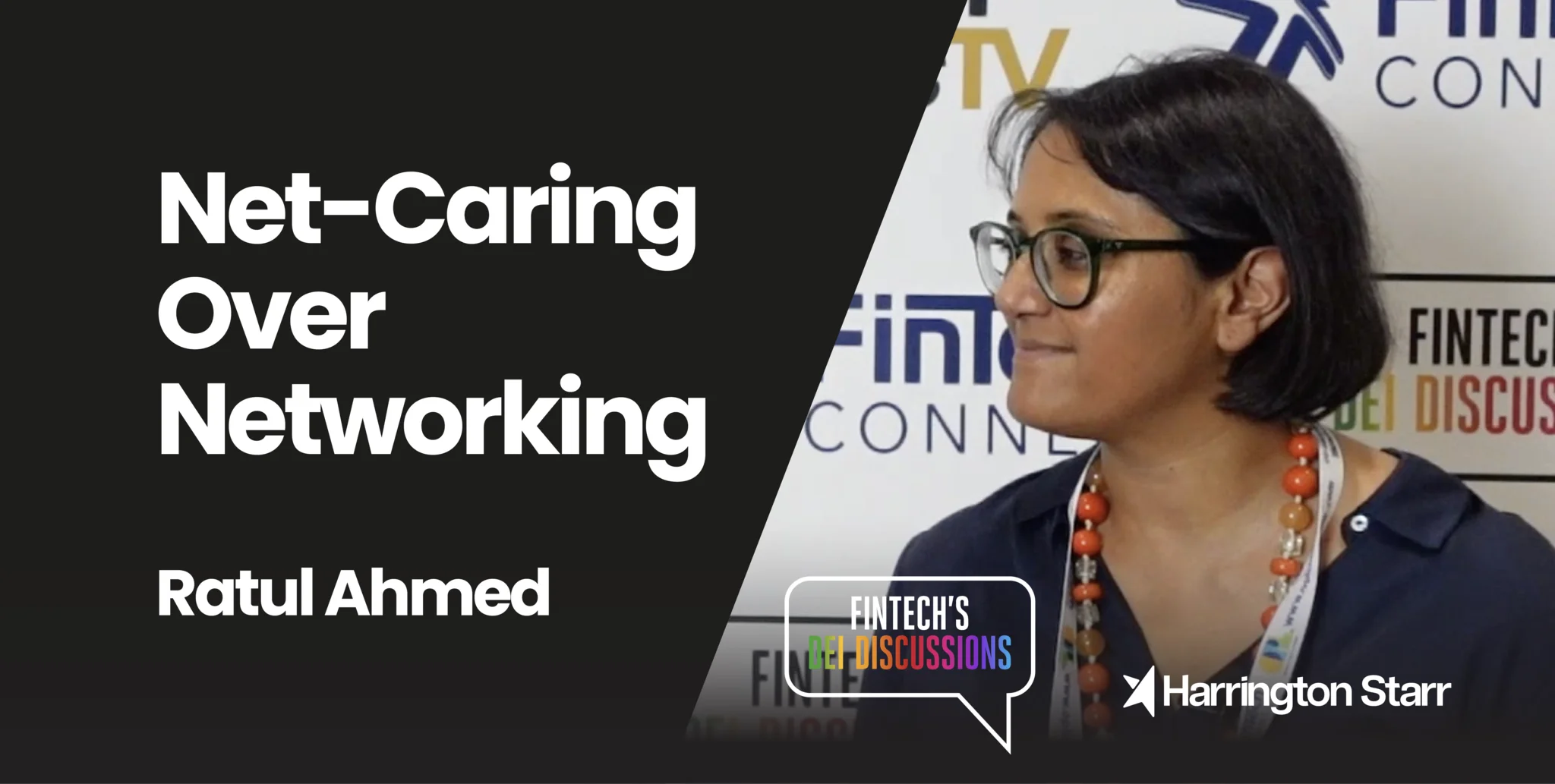
Nadia is joined by Ratul Ahmed, Group Head of Model Risk Management and Validation at Commerzbank AG. With over 25 years of experience across market risk and model risk management, Ratul brings a rare long-term perspective on how financial services roles, responsibilities, and perceptions have shifted. Having spent much of her career in second-line risk functions, she reflects candidly on how risk professionals are often viewed within organisations, and how that perception has evolved as technology, regulation, and complexity have increased.
Ratul explains how her career began in traditional market risk management, primarily within the equity derivatives space, before transitioning more recently into model risk management. She highlights an important reality for many professionals in financial services: risk teams are often seen as gatekeepers rather than enablers. Moving from market risk into model risk has added another layer of complexity, with model risk sometimes described as “second line within second line”. Yet, as financial institutions rely more heavily on complex models and AI-driven decision-making, these roles are becoming increasingly vital. This shift reflects a broader trend across FinTech and financial services, where governance, oversight, and ethical decision-making are now core business priorities rather than peripheral functions.
Reflecting on the atmosphere at FinTech Connect 2025, Ratul notes a clear shift in the makeup of the event. Compared to earlier years, there is a stronger presence of third-party technology vendors and service providers, all eager to understand how financial institutions want to deploy technology for efficiency, compliance, and innovation. This change highlights the growing ecosystem that surrounds modern financial services, where banks, FinTechs, and technology partners must collaborate closely. For employers, this evolution also changes the talent profile required, with increasing demand for professionals who can bridge technical expertise, regulatory understanding, and commercial awareness.
A key theme of the discussion is the role of AI and RegTech in reshaping compliance and risk management. Ratul shares insights from her stage session at FinTech Connect, where she spoke about real-world use cases for technology within compliance and regulatory functions. Rather than focusing solely on automation, she emphasises the importance of using AI to create time and space for higher-value work. This includes enabling professionals to focus on judgement, strategy, and collaboration, rather than manual processes. However, she is clear that technology adoption must be accompanied by a shift in skills and mindset, with organisations investing in learning and adaptability as much as tools.
Beyond technology itself, Ratul highlights that the biggest challenge facing organisations is mindset. AI adoption is not simply a technical issue but an organisational one, requiring leaders to rethink how decisions are made and how people are empowered. She explains that introducing AI into financial services forces companies to revisit the traditional three lines of defence model and consider how accountability, oversight, and collaboration work in practice. For FinTech leaders, this means creating environments where people feel confident engaging with new tools, questioning outcomes, and contributing ideas, rather than fearing mistakes or scrutiny.
When asked what inclusion means for the future of the industry, Ratul frames it as essential to adaptability. As financial services continue to evolve globally, organisations need people who are curious, open-minded, and able to understand perspectives beyond their own. Inclusion, in this context, is not limited to demographic diversity but extends to diversity of thought, experience, and approach. Ratul emphasises that empathy is about perspective rather than sympathy, and that inclusive teams are better equipped to navigate uncertainty and complexity. This message resonates strongly in a sector facing rapid technological change and shifting global dynamics.
Despite conversations around deglobalisation and economic fragmentation, Ratul argues that financial services must continue to think globally when it comes to technology and talent. Innovation does not happen in isolation, and the challenges facing the industry require cross-border collaboration. This has important implications for FinTech recruitment, where employers increasingly seek professionals who can operate across cultures, jurisdictions, and regulatory environments. Building inclusive teams with global outlooks is no longer a “nice to have” but a competitive advantage in attracting and retaining top talent.
Ratul expresses a strong desire to see organisations create safe “sandbox” environments where employees can experiment with technology and develop new skills. She believes that empowering people to explore use cases, learn independently, and challenge existing processes is key to long-term success. Rather than imposing top-down solutions, she advocates for enabling teams to bring their own ideas forward and adapt tools to fit real-world needs. This approach not only improves outcomes but also helps individuals bring their best selves to work, fostering engagement and confidence.
A recurring theme throughout the episode is the importance of psychological safety. Ratul highlights that inclusion is about more than representation; it is about creating cultures where people feel able to challenge ideas, question decisions, and contribute authentically. She encourages leaders to move away from prescriptive approaches and instead focus on enabling dialogue and trust. For FinTech employers, this requires intentional leadership and a willingness to listen, particularly during periods of transformation driven by AI and regulatory change.
For individuals listening to the podcast who want to make a difference within their own organisations, Ratul offers practical advice rooted in collaboration. She encourages people to step outside their immediate communities, engage with others across the industry, and put themselves in situations that feel uncomfortable. These conversations, she explains, are where learning and growth happen. Rather than viewing collaboration as competition, she frames it as a shared effort to improve the industry as a whole.
One of the most memorable moments of the episode is Ratul’s introduction of the concept of “net-caring”. Moving beyond traditional networking, net-caring is about generosity, active listening, and genuine connection. Ratul explains that sharing time and perspective with others ultimately benefits everyone involved, from individuals to organisations and even the wider industry. This philosophy aligns closely with the ethos of FinTech’s DEI Discussions and reflects a growing recognition that relationships built on trust and empathy are more valuable than transactional connections.
Ratul closes the conversation by encouraging people to find their voice and continue speaking up, even when it feels difficult. She acknowledges that not everyone finds it easy to be vocal but stresses the importance of seeking out platforms, asking questions, and engaging in dialogue. Whether through internal meetings, industry events, or community forums, these conversations help shape a more inclusive and resilient financial services sector. Her message is one of persistence and belief, rooted in the idea that meaningful change comes from sustained effort rather than one-off initiatives.
For Harrington Starr, as a global FinTech recruitment business, the themes explored in this episode are deeply relevant to clients and candidates alike. The future of financial technology depends on organisations that can attract diverse talent, support continuous learning, and foster inclusive cultures. As AI and regulation reshape roles across risk, compliance, and technology, employers must think holistically about how they develop and retain their people. This episode provides valuable insight into what that future could look like, grounded in real experience and thoughtful leadership.
Recorded live at FinTech Connect 2025, this episode of FinTech’s DEI Discussions reinforces the importance of listening, learning, and acting when it comes to inclusion in financial services. Through Nadia’s conversation with Ratul Ahmed, listeners are reminded that technology alone will not define the next chapter of FinTech. Instead, it is the combination of inclusive leadership, empowered people, and a willingness to care for one another that will shape a more sustainable and innovative industry.