The Hiring Move Fintech’s Need to Make
24 March, 2026
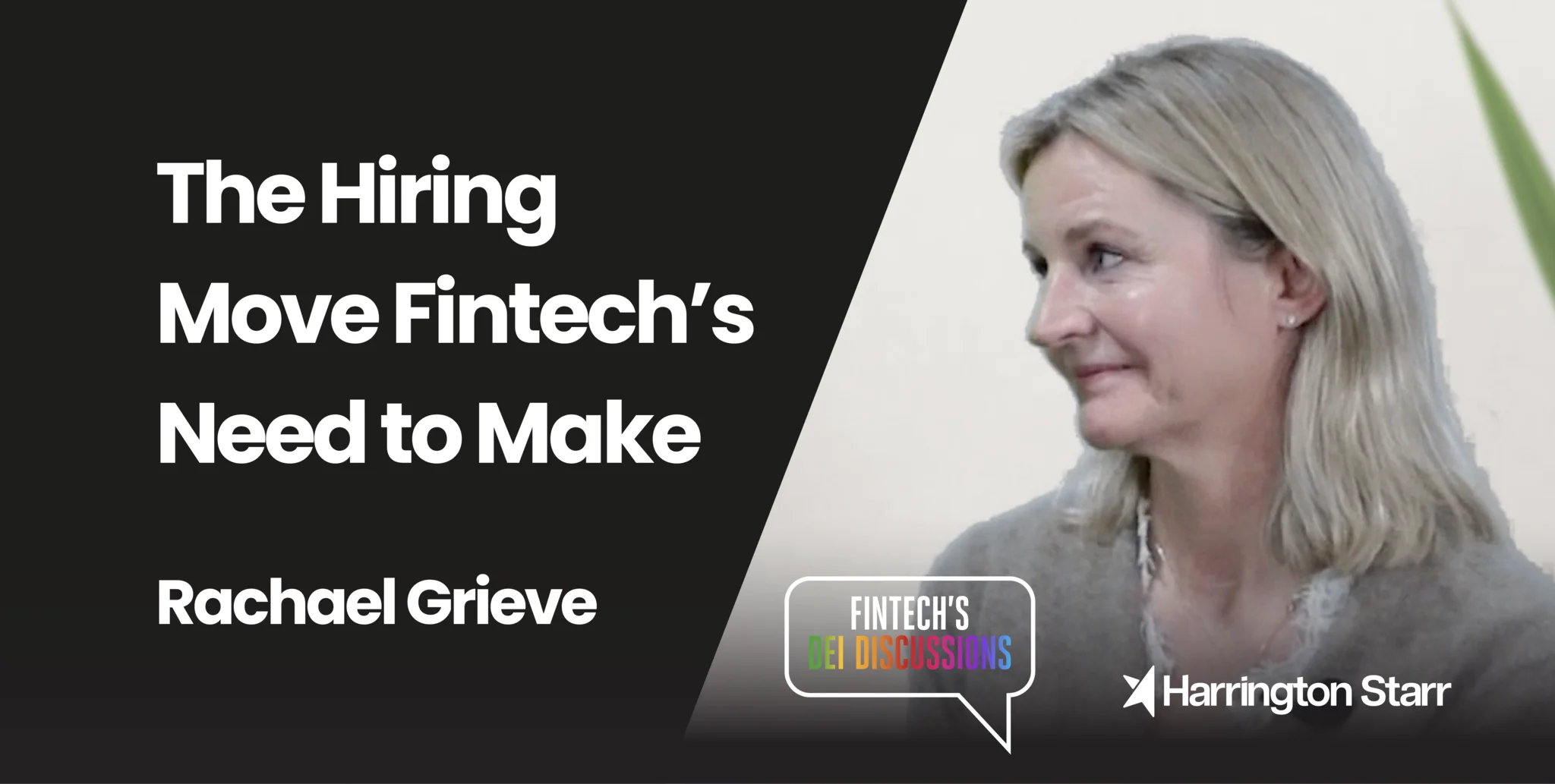

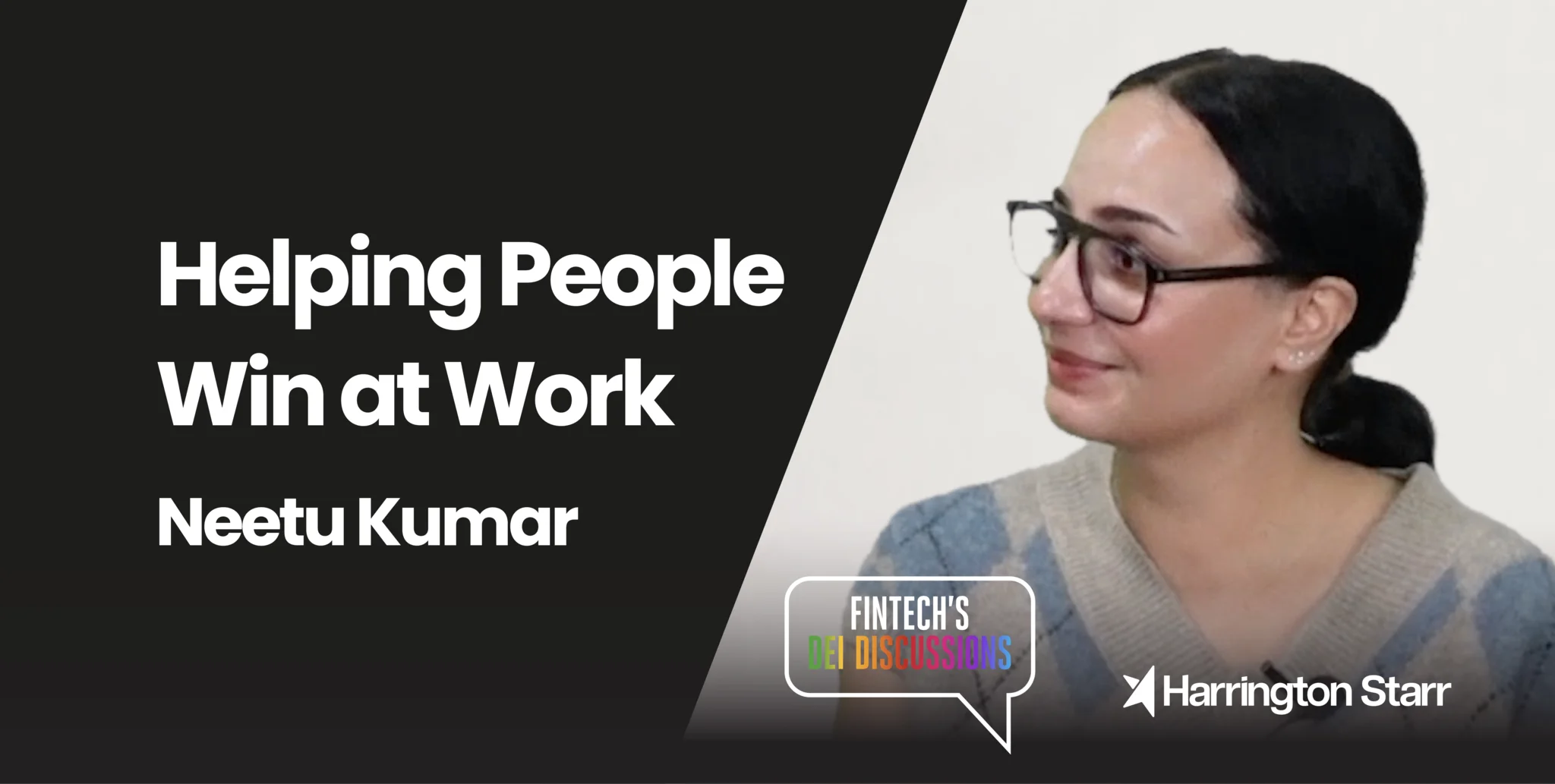
What does it really mean to build inclusive organisations in today’s financial technology landscape? In this episode of FinTech’s DEI Discussions, hosted by Nadia Edwards-Dashti, we hear from Neetu Kumar, Head of Graduate Programmes at Centrica, whose 23-year journey across talent acquisition, technology hiring and emerging talent offers a deeply practical view of what inclusion looks like beyond policy.
At the heart of Neetu’s philosophy is one simple but powerful idea: her role, in any capacity, is to help people win. Whether she is working in talent acquisition, leading inclusive hiring practices, or shaping graduate programmes, the goal remains the same. She speaks about leadership as a privileged position of influence and emphasises that how leaders use that influence can determine whether someone reaches their potential or remains just within touching distance of it. Sometimes, she says, people need help, and that is okay.
For those working in FinTech recruitment, talent strategy and financial technology leadership, this conversation is a reminder that inclusion is not a side initiative. It is a core driver of performance, engagement and long-term business resilience.
Neetu shares her career journey with honesty and humility. She joined Centrica straight out of university, unsure of what she wanted to do. After spending time supporting her father’s rehabilitation and facing multiple job rejections, she eventually joined Centrica’s contact centre through a recruitment agency that asked her a different question: not what she wanted to be, but what she enjoyed doing. Her answer was simple, talking to people and helping people.
That starting point shaped everything that followed. Working at the “coal face” of customer interaction gave her a deep understanding of how businesses operate and what customers truly need. She then moved into a coaching and learning and development role, training colleagues within the contact centre and continuing to build skills centred on people development.
Her career evolved into talent roles combining learning, development, coaching, recruitment and performance mapping. Eventually, following organisational restructuring, she moved into talent acquisition within a centre of excellence model. Over the last four to five years, she supported Centrica’s technology business, describing it as both her steepest learning curve and her best adventure. She recalls entering early meetings surrounded by acronyms and unfamiliar technical language, choosing not to retreat but instead to immerse herself fully in the world of technology. She completed beginner coding courses and engaged directly with technology leaders to understand the landscape.
Alongside this move into technology hiring came the opportunity to lead on inclusion across talent acquisition. She embraced it. Inclusive hiring practices became embedded into every stage of the recruitment process, from attraction and communication to bias awareness and reasonable adjustments. What began as good practice in pockets became a consistent approach rolled out across Centrica’s 21,000-strong organisation.
Today, as Head of Graduate Programmes, Neetu leads emerging talent across graduates, undergraduates, postgraduates and summer placements. Crucially, she has carried inclusive hiring into this space, ensuring that belonging is not limited to the recruitment stage but forms part of the lived experience once individuals join.
One of the most compelling parts of the discussion focuses on inclusive hiring and the danger of “culture fit”. Neetu describes how groupthink once felt normal in recruitment. Hiring managers would look for someone who fit in, who mirrored existing team members or even who could be “cloned”. She notes that phrases like “if I could find another me” were once commonplace.
In 2025, she views that mindset as archaic. Expecting people to fit in suggests that individuality should be masked. She challenges the very idea of fitting in, arguing that organisations should instead focus on what individuals add. Unique childhood experiences, skills, perspectives and lived realities are the true drivers of innovation.
For those involved in FinTech recruitment and financial technology hiring, this insight is critical. In a sector driven by innovation, digital transformation and technological disruption, homogeneity limits competitive advantage. Diverse teams build stronger organisations. The data supports this, but Neetu emphasises that the motivation should go beyond ticking boxes. Inclusion drives better outcomes because it enhances thinking, creativity and resilience.
She draws a powerful analogy with artificial intelligence. If every organisation relied entirely on AI tools to make decisions, they would all arrive at similar strategies and solutions. Innovation would stagnate. The same applies to hiring. If teams recruit only in their own image, they narrow the range of thought in the room and limit growth.
Diversity of thought is not an abstract concept in this episode; it is presented as a business necessity. Neetu explains that bias does not always stem from bad intent. Often, it arises from a lack of awareness. Hiring managers may unconsciously lean towards familiarity. The role of inclusive recruitment professionals is to surface those biases in conversation, not to shame but to educate and coach.
She expresses relief that these conversations still happen. Rather than fearing that bias exists, she sees value in it being visible and discussed. Hidden bias is far more dangerous than bias that can be addressed openly.
For FinTech leaders navigating complex markets, regulatory pressures and digital acceleration, this discussion reinforces a vital message: diverse thinking is a strategic asset. Teams composed of individuals with varied experiences, perspectives and problem-solving approaches are better equipped to navigate uncertainty.
A significant portion of the episode explores reasonable adjustments and psychological safety. Neetu reflects on how the conversation around adjustments has become easier but acknowledges that stigma and fear remain. Some employees worry that requesting adjustments may lead to perceptions of being less capable.
She challenges the terminology itself, questioning the subjectivity of the word “reasonable”. What one person deems reasonable may feel burdensome to another. Instead of relying on a rigid toolbox of predefined solutions, she advocates for flexible, individual conversations. There is no universal checklist. Adjustments should be shaped by dialogue.
In her experience across more than two decades in recruitment, very few adjustments cannot be made. Examples range from removing time barriers in tests to sharing interview questions in advance, allowing chaperones, or even conducting walking interviews. The key is not assumption but asking: what does winning look like for you?
For those working in FinTech jobs, especially within highly technical or high-pressure environments, this approach matters. Accessibility and inclusion are not only ethical considerations; they directly influence performance, retention and employee engagement.
As Head of Graduate Programmes, Neetu now applies inclusive principles to emerging talent. She speaks about ensuring that graduates and early-career professionals feel seen, heard, respected and valued from the outset.
Belonging, she argues, must extend beyond the hiring moment. It should shape the entire programme experience. In hybrid and global working environments, building community requires deliberate effort. Inclusion must account for location, remote work and the realities of a dispersed workforce.
For financial technology organisations investing in graduate pipelines and early-career hiring, this conversation underscores the importance of embedding inclusion early. Emerging talent represents the future of the industry. If inclusion is not modelled at the start of their careers, organisations risk perpetuating outdated practices.
The discussion does not shy away from the broader social and political context. Neetu acknowledges rising political polarisation and discrimination, describing a disconnect between how she feels inside her workplace and how she feels in wider society. She notes that inclusion may be more critical now than ever.
While Centrica has embedded inclusive practices into its culture, she is clear that the journey is ongoing. Inclusion is not yet fully embedded DNA; it remains a continuous effort. Courageous conversations, unconscious bias training, and visible leadership commitment are all required.
She stresses that inclusion cannot become tokenistic. It cannot exist solely as a target. It must be part of how organisations operate daily. For leaders in financial technology, this reinforces the need for visible commitment from the top. Inclusion should not sit solely with HR or talent functions; it must be championed by senior leadership.
When asked what individuals can do to drive inclusion in their workplaces, Neetu outlines several fundamentals. Acting with intent is paramount. Leaders must use their platforms responsibly. Employee resource groups and ally networks provide community and support. Continuous learning is essential; unconscious bias training cannot be a one-off event.
She highlights the importance of self-awareness. Everyone carries bias. The goal is not perfection but recognition and correction. Catching oneself before bias translates into impact is a powerful skill.
Importantly, she identifies a group of individuals who want to support inclusion but do not know how. This group represents untapped potential. If organisations fail to engage them, they miss an opportunity to accelerate progress.
For professionals in FinTech recruitment and financial technology leadership, this episode offers both reflection and direction. Inclusion is not solely about policy frameworks or diversity metrics. It is about how people feel when they meet you and how they feel when they leave you. It is about whether they believe their voice will be heard and whether they can succeed without masking who they are.
At Harrington Starr, as a FinTech recruitment business focused on connecting talent with opportunity across financial technology, these themes resonate deeply. The future of FinTech jobs depends not only on technical capability but on cultures that allow talent to thrive.
Neetu’s journey demonstrates that inclusive hiring drives tangible change. From contact centre beginnings to leading graduate programmes, her career reflects the power of embedding belonging into every stage of the talent lifecycle.
This episode of FinTech’s DEI Discussions is more than a conversation about diversity. It is a call to action for leaders, hiring managers and recruiters across financial technology. It challenges outdated notions of fit, encourages honest dialogue about bias, and reframes leadership as the responsibility to help people win.
If you are building teams, shaping graduate pipelines, or rethinking your FinTech recruitment strategy, this discussion will leave you with practical insight and renewed clarity.